Gaurav Kumar arrived at an American conference with an assignment: collect 100 business cards a day. He had come from India, was working in sales and took the instruction seriously. On the first day, he stepped out from behind the booth, introduced himself to people walking past and collected more than 200. His boss was pleased, though there was some teasing about his technique. Kumar had supplied the cards. The less glamorous work was waiting.
Back came the follow-up calls, the spreadsheet and the appointments to arrange for his boss. He noticed how little salespeople enjoyed that part. Years later, in 2008, he started Beyond Codes to take on work other sellers preferred to avoid. Some business ideas arrive with a flash of inspiration. This one came with a contact list.
A living made between hello and the meeting
The early operation was small enough for Kumar to juggle several clients himself, with different laptops and phones helping him keep their calls straight. It is an appealingly physical picture of a business that now deals in sales pipelines: before there was an organization, there was somebody remembering which company he represented when the phone rang.
Beyond Codes grew around appointment setting and lead generation for technology businesses. The task sounds modest until one considers the customer. An enterprise seller may need to reach a technology executive, a procurement team or a business leader whose attention is already lavishly courted. A name in a database is a beginning. A relevant conversation takes rather more work.
Kumar's company works across North America, Europe and Asia-Pacific, combining prospect research with outreach and follow-up. Its customers include IT services and software product businesses. The attraction is practical: let a specialist organize the introduction so the customer's sales team can spend time on the conversation it has been trying to secure.
There is a certain courtesy in building a business around an unglamorous chore. It acknowledges that the conference speech and the signed contract have several tedious relatives. Someone must keep them all on speaking terms. Kumar chose to make those relatives his profession.
The garage is the beginning, not the plot
Kumar has described Beyond Codes as a company that began in a garage. When he marked its first decade, he gave the space remarkably little romance. His account dwelt on the people who had accompanied him: family, friends, colleagues and clients. He acknowledged failures and crises alongside the celebrations. The anniversary message read like thanks to a group that had done the work together.
That emphasis matters. The familiar garage story can make enterprise look like a private act of genius, with the rest of the organization arriving later to carry the furniture. Kumar's own account makes room for companionship. A company lasts long enough to have anniversaries because people continue to answer one another's calls.
Its progress also has a public numerical record. Beyond Codes appeared on the Inc. 5000 in 2015, 2017, 2018, 2019, 2024 and 2026. The latest listing places it at No. 4,915, with 17 percent growth over three years. These are dated measurements of a company, rather than a personality score for its founder. They give the story something useful: checkpoints beyond the opening anecdote.
The gaps between the listed years are part of that record too. Business biographies tend to prefer an uninterrupted ascent. A sequence of actual dates is more interesting. It allows the reader to see a company across different periods without demanding that every year perform the same trick.
Beyond Codes on the Inc. 5000 · year and rank
- 20152,301
- 20173,066
- 20183,558
- 20191,744
- 20244,321
- 20264,915
Eighteen holes, with homework
Golf gave Kumar another way to talk about his trade. His 2022 book, Sales Lessons from Golf, is arranged in 18 chapters, one for each hole, with exercises at the end of the chapters. A reader hoping that a business book might provide a respectable excuse to leave the office discovers that the author has brought assignments along.
The pairing has an obvious social appeal. Both occupations involve people who can discuss a disappointing outcome at considerable length. Kumar is interested in the discipline beneath that conversation: preparation, patience and decisions made under imperfect conditions. Golf offers a language for explaining work that otherwise threatens to disappear into sales terminology.
He had already published #DemandGeneration Tweet in 2012. That earlier book put demand-generation advice into short observations. Its author biography also recorded a venture away from enterprise selling: he founded Entertainment Ecosystem Inc., an online radio business aimed at the South Asian diaspora. His interest in reaching an audience has taken more than one form.
The golf book gives that teaching impulse a longer rhythm. Its website pledges all profits from the book to golf caddies' families. The people who help the game happen receive a place in the project, even as its title addresses the professionals holding the clubs.

Give the middle of the sale some attention
One of Kumar's recurring ideas is that the work between the opening and the close deserves more care. In his account of applying golf to sales, the approach shots become a way to think about the intervening stages of a deal. There is room to establish confidence before asking a customer to commit.
He also argues for a consultative relationship. The seller should ask questions, understand what the buyer needs and help the buyer make a useful decision. He goes as far as allowing that the appropriate recommendation may be somebody else's solution. For a profession paid to win business, that is a demanding test of whether the customer's interests have entered the room.
His later golf writing returns to patience, a repeatable routine and adjusting to difficult conditions. A disappointing response calls for reassessment. The lesson is easy to say and rather harder to observe when a target is approaching. A golf ball, at least, rarely sends the proposal to a committee.
That attention to temperament extends to the team. Kumar distinguishes the seller who enjoys finding fresh opportunities from the colleague who is good at developing an existing account. His advice is to recognize the different strengths and organize collaboration around them. Even a persuasive manager cannot make every employee enjoy the same part of the job.
“Don't ask a hunter to farm, and don't ask a farmer to hunt.”
Gaurav Kumar
Taking a seat on the other side of the table
For founders, the problem of finding customers often survives the first product launch. Kumar's advisory and investment work keeps him close to that problem. He has founded Hunt Grow Consulting as well as Beyond Codes, and mentors emerging companies. The conversation expands from arranging a sales meeting to helping a founder decide how the business will sell.
In June 2023, Matchbook AI announced his appointment to its board. The company said he would support sales networking, strategic partnerships and board decisions. Matchbook AI works on external data management for enterprises. The appointment placed his experience in customer acquisition alongside another company's product and data expertise.
His other affiliations include advisory roles with Alltius and VirZOOM, a strategic advisory council role at Prezent AI, and a board role with Stanford Angels & Entrepreneurs of Southern California. He is also a Stanford Graduate School of Business alumnus. Taken together, these connections put him among people working on products, financing and the often awkward business of persuading an organization to try something new.
The common thread is a question rather than an industry: who is going to buy, and what will help them decide? It is a useful question for an investor to keep near the financial model. A forecast can accommodate a remarkably agreeable imaginary customer.
From receiving introductions to making them
Kumar took over the TiE SoCal presidency on January 1, 2024, for the 2024-2025 term. His involvement had included volunteering, membership and sponsorship. He credited TiE with mentoring and introductions when he was starting his own company. Leadership offered a way to return some of that assistance.
His announced priorities were concrete: workshops and masterclasses for members, opportunities for young entrepreneurs, stronger participation by women and continued access to funding. He also wanted members to receive enough practical value to keep participating. A professional network, in this view, has to earn the next visit.
By June 2026 he was identified as TiE SoCal's immediate past president. That month brought an announcement of a Colombo masterclass scheduled for July 17, focused on building a global go-to-market strategy. The subject carried his original concern into another setting: how an enterprise finds customers beyond its familiar market. The classroom had changed countries; the question remained recognizable.
A dog has little use for a sales forecast
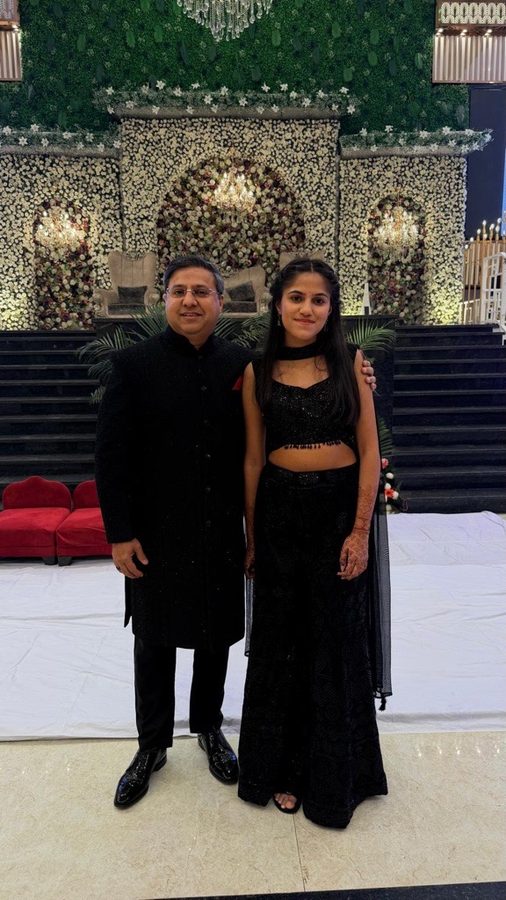
Outside the business, Kumar makes room in his public life for his daughter, Bani, golf and the family dog, Kaju. These details give a different scale to the appointments, boards and workshops. The calendar belongs to somebody with people to spend time with and a dog whose interest in quarterly performance is likely to be limited.
His work now includes speaking about sales systems that can function without the founder doing every deal. That is a fitting ambition for someone whose early operation required several phones on one desk. Building a company means teaching other people enough that the original seller can occasionally put the phone down.
The conference cards, the appointments and the golf exercises belong to the same continuing effort: pay attention before asking for a decision. Kumar has made a career of the distance between meeting someone and earning their business. There is plenty of room along that fairway for another lesson.
Continue the conversation
- Gaurav Kumar's personal website ↗
- Beyond Codes ↗
- Sales Lessons from Golf and a book excerpt ↗
- Listen: The Founders Sandbox with Brenda McCabe ↗
- Watch: Beyond Codes Live Room, with YouTube episodes ↗
- YouTube: a Beyond Codes Live Room episode ↗
- Read Kumar: Sales Lessons From Golf ↗
- Read Kumar: Hunter Versus Farmer Mentalities ↗
- Beyond Codes' Inc. company profile ↗
- The TiE SoCal presidency interview ↗
- The 2026 Colombo masterclass announcement ↗