Sales teams often do not have a lead problem. They have a missing-cell problem. The target account is sitting in a spreadsheet, the right person has a LinkedIn profile, and the columns marked “email” and “mobile” contain a graveyard of blanks. FullEnrich is built for this exact, unglamorous moment. Give it a name, company, domain or profile URL and it asks a procession of contact-data vendors for an answer. When one returns a match, FullEnrich verifies it and hands it back. When nobody knows, you are not charged.
That makes the product particularly useful for outbound sales teams, recruiters, agencies and RevOps operators who already know whom they want. It is also increasingly pitched to software companies and AI-agent builders that need contact data through an API. If you want a prospecting database, campaign sequencer, dialer and inbox in one tab, look elsewhere. FullEnrich supplies the coordinates. It does not fly the plane.
A sales headache became the product
Co-founder Benjamin Douablin spent seven years in sales before FullEnrich. At the founders’ previous company, the team paid seven data suppliers and built an internal system that queried them one after another. It worked, but it was expensive, fragile and forever asking for maintenance. When that earlier startup ran out of road, the founders sold its customer base, let the team go and started turning the internal contraption into FullEnrich the next day. It is a bracing story because there is no brainstorm montage. They had already paid dearly to discover the problem.
Douablin, Grégoire Démogé and CTO Jean-Luc Manceron founded FullEnrich in 2023. Its January 2024 Product Hunt debut finished first for the day and third for the week. FullEnrich 2.0 returned in October, finishing second for the day. Axios later reported a $2 million seed round from a group including Flex Capital, M-Fund, Kima Ventures and First Degree. A July 2026 founder interview put the business at more than 5,000 customers and 45 employees across France, the United Kingdom and the United States. Treat those scale figures as company-reported, but the trajectory explains why the tool now looks more like data infrastructure than a clever spreadsheet utility.
What actually happens to one row
Why the waterfall earns its name
A single-source service can only return what sits in its own database. FullEnrich instead routes a lookup through more than 20 providers. If the first source misses, the next gets a turn. That raises the odds of finding awkward contacts without making a RevOps engineer negotiate separate contracts, learn separate APIs and reconcile separate credit systems. The company says its average find rate is around 80 percent, while warning that geography, role and industry can move the number considerably. The honest purchasing move is to ignore any universal percentage and run your own sample.
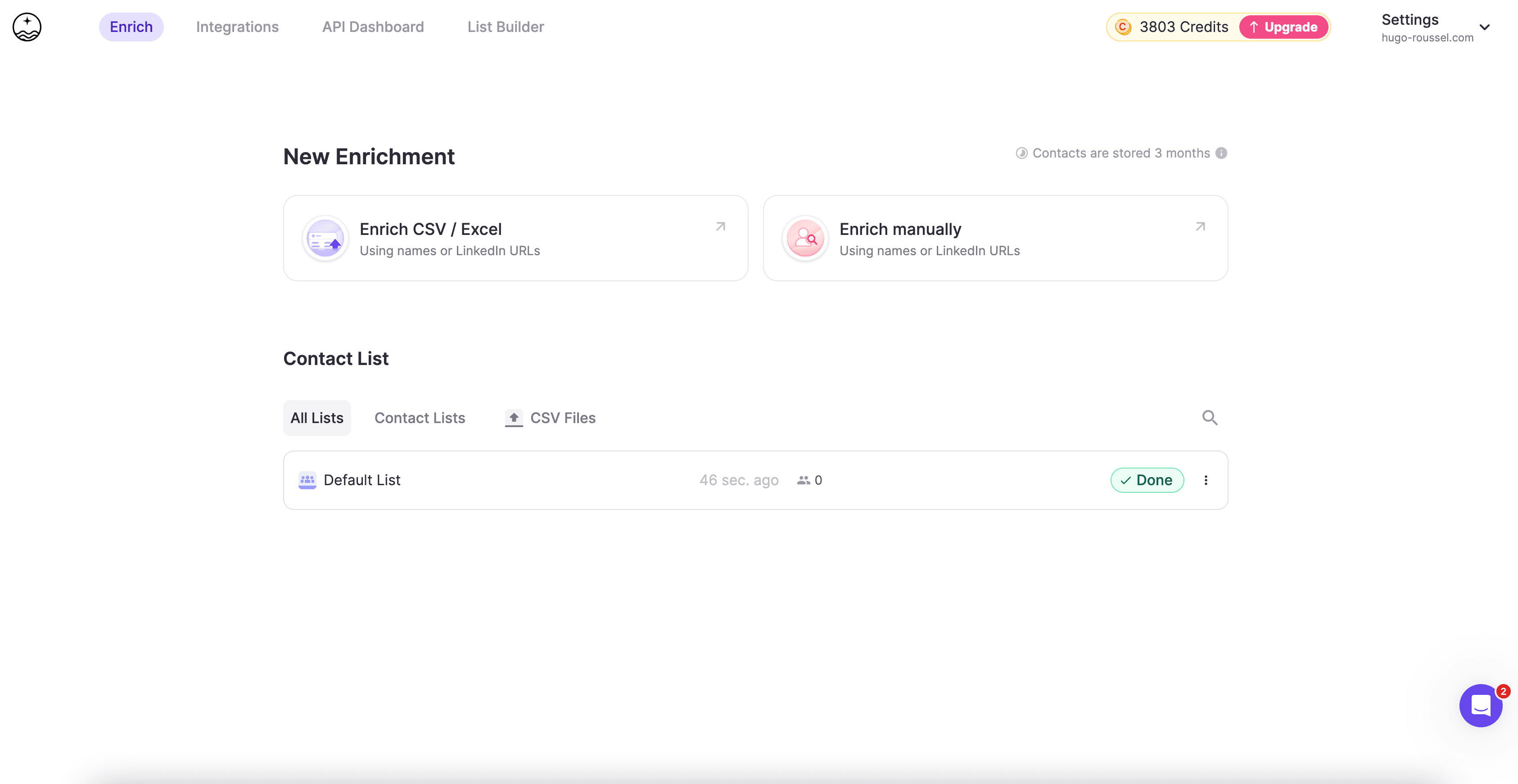
The input can be a manual record, CSV, Excel file or API request. A person lookup uses first name, last name and company, with a LinkedIn URL added when available. Reverse lookup starts with a known email and fills in identity, role, company and profile data. The newer Search product moves FullEnrich a step upstream: it claims access to 800 million people and 50 million companies, with more than 30 combined filters. In August 2026 it added filters for over 170,000 technologies, useful for a seller who only wants retailers running Shopify or finance teams using a particular accounting stack.
A credit is simple until the phone rings
FullEnrich offers 50 trial credits without a card. Pro pricing scales on a volume slider; at the 1,000-credit setting we observed, the site showed $55 a month, or 5.5 cents per credit. One verified work email costs one credit, a personal email costs three, and a mobile phone costs ten. Reverse email lookup costs one. Basic person or company data is included with an enrichment and costs a quarter-credit on its own. Credits roll for three months on monthly plans and 12 months on annual ones, and every plan includes unlimited users.
The apparent bargain changes with your channel. A thousand credits can buy 1,000 work emails, but only 100 mobiles. An email-heavy agency can spread one plan widely. A cold-calling team can chew through the same balance before lunch. Failed lookups are free, which is a meaningful protection, yet “pay only when found” is not the same as “every found result is equally valuable.” A live number belonging to the wrong person still costs a rep a strange conversation. Model the mix you actually need, then calculate cost per usable result after checking a sample.
| Need | Credit cost | What 1,000 credits buys | Buyer note |
|---|---|---|---|
| Work email | 1 | Up to 1,000 | The cleanest economics for list-based outbound. |
| Personal email | 3 | Up to 333 | Useful in recruiting; consider privacy and relevance. |
| Mobile number | 10 | Up to 100 | Test connect rate, not merely the number of hits. |
| Reverse email | 1 | Up to 1,000 | Handy for thin inbound records and form fills. |
Web app for humans, plumbing for machines
The web workflow is deliberately plain: upload a file, choose the fields to enrich, wait for completion, then export or push the records onward. HubSpot is available as a direct destination. Clay, Zapier, Make and n8n cover orchestration. A REST API handles individual or batch jobs and delivers results through polling or webhooks. The MCP server gives compatible AI clients a structured way to search people and companies or request contact details. July’s ChatGPT and Manus integrations made that agent story visible to non-developers.
There are boundaries worth noticing. Several CRM and outreach connectors on the integrations page are still labeled “soon,” including Salesforce and Pipedrive. G2’s review summary repeatedly flags the missing Chrome or LinkedIn extension, a friction for reps who want a one-click reveal while browsing. FullEnrich works better as a batch and systems product than as a tiny button living on every profile. For an operator building lists or enriching CRM records, that distinction barely matters. For a rep living inside Sales Navigator all day, it can decide the purchase.
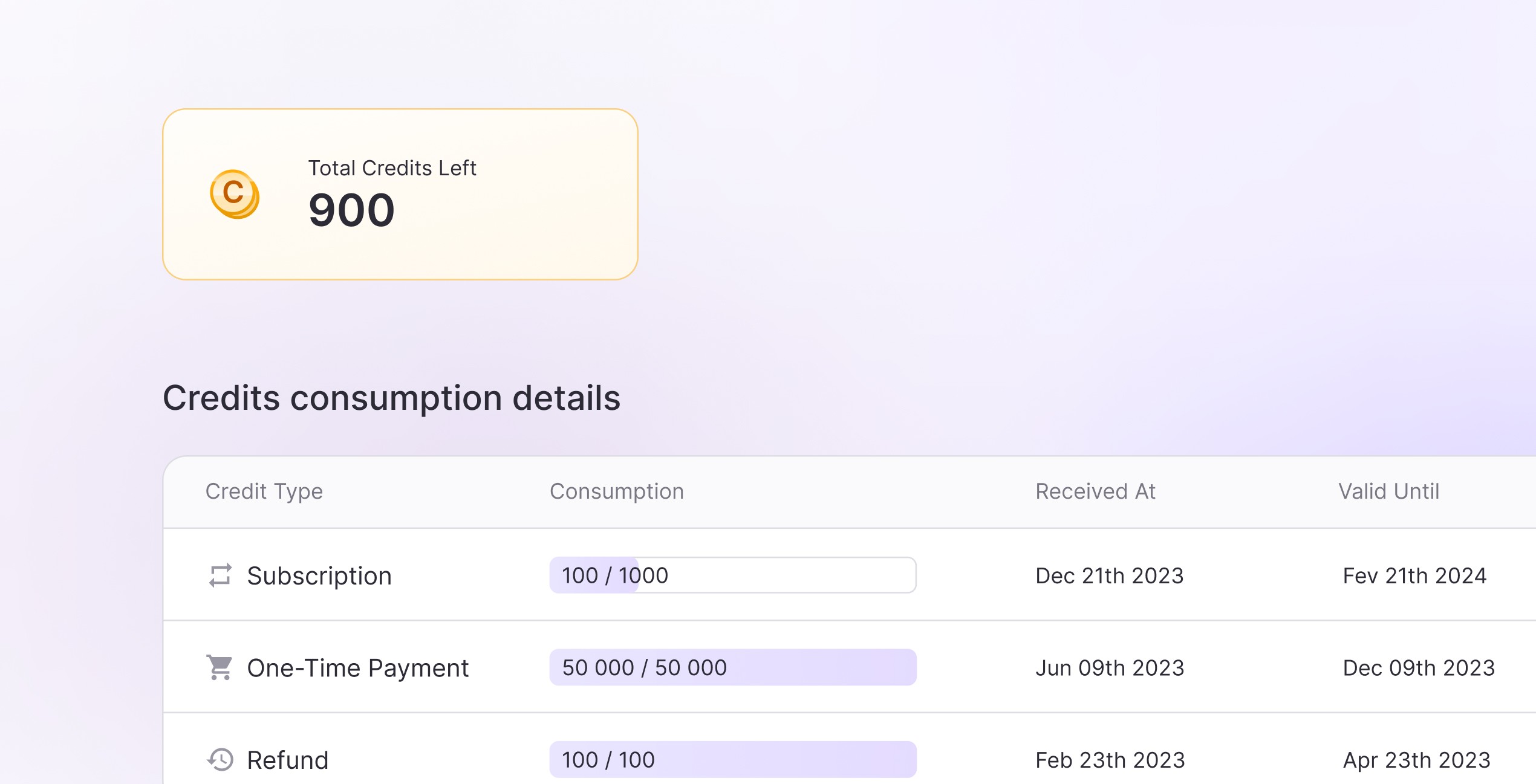
“The credits carry over month to month.”Dave M., small-business founder, G2 review, March 2026
What users like, and what they grumble about
At research time, FullEnrich held 4.8 out of 5 from 188 G2 reviews and 4.7 from 32 Product Hunt reviews. The praise is consistent: multiple sources improve coverage, setup is quick, and one vendor relationship beats a cupboard full of subscriptions. A Product Hunt reviewer described the old job of negotiating with providers and assembling the pipeline as a time sink. A G2 reviewer liked that rollover credits remain available when a large, irregular project arrives.
The complaints are useful shopping advice. G2’s topic counts include incorrect numbers, expense, integration issues, slow loading and missing emails. Reviewers also ask for source-level visibility and the departed browser extension. Product Hunt’s review summary carries a serious privacy complaint concerning personal-data use. FullEnrich publishes SOC 2 Type II, GDPR and CCPA claims, but compliance badges do not replace a buyer’s own lawful-basis, suppression and retention policies. Contact data is permission-sensitive material. Use it with the restraint you would want applied to your own number.
The fieldChoose the job before choosing the tool
BetterContact is the closest conceptual rival: a focused, pay-per-found waterfall with aggressive pricing. Clay is broader and more configurable, suited to teams that want to design enrichment logic and automate much more than contact discovery. Apollo combines a large database with sequences and engagement tools. Lusha emphasizes quick, rep-led lookup. Cognism leans into enterprise and European phone data, while Dropcontact makes an EU compliance-oriented case. Prospeo is another focused email-data option.
FullEnrich occupies a useful middle. It hides provider complexity without asking the buyer to adopt a complete sales operating system. That is attractive when you have a workflow you already like and simply need more rows to become contactable. It is less persuasive when one affordable database already covers your niche, when your reps demand a browser extension, or when you want intent signals and campaign execution under the same roof.
The verdict: buy the waterfall, not the slogan
Run 200 representative contacts through the free trial. Score work-email delivery, correct-person mobile connects, coverage by region and total credits used. If the extra verified contacts beat your current provider by enough to cover the cost, FullEnrich has done its job. If the lift is small, a simpler source will be cheaper and easier.
A sensible first week
Start with a clean holdout file, not your whole CRM. Include easy and difficult contacts across the regions and seniority levels you normally target. Ask for email and mobile separately so you can see which field drains the balance. Compare returned emails against a second verifier and log bounces. For phones, have reps label correct person, wrong person, dead line and switchboard. The result you care about is not find rate alone; it is cost per correct, reachable human.
Then decide where the tool belongs. Occasional campaigns can stay in CSV. Ongoing inbound enrichment belongs in HubSpot or an automation. Product features and high-volume pipelines should use the API, with low-credit alerts and graceful handling for unfinished jobs. AI agents should receive narrow permissions and return sources and confidence alongside contact details. Finally, document suppression rules and deletion requests before anyone celebrates the first full spreadsheet. Clean data practice is part of the product experience, even when the button sits elsewhere.