C.C. Fridlin had an 11 a.m. conference call and a plan for lunch. On a February morning in 2012, he bought bacon in Huntsville, stopped for bread, then hurried home to make the call. Somewhere in that ordinary sequence, he announced his intended sandwich on Facebook: bacon and peanut butter. The response was considerably more animated than a lunch announcement generally deserves.
He had first tasted the combination at a culinary conference, where someone persuaded him to try it. Now he was defending it to friends. He cooked three slices of bacon slowly, taking more than 25 minutes, spread peanut butter on thick bread and ate. His telling of the episode is funny because he treats both the objections and the sandwich seriously. He had been skeptical himself. A taste had changed his mind.
Today, Fridlin is CEO of PCI Productions, the Huntsville company selected to manage communications services across NASA. He is also a culinary instructor and cookbook author. That combination has its own bacon-and-peanut-butter quality: initially unexpected, then easier to understand when you examine the ingredients. Engineering, explaining, organizing and feeding people have all found room in the same career.
Before the cookbook, 600 mouths
His culinary beginning was a summer-camp kitchen serving 600 campers and staff. It is a useful place to start a story about someone whose later work involves coordinating people. A camp meal must eventually leave the kitchen. Six hundred appetites offer limited encouragement for theoretical perfection.
He went on to assist in more than 100 cooking classes at a consumer cooking school. Cookbook authors, restaurant chefs and staff instructors led those sessions. Assisting meant being close to the work before taking responsibility for teaching it. His own instruction began with an in-home culinary-class company. After moving to Huntsville, he taught through local venues including Williams Sonoma, Stem and Stein, and The Wine Cellar, as well as in private kitchens.
The domestic setting matters. A home cook has to use the lesson after the instructor leaves. The class needs to survive contact with an ordinary evening, an unfamiliar ingredient and whatever equipment is actually in the cupboard. Fridlin’s teaching business has made that practical audience its starting point. The invitation extends to beginners, couples, supper clubs and groups looking for an evening together.
His classes include ingredients, equipment, instruction and recipes; the meal is part of the occasion. For classes in a client’s kitchen, he also offers to clean up. This is a persuasive educational policy. Plenty of people are willing to pursue knowledge, provided knowledge does not leave three pans soaking in the sink.
At the counter, the details count
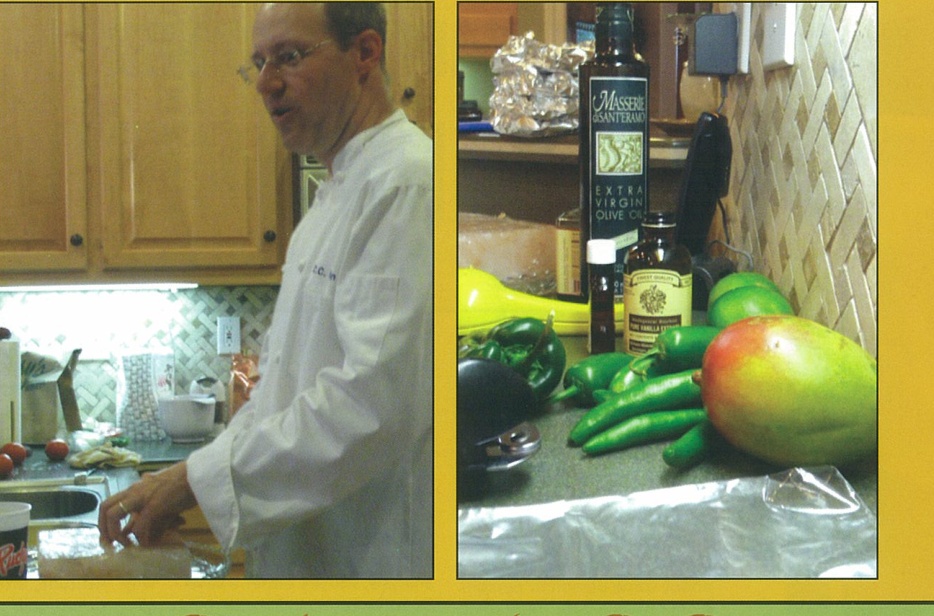
A guest named Gwynn Schneider described one of his “Heat of Summer” classes in 2010. The menu moved from caprese salad to grilled chicken fajitas with watermelon-mango salsa, grilled corn and fresh cherry cheesecake. Fridlin introduced the menu and his assistant, then explained how the flavors fitted together. Guests had copies of the recipes so they could follow the preparation.
Schneider remembered the small, usable details: holding a knife, chopping and identifying olive oil. As each course arrived, he drew attention to a particular ingredient or taste, including the salsa served with the chicken. The evening combined watching, tasting and taking home instructions. It was a class with dinner built into it, rather than a performance in which the audience’s only task was applause.
Years later, a March 2024 Huntsville cooking-class guide recorded his continued interest in private lessons. It also described plans to travel to Tuscany and the Amalfi Coast to cook and learn. Teaching and being taught appear side by side. An instructor who still goes looking for classes gives his students a useful example: knowing enough to teach need not mean being finished with learning.
The engineer in the recipe
Fridlin earned a degree in electrical engineering and later an MBA. His early professional work included hardware and software product development, global sales and customer support. His LinkedIn credentials list an Alabama Professional Engineer license issued in January 1995 and a Project Management Professional certification issued in June 2013. These are unusually technical accompaniments to a cookbook.
Two American patents make the engineering concrete. Fridlin is a co-inventor with Steven R. Blackwell and John T. Pearson on Motorola patents concerning data-communications devices. One, granted in January 1997, concerns operating a digital device in an analog mode. Another, granted that September, concerns a device that can function as an analog modem, a digital modem or a terminal adapter.
In everyday terms, these inventions address how equipment works across different communications arrangements. The patent descriptions belong to a world of interfaces, signals and operating modes. Their usefulness depends on details that most users would prefer never to consider. It is a long way from a plate of pasta, although both subjects punish instructions that skip an essential step.
That connection is an interpretation of his work, rather than a claim that engineering automatically produces a good cook. Fridlin’s record gives the comparison substance: technical product work, corporate training, culinary instruction and a book intended to explain a procedure clearly enough for someone else to repeat it.
A home cook has to use the lesson after the instructor leaves.
analog operationSEP 1997Analog modem, digital modem,
terminal adapter
An Italian lesson you can take home
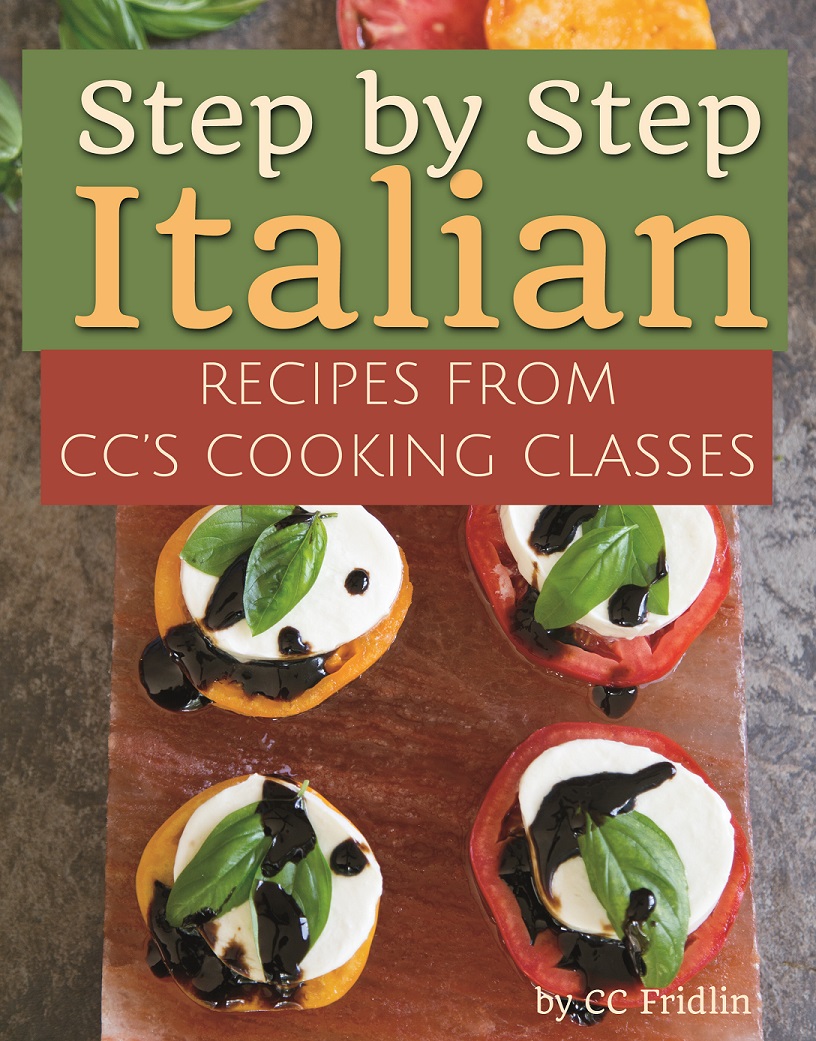
His cookbook, Step by Step Italian: Recipes from CC’s Cooking Classes, appeared in 2018. It gathers dishes he had taught over more than 15 years, with step-by-step directions and photographs by Sarah Bélanger. Fresh pasta, pesto, tomato sauces and caprese salad sit within a collection drawn from Italian travel and classroom experience.
The book includes “Food Geek Notes,” little explanations of why a technique or ingredient matters. Examples include keeping a custard sauce smooth and understanding vodka’s role in a sauce. The extra explanation gives a reader something beyond an order to stir. When a person understands what a step is doing, the recipe becomes easier to think about.
A cookbook also changes the teacher’s working conditions. In a class, an instructor can notice confusion and answer a question. On paper, the directions must do that work ahead of time. Photographs and detailed steps carry part of the burden. The title’s promise is modest and specific: take the reader through the task in an order that can be followed.
His participation in the International Association of Culinary Professionals extends beyond attending its conferences. He served two years as chair of its Cooking Schools and Teachers Interest Section. He received its Volunteer of the Year recognition in 2014, and the association lists him among its 2021 Member of the Year recipients. Those honors belong to the teaching and professional-community side of his life.
A bigger audience in Rocket City
In summer 2010, NASA identified Fridlin as director of business development at Applied Geo Technologies. Discussing the agency’s example, he said, “NASA didn’t become what it is today by resting on its accomplishments.” The remark fits a career that has continued moving between technical work, business development and management.
By 2020, he was president of Media Fusion and working in business development and operations management for PCI Productions. The two companies share an ownership connection: the Poarch Band of Creek Indians acquired Media Fusion in 2018, and PCI Productions was established in 2019. Their relationship places his work within a tribally owned group of businesses.
In March 2023, NASA announced that it had selected PCI Productions for agencywide communication services, with performance beginning June 1. The potential value was approximately $217.6 million, including options and a maximum $183 million ordering value. That was the contract’s potential value at announcement, rather than an amount already earned.
Its scope included strategic communications, public engagement, media relations, archives, libraries and support for Freedom of Information Act requests. Those last three items are a reminder that communication has a long memory. An institution needs people who can explain today’s work and people who can help someone find yesterday’s record.
The core team included Mori Associates, Abacus Technology Corporation and Alutiiq Career Ventures alongside PCI Productions. Fridlin participated in the proposal team before becoming CEO in January 2024. The sequence matters: the company secured the NASA work while he was working in business development and operations, then appointed him to its top executive role.
A separate NASA award announced in July 2023 covered administrative and technical support at Armstrong and Ames research centers, with a maximum potential value of $50 million over five years. Its work included technical publications, research-library functions and business support. Such assignments reveal the less theatrical tasks around scientific work: documents, systems, coordination and keeping information usable.
Total potential contract value at announcement
$183m maximum task-order value included in totalThe next question is still dinner
The cooking calendar remains active alongside the executive career. A June 2025 class listing added a second session after the Saturday class sold quickly. Its menu included sausage-and-cheese crostini, Florentine balsamic chicken, risotto Milanese and bananas Foster. The evening promised demonstration and recipes. Demand was answered with another place at the table.
For September 12, 2026, he listed a class built around the recurring household question of what to make for dinner. The subject was familiar chicken breasts, approached through bourbon chicken and chicken baked with tomatoes and mozzarella. These are practical alternatives to making the same meal again. The lesson begins with a problem the students already recognize.
His published travel plans also include a Portugal food-and-wine journey dated October 4-11, 2026, with Go Get Lost handling logistics. The itinerary advertises Porto, the Douro Valley and Lisbon, including cooking classes and tastings. It carries his classroom interest into a different setting, with local techniques becoming part of the trip.
Seen together, these activities suggest a recurring interest in helping people understand something well enough to use it. The audience changes: a customer, a government agency, a group gathered around a kitchen counter. The work leaves behind a product, a record, a recipe or a meal. There is room for serious preparation in each, and occasionally for a sandwich that makes the Facebook comments difficult to ignore.
Follow the work, and the recipes
Explore PCI Productions’ leadership, Media Fusion and Fridlin on LinkedIn.
Visit Cooking with C.C., browse the cookbook, or follow his cooking pages on Facebook and Twitter/X.
Read NASA’s 2023 contract announcement, the 1997 patent, the IACP award roll and Huntsville’s cooking-class guide.