Before Frederik Kofoed Hansen built software for commercial due diligence, he bought a great deal of it. For six years at Blackstone, across London, New York and San Francisco, he worked on the private equity side of multi-billion-dollar buyouts. Part of the job was commissioning market research from the large consulting firms: customer interviews, market maps, competitor analysis and, at the end, a substantial presentation. The bill could run from $500,000 to $1 million. The result could stretch to 200 pages. It was careful work, often useful work, and also a peculiar artifact of modern finance: an expensive answer delivered in a format that made it awkward to inspect how the answer had been assembled.
Hansen did not leave Blackstone with a vague desire to sprinkle AI over finance. He left with the memory of a specific purchase. The diligence report was slow because teams had to recruit experts, schedule interviews, transcribe conversations, compare responses, build models and turn the whole thing into a coherent argument. It was costly because skilled people did much of that work by hand. It was opaque because the final slide could sit several steps away from the source material that supported it.
His company, DiligenceSquared, is an attempt to shorten those steps without pretending that a high-stakes investment decision should be left to an unsupervised machine. AI voice agents interview customers, competitors and market experts. Software synthesizes what they say. Senior consultants review the work. The final report is interactive, with findings linked back to transcripts. The quiet revolution is a hyperlink: confidence, meet provenance.
“We are taking these great insights that were previously reserved for the very big decisions, and now we make them more accessible.”Frederik Hansen
The customer who knew the invoice
Founder lore prizes the person who knows a problem from the inside. Hansen's acquaintance with this one was unusually literal. At Blackstone he commissioned dozens of the reports his startup now competes with. He knew what investment committees found credible, what deal teams needed quickly, and which elegant pages became expensive ornaments. That experience gave him a useful constraint: a cheaper answer that is only nearly good enough has little value when the decision carries nine or ten zeroes.
“If the work is not genuinely insightful or only 90% of the way there, it simply isn't good enough for top PE firms,” he has said. The sentence is revealing because it refuses the easiest AI sales pitch. DiligenceSquared does not merely promise a larger pile of machine-made research. It promises a workflow in which automation handles scale while people remain accountable for the quality of the conclusion.
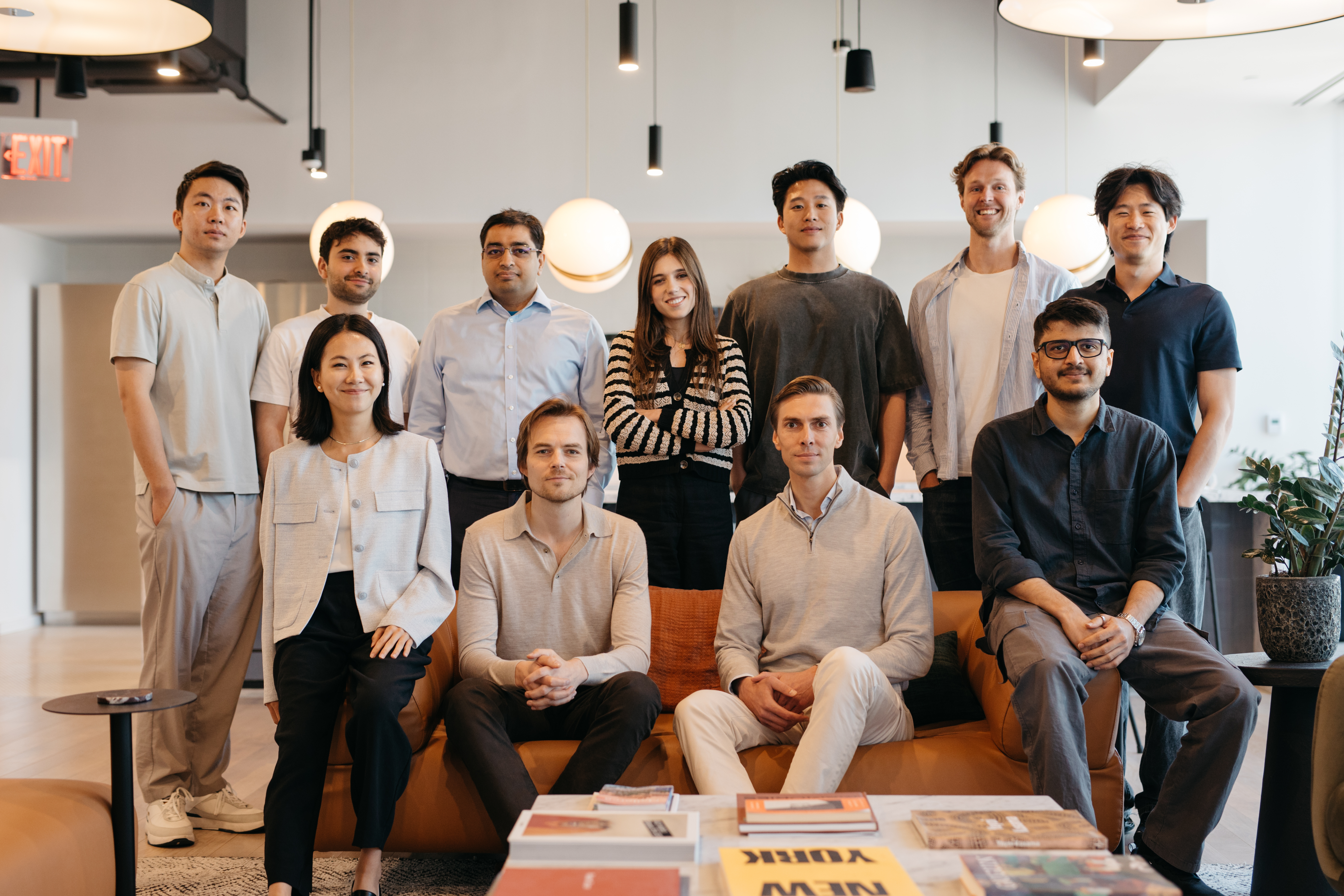
The founding team makes that division of labor visible. Søren Biltoft-Knudsen spent seven years in BCG's private equity practice and led more than 40 commercial diligence projects. He had sold and delivered the service Hansen had purchased. Harshil Rastogi, a former Google engineer and repeat founder, brought experience building production machine-learning systems. The trio could compare the buyer's complaint, the consultant's method and the engineer's answer without asking any one perspective to impersonate the others.
The report learns to show its work
A commercial diligence project begins with questions. Is the market as large as the seller says? Do customers actually like the product? What would make them leave? Which competitor is becoming dangerous? In the traditional model, a team gathers testimony and data, then compresses the messy evidence into a clean deck. The compression is useful, but it can also sever the neat statement from the untidy conversation that produced it.
DiligenceSquared's design keeps those layers connected. A consultant leads the research plan. AI agents gather information, including through voice interviews that can run in parallel and in local languages. The system organizes the material and develops analysis. Consultants validate, review and synthesize. An investment team receives an interactive report rather than a sealed presentation. A claim can be followed back to its underlying transcript.
Traceability is more than a tasteful product detail. Generative systems are fluent even when wrong, while investment research is valuable only when a team can challenge it. By keeping the transcript near the claim, DiligenceSquared lets a skeptical reader inspect the wording, context and strength of the evidence. The interface does not abolish disagreement. It gives disagreement somewhere productive to go.
Let software multiply interviews and organize evidence. Keep experienced people on the questions, validation and final judgment. Preserve the path from conclusion to source.
Cheaper research changes the clock
The economics matter because they change when diligence begins. External advisory expenses are lost if a transaction dies. A fund may therefore delay a costly commercial study until it already feels serious about a target. DiligenceSquared says it can deliver analysis for roughly $50,000, a fraction of the traditional range. At that price, an investment team can investigate earlier, before enthusiasm hardens into commitment and before the deal calendar begins shouting.
Earlier research creates a different kind of return. A team might reject a weak market before spending weeks chasing it. It might discover a customer problem while there is still time to adjust the thesis. Or it might find enough evidence to take a neglected opportunity seriously. Hansen's stated ambition is to make rigorous market intelligence available for decisions that could never justify a seven-figure consulting fee. Lower cost is the mechanism; better timing is the strategic effect.
There is an appealing irony here. Private equity is obsessed with operating leverage, yet one of its familiar research processes remained stubbornly labor-intensive. Hansen is applying the logic of the buyer to the buyer's own toolbox: identify the repetitive work, redesign the workflow, and reserve expensive human attention for the moments where it compounds.
From Copenhagen to Hudson Yards
Hansen's analytical habits predate the company. At Copenhagen Business School, where he studied from 2014 to 2016 and graduated top of his class, his master's thesis examined active mutual fund performance. The subject fits the later career almost suspiciously well: how do you distinguish a persuasive record from durable evidence? By 2025, he had moved from analyzing investment claims to building a company meant to make those claims easier to examine.
DiligenceSquared joined Y Combinator's Fall 2025 batch. Hansen called presenting on the Demo Day stage surreal and energizing. The company announced a $5 million seed round in March 2026, led by Damir Becirovic's Relentless, with Y Combinator, Amino Capital, Founder Factor, Multimodal Ventures, Twenty Two Ventures and angel investors participating. By then it had completed projects for large and mid-market private equity firms, with clients representing more than $2 trillion in combined assets under management.
The company then moved its center of gravity to New York. From a new office in Hudson Yards, Hansen has been hiring engineers and people trained in consulting and finance. His public roll call of recent recruits reads like the company thesis in miniature: Stanford AI training beside BCG diligence experience, startup engineering beside Blackstone and J.P. Morgan. The office is in person. The product is automated. Good contradictions often turn out to be operating principles.
The future of diligence may be less about producing the confident slide and more about keeping the evidence close enough to argue with it.YesPress
The standard hiding inside the software
DiligenceSquared describes itself as an AI-native consulting firm, but its larger idea is almost old-fashioned. Important claims deserve scrutiny. Senior judgment is scarce. Evidence should survive the journey into a conclusion. AI makes the ambition economically plausible by conducting more interviews and processing more material than a small human team could manage on the same clock.
The danger is obvious: more research can become more noise, delivered at machine speed. Hansen's response is a system of checks rather than a promise of magic. Research begins with human direction, moves through automated gathering and analysis, and returns to humans for review. Its value will ultimately depend on execution: the quality of the interviews, the care of the validation, and the willingness of clients to treat interactive evidence as more than a decorative feature.
Still, the founder's route offers a clean lesson. Hansen found his company not by looking for a profession to disrupt from a distance, but by remembering a recurring bill and asking what it was really paying for. Some parts bought rigor. Some bought coordination. Some bought the brute force of many junior hours. Software could attack the last two. The first had to be protected.
That distinction is the heart of DiligenceSquared. Its AI can help ask hundreds of questions, but the company's future depends on whether it helps investors ask the right ones. Hansen has spent his career on the side of the table that must eventually decide. Now he is building a better way to arrive there, one transcript, one linked claim and one inspectable slide at a time.