A driver standing at a fuel pump has a modest ambition: fill the tank and leave. The mechanism inside the filler opening has a more exacting assignment. It must admit what belongs there, close afterward and, in some designs, refuse what does not. There is little applause for a valve doing its job. There is considerable inconvenience when it fails.
Franco Cisternino has worked on that uncelebrated border between an ordinary action and a mechanical mistake. His name appears as the inventor of a mis-fuel inhibitor granted a US patent in May 2014. The problem is familiar enough to explain without an engineering degree: a smaller nozzle can enter an opening intended for a larger one. A diesel vehicle can therefore receive fuel it was never meant to use.
The device responds to the diameter of the nozzle. An acceptable nozzle moves the actuator and releases a door; an undersized one leaves the obstruction locked. Its attraction, for a reader following Cisternino’s career, is the specificity. Someone had to consider the moment when the wrong object reaches the right-looking opening. Engineering begins with such awkward little encounters.
Today Cisternino is Senior Managing Director at Madison Industries. The distance between a fuel inlet and an executive office seems considerable. Follow the work, though, and the route becomes easier to see. It passes through product design, manufacturing businesses and the management of several industrial groups. The questions grow larger; the need to understand how things connect remains.
A career with a parts list
Cisternino studied aerospace engineering at the University of Kansas and earned an MBA at DePaul University. He began his ITW career in product design and spent 17 years there, taking on increasing responsibility. That combination puts technical work and business education in the same biography, with neither reduced to a decorative credential.
The patent record supplies objects to go beside those job titles. A car seat tether anchor and system, granted in 2001, names Cisternino with Kenneth LeVey and Eric Parker. The design concerns how an anchor attaches to a vehicle body panel. Feet on the anchor and a resilient locking flange engage the panel in different directions. The reader can almost hear the satisfying click, although a patent, sensibly, makes no promise about the soundtrack.
A fuel-fill seal patent followed in 2008. Here the concern is the meeting of a pipe and an inserted refueling nozzle. The assembly provides a flexible seal at that interface. It is an easily overlooked location until one tries to describe everything the contact must accomplish. The driver supplies a nozzle; the designer has to supply a workable relationship between surfaces.
These inventions give Cisternino’s early career a physical vocabulary: anchors, openings, flanges, seals. They also give it company. Several records list teams of inventors. Industrial design often reaches the public under a manufacturer’s name, while the people behind it appear in smaller type. Reading those names brings the work back to a human scale.
Convenience has a surprisingly crowded backstage.From this feature
When the problem becomes a business
Consider another entry: the capless refueling system granted in May 2014. Cisternino is one of six named inventors, alongside Robert Dutzi, Bryan Miller, William Purdy, Stephen Sperando and Paul Sutenbach. The task extends beyond removing a cap from the driver’s routine. The assembly must open for the nozzle, close after withdrawal and remain securely connected to the fuel pipe.
The design addresses how the lower body and cover join, where sealing takes place and how the assembly is retained. Those details affect the sequence of putting the product together. To a motorist, capless refueling is a brief convenience. To the people designing the mechanism, it is a collection of interfaces that must cooperate. Convenience has a surprisingly crowded backstage.
The later coatings work moves to another kind of interface. Cisternino appears with Jeffrey Stupar, Eugene Sessa and Robin Monahan on patents titled “Articles having thermoset coatings and coating methods,” assigned to Nylok. The subject is corrosion where articles with different anodic characteristics meet. Applying and curing a coating before securing the articles together is part of the proposed method.
This is a useful thread through otherwise different inventions. One problem involves an object entering an opening; another involves two materials facing one another. Both demand attention to the contact itself. The comparison belongs to the work on the page, rather than to an imagined conversation with its inventor. It shows how much industrial engineering happens at the places where things meet.
Nylok also appears in Cisternino’s management career. A 2016 Kohl Children’s Museum annual report lists him as its general manager. The following year’s report identifies him as Group President of Marmon Automotive Components. These are dated glimpses of widening responsibility: from an individual manufacturing business to a group of them.
The visit, the luncheon, the questions
At Marmon Holdings, part of Berkshire Hathaway, Cisternino went on to become an executive vice president. World Business Chicago identifies the scope of that role as electrical, plumbing and refrigeration, and metal services. These categories cover different products and customers. Leading across them requires a view wider than any single drawing or production line.
His responsibilities included three industry groups producing more than $2 billion in annual revenue. That figure describes the businesses under his oversight. It gives the career a sense of scale, but the smaller documented moments make it easier to picture the setting in which such work occurs.
A Marmon Industrial Energy & Infrastructure post describes a visit by electrical leadership, naming Cisternino among the participants. There were facility tours, meetings and presentations involving people from across the business. The gathering also included a company-wide outdoor luncheon, with employees hearing from leaders and asking questions. The scene is refreshingly practical: a leadership visit accompanied by lunch and an opportunity to speak.
Another workplace account, concerning the arrival of Scott Fetzer businesses at Marmon, thanks Cisternino alongside colleagues involved in the effort. The described training covered subjects including pricing, strategic marketing, negotiations, lean practices and 80/20. The account closes with a facility tour. Acquisition work, in this telling, includes a considerable amount of teaching and walking around.
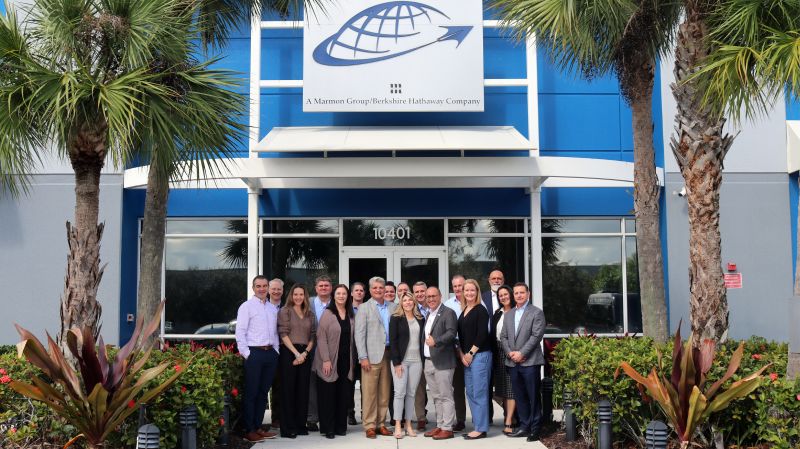
A February 2025 Future Metals post places Cisternino among visiting senior leaders, including Marmon chairman and CEO Angelo Pantaleo. The accompanying photograph gathers the visitors outside the building. It is an ordinary group picture with a useful point: industrial businesses are places people go. Their work occupies buildings, draws teams together and gives a corporate title somewhere to stand.
A place for play
There is another institution in Cisternino’s public life where objects, spaces and hands-on discovery matter. His LinkedIn profile lists board service at Kohl Children’s Museum beginning in March 2015. Museum reports from 2016 and 2017 include him among the trustees. The connection adds a civic setting to a career otherwise described largely through companies and patents.
A children’s museum is an appealing neighbor to this particular work history. The resemblance is an editorial observation: both invite attention to what happens when someone handles an object. In one setting that encounter helps a visitor explore; in the other it becomes a design requirement. The board service itself is the concrete fact. It need not carry a grand theory of his private motivations.
Cisternino is also a member of The Economic Club of Chicago. Alongside the museum connection, that membership places his professional life within Chicago’s broader network of business and civic institutions. Lake Forest is the location on his LinkedIn profile. His work stretches across industrial organizations, while these affiliations give the story a local address.
The scale changes; the details remain
Madison gives this career its current setting. The company describes an ownership model built around long-term operation, with its management team owning the business. Its account of acquisition relationships emphasizes trust and continuity. For an executive coming from ITW and Marmon, the work sits within another organization concerned with building and running industrial companies.
A patent drawing and an acquisition brief ask different things of their readers. One directs attention toward a component; the other toward an organization. Cisternino’s career has involved both. The surviving details are unusually helpful: a flange that locks an anchor, a seal that meets a nozzle, a visit that lets employees ask questions. Each offers a concrete way into work that executive biographies often compress into a few broad phrases.
The tempting ending would be to turn the fuel valve into a complete philosophy of management. A mechanism deserves better than being recruited into every business metaphor. What it does offer is a beginning: a specific problem, a design and a named inventor. From there, Cisternino’s path leads toward responsibility for businesses whose own products contain thousands of such decisions.
The driver at the pump will probably never know the names behind the opening. That is part of the arrangement. A useful piece of engineering lets a person get on with the day. Cisternino’s story makes a little of that hidden work visible, then follows the engineer as the responsibilities become larger. The small things remain worth a second look.