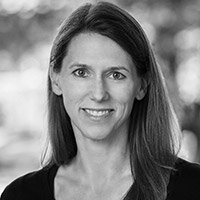
She's running Business Operations, Engagement & Strategy for the Office of the CIO at Apple. Before that, she co-founded a venture firm that raised over $400 million. Before that, she spent 14 years at Kleiner Perkins betting on hardware when software was the darling. Before that, she co-founded a company that sold for half a billion dollars. Before that, she designed products at IDEO for Palm and Dell. And before any of that, she worked at a Dairy Freeze in Fairmont, Minnesota.
Trae Vassallo doesn't follow the script. When she was offered a role on Apple's iPod team in 2003, she said no. Eighteen years later, she walked through Apple's doors - but this time on her terms, with 13 patents, a founder exit, a legendary VC track record, and nothing left to prove.
The Hardware Whisperer
In Silicon Valley's software-obsessed ecosystem, Vassallo made her name betting on atoms, not bits. While others chased apps and platforms, she invested in the devices that would sit on your nightstand, guard your front door, and cool your home.
Pattern recognition? She has it. Vassallo's engineering background - bachelor's and master's in mechanical engineering from Stanford, both with honors - gave her what most VCs lack: the ability to evaluate hardware at the component level, to understand what's possible and what's vaporware, to know when founders are building something real versus pitching science fiction.
"The best startup one-liners are emotional. Think iPod's 'a thousand songs in your pocket.'"
- Trae Vassallo on product storytelling
From Fairmont to Stanford to Apple
The path from a Minnesota town of 10,000 to Silicon Valley's inner circle doesn't follow a straight line. Vassallo graduated from Fairmont High School in 1990. As a kid, she played The Oregon Trail in the school library - early exposure to programming that would shape her career. She took sailing lessons at the Chain of Lakes Yacht Club, performed in "Oliver Twist" at the Fairmont Opera House, and worked at the Dairy Freeze.
Stanford came next. Not just once, but three times. Bachelor's in mechanical engineering. Master's in mechanical engineering. MBA from Stanford's Graduate School of Business (class of 2000). All with honors. The kind of credentials that open doors - but Vassallo didn't just walk through them. She built new ones.
The Builder Phase
At IDEO in the late 1990s, Vassallo was designing the future in three dimensions. Products for Palm, the PDA that predated the iPhone by a decade. Hardware for Dell when Dell meant something. She racked up 13 patents - not in one narrow domain, but across technologies and disciplines. The work of someone who sees connections others miss.
Then in 2000, she co-founded Good Technology. Enterprise wireless email before the BlackBerry became ubiquitous. The company made hardware and software that let executives check email on the go - revolutionary at the time, quaint in retrospect. But here's what matters: Vassallo was leading hardware strategy, and when the management team decided to pivot to software-only, she made the call. Focus beats sprawl. Good Technology sold to Motorola in 2007 for $500 million. Later, BlackBerry acquired it for $425 million.
Not bad for a first startup.
14 Years at Kleiner
In 2003, Vassallo joined Kleiner Perkins Caufield & Byers as a General Partner. Fourteen years. Through boom, bust, and the resurrection of consumer hardware. She worked with John Doerr, learned from one of venture capital's architects, and built a track record that speaks for itself.
But Kleiner is also where the other story happened. The one that wasn't on her LinkedIn. In 2011, Vassallo filed a sexual harassment complaint against Ajit Nazre, a partner at the firm. He showed up at her hotel room door in a bathrobe during a business trip. He touched her under the table at dinner. She reported it. The firm investigated. Nazre was fired in 2012.
Then came 2015 and the Ellen Pao trial. Pao sued Kleiner Perkins for gender discrimination, and Vassallo was the first witness. Her testimony was vivid, specific, damning. She described what happened - not in abstract terms, but with the kind of detail that makes people uncomfortable. After she testified, her inbox filled. Women reaching out. Sharing their own stories. The same patterns. Different names.
"My experience wasn't the exception. After testifying, many women reached out to share similar experiences."
- Trae Vassallo on the aftermath of her testimony
Vassallo didn't retreat. She leaned in - not to corporate feminism, but to data. In 2016, she co-authored "Elephant in the Valley," a survey of 210 senior women in tech. The findings: 84% had been called "too aggressive." 60% reported unwanted sexual advances. 47% were asked to do tasks - note-taking, ordering food - that male colleagues never handled.
The survey went viral. Not because it revealed new problems, but because it quantified what everyone knew and nobody wanted to say out loud.
Building Defy
In 2016, Vassallo and Neil Sequeira co-founded Defy Partners. Two veteran VCs with complementary backgrounds - Vassallo on product and hardware, Sequeira on enterprise and scaling. They raised $151 million for their debut fund in 2017. Then $262 million for fund two in 2019. Over $400 million total.
Defy focused on the gap - Series A rounds for companies that needed more than seed capital but weren't yet ready for traditional growth equity. The sweet spot where great companies either accelerate or stall. Defy's thesis: bet on founders with product-market fit who need capital and counsel to scale.
For five years, Vassallo built the firm. Portfolio companies. Returns. Reputation. Then in August 2021, she left. Not because Defy failed - it didn't - but because she was ready to build again.
"Building Defy made me realize I was ready to build again."
- Trae Vassallo on joining Apple
The Apple Return
Eighteen years after turning down the iPod team, Vassallo joined Apple. Same company. Different role. She runs Business Operations, Engagement & Strategy for the Office of the CIO - a mouthful that translates to making sure Apple's internal operations work as smoothly as its products.
Why now? Because at Apple, Vassallo isn't investing in other people's visions. She's building infrastructure for the world's most valuable company. Applying decades of pattern recognition - what works, what doesn't, what scales, what breaks - to operations at a scale few companies ever reach.
She still invests as an angel. Still advises startups. Still serves on the Stanford Business School Trust and advises Stanford's Mechanical Engineering Department. But the core work now happens inside Apple, where hardware and software converge in ways that still, somehow, feel like magic.
The Timeline
By The Numbers
- 13 patents across diverse technologies
- $500M+ founder exit (Good Technology)
- 14 years as GP at Kleiner Perkins
- $400M+ raised across two Defy funds
- Multiple billion-dollar exits: Nest ($3.2B), eero, Dropcam
- 210+ women surveyed for "Elephant in the Valley"
- 3 degrees from Stanford (all with honors)
- 20+ years investing and operating
Organizations
- Apple (Current)
- Defy Partners (Co-Founder)
- Kleiner Perkins (Former GP)
- Good Technology (Co-Founder)
- IDEO (Former Designer)
- Broadway Angels
- Kauffman Fellows
- Telstra (Former Board Member)
What Makes Her Different
In a world of pattern-matching VCs who studied finance at Wharton and did two years at Goldman, Vassallo is an outlier. She's an engineer who can read schematics. A founder who's navigated pivots. An operator who knows the difference between what founders say in pitch decks and what actually ships.
She bet on hardware when everyone else was chasing mobile apps. She spoke up about harassment when Silicon Valley preferred silence. She walked away from a successful VC firm she co-founded to join a company she'd turned down two decades earlier.
Her Twitter bio - @trae since March 2007, a handle she secured before Twitter became Twitter - describes her as "engineer, tinkerer, founder, investor, operator, adventurer & mother with a passion for great products and empowering people with technology."
That about covers it. Except for one detail: she's from Fairmont, Minnesota. Population 10,000. Where she worked at the Dairy Freeze and played The Oregon Trail in the school library. She hasn't forgotten. In September 2024, she returned to speak at an event in Fairmont, sharing how her upbringing shaped her career.
She and her husband Steve Vassallo made a seven-figure philanthropic gift to establish the Dr. Helen G. Vassallo Distinguished Presidential Professorship at Worcester Polytechnic Institute - honoring Steve's mother, but also investing in the next generation of engineers.
Fun Facts Worth Knowing
The Pattern
Look at Vassallo's career and you see a pattern. She builds. She invests. She speaks up. She moves on - not because things failed, but because she's done what she came to do.
Good Technology? Built it, sold it, moved on. Kleiner Perkins? Invested for 14 years, testified when it mattered, kept going. Defy Partners? Raised two funds, built a portfolio, then decided she was ready to build rather than fund.
At Apple now, she's not chasing exits or portfolio returns. She's optimizing operations for a company that ships products to billions. Different game. Same skillset: understanding how complex systems work, where they break, and how to make them better.
The engineers who become VCs often make the best VCs. They know what's possible. The VCs who return to operating often make the best operators. They've seen hundreds of companies make the same mistakes. Vassallo is both - and she's applying two decades of pattern recognition to making Apple run smoother.
She's not done. People like Vassallo don't retire. They find new problems to solve, new systems to improve, new ways to prove that hardware matters and engineers make things that last.
From Fairmont to IDEO to Good Technology to Kleiner Perkins to Defy to Apple. From designing Palm devices to investing in Nest thermostats to running operations for the company that defined consumer hardware. From The Oregon Trail to the actual trail she's blazed.
Trae Vassallo. Engineer, investor, operator. The woman who turned down Apple, built a half-billion-dollar company, invested in billion-dollar exits, stood up when it mattered, and came back to Apple when she was ready.
Not bad for a kid from Minnesota who once worked at a Dairy Freeze.