Francisco Serrano has given himself a job title that makes a deadline sound like a department: Chief Speed Officer. At 121, the agency he founded, the phrase is both a calling card and a promise. Advertising has never suffered from a shortage of people prepared to have an idea. Serrano has spent much of his career considering how quickly the idea can become something a client can actually use.
It is an unusually practical preoccupation for a business so fond of its own imagination. The campaign needs another format. The packaging needs another market. The approved concept needs a person who knows where the files are. Somewhere between inspiration and delivery, glamour has to learn to keep an appointment.
Serrano built his position in that interval. His story begins in Guadalajara, passes through the complicated corridors of large consumer brands, and keeps returning to the same question: what, precisely, is making this take so long?
A candy business opens the door
Serrano describes himself as originally from Guadalajara, in the Mexican state of Jalisco. That is where 121 began, serving local clients before a relationship with a candy business led into Hershey. The larger company had acquired the Mexican business; work attached to that brand gave Serrano's agency a route into a much larger organization.
The interesting detail is the size of the doorway. The agency arrived with knowledge of a particular brand, rather than an invitation to solve every marketing problem in the building. It became a partner for Hispanic brands and gradually found opportunities elsewhere in the organization. Familiarity with one assignment could travel further than a sweeping introduction.
There is something pleasantly untheatrical about this origin. The important event was a customer relationship. Acquisitions are usually narrated from the boardroom, with the buyer and the price occupying the stage. For an agency already doing the work, an acquisition can also change who is on the other end of the conversation.
Serrano has acknowledged luck in that progression. He has also described a decision to expand beyond the Hispanic portion of the account. Both belong in the story: the opening that arrived and the choice to do more with it. An opportunity becomes a career only after somebody answers the next brief.
- 01 Guadalajara clients
- 02 A Mexican candy brand
- 03 Work within Hershey
The stopwatch gets an office
By November 2019, 121 was announcing a new chief operating officer, Mariana Scuderi. Her background included account management, planning and operations at agencies such as Wunderman and TBWA. The appointment put an experienced operator beside a founder whose commercial argument depended on making delivery work.
At the time, Serrano said the agency's turnaround was between 35 and 50 percent faster than other agencies. That was his company's comparison, without a published independent benchmark. It nevertheless shows how explicitly he had made time part of the sales proposition. A client was being asked to buy a different experience of waiting.
The appointment also made a quieter point. Growth requires somebody to arrange the machinery of growth. A founder may win the relationship and still need another leader to make the relationship manageable. Scuderi's arrival was described as part of the agency's plans to scale and improve service.
In a 2020 agency interview, Serrano described two important steps in expanding the business: hiring an HR professional to handle recruitment, then bringing in a COO for execution. The team was described as numbering 90 at that time. His intended focus was relationships and the business itself. The founder was gradually changing his own job.
“Business size does not matter, speed does.”
Francisco Serrano, 2019
Before the interview, decide who you are
Serrano's writing on hiring is revealing because it starts before a candidate enters the room. In 2019, he argued that a company should understand its culture before it advertises a vacancy. Otherwise, the employer is trying to recognize a fit without having decided what the person must fit into.
He applied that principle to 121's emphasis on speed. Moving quickly had to mean something in the daily work and in the expectations given to newcomers. A word on the wall is easily installed; a shared way of working requires rather more maintenance.
His advice extended to the questions employers ask. Familiar prompts can produce polished answers while leaving the actual requirements of the role untouched. He favored discussing the relevance of a candidate's experience and making the organization's values clear enough to discuss in concrete terms.
Then came onboarding. Hiring, in his account, continued after the successful interview. People needed to understand their responsibilities, colleagues and company culture. That concern gives his business philosophy a human scale. The promised speed depends on people knowing what they are doing and how their work joins somebody else's. Confusion is an expensive colleague, and remarkably difficult to dismiss.
A fast business still needs a point of view
His 2019 essay on speed ranged beyond creative production. He looked at repetitive tasks, automation, communication and the way senior leaders behave. The implication was organizational: remove delays from the workings of the company, rather than relying on a heroic last-minute effort to conceal them.
He also treated competitors as a useful source of discomfort. A successful business can become attached to its own habits. Quicker rivals oblige it to examine those habits. In his argument, speed demanded continuing attention, including the willingness to revise everyday processes that had become familiar.
Read beside his hiring advice, this becomes a fairly demanding view of leadership. A chief executive cannot ask for urgency while preserving every cumbersome routine. The promise has to pass through recruitment, communication and the allocation of work. Otherwise, the stopwatch is merely an accessory.
121's current agency network gives that operational interest a physical form. Its specialties cover creative strategy, design, production, digital work and staffing. For Serrano, the coordination matters: an assignment can require several skills before it ever reaches an audience. Each handoff is another place where the original promise has to survive.
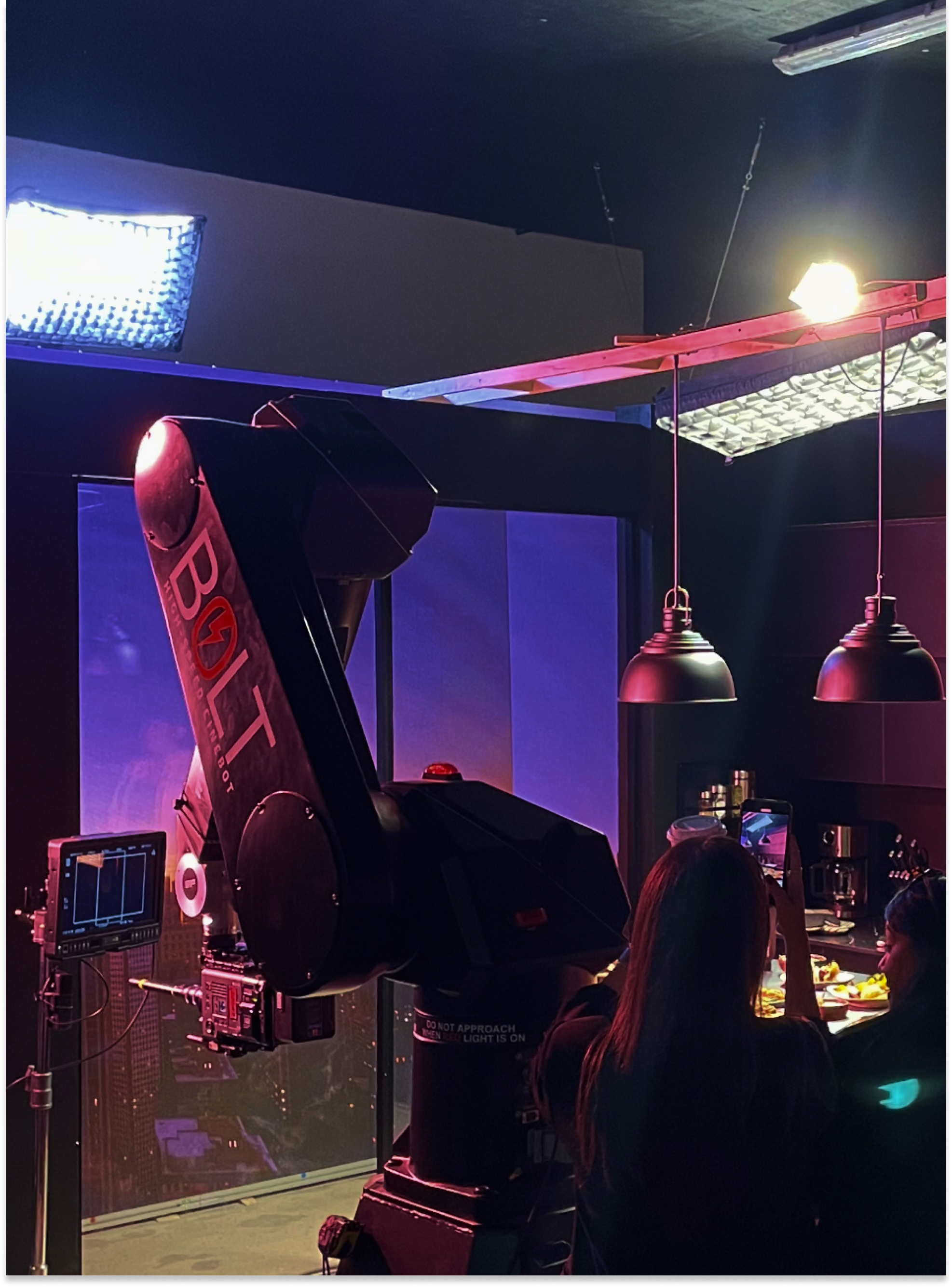
For a T-fal air-fryer production, the studio used its Bolt camera robot in Guadalajara alongside CGI. The project description includes budget constraints. An existing piece of equipment helped shape what the team could make. It is a useful glimpse of the business behind the vocabulary: people, tools, a brief and decisions about what the resources allow.
He enjoys a risk with a reason
Serrano's interest in execution does not exclude an appetite for an unconventional idea. His commentary on the advertising of 2019 considered Carlsberg criticizing its own beer and Doritos removing its name from a campaign. He was interested in the circumstances that made a surprising gesture believable.
Carlsberg's self-deprecation accompanied a product change. Serrano read it as an opportunity for the company to acknowledge that it had disappointed expectations and explain an improvement. The humor had a job. A brand making fun of itself still needed a reason for the customer to care.
Doritos presented a different puzzle: how much branding could be removed before recognition disappeared? Serrano's analysis emphasized the product's familiar shape and the audience's relationship with advertising. The gamble depended on something the brand had already earned. A lesser-known product could hardly expect a missing name to perform the same trick.
These examples suggest a consistent professional interest: the connection between a company's behavior and what its audience understands. Novelty can attract attention; the meaning of that attention still matters. His taste runs toward risks with a recognizable purpose. Even a mischievous campaign needs to know whose party it has entered.
On the other side of the microphone
Serrano also hosts The NOW Gen podcast, where the agency founder becomes the person asking questions. The show's premise is the pressure on brands to respond to changing expectations. His host biography calls him Ico, a less formal name for somebody who has already made an executive title unusually memorable.
The conversation format extends his working interests beyond the agency. Episodes have featured people involved in branding, creativity and consumer research. It gives him a place to examine how other professionals handle the same problems of relevance, timing and audience that run through his own writing.
His interview with Samsung Ads' Justin Evans at CES 2024, for example, addressed data and reaching consumers across channels. The setting suited his subject: a gathering full of new technology, with the more difficult question of what people will actually do with it waiting nearby.
There is a useful change of pace in becoming a host. The founder who has a clear proposition must also leave room for another person's explanation. A microphone can be a marketing instrument, of course. It can also force its owner to listen long enough for the interesting answer.
The next delay is usually upstream
In recent public posts, Serrano has used the phrase Strategic Velocity for 121's approach. One example concerns Land O'Frost, where the company name is also the name of one brand in a wider portfolio. He described ordering the website around company, brand, product and action. The sequence was part of the design problem.
That example brings the story back to his original preoccupation. Moving work forward requires knowing where it is supposed to go. A clearer structure can prevent the revision that would otherwise arrive later, wearing the perfectly innocent expression of a small change.
The career has grown around the space between a promise and its delivery. Local accounts became larger relationships. Recruitment and operations became specialist responsibilities. A founder became a writer and interviewer while continuing to argue for attention to the work itself.
Chief Speed Officer is an amusing title. Keeping it plausible takes rather longer than printing the business card.
Keep the conversation going
- 121 - agency website ↗
- Francisco Serrano on LinkedIn ↗
- The NOW Gen - interviews and conversations ↗
- The Thoughtful Entrepreneur - Guadalajara origins and brand adaptability ↗
- Agency Rockstars - Speed Over Perfection ↗
- Serrano’s essays on speed, hiring and brand risk ↗
- The NOW Gen at CES - Justin Evans of Samsung Ads ↗
- 121’s production films on YouTube ↗