A company anniversary usually leaves behind a cake, a photograph and a few speeches that nobody asks to hear twice. At Woodruff’s twenty-fifth, in 2017, something more durable changed hands: ownership. The advertising agency Terry Woodruff had started in Columbia, Missouri, became 100 percent employee-owned. His surname stayed on the business. The business acquired a different answer to the question of whom it belonged to.
That decision makes a useful entrance into Woodruff’s story. A founder’s name suggests a single author. An agency, however, depends on people whose names rarely make the door: the strategist, the writer, the account manager, the person who catches a mistake before a client does. Woodruff had spent years building around those people. The anniversary made their place in the enterprise more concrete.
“It’s literally giving them ownership.”
Terry Woodruff, announcing the 2017 transition
A detour through the music business
His route to that door was unusually indirect. Woodruff grew up in Mexico, Missouri, studied marketing at the University of Central Missouri and sold real estate before working in music. He moved into tour management, then public relations and video production. In Los Angeles, he co-produced LA Rocks! with actor Sherman Hemsley and later ran an independent production company.
The television venture failed to attract the audience its makers wanted. Film work followed, including documentaries. There is something reassuringly untidy about that sequence. A career can look carefully designed once somebody removes the experiments that did not work. Woodruff’s includes the experiments. The advertising founder had learned about audiences in businesses where attention could be difficult to win and very easy to lose.
He and his wife, Betsy, moved back to mid-Missouri after their daughter’s birth in 1990. In 1992, he opened his agency with an Apple Macintosh and a six-foot folding table. Betsy did design work while Terry brought in business. The equipment was modest; the experience behind it was less so. He arrived with practice in selling, organizing productions and making an idea presentable to strangers.
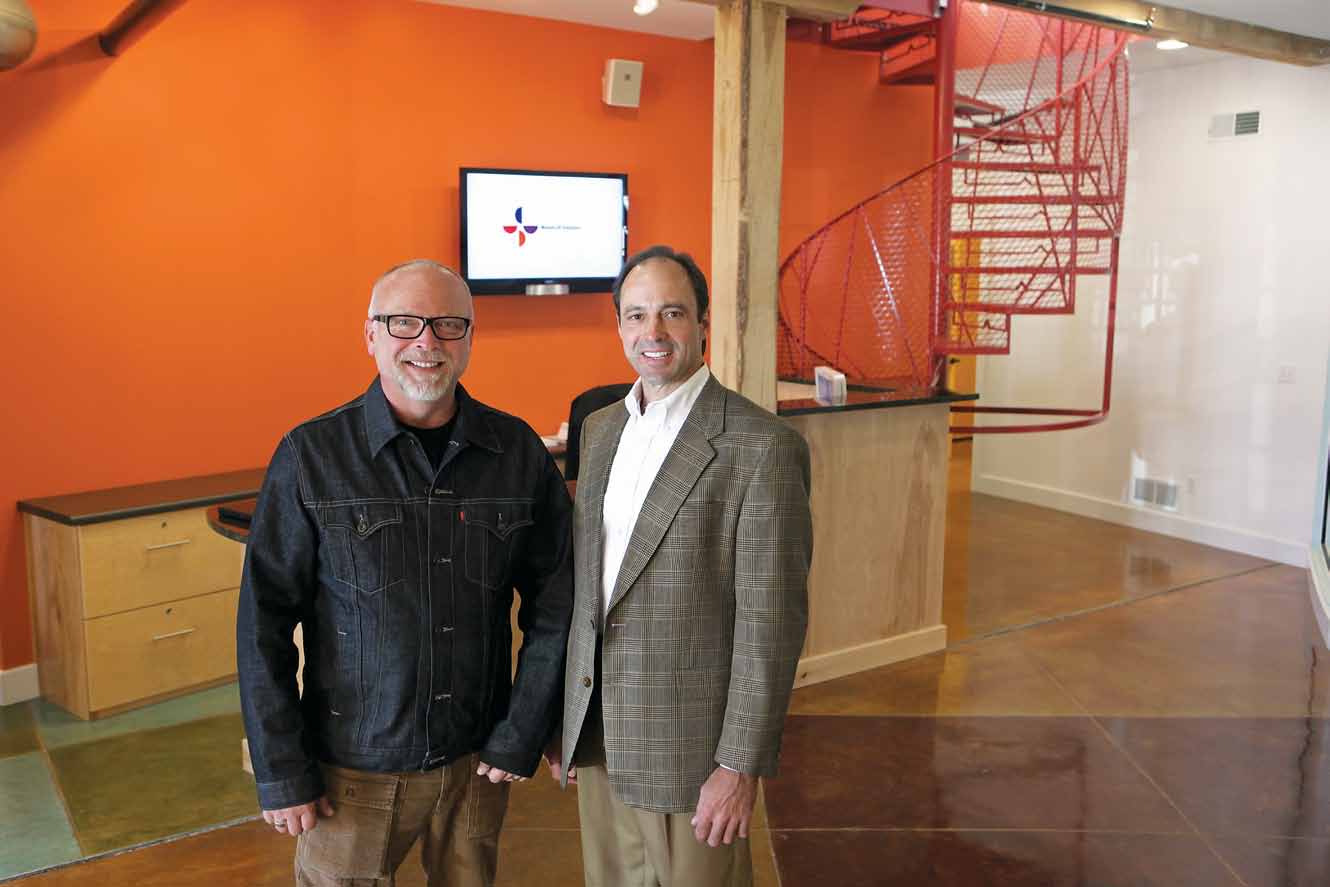
The friend who knew the bunny
Steve Sweitzer, a friend from high school, joined the agency in 2004. His advertising experience included Energizer and the American launch of Sony PlayStation. The two had taken different professional routes before putting their names together as Woodruff Sweitzer. One brought the founder’s commercial experience; the other brought a substantial creative career. A school connection had become a business partnership.
Their history also allowed for a little puncturing of professional dignity. Before one interview, Woodruff told the interviewer, “Don’t let him be humble.” It is a small remark, but a revealing one: he was selling his partner’s abilities as readily as his own firm’s. The pitch had a familiar audience by then. He knew exactly whom he was recommending.
Woodruff’s earlier music work included U2. Recalling the band years later, he joked, “I think you’ve peaked.” A founder who can leave that joke on the record has at least made room for the possibility that his judgment is fallible. It also makes a better story than an immaculate claim to have foreseen everything.
Growth needed somewhere to go
By November 2010, Woodruff was describing a business expanding across borders. The agency had offices in Columbia, Kansas City and Calgary. He reported annual growth of 20 to 25 percent over the preceding three years. Both Missouri offices had moved into larger premises, and the Calgary team was preparing to move too. The company was hiring for interactive strategy work.
Those figures belong to that moment. What matters in the longer story is the practical pressure underneath them. More work requires space, people and capabilities. Cross-border offices also offered an exchange of market knowledge. Woodruff described the sharing of insights between the United States and Canada as valuable to the agency’s work. Expansion gave the business more than another address to print on stationery.
Annual growth reported by Woodruff for the preceding three years.
Another expansion came in July 2012, when Woodruff Sweitzer acquired St. Louis agency Paradowski Creative. The announcement was specific about the attraction: digital and mobile expertise. The agencies would keep their individual names, and their organizational structures and staff would remain apart from founder Alex Paradowski’s planned departure. This was an acquisition with some respect for the existing furniture.
At the time, Woodruff Sweitzer had 63 employees and Paradowski had 24. The deal connected a growing agency with another creative business rather than requiring every new skill to be built from scratch. For Woodruff, growth meant finding people who could do work the company increasingly needed. Buying capabilities sounds abstract. In practice, it means acquiring colleagues with abilities you cannot conjure by changing a job title.
A bank anniversary gets a soundtrack
Music returned to Woodruff’s working life on a larger local stage. In 2007, Boone County National Bank marked its 150th anniversary with a free festival in downtown Columbia. More than 60,000 people attended. Woodruff, Sweitzer and Blue Note owner Richard King were its principal organizers and formed a company to continue running it. Roots ’N Blues ’N BBQ had a life beyond the bank’s birthday.
The continuation came with ordinary business complications. Sponsorships, VIP packages and vendor fees were supposed to cover the costs; the city contributed $100,000. The audience grew, but the festival still lost money. In 2009, plans to charge admission to some stages provoked controversy before the city council approved them. Popularity and financial sustainability had turned out to be different calculations.
That is the part of the episode worth keeping beside the crowd figure. A successful invitation can create an expensive obligation. People want the event again; someone has to pay for the next stage, the next performance, the next year. The former tour manager found himself involved in a familiar problem: getting the show to happen, with all the arithmetic that applause tends to conceal.
Woodruff also spoke for Thumper Productions before Columbia’s city council in March 2008, thanking officials for supporting the festival. The public record places the advertising executive in the civic work around the entertainment. A campaign had become a recurring negotiation among organizers, sponsors, officials and the people who wanted to attend.
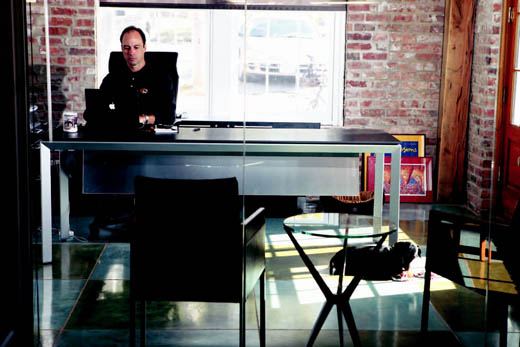
The business beyond the founder’s desk
There were other enterprises around the agency. By 2007, Woodruff had launched True Media Services, EVOKE Research and WS Express, covering media planning and placement, research, and retail advertising. His professional interests extended across the machinery that makes a marketing idea useful. Producing the message was one task. Understanding the audience and deciding where the message should appear were others.
That year he took part in a strategic communication summit at the University of Missouri’s journalism school. Photographs show him talking with Margaret Duffy and listening to a presentation alongside Lincoln Stephens. It is a quieter scene than a festival, but it belongs in the same career: an agency owner participating in a discussion about the business of communication rather than assuming the subject had been settled.
By 2017, the company’s working arrangements crossed office boundaries as readily as its earlier growth had crossed national ones. People in Columbia, Kansas City and Minneapolis could work together on the same account. Recruiting in several places widened the pool of available colleagues. The company’s public description of itself emphasized freedom and employee initiative. Ownership would give those words a more consequential setting.
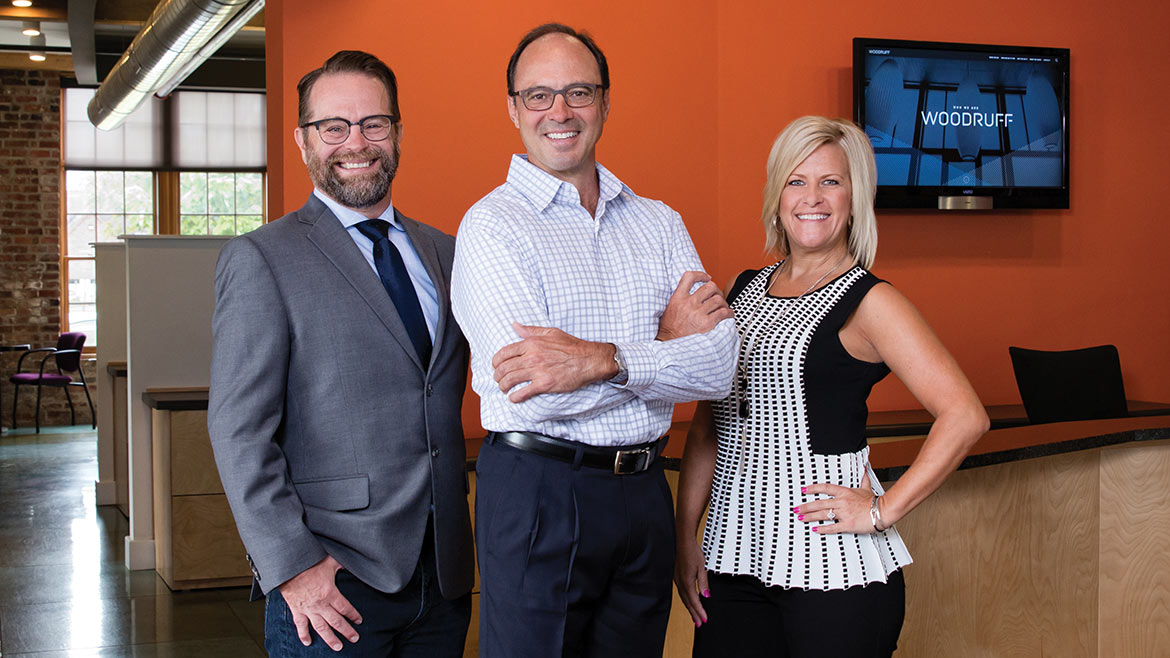
The anniversary that changed the paperwork
The 2017 transition came with a shorter name: Woodruff. The Canadian business became sister agency WS. In the United States, an employee stock ownership plan gave staff the opportunity to participate in the success they helped create. It was a structural change alongside a rebranding, with the shared history continuing across the border.
By September, the agency was described as fully employee-owned. Woodruff said the transition had been in preparation for several years and expressed confidence in the staff taking the company forward. The founder’s account of what the agency sold was spare: time and ideas. Both came from people. The ownership arrangement recognized that dependence in the organization’s financial structure.
One founder’s name.
A company held by its people.
There is an interesting modesty in a surname that survives such a change. A name can mark where a company began without deciding every part of its future. Woodruff had made a business of persuading clients to consider unfamiliar ideas. Here was an idea applied to his own enterprise, one that required the founder to let other people carry the result.
Other people write the next chapter
The agency now lists Shelley Thompson as chief executive. In 2026, it announced another planned succession: president and chief strategy officer Scott Kington would retire in January 2027, with Jenny Jones taking those roles and joining Thompson on the board. The announcement also described a new technology and AI leadership position. The company founded in 1992 was still adjusting its skills and responsibilities.
These are developments at the business Woodruff founded, and they make the ownership decision easier to assess over time. Leadership can change. New capabilities can arrive. The company can make plans that do not require the founder to occupy the chief executive’s chair. Continuity becomes visible in what colleagues are able to do next.
A folding table makes an appealing beginning. Shared ownership provides a more interesting destination. Between them lie the jobs, experiments, friendships and negotiations that made the agency possible. Terry Woodruff kept his name on the company. He also helped make room for other people to decide what that name would mean.
Follow the threads
- Woodruff’s website ↗THE AGENCY TODAY
- Terry Woodruff on LinkedIn ↗PROFESSIONAL PROFILE
- Risks = Rewards ↗COMO MAGAZINE · 2013 CAREER FEATURE
- Woodruff Sweitzer: What’s the big idea? ↗COMO MAGAZINE · 2010 INTERVIEW
- Listen: Terry Woodruff on the agency’s growth ↗AGWIRED · ZIMMCAST INTERVIEW · 2010
- The employee ownership announcement ↗WOODRUFF · APRIL 2017
- The agency’s next leadership transition ↗AGRI MARKETING · SEPTEMBER 2026