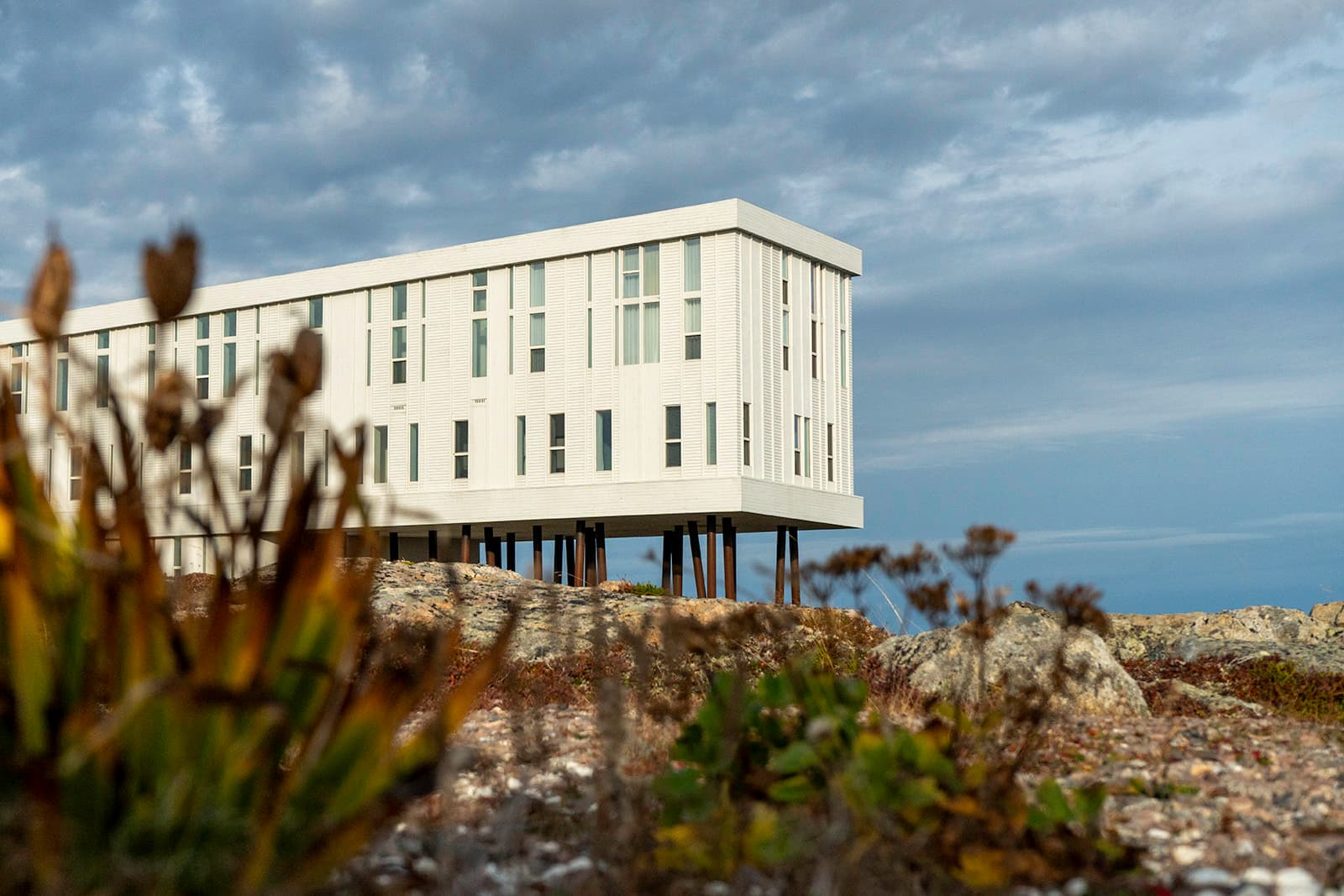
Fogo Island Inn looks, from the North Atlantic, like a long white dare balanced on matchsticks. The hotel has 29 rooms, floor-to-ceiling ocean views and nightly rates that Newfoundland and Labrador Tourism lists from CA$2,475 to CA$9,275 for the 2026 season. It cost CA$41 million to build. These figures invite the obvious reaction: who thought this arithmetic belonged on a small island off another island?
Zita Cobb did, alongside her brothers Anthony and Alan and the charity they created, Shorefast. Their answer was not to make an ordinary hotel in an extraordinary place. It was to build a piece of economic infrastructure disguised as a very good hotel. Shorefast owns the Inn; the community is its beneficial owner; every operating surplus goes back through Shorefast into work on Fogo Island. There is no private shareholder waiting at the end of the corridor.
01 / The job behind the job
A hotel built to keep a place working
Fogo Island had already lived through an economic lesson delivered with a hammer. The northern cod moratorium of 1992 devastated fishing communities across Newfoundland and Labrador. Cobb, raised on Fogo Island and later a technology executive, returned with capital and a question: what did the island possess that globalization could not cheaply copy?
The answer was not “luxury.” Any chain can order thick towels. Fogo had hard-won knowledge of the sea, a culture of making, blunt hospitality, strange seasonal light, foodways shaped by scarcity, and a landscape that refused to behave like a backdrop. Shorefast began with contemporary art and artist studios, bringing outsiders into productive contact with residents. Cobb has said they did not want a museum or a mausoleum for the cod fishery. The living skills needed a living market.
“If you walk into the inn and see only other visitors, we will have failed.”Zita Cobb, before the Inn opened
That sentence explains the product better than “five-star hotel.” Guests receive a room, all daily meals, non-alcoholic drinks, gratuities, weather gear, bicycles, most land-based excursions and an island orientation with a Community Host. They also encounter a local supply chain: furniture and textiles made through collaborations between international designers and Fogo Island craftspeople; menus fed by regional growers, fishers and foragers; stories carried by people who live there.
The customer is an affluent traveller prepared to cross inconvenient geography and stay at least three nights. The Inn also sells private buyouts, retreats and celebrations. Its competitors include remote, design-led lodges such as Clayoquot Wilderness Lodge and Nimmo Bay, plus far cheaper local rentals. The difference is not simply service. Fogo makes ownership and economic retention part of what the guest buys.
There is plenty of hotel in the proposition. The ground floor holds a dining room, tea room, art gallery, cinema and heritage library. The roof has wood-fired saunas, hot tubs and a view that can include whales or icebergs, depending on what the Labrador Current has delivered. Meals run from a daybreak tray to a departure lunch, with a 24-hour in-between menu for the hours when three proper meals somehow have not settled the matter. Guests can eat at other island restaurants under the full-board arrangement. Alcohol, helicopters, boats and certain excursions remain extra.
This bundling solves two problems at once. For the traveller, it removes the planning anxiety of a remote destination with limited infrastructure and unpredictable weather. For the operator, a three-night minimum and inclusive rate create enough time and revenue to deliver the community encounters that make the trip distinct. A conventional room-only rate would encourage guests to treat the Inn as an object to photograph. The product instead nudges them outward, where other residents and businesses can participate in the visit.

02 / Follow the dollar
Luxury, with the accounting left visible
The nightly rate can sound indecent until the cost structure enters the room. Labour at the Inn has historically consumed roughly half of a guest dollar, well above the conventional hotel share Cobb has described. A published 2017 Economic Nutrition label for a sample CA$1,875 night assigned 49 percent to labour, 11 percent to food and room supplies, 16 percent to operations and administration, and 15 percent to Shorefast. It estimated that 63 percent of the money stayed on Fogo Island.
A sample night's economic nutrition / 2017
This is the Inn's sharpest invention because it converts “supports the local community” from brochure perfume into a debatable claim. A guest can ask why more food is not local. A manager can see where leakage occurs. A supplier becomes part of the value proposition rather than an invisible cost to squeeze. Transparency does not make a high price affordable, but it makes the choices inside that price legible.
The place-based flywheel
The model extends beyond the rooms. Furniture designed for the Inn helped create Fogo Island Workshops. Fogo Island Arts attracts residents who become ambassadors for the place. Community Hosts transform local knowledge into paid expertise. Shorefast's 2022 impact report estimated that the Inn's gross revenue supported CA$32.1 million in provincial GDP through direct, indirect and induced effects. The same report said Shorefast employed a quarter of the island's labour force. Those are ecosystem numbers, not an Inn profit-and-loss statement, but that is precisely the point.
03 / Friction is real
What failed first - and what still can
The first failure was persuasion. When Shorefast sought government participation, an early response described the proposal as not normal, practical, reasonable or rational. Conventional hotel math agreed. CA$41 million divided by 29 keys is a terrifying number if the only objective is financial return. Cobb's frame changed the decision: losing money was a risk, but losing a working culture was the larger one. Roughly three quarters of construction funding ultimately came from private donations, most from Cobb, with public grants filling part of the balance.
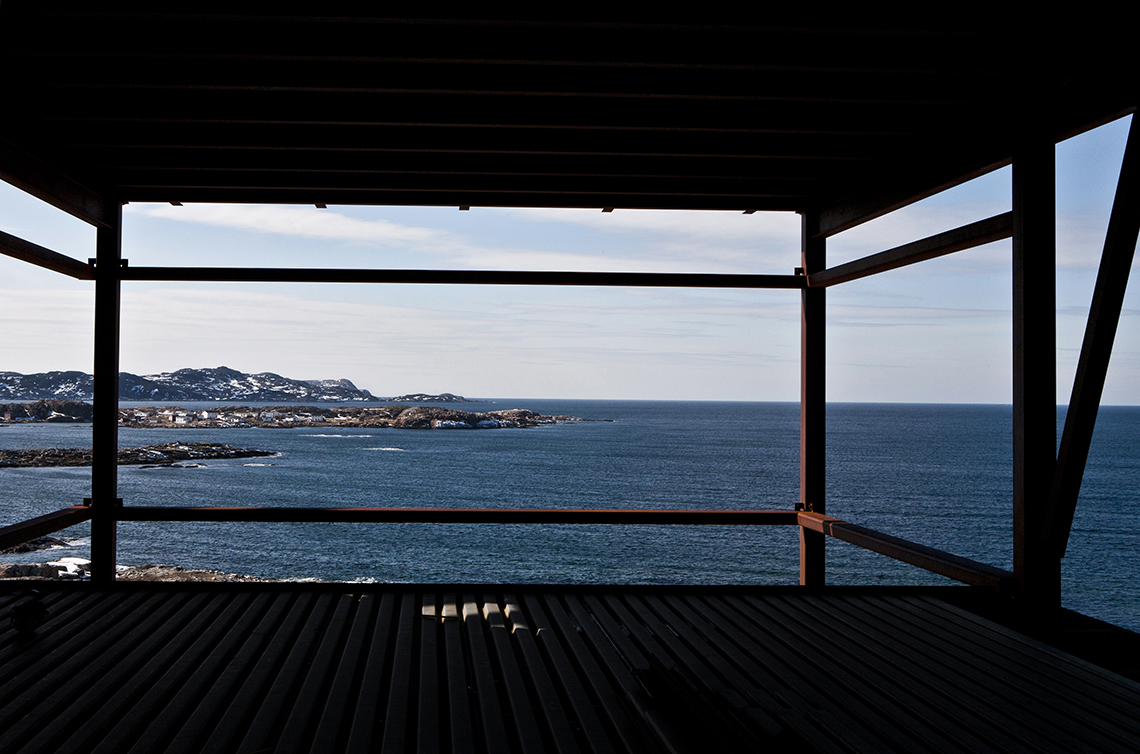
The physical build was punishing, too: a roughly 300-foot-long structure on exposed rock, built mostly by islanders and finished inside and out with wood. Then came normal operations in an abnormal location. Ferries and weather complicate arrivals. A small labour pool makes specialist recruitment difficult. Housing and limited services make relocation harder. Seasonality constrains productivity. The pandemic stopped travel and forced the Inn to close, revealing the obvious weakness in any visitor economy: when visitors cannot arrive, the flywheel stops.
Recognition helps but brings its own risk. The Inn joined Relais & Châteaux in 2023, received Three Michelin Keys in 2024 and retained them in 2025. Attention can fill rooms; it can also inflate land, expectations and resentment. Shorefast's answer is limited scale. Twenty-nine rooms cannot produce mass tourism. It can, however, support high-value demand that gives cooks, guides, growers and makers more room in the economics.
The operating calendar is another quiet constraint. Public tourism listings show an April-through-October 2026 season, with reopening planned from March in 2027. That protects the fiction that a remote hotel can behave like an urban one year-round. It also concentrates work and revenue, a real weakness for employees and suppliers. The Inn cannot repeal geography; it can only price the inconvenience honestly, coordinate arrivals carefully and build enough value into the stay that the journey feels integral rather than defective.
04 / The stealable bits
Copy the plumbing, not the building
Most towns do not need a white X on stilts. They can borrow the operating logic at a much smaller price. The essential move is to begin with assets residents recognize, attach customer demand to them, and design ownership so value does not immediately leave.
A five-move field guide
Do not try this when...
- The destination has no credible premium demand or practical route for guests to arrive.
- Capital expects a fast exit, conventional margins or control that conflicts with community ownership.
- Residents have not shaped the project and are being cast as scenery or low-cost labour.
- Local housing, transport or ecology cannot absorb even a carefully limited rise in visitors.
- The experience could be copied anywhere by swapping the place name on the menu.
Fogo Island Inn does not prove that an expensive hotel saves a town. Fishing remains vital; the island still faces demographic, housing, service and labour constraints. Nor does charitable ownership excuse every dispute. It proves something narrower and more useful: tourism spending can be designed to circulate, and a place can sell access to its culture without selling the culture itself.
The building gets photographed because it is strange. The business deserves study because it is specific. One is hard to copy. The other begins with a spreadsheet, a roomful of residents and an awkward question for every expense: where does this money go?