Fasil KK gave a city a vote of confidence in the most practical currency a software founder possesses: an assignment. After starting IOCOD in Bangalore and moving the business to Kozhikode a few years later, he spoke about trusting the Kerala team with work from his New York office. Geography supplied the distance. His engineers supplied the reason to disregard it.
“Kozhikode is rich with highly educated and skilled youth,” he said. It is an uncomplicated sentence with consequences. Admiring a workforce costs very little. Putting a client's work in its hands requires a founder to mean the compliment. In Fasil's account, the confidence had already travelled beyond polite words and into the company's working arrangements.
That choice gives his story its shape. There is a business to build, certainly, and software to deliver. But the people doing the building remain close to the center: engineers in Kozhikode, a colleague attending a developer conference, a specialist entrusted with testing, an employee moving on. A founder's portrait can be assembled from these smaller decisions. They have the advantage of having happened.
The work crossed borders.
The team stayed in view.
Bangalore was the starting point. Kozhikode became the next chapter. When Fasil discussed the move in a Cyberpark interview shared in 2022, he described a company that had begun in Bangalore seven years earlier and shifted to Kozhikode after that. The sequence matters more than an anniversary. He had experience of one technology center and chose to build in another.
His explanation emphasized the capabilities of Kozhikode's young workforce. The city, in his telling, had people equipped to take on work connected to the New York office. That is a specific claim about responsibility. The engineers were being asked to perform work for a business whose relationships extended beyond their immediate surroundings.
It is tempting to make every relocation a grand rebellion against the map. Fasil's version is more useful. He talks about the team. For someone reading his story from another city, that changes the question. Instead of asking whether a place sounds sufficiently fashionable, ask what its people can deliver when given the opportunity. Fashion has never been particularly good at debugging.
“Kozhikode is rich with highly educated and skilled youth.”
Fasil KK, in his Cyberpark interview
with delivery
crosses borders
An office opening, with neighbours in the room
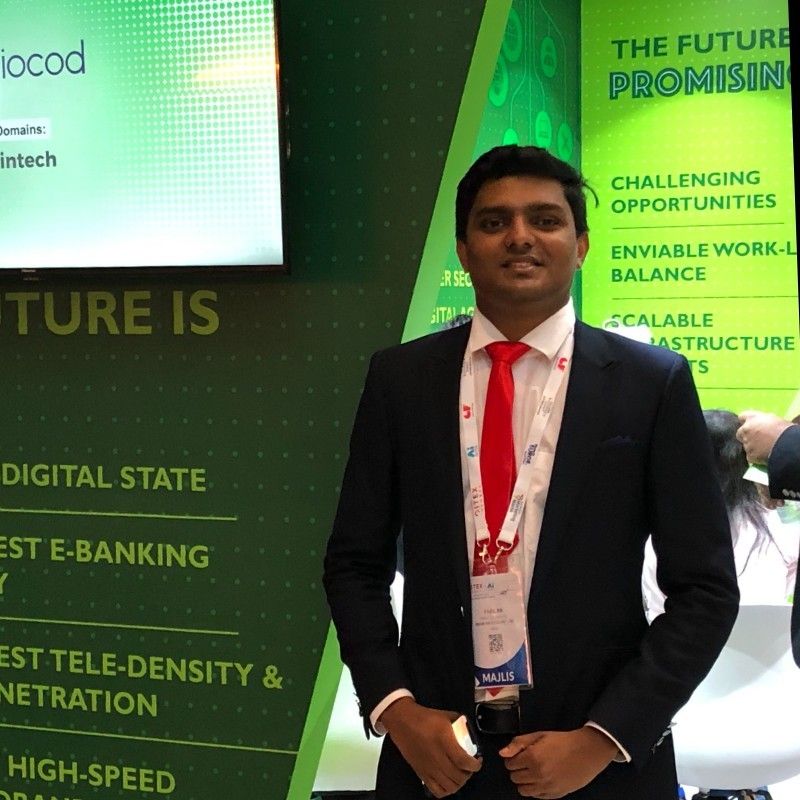
On 1 February 2021, IOCOD marked an inauguration at Cyberpark in Kozhikode. Fasil was there as founder and CEO. So were people from the local technology community: Nireesh C, Cyberpark's general manager for marketing and operations, and CAFIT representatives Haris P T and Abdul Gafoor. The company was establishing itself in a place with institutions and professional neighbours.
The Indian corporate entity, IOCOD Infotech Private Limited, had been incorporated on 19 October 2020, with Fasil appointed a director that day. That formal step sits between the earlier Bangalore beginning and the Cyberpark inauguration. A business can have a working history before it acquires a particular corporate form; the paperwork marks an event of its own.
An opening ceremony provides an agreeable photograph and a firm date. Its longer significance lies in what follows: a place to work, people to work alongside, and relationships that can continue after the guests have gone. In Fasil's story, the office belongs beside the earlier decision to trust local engineers. One gives the company a location; the other gives the location a purpose.
CAFIT would later celebrate IOCOD's appearance in Mathrubhumi's Silver Canopy Kozhikode edition, recognizing Fasil and Fasna K K in the city's technology community. The connection runs through both moments. A software company grows among other companies, park administrators and colleagues who recognize its progress. Even a business serving distant clients has a neighbourhood.
The useful art of handing work over
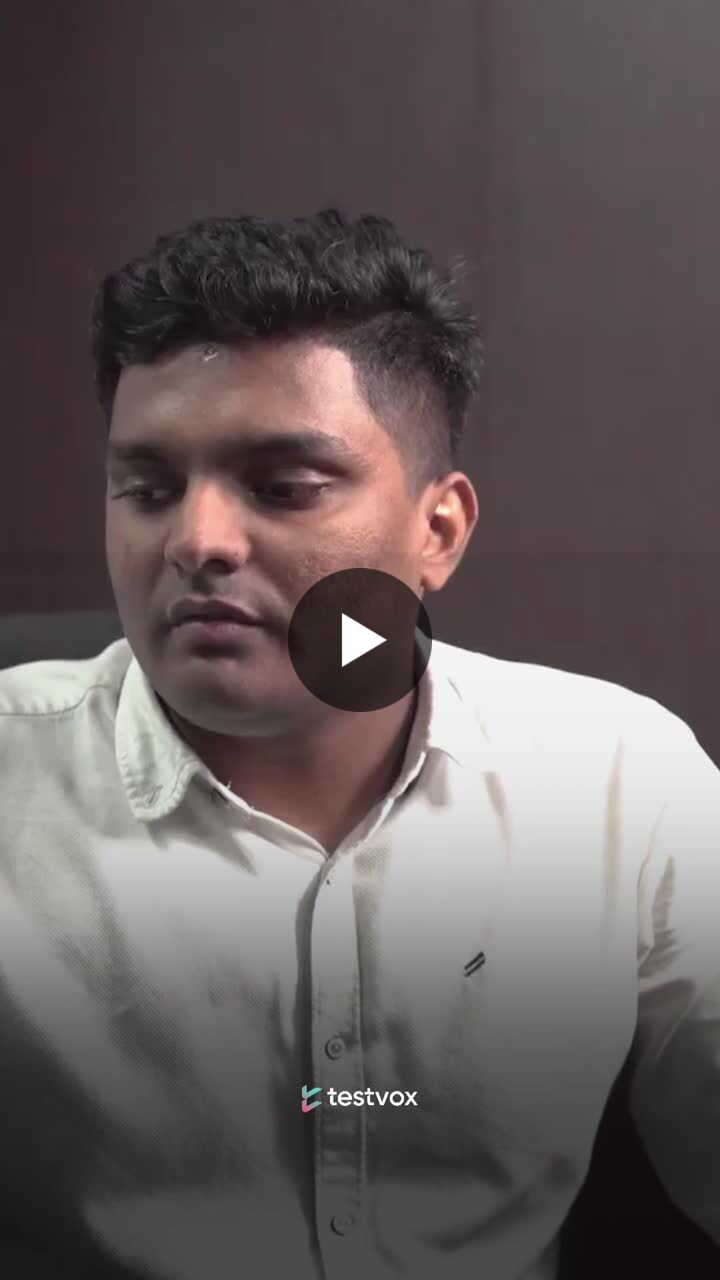
Fasil's account of working with Testvox gives another view of his job. IOCOD needed focused help with software testing and quality assurance. He described beginning with a trial engagement, finding that the testing work met the company's needs, and recommending the provider to other businesses. The story is short, practical and concerned with whether somebody can take responsibility.
That concern resembles the confidence he expressed in the Kozhikode team. A founder has to decide which people should handle which tasks. Sometimes the answer is a team inside the business. Sometimes it is a specialist outside it. In both cases, the useful part of trust is the responsibility attached to it.
Software testing offers little glamour to a company portrait. It deserves a place anyway. An application can look splendid in a presentation and still require patient examination before people should depend on it. The small indignities of software tend to arrive after the applause: a troublesome interaction, an overlooked condition, an assumption that turns out to have been rather optimistic.
In the testimonial, Fasil discusses a working relationship through its results. He explains the need, the trial and the recommendation. It is a modest window into running a software company, but a clear one. Somebody has to make sure a promise reaches the people capable of keeping it.
A conference ticket, and what came back
There is an especially human detail in IOCOD's account of Laracon India 2025. Project manager Niyas N described attending the developer gathering in Ahmedabad and thanked IOCOD and Fasil for making it possible. He wrote about meeting the Laravel community, hearing technical talks and bringing ideas back to the team.
The thank-you does useful work in a profile. Learning is easy to praise in the abstract. Here it had a destination, an event and a colleague who went. The account connects Fasil to an opportunity somebody else experienced directly. It brings the story down from the executive title to a decision that affected a person's working life.
Niyas described sessions on subjects including application scaling, multitenancy and integrating AI into PHP development. His interest was in what the experience could contribute to real projects. The trip therefore fits neatly into the larger company story: engineers trusted to deliver work also need opportunities to encounter new ways of doing it.
A conference has its own pleasures, of course. There are conversations with people who understand a technical problem without first requiring a family tree of the entire application. There is relief in discovering that other teams wrestle with similar questions. Niyas's account emphasized learning and community. Fasil's part in making the attendance possible is the concrete detail worth keeping.
Ahmedabad · Developer learning · Ideas brought back to the team
The colleague who was leaving
Another glimpse arrives at the opposite end of an employee's time with the company. In a public farewell, Jishad P thanked colleagues and specifically acknowledged Fasil and Fasna for their leadership and support. Fasil replied by appreciating his contributions, expressing pride in what he had achieved and wishing him well.
One exchange cannot describe every day inside a company. It can still tell its own small story. A departing colleague chose to express gratitude, and the founder responded with recognition. The relationship was given a courteous ending in public, with room for the employee's next chapter.
That belongs in the portrait alongside the assignments and the conference. The people in a founder's story have careers of their own. They learn, contribute and sometimes leave. Keeping them visible prevents the company from becoming a solitary performance with a payroll attached. Fasil's public reply gives a colleague credit for the work he did.
What the address makes possible
IOCOD's present work spans custom software and financial systems, with services extending to applications, integration, design and testing. The company's account of its process places understanding the problem before building and continuing support after delivery. For Fasil, those activities sit behind the founder-and-CEO title: a business depends on coordinating people whose expertise has to meet a client's need.
The company describes working with banks, fintech businesses and enterprises. Its offerings include API and system integration alongside web and mobile applications. Those tasks help explain why the testing conversation belongs here. Connecting services, handling financial workflows and maintaining applications all make reliability part of the job, extending the obligation beyond the first demonstration.
In February 2026, IOCOD shared another office-inauguration video, bringing an opening and a team celebration into the same announcement. An expanded workspace gives this continuing story a physical marker. The earlier Cyberpark ceremony is no longer the only office milestone in view. A founder can point to premises, but their value is eventually measured in the work people can do there and the relationships they can sustain.
Seen through the people around him, his story becomes quite tangible. Kozhikode engineers receive responsibility for international work. A testing partner takes on a defined need. A project manager returns from a developer gathering with ideas. A departing employee receives good wishes. These are different relationships, each carrying a piece of what a software company must do.
The Bangalore-to-Kozhikode move remains the decisive thread because it places those relationships somewhere specific. Fasil saw capability in the city and trusted it with assignments. A city can have educated people for years before enough employers give them the work their abilities warrant. His interview describes one founder choosing to put that confidence into practice.
There is something pleasingly direct about the result. To understand what a founder believes about talent, follow an assignment. See who receives it, who supports the person doing it, and where the finished work is expected to go. In Fasil KK's case, that trail leads to Kozhikode, with New York already in the conversation.