A model walks past a row of spectators. Most of us see a jacket, a silhouette, perhaps a handbag costing more than our sofa. A television engineer sees something else: texture, movement, colour and the problem of getting all three into somebody’s living room. FashionOne built a business where those two ways of looking meet. Its revealing moment came on September 1, 2015, when a specialist fashion network joined the early experiment in global 4K broadcasting.
- Fashion, lifestyle and entertainment, packaged as a round-the-clock channel.
- A 2015 Ultra HD launch backed by satellite partners SES and MEASAT.
- The transferable idea: own useful content and make it easy for partners to distribute.
There is an agreeable absurdity here. An industry devoted to appearances required an unusually serious investment in everything viewers would never see. The camera was merely the invitation. Behind it stood editing systems, broadcast schedules, rights agreements and satellites. FashionOne’s story becomes more interesting when you stop looking exclusively at the clothes.
01 / A runway cannot fill the whole day
Launched in 2010 as a subsidiary of Bigfoot Entertainment, the network was founded by Michael Gleissner. Fashion television already had a familiar alternative in FashionTV. FashionOne’s proposition stretched beyond the procession of models: original reality programmes, documentaries, travel, fitness and entertainment alongside fashion-week coverage. A channel needs a reason to keep watching after the final model disappears backstage.
Consider its programme cupboard. Model Yoga brought fitness into the schedule. Fashion On A Plate applied the vocabulary of style to food. Design Genius challenged designers to work with unconventional materials for a $20,000 prize. These were different entrances into the same subject, allowing a specialist network to behave more like a lifestyle channel.

For a viewer, the usefulness is straightforward: see collections, discover designers and follow stories without an invitation to a show. For a television operator, the product is a programmed channel with a recognizable subject. FashionOne sits between fashion’s event calendar and the distribution businesses that need something to show their subscribers every evening.
02 / The bill arrived backstage
The company began upgrading production from HD to Ultra HD in 2014. By the following September, Fashion One 4K was launching outside Europe while the European service used the name Fashion 4K. SES supplied satellite distribution and managed broadcast services; MEASAT carried the channel into Asia-Pacific and neighbouring regions. Partners promoted it as the first global Ultra HD channel.
The work underneath that announcement was considerable. In 2016, chief operating officer Gleb Livshits described more than 110 production teams covering over 45 fashion cities. Those teams needed new cameras. Editing, rendering, playlist generation and playout across seven worldwide feeds also needed rebuilding. Change the picture format and the consequences travel through the entire factory.
“Fashion One has been painstakingly re-engineering its entire workflow.”
Gleb Livshits, chief operating officer · 2016
Its early financing was reported at $14 million in September 2010, supporting production and distribution expansion. That figure belongs to the network’s earlier growth, rather than serving as a price tag for the later 4K launch. The upgrade’s practical cost lay in equipment and production work across a dispersed operation. A fashionable announcement still requires an unfashionable implementation budget.
8.29m pixels
2.07m
3840 × 2160 vs 1920 × 1080. More detail also means more work throughout production.
03 / A signal needs a second customer
Satellite coverage made the launch sound enormous. SES put technical reach at 100 million households in North America, 23 million in South America and more than 116 million in Europe. These numbers described the potential distribution footprint in 2015. They did not count people watching. A signal above a house is a possibility; an audience is a behaviour.
Potential households within announced satellite distribution footprints. These are historical figures, not viewer ratings.
The operator is therefore a second customer worth understanding. FashionOne’s distribution history includes Indonesia’s First Media and Spain’s ONO. In 2016, MultiChoice added it to DStv in place of FashionTV. Such agreements turn a network’s catalogue into something accessible inside an existing television package. The business involves winning carriage as well as winning attention.
Early Ultra HD also encountered a hardware constraint. The industry needed compatible receivers in homes, not merely attractive new screens. Fashion 4K offered an HD preview alongside its European Ultra HD service at launch. That accommodation shows the dependency: better pictures become useful when the receiving equipment and distribution chain can deliver them.
04 / The wardrobe has a passport
FashionOne’s executives emphasized ownership of content rights as a way to offer partners flexibility across television, mobile and on-demand services. The commercial logic is persuasive: a programme can travel more easily when permission travels with it. Broad distribution creates opportunities for reuse, while a recognizable library gives operators something more substantial than a stream of interchangeable clips.
And the library could be curious. Eco Fashion featured Icelandic fish-skin leather, footwear made from discarded tyres in Indonesia and accessories using old Hong Kong taxi upholstery. Here was fashion television with an unusually interesting rubbish bin. These stories gave viewers a way to think about materials and makers, beyond the question of what somebody famous wore.
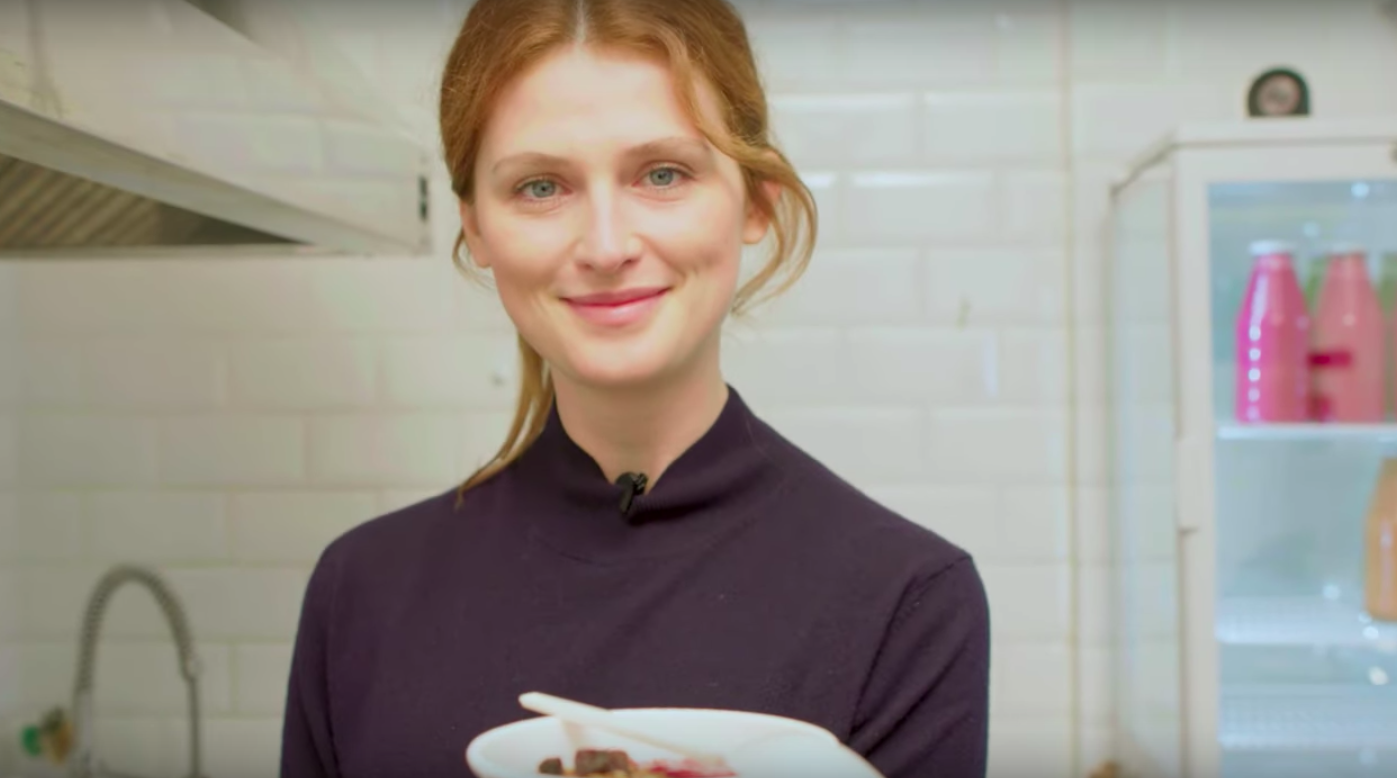
The partnerships widened the frame. In October 2018, a FUEL TV agreement brought action-sports lifestyle and urban culture into the content strategy. The next month, FashionOne announced work with Virtual Xchange Group on programming for African audiences. Global distribution was being paired with local production. A satellite does not tell you which stories a particular audience wants.
05 / What travels beyond fashion
For a producer or niche publisher, the useful sequence is visible: build material people want, secure the rights needed to reuse it, and work with distributors who already reach the intended audience. FashionOne’s expertise joins fashion coverage to programme production and broadcast delivery. Those capabilities have to cooperate; an elegant catalogue stranded without carriage remains an elegant catalogue.
The approach depends on enough programming to sustain a channel, partners willing to carry it and audiences equipped to receive it. Today’s fashion viewer can also turn to publishers, creators and brands’ own streams. FashionOne’s distinguishing historical bet was to package a wider fashion world for television, then improve the machinery that delivered it. The runway supplied the glamour. The machinery gave it somewhere to go.
Watch the clothes. Follow the makers.
Explore the FashionOne website and programme catalogue. Watch selected films on YouTube, or the Eco Fashion: Indosole episode. Read Ashley Jordan’s interview about the network’s programming ambitions.