In 1995, Farsheed Ferdowsi put a bowling ball and a marble in front of a potential investor. His payroll company, PayMaxx, needed $500,000. The question was familiar: how could a small business compete with ADP and Paychex? Ferdowsi flicked the bowling ball. It stayed put. He flicked the marble. It moved. His answer required very little PowerPoint.
The visitor was Nashville entrepreneur Clayton McWhorter, accompanied by investment adviser Bill Cook. In Ferdowsi’s telling, Clayton Associates invested a few weeks later. The demonstration made smallness look useful. A young company could change direction while a larger rival was still arranging the meeting about changing direction. Decades later, Ferdowsi would give the recollection an appropriately hazardous title: Dancing with Elephants.
It is an appealing opening for a career usually described in less animated terms: payroll, software, recurring revenue, acquisitions. Yet the quieter details are equally revealing. Ferdowsi studied structural engineering. He wrote a spy novel. He spent decades researching his father’s life. And after building PayMaxx and Inova Payroll, he began publishing essays that ask how much a bank balance can actually explain about a person.
A civil engineer takes a software detour
Ferdowsi came from Tehran to Nashville in 1973, aged eighteen, to study civil engineering at Vanderbilt University. He continued to the University of California, Berkeley, earning a master’s degree in structural engineering. His education was in the things that hold weight, endure stress, and remain standing. The business applications would arrive through a different door.
Back at Vanderbilt for further study, he encountered a difficult job market for civil engineers. Computer programming, learned during his engineering education, offered another route. He began serving business customers, including a brother who operated a restaurant franchise with multiple locations. In 1979 he founded Access Data, a software development business. A skill acquired for one profession became the foundation of another.
The transition helps explain why his later writing so often reaches for physical objects and forces. He likes a business idea that can be demonstrated. The bowling ball and marble belong to the same intellectual toolbox as his more recent airplanes, prisms, and batteries. An abstract argument becomes easier to inspect when something in it can roll across a table.
Payroll gets out of the office
PayMaxx developed out of that software work, and payroll became the recurring problem around which Ferdowsi built a national business. The industry offered a dependable supply of deadlines. Employees expected to be paid; employers needed a process they could trust. There was room for better technology, provided customers could use it when the next payroll arrived.
PowerPayroll, launched in 1999, moved the work onto the internet. By December 2002, it accounted for a quarter of PayMaxx’s annual revenue. Its practical attraction was portability: customers could run payroll from an internet-connected computer without installing software. One business owner completed the task from an internet café in Amsterdam. A back-office chore had acquired a surprisingly international itinerary.
At the time, PayMaxx had annual revenue of about $12 million. Its internet service gave it a way to compete with larger providers that had yet to introduce an equivalent offering. The Amsterdam detail makes the change tangible. Customers were buying freedom from a particular machine and a particular office, along with the payroll processing itself.
Contemporary Nashville reporting also described a company with a PC-based product for larger employers, a separate internet offering for smaller businesses, and customers including Tractor Supply and Gibson Guitar. PayMaxx appeared on the Inc. 500 list four years running. The small company had built enough substance to make its investor’s confidence look considerably less speculative.
The second company keeps the human voice
Ferdowsi sold PayMaxx to CompuPay in July 2005. He remained involved with the combined business as chief development officer until August 2007, then launched Victor Hope Capital to pursue private investments and real estate projects. An exit had opened several doors. Walking through all of them would, admittedly, make retirement rather difficult to schedule.
Inova Payroll followed in 2011. Its founding proposition placed personal service alongside software: employers should know their support contacts and develop a continuing relationship with them. This mattered in a market where the product could sound interchangeable from one provider to another. A payroll system still needed people who could understand an employer’s particular question.
In 2017, Inova reported three-year growth of 112 percent and its second consecutive appearance on the Inc. 5000. Ferdowsi credited the team and the care given to employer clients. The company described a consultative start to each relationship and attention to the transition onto its service. Growth was being pursued through the decidedly unglamorous work of making a change less troublesome.
Reported revenue growth over three years.
Second consecutive year on the list.
When Inova received an Association for Corporate Growth Tennessee award in 2020, Ferdowsi spoke about legacy. The company was one of twenty businesses whose founders were recognized at the Nashville event. An award ceremony naturally invites a little retrospective polish. His emphasis nevertheless fits the longer pattern: the business mattered as something built with other people, capable of continuing beyond its founder.
Knowing when to give someone else the controls
Joe Schweppe came into Inova through its combination with Integrated Payroll Services and became president in 2022. On July 1, 2023, he became CEO. Ferdowsi moved to founder and executive chairman. That sequence gave the handover a period of shared work before the final change of title.
Ferdowsi’s later essay The Physics of Growth offers a way to understand such transitions. He compares a growing business with an aircraft moving from the gate to the runway and then into flight. Each stage brings different forces. The founder who can manage everything directly at the beginning eventually needs new systems, new skills, or people equipped for the next stage.
The engineering is an analogy, rather than a formula for running a company. Its useful point is the need to adapt. A bigger operation cannot indefinitely depend on the habits that made a small one workable. In Ferdowsi’s account, recognizing that change takes humility. Being the person who started a business does not settle every question about who should lead its next chapter.
He also noticed something Schweppe did that he wished he had done himself: meeting each new employee personally. In his August 2026 leadership essay, Ferdowsi praised the investment of time and said he would adopt it if he started another company. It is a revealing compliment from a founder to his successor. Experience, in this telling, still leaves room to borrow a good idea.
“If it isn't being fixed, it's going to break.”
Farsheed Ferdowsi, The Physics of Leadership
A different kind of family business
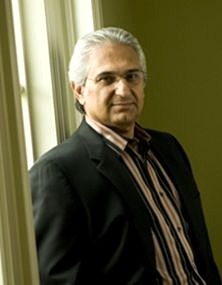
Alongside the companies, Ferdowsi built a life as a writer. His 2009 novel, Mushroom in the Sand, follows a fictional Iranian-born physicist and a nuclear intrigue. In 2012, a Vanderbilt international politics course included it on the reading list. The former engineering student had returned to the classroom by the rather circuitous route of writing a thriller.
Under the Staircase: A Martyr’s Journey, published in 2022, required another kind of attention. It tells the life of his father, Fatollah Ferdowsi, a businessman and member of the Baha’i Faith who was executed in Iran on January 4, 1982, because of his religious beliefs. Farsheed spent more than three decades researching the biography and its historical setting.
Some of that work took place in conversations with his mother. Over four months in the summer of 2006, he sat with her on Saturdays to record her memories. In explaining the book’s intended audience, he imagined concentric circles reaching from the wider public toward friends and relatives, with his children Kimia and Donesh at the center.

His business memoir, Payroll Pioneer: Scaling Two Companies to National Prominence, brings the two strands closer together. It treats capital, acquisitions, marketing, and company culture as parts of a personal journey. The title promises payroll; the range reflects a founder who has spent years thinking about what happens around the spreadsheets as well as inside them.
After the exit, a wider measure
UKG announced its agreement to acquire Inova in December 2025. By then Inova served more than 4,000 businesses and had appeared on the Inc. 5000 eight times. In a subsequent public message, Ferdowsi marked the close of his involvement, thanked colleagues and investors, and said his attention would turn to Victor Hope Capital. Payroll had occupied decades; it would no longer occupy his working life in the same way.
His September 2026 essay, The Physics of Success, turns to a prism. What looks like a single measure separates into several elements, including relationships, meaningful work, and financial security. The comparison suits someone whose own record contains enterprises, books, family history, and civic service. He has numbers to point to. He is increasingly interested in what those numbers leave out.
The marble demonstrated a small company’s ability to move. The later writing asks where all that movement should lead. For Ferdowsi, the question has survived two payroll companies and their exits. An engineer may spend a career calculating what a structure can bear. Eventually, he also gets to decide what he wants it to hold.