Samantha Owens Pyle had a number in mind: a million dollars in annual revenue before her agency turned ten. Green Apple Strategy reached it in 2019, three years ahead of its tenth birthday. For a business built around patient relationships, it was a satisfyingly punctual arrival. But the more revealing part of Pyle’s story is what she chose to build on the way there: an agency whose creative team could change with the job.
She called that network The Orchard. It is an unusually apt name in an industry that can spend a remarkable amount of money naming things. Writers, designers, developers and other specialists work alongside a core team responsible for strategy and client relationships. Pyle had founded the Nashville business in April 2012 after working on both the corporate and agency sides of marketing. She wanted room to choose the people a client needed.
There is a personal concern underneath that arrangement. As an agency employee, she had seen layoffs and staff turnover. Building her own company gave her a chance to reconsider the structure that surrounded the creative work. The result makes her an interesting kind of founder: someone whose business idea includes a theory about how people ought to work together.
A company assembled around the assignment
The Orchard puts that theory into practice. Green Apple’s permanent team handles the continuing relationship, strategic direction and coordination. Freelance specialists contribute particular crafts, including content, design, search, video and email marketing. A client’s requirements determine the combination. The model gives Pyle a way to offer several disciplines without employing every specialty full time.
Consider the range of work involved in telling a business’s story. A website needs writing and development. An event needs planning and publicity. An email campaign needs someone to build it and someone to ask whether it worked. These are related jobs, but they require different abilities. Pyle’s structure acknowledges that distinction and makes coordinating those abilities part of the agency’s work.
A team chosen for the work at hand.
Her company’s account of the model also points to lower office overhead and the ability to recruit beyond one city. Those are operating choices with human consequences. A smaller permanent structure was intended to give employees more stability, while a continuing flow of assignments could keep freelancers involved. The promise depends on the unglamorous middle of agency life: clear briefs, reliable communication and somebody keeping track of the moving parts.
Pyle’s work stretches across business and consumer marketing. Green Apple has served organizations in fields ranging from education and financial services to solar technology. That breadth makes the coordination more than an administrative detail. The people doing the work have to understand the customer, the business and the reason a particular message should matter.
The client who keeps coming back
Acquiring an account makes a good announcement. Keeping one produces a quieter kind of evidence. In Green Apple’s 2023 award entry, the company reported that 75 percent of its clients had been with the agency since 2017 or earlier. Treat that as a dated company snapshot, rather than a permanent retention rate. Even with that qualification, it explains the emphasis Pyle places on relationships that outlast an individual campaign.
The same entry described an annual account growing from $30,000 in 2013 to $540,000 in 2023. Those figures measure the agency’s engagement with that client, rather than the client’s revenue. They suggest a relationship that expanded as the assignment expanded. For Pyle, sustained work is a practical expression of the partnership she set out to offer.
Annual account value. This is agency work billed for one relationship, not client sales or personal wealth.
There is a useful distinction here between knowing the account and knowing what works. Green Apple’s email work includes A/B testing. A customer case study described open-rate increases as high as 108 percent after testing became a regular practice. It is a result from that case study, not a promise for every mailing. The habit is the interesting part: make a choice, observe the response, then revise.
That appetite for practical questions appears in Pyle’s writing for The Business Journals. Her topics include when to redesign a website, how to set annual marketing goals and how to explain a complicated product. They are questions a business owner can recognize immediately. A lovely campaign still has to survive the entirely reasonable question of what it is doing for the business.
Keeping the conversation when the office disappears
By 2020, Pyle faced another assignment: keeping a dispersed team connected. In an interview that October, she described video check-ins from Monday through Thursday, along with virtual social gatherings and shared recommendations for books and podcasts. The routines replaced some of the ordinary conversations that had happened at desks and doorways.
Her attention went to how colleagues worked with one another. The team discussed personality assessments and preferences, including how people learned and responded to different situations. She also encouraged sharing wins, acknowledging difficulties and asking employees for their views when a decision affected them. Her phrasing was plain: “Show your gratitude.” A management principle small enough to fit on a sticky note can still require considerable daily effort.
That operating model kept evolving. By 2023, Green Apple described a remote core team, access to space for in-person collaboration and freelance talent across national borders. For a founder concerned with assembling the right mix of skills, geography had become a less restrictive filter. The work still needed structure; the structure no longer required everybody’s chair to be in the same room.
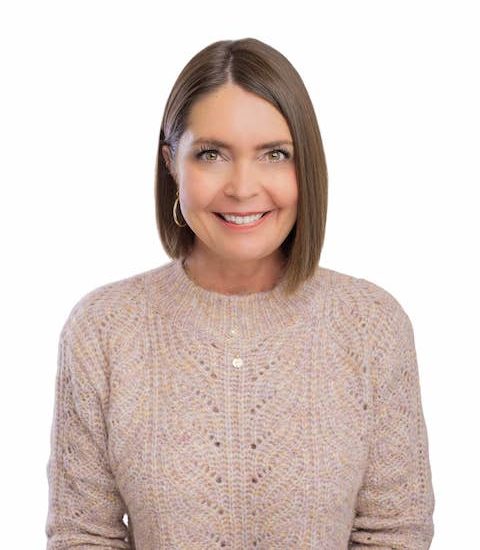
“Show your gratitude.”SAMANTHA PYLE · ON LEADING A TEAM
The founder goes back to class
Pyle’s own education continued alongside the business. She earned a bachelor’s degree at Western Kentucky University and a master’s degree at Tennessee State University. In 2022, she began the Professional MBA program at Lipscomb University. Her LinkedIn profile lists the program through 2024, a 4.0 result and membership in the Beta Gamma Sigma business honor society.
The timing is revealing. She already had a decade of experience running Green Apple when that MBA began. Formal study came after she had dealt with clients, payroll and the work of keeping an agency operating. It gives her career a less tidy sequence than the familiar story in which education ends and entrepreneurship begins. Here the founder returned to the classroom with an existing business to think about.
Entrepreneurial learning also ran through EO Nashville. She participated in its Catalyst program in 2018 and later served on the organization’s board as a Catalyst chair. There is a pleasing continuity in that progression: the owner who entered a development program went on to help support it. Her professional network became a place to contribute as well as a place to learn.
A second business, close to the dinner table
In February 2024, Pyle and the Green Apple team launched Olive + Leo. Its audience was hospitality businesses, including independent restaurants facing larger brands with larger marketing budgets. It offered text messaging, email and other customer engagement tools, with both do-it-yourself and managed options. The proposition addressed a specific constraint: an independent operator may need to keep in touch with customers without commissioning a full agency relationship.
“Customers crave genuine dialogue with the brands they love,” Pyle said at the launch. The restaurant has already done the work of making an experience worth returning for. Olive + Leo was designed to help it maintain contact afterward. The name on the door, the atmosphere and the meal might create affection; a well-timed message gives that affection somewhere to go.
Her public work carried on beyond the two businesses. In June 2024, she was announced as the opening keynote speaker for the YP Nashville Summit. In 2025, she received a Nashville Business Journal C-Suite Award. By September 2026, Thistle Farms had named her vice chair of its board, alongside chair David Thompson. The latest appointment adds another leadership responsibility in the city where she built her agency.
The repeat customer in the audience
Away from business, there is another form of loyalty in Pyle’s biography. She has attended more than 50 Dave Matthews Band shows. Her published music picks for Green Apple’s 2023 roundup included “Two Step,” alongside songs by Harry Styles and Zach Bryan. Fifty concerts is a substantial commitment to hearing what happens next, even when you know the repertoire.
She also enjoys hiking with her dogs, Charlie and Ford, and traveling with her husband. Her biography describes a goal of visiting every U.S. state, along with travel ambitions in the Caribbean and Europe. These are personal plans with plenty of room for another stop. They belong in the picture alongside the revenue milestone and the qualifications: the founder has interests that do not require a marketing brief.
Across the professional story, the recurring choice is to keep a relationship capable of developing. A specialist can take another assignment. A client can need something new. A founder can enroll in a course after ten years in business, then start a second company. Pyle’s agency gives those changes a place to happen. The Orchard’s name may be playful, but the work beneath it is patient: choose people carefully, stay in conversation and leave room for the next season’s work.