Before the penguin, there was an inbox. In 2017, Fabian Kamberi went to the United States for the first time. He was 18, came from Rottenburg in southern Germany, and wanted to meet people whose work he admired. He sent cold emails. Some of them worked. Years later, remembering that visit, he described the beginning of an obsession with building a consumer company on the scale of Facebook. He also reviewed his younger self’s clothes: “Horrible fit though, lol.” Ambition had survived the intervening years. The outfit had fared less well.
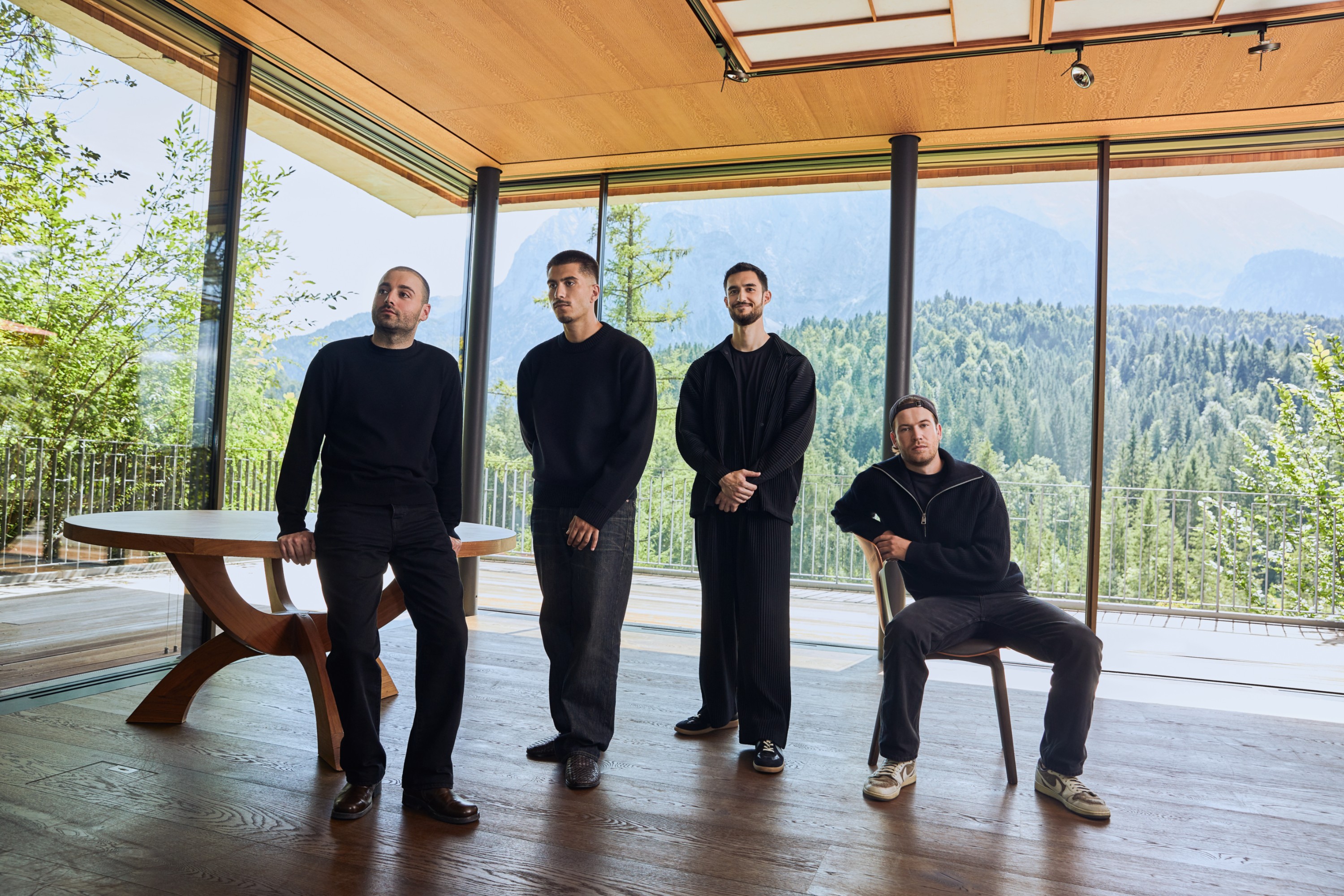
Today, Kamberi is CEO and co-founder of Born, the company behind the virtual penguin Pengu. His route there passes through a book, a music platform, a compliments app and a succession of experiments in getting people to interact. The recurring interest is surprisingly ordinary. He wants to give people something they can enjoy together. The means have become considerably more elaborate.
An American trip, arranged by inbox
Kamberi’s account of that first American visit starts with him and his best friend, Jannis Ringwald, making apps and trying to find their direction. He says the trip changed what he wanted from his life. He abandoned the plan to attend college near home after returning. The meetings had made a previously distant kind of career seem available to a teenager from a small town.
A childhood friend, Tito Ras, remembers an earlier version of the same ambition. On the way home from basketball, Kamberi talked about an app idea and the impact he hoped to have. It is a useful detail because it places the aspiration somewhere ordinary: between a game and the journey home, with a friend who would still remember the conversation years later.
He was already committing ideas to paper. In February 2017, Kamberi and Raphael Koehrer published Was Du in der Schule nicht lernst: Der Trainingsplan für Deinen Erfolg, a German book whose title promises lessons school leaves out. A school in Zweibrücken later recommended it to pupils as a book written by two school-leavers. At 162 pages, it was a fairly substantial answer to anyone wondering what he might do with his spare time.
Before the penguin, the playlist
By October 2020, Kamberi was discussing Bouncy, the social music platform he co-founded, on the Product Pioneers podcast. He was introduced as a product management student at CODE in Berlin. The conversation covered the idea, a change of direction, fundraising and partnerships with record labels. The audience he wanted to understand was Generation Z. The business already required him to think about both what people wanted and how a young company could reach them.
Music also gave him a microphone. He hosted Bouncy’s More Than Music podcast, which ran in 2020 and 2021. Its premise was to look beyond surface facts about songs, artists and albums, including the influence musicians exercised through streaming and social media. Long before an animated penguin became the main attraction, he was working around the things people share to express who they are.
There is a visual record of that period, too. His Dribbble portfolio lists mobile, interface and web design, with work including Bouncy branding, a trading interface and an NFC checkout concept. These are public design projects, rather than evidence of separate businesses. They show another part of his work: making the invitation look clear enough for someone to accept it.
Compliments, credit cards and the school gate
SLAY brought Kamberi together with Ringwald and Stefan Quernhorst. The early app used positive polls about school friends. In his later account of its beginning, Kamberi describes a Sunday in 2022 spent building a version of Nikita Bier’s tbh. The app caught on in Europe. He says the founders exhausted personal credit cards paying AWS bills, then raised their first funding a week later. Popularity had arrived with an invoice.
The distribution was personal before it became a business case. At a 2022 talk hosted by lemon.markets, Kamberi described younger family members helping to spread the app. The team also worked with student ambassadors and thought about when an invitation would become a topic of conversation on Instagram. The event recap said SLAY reached number one in the App Store four days after launch.
That is a more specific account of growth than a chart arrow pointing upwards. It involved relatives, school communities and timing. A product could be passed between people who already knew one another. The same event host managed to fit in a reference to Kamberi’s sneaker collection. Consumer research, apparently, could coexist with an interest in footwear.
The penguin changes shelves
The team kept making things. There was frfr, an AI voice-messaging app for Instagram stories. Pengu arrived toward the end of 2023. By June 2024, the studio’s four apps together had more than ten million downloads and 2.5 million monthly active users. Those were portfolio figures at a particular moment. They describe a team learning across products, with Pengu becoming the focus.
The penguin gave friends a shared activity. They could raise it, play minigames and participate in its small digital existence. A virtual animal is an agreeably undignified way to make two people responsible for the same thing. It supplies a subject for conversation without requiring either person to produce an opening line worthy of preservation.
In October 2024, Kamberi explained a revealing decision: Pengu had moved from the games category into social networking. People were treating it as a friend to raise together, and the change also helped with distribution. “The social aspect of raising a Pengu with friends became central to the product.” The category followed the behaviour. For a founder who began by thinking about the next Facebook, a penguin had supplied a rather unexpected route back to social software.
People who know the cost of a hit
The financing brought him into contact with people who had built consumer and gaming businesses before. Accel’s relationship with the founders began in 2022. In its June 2024 account of the team, the firm singled out product quality, repeated experiments guided by data and the ability to work at a demanding pace. Its description makes the chart successes sound less like isolated moments of inspiration than the result of a method.
There was also a practical argument behind the cuteness. In 2024, Kamberi discussed how friends could play a minigame, earn a reward and feel they had accomplished something together. He described distribution as a central difficulty in games. Sharing, in that account, belongs inside the experience. The product needs to give its users a reason to bring somebody else along.
By September 2025, the company was announcing its next stage under the name Born. Kamberi credited Supercell co-founder Ilkka Paananen with introducing him to Tencent. He recalled travelling to the Bay Area and completing the Series A process in less than two weeks. That story connects the teenager requesting meetings to an executive maintaining relationships. The scale of the request had changed; approaching people remained part of the work.
Born reported $25 million raised in total after the round. Company funding, at that date.
A bigger cast, the same invitation
In January 2026, Pengu expanded into Friends. The cast included Mellow, a companion focused on education and learning. Born also previewed Life, with photorealistic companions communicating through messages, images, video, voice and calls. The change widens Kamberi’s task: a character now has to make sense across more kinds of interaction than a game session.
He had been preparing to think beyond an app alone. A Pengu mini-series shared in 2024 presented the character through animated storytelling. His accompanying explanation emphasized building an identifiable character that could work beyond a simple conversation window. The entertainment matters to the ambition. People need to have some reason to recognize the creature before a company can ask them to care what it does next.
New York is now his public base, with Born operating in that city and Berlin. The geography follows the company’s international ambitions, while the work retains its European connections. A company with several names and products can still be organized around a lasting interest. His own description of the commitment is plain.
“I want Born to be my life’s work.”
Fabian Kamberi
An open door for the next builder
Recognition has brought another role. Kamberi appeared on Forbes’ 2025 Under 30 Europe Sports & Games list. For the 2026 edition, he was one of the independent judges, alongside people drawn from sport and business. Within a year, he had moved from being considered to helping consider others.
He is also listed as a Project Europe partner. The initiative connects young technical founders with investment, mentorship and a wider network of builders. It offers a public counterpart to those early cold emails: a way for somebody starting out to reach people further along. His participation fits the interest he has expressed in supporting European consumer technology.
His recruiting posts are similarly direct. He asks engineers to show their work and says academic credentials and famous employers are not his deciding criteria. For generalists, he emphasizes ambition and speed; for designers, iteration and results. These are his stated preferences, and they echo a career built through making and revising things.
That leaves a recognizable person behind the company vocabulary: a young app maker who sent emails, hosted music conversations, thought about interfaces and learned how a school invitation travels. Born gives those interests a new setting. Somewhere inside the larger ambition is still the small, legible proposition that made Pengu work: here is something you and a friend can do together.