A staffing business can be full of activity and short of cash. People go to work. Customers receive the service. Wages come due. Somewhere else, an invoice enjoys an extended holiday. Eyal Shinar watched his mother run a staffing company in Israel and encountered a lesson that business success has an awkward habit of teaching: growth can make the money problem worse.
Her customers could take months to pay. The business grew, and its expenses grew with it. A revolving credit line did not cover everything. “She just grew too fast to make payments,” he recalled. The problem had a certain bureaucratic elegance. The work was real. The money was expected. The calendar declined to cooperate.
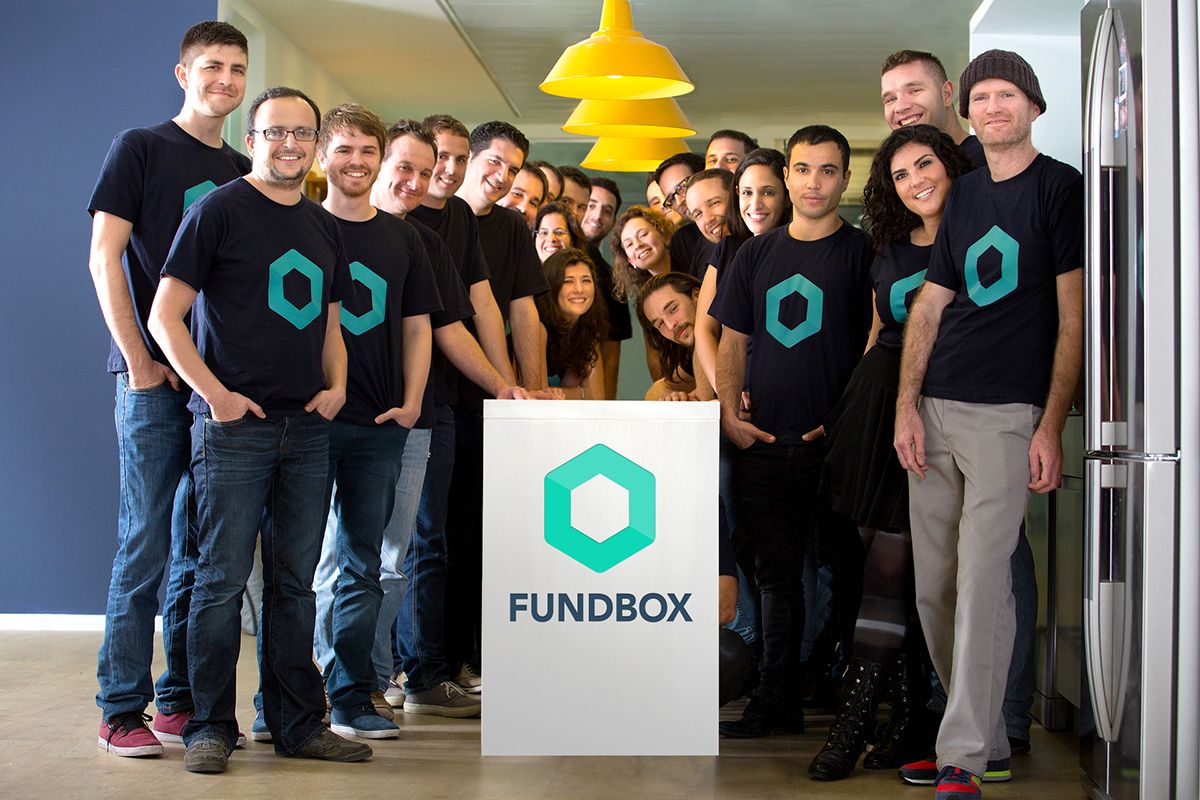
That experience helped inspire Fundbox, which Shinar co-founded in 2013 with Tomer Michaeli and Yuval Ariav. Years later, his second founding chapter would take him into tax preparation. The documents changed. A concern with the time trapped inside financial systems remained. Read his career that way, and the distance between an unpaid invoice and an accountant’s crowded desk becomes rather shorter.
An investor crosses the desk
Shinar arrived at entrepreneurship with experience on the other side of the funding conversation. He had worked at the private equity firm Castle Harlan and was an early employee of Old Lane, the hedge fund later acquired by Citigroup. He earned an MBA at Wharton, then became a vice president at Battery Ventures, working across financial technology, machine learning and software businesses.
His interests preceded the business cards. In a 2015 interview, he described an enthusiasm for programming from age eight and investing from age ten. Most children have to wait considerably longer before discovering that these two hobbies can occupy an entire working life. For Shinar, the combination eventually supplied both the subject and the tools.
The opening he saw involved information. Business records were moving into digital systems and then into the cloud. Accounting applications, inventory tools and other software held increasingly detailed evidence of how companies actually operated. With a customer’s permission, that information could be accessed through software connections. Machine learning offered a way to turn the records into credit decisions.
For a small business, that proposed a different encounter with finance. Its operating history could speak for it through the software it already used. For the founder, the opportunity joined a familiar family problem to a changing technical landscape. The timing of the technology finally offered a possible answer to the timing of the money.
The invoice has excellent manners. Payroll has a deadline.
Fundbox initially addressed the gap between completing work and collecting payment. A business could connect its accounting software and seek an advance against an outstanding invoice. The attraction was easy to understand without becoming fluent in financial terminology. A company had already supplied something of value. It needed usable money sooner than its customer intended to send it.
The smallness of an individual transaction was part of the opportunity. A modest invoice could matter enormously to its owner while looking unremarkable from the perspective of a large financial institution. Fundbox put software into that interval. The company’s early story concerned the practical arithmetic of keeping a business moving while payment travelled at a more leisurely pace.
Shinar’s ambition extended beyond advancing money on invoices. In conversations about Fundbox, he returned to the example of consumer payment networks. A buyer could have time to pay while a merchant received money promptly. He wanted a comparable arrangement for transactions between businesses. Credit and payment belonged in the same conversation because each affected when commerce could happen.
He could be particular about that distinction. In a 2019 interview with entrepreneur Sramana Mitra, he repeatedly pushed the discussion toward the payment network he wanted to build. She pressed him on receivables financing and integration with large buyers. The exchange has the texture of an actual business conversation: questions, resistance, clarification and a founder unwilling to let someone else’s category do all his explaining.
His response also exposed his view of incentives. Installing a new system inside a very large buyer could take years, he argued, while the smaller seller already had an immediate reason to seek help. That is a revealing practical preference. Start where the need is felt and the willingness to act is present. A corporate purchasing department may admire efficiency without being in any hurry to acquire it.
The route to the customer matters
Distribution became one of Shinar’s recurring lessons. Fundbox connected with business software such as QuickBooks and FreshBooks, placing financing near the records and routines customers already maintained. The design had a plain commercial logic. A useful product still needs a way into someone’s working day. An owner trying to finish the accounts has little appetite for an additional expedition.
By September 2019, Fundbox announced a $176 million Series C financing and a $150 million credit facility. Those figures describe different resources: equity investment in the company and a facility supporting credit provision. Together, they show the financial machinery required behind a service whose appeal to customers was speed. Making money move simply can require a fairly elaborate engine room.
Shinar had also been learning about the less numerical parts of building a company. He admitted that he had once been cynical about culture, values and principles. Experience made those subjects harder to dismiss. His advice to founders became unusually attentive to the first year, when choices about people, professional partners and operating habits could shape the business for years afterward.
“I have historically been cynical about things like culture, values, and principles.”Eyal Shinar, 2021
There is some charm in a financier discovering that the apparently soft subjects have durable consequences. The law firm, the distribution plan, the first colleagues: each can look like a practical item to settle and move past. His later advice treats them as decisions that continue working long after the founder has stopped thinking about the meeting in which they were made.
Handing over the daily job
In July 2020, Fundbox announced a change at the top. Shinar would become full-time executive chairman. Prashant Fuloria, then chief operating officer, would become CEO. Fuloria had joined in 2016 as chief product officer after senior roles at Google, Facebook and Yahoo. The succession followed four years of working inside the same company.
Shinar’s new responsibilities included strategy, corporate and business development, strategic relationships and board activities. “I’m not going anywhere,” he said at the time. He described a wish to concentrate on the longer horizon rather than managing people day to day. Founding a business gives someone a particular relationship to its beginnings. Running its next stage can require a different allocation of attention.
That transition matters to his story because it makes room for a second beginning. The Fundbox founding title remains part of his identity, but his current operating role is at Black Ore. He also serves as an advisor to Oak HC/FT. The career has moved through investing, founding, chairing and founding again, with financial technology as its persistent subject.
A second company takes on the paperwork
Shinar co-founded Black Ore with Pavel Kapovski, whose background included leading research and development at CME Group. In November 2023, the company emerged from stealth with $60 million in financing led by a16z and Oak HC/FT. Its first product, Tax Autopilot, addressed tax preparation for CPAs and accounting firms.
The initial product covered individual federal and state returns. Black Ore described a workflow that took in documents, transformed their data, prepared returns and produced supporting workpapers. At launch, its process included a preliminary review by its own US-based CPAs before documents went back to the accounting firm. The human and software responsibilities were part of the product’s design.
By April 2026, Black Ore was announcing broader availability and describing a preparation process without intervention from its own team. The company said it had admitted 75 firms during early access, including 40% of the top 20 US CPA firms, from a waiting list approaching 4,000. These were company-reported adoption figures, giving a view of the audience it was trying to reach.
Its announcement included 40% of the top 20 US CPA firms.
What should a professional do all day?
At Black Ore’s AI Tax Summit at Nasdaq Tower in May 2026, the conversation reached beyond preparing returns. Shinar later recalled a veteran accounting partner asking whether AI would benefit practitioners or chiefly enrich vendors. It was a fair question, and a useful interruption to any roomful of people selling the future.
His answer, developed in a June essay, centred on capacity. He argued that qualified professionals spent too much time on document chasing, data entry and routine preparation. Automating those tasks could leave more room for planning, advice and client relationships. He also specified that CPAs would retain final authority before filing. The intended destination was more space for professional judgment.
Shinar has forecast fully autonomous tax preparation at CPA firms by the end of 2028. That remains his prediction. It gives his current work a deadline and makes the ambition concrete enough to examine. The practical test will be what firms can reliably delegate and what they can do with the hours they recover.
His mother’s staffing business needed money to arrive sooner. The accountants he now serves need preparation to consume less of their day. Across the two businesses, Shinar keeps returning to people whose useful work is constrained by the systems around it. An invoice, a tax return, a waiting customer: finance has many documents. He seems particularly interested in the time they take.