Jessica Mah’s first customers were her classmates. The merchandise was a portfolio of traced drawings, carried onto the playground and offered for sale. The prices, she later recalled, could reach $50. Other children were discovering the pleasures of pocket money. Mah was investigating its distribution. It was an early indication that the ordinary arrangements of childhood might struggle to contain her.
The playground had a sales department
She grew up in New York with an engineer father and an entrepreneur mother. Technology and commerce were familiar occupations at home, rather than mysterious professions glimpsed on television. In middle school, she was designing and programming websites for other people. A web-hosting business followed. Long before the business cards, there was already a person willing to make something and ask someone else to pay for it.
The school timetable proved less accommodating. At 15, she left high school for Bard College at Simon’s Rock, an early-college route that eventually took her to the University of California, Berkeley. Her departure from high school led into more education. She studied computer science, acquiring a practical language for the enterprises she was already inclined to start.
In 2008, while still at Berkeley, she helped launch internshipIN with two other undergraduates. It was a job board connecting students with internships, an appropriately direct response to a problem close at hand. Her early projects had the same useful quality as those playground drawings: they existed. A modest working business offered more instruction than an immaculate idea waiting for permission.
A co-founder from discrete mathematics
At Berkeley, Mah met Andy Su in a discrete mathematics class. They spent two years working together on coursework and side projects before starting inDinero. Their partnership grew out of shared work, with all the familiarity that entails. They knew how to make things together before they had much experience of what a company might demand of their friendship.
The original problem was their own. Running an earlier venture, they struggled to understand its finances: how much money was coming in, what was being spent, and what the margins actually were. Accounting software seemed unnecessarily complicated. For two computer science students, the temptation was obvious. Surely a better interface could make the business legible.
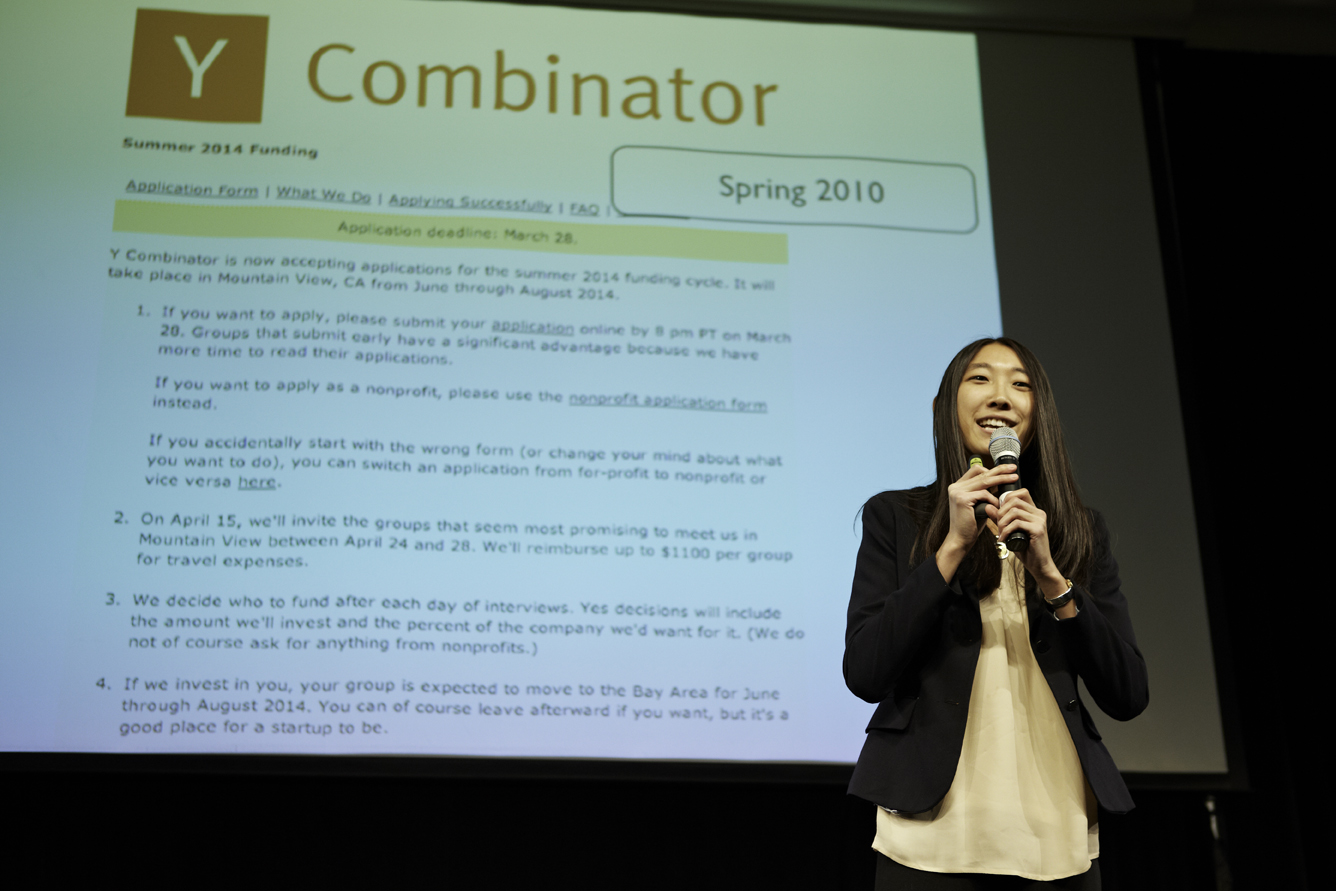
inDinero was founded in 2009 and joined Y Combinator’s summer 2010 batch. A campus talk by Dropbox co-founder Drew Houston had encouraged Mah to apply. On graduation day, she packed her dorm room and moved to Mountain View. The transition from student to founder involved remarkably little intermission. They had a rough prototype; a launch followed about a month into the programme.
The early proposition was a financial dashboard for small businesses. It tracked the movement of money and offered an easier view of the numbers. Attention followed, along with seed funding. In 2011, Fast Company included Mah in its Most Creative People in Business list. Her product had thousands of users. Those are agreeable things to have, especially when the future appears to be arriving ahead of schedule.
The customer wanted the work to disappear
There was an awkward distinction between people who would try the dashboard and people who would pay enough to support a company. Plenty of users chose the free version. A growing audience could coexist with a business that was running out of money. The dashboard could describe a customer’s finances while its own maker remained in difficulty. Irony, unlike revenue, was plentiful.
Mah has been candid about the confidence that accompanied this period. Early coverage had gone to her head. Steve Blank, the entrepreneur, teacher and inDinero investor, challenged her view of the business. “He saw through all my crap,” she later said. The line is brisker than the usual founder vocabulary. It also gives the mentor a rather more useful job than offering congratulations.
The company cut costs and reduced its staff. Mah and Su moved the remaining operation into their apartment and began working out what customers actually needed. The question became specific: what would somebody pay a meaningful monthly fee to have done? That question forced them to look beyond the appeal of a tidy screen.
A visit to a customer’s office made the problem plain. The customer was paying for software but still doing the work of managing the accounts. He wanted to pay more to hand over the task. Mah and Su began learning bookkeeping and rebuilt the offering around accounting and taxes, supported by software. The service assumed responsibility for a job that customers had been trying to escape.
The early dashboard helped owners track their finances.
The rebuilt service paired software with accounting and tax expertise.
That decision changed the economics and the character of inDinero. It also asked a programmer to become curious about a profession she had not originally understood. The work included expertise, process and delivery, alongside the code. Mah’s willingness to learn an unglamorous discipline belongs near the centre of her story. Bookkeeping rarely makes a dramatic entrance. It can, however, save the plot.
A different sort of growth chart
By 2014, inDinero recorded $2.9 million in revenue. Its three-year growth rate was 2,685.6 percent, and Mah appeared on the cover of Inc. in 2015. Those figures describe a particular stage of the turnaround. Behind the percentage was a concrete change in what the company sold: customers were paying for accounting work to be handled, rather than simply for a view of their money.
inDinero’s three-year revenue growth through 2014
The scale brought new problems. Managing people required skills that writing software had not supplied. In later interviews, Mah described keeping a growing workforce moving in the same direction as a central challenge. Headcount could expand faster than the systems supporting it. Every new employee meant equipment, spending decisions and another person who needed clarity about the work.
Her own financial habits grew more deliberate. She wrote about budgeting, questioning expenses and calculating the return on a project, including the cost of employees’ time. The adolescent business owner who had struggled with outdated accounts had become a leader asking departments to connect effort with results. The figures were now part of how she managed, rather than a nuisance awaiting someone else’s attention.
She also made room for study. Her conversations about building inDinero included reading, the book The Outsiders, and entire “think weeks” set aside for absorbing ideas. The habit gives a quieter picture of ambition than the customary office spectacle. Sometimes the useful executive activity is to sit still, read carefully and resist the temptation to announce something.
Building the company, choosing its CEO
Eventually, Mah began reconsidering the job she wanted for herself. She still enjoyed starting companies. Running every part of a company indefinitely was a different proposition. At Mahway, she developed a venture-building approach: help create the business, assemble the people and resources, and work with a CEO who would lead its growth. The founder could remain involved without occupying every chair.
In an April 2025 conversation with Eric Ries, she discussed leadership selection, governance and a longer view of building. One practical detail was a 90-day trial for executive talent. It is a revealing preference for someone whose original partnership began in a classroom. Working together produces information that an impressive introduction cannot supply. Time becomes part of the interview.
Mahway’s current public offering focuses on co-founding AI companies with repeat founders and domain experts. The division of labour is explicit. An industry operator brings knowledge of workflows, customers and distribution; the studio supplies engineering, product, design, recruiting and help bringing the product to market. This is the same basic curiosity about who should do which work, applied at the formation of a company.
Mah has also returned to making things herself. On her personal site, she describes writing code with Cursor and building outbound systems with Clay. Her interest in AI is expressed through tools she uses, alongside investment ideas. There is a pleasing continuity here. The former computer science student, after years of managing the people around the software, is back at the keyboard.
A room worth spending time in
People remain a recurring concern. At XFactor Ventures, Mah has described wanting to create the support she wished she had when starting out. Her advice to women entrepreneurs includes building a “founder sisterhood.” She has also encouraged girls to enter STEM and mentored younger entrepreneurs. Her experience gives the encouragement a practical basis: access to people can alter what a founder knows how to do next.
“Creating an ecosystem of support that I wish I had when I was getting my company off the ground!”
Jessica Mah, on XFactor Ventures
That belief also appears in Outcove, the retreat business she started with Noah Berkson. In a public post, Mah described an interest in curating experiences that stretches back to running a Burning Man camp. For Outcove, she has spoken about shared meals and extended conversations, with partnerships and friendships continuing after the gathering. A smaller room gives an introduction time to turn into something more useful.
Her Y Combinator memories have a similar emphasis. She valued the alumni who introduced investors, reporters, candidates and mentors, and the dinners where founders compared their difficulties. The network was made of assistance as much as acquaintance. This makes her later interest in convening people feel connected to an old experience: somebody else’s timely introduction can become part of a company’s infrastructure.
The pilot still has to pay attention
Away from the desk, Mah flies. She holds a commercial pilot licence, and her public biography has described weekends in a Cirrus SR22T. Aviation is a fairly decisive way to change the subject after a week of business meetings. The aircraft has its own requirements; persuasion does little to improve them. For a person whose career has involved revising assumptions, the attraction is understandable.
Her current interests extend to established businesses whose owners are approaching retirement without a succession plan. In February 2026, she was also publicly arguing for greater discipline in startup funding, with revenue and execution receiving closer attention. The subjects differ in age and fashion, yet both concern what makes a business continue after the excitement of its beginning.
Mah’s career began early enough to invite a story about precocity. The more interesting account takes longer. A classroom partnership became a company; an appealing product needed a different business model; a founder learned to choose other leaders. She continues to build, invest and experiment. The child carrying drawings across the playground had already learned to approach a customer. Experience taught her to listen once she got there.
Continue the conversation
- Jess Mah’s personal site
- Mahway
- inDinero company profile
- Twitter / X
- Jessica Mah on YouTube
- Watch: business ideas with Shaan Puri (2025)
- Listen: conversation with Eric Ries (2025)
- Read: YC Female Founder Stories
- Read: the customer visit, with Steve Blank
- Listen: reading, planning and think weeks
- inDinero’s current leadership
- More profiles and writing