Everybody Wants to Host Your Community Now
Kajabi, Discourse, Disciple and a pack of rivals are selling creators and brands the same promise - leave the algorithm behind and own the people who show up. Here is who is actually fighting for the private community, and what they are betting on.
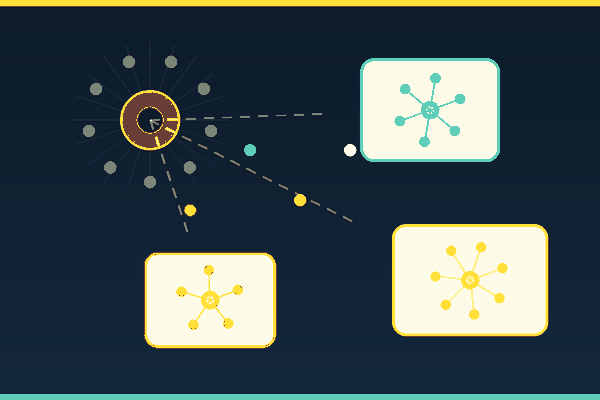
Ask any creator who has been at it for more than a year about their worst day, and it is rarely a bad launch or a mean comment. It is the morning they woke up to a feed that had quietly stopped showing their posts to the people who asked to see them. One algorithm tweak, and an audience they spent years building turned into a list of strangers they could no longer reach. That single fear - not growth, not virality - is the reason a whole category of software now exists.
The pitch is easy to say and hard to argue with. An audience you do not own is a loan, not an asset. You can borrow reach from Instagram or a Facebook Group for free, but the platform keeps the customer, the contact details and the right to change the terms whenever it likes. So a group of companies - some a decade old, some barely known outside their niche - have built their entire business on helping you take the relationship back.
Eight of them landed on our desk at once: Kajabi, Raklet, XenForo, ToucanTech, Disciple, Discourse, Zapnito and GroupApp. They look like competitors, and on paper they are. Look closer and they are attacking the same shift from four completely different doors.
01The all-in-one crowd wants to replace your whole stack
Kajabi is the loudest voice in the room, and the oldest. Founded in 2010 by Kenny Rueter and Travis Rosser, it started as a way to sell online courses and grew into a suite that bundles memberships, email marketing, payments and a community feed into one login. The trade is simple: pay somewhere around $179 to $499 a month and never stitch together six tools again. It reportedly does around $75 million in revenue, which tells you the trade lands.
GroupApp plays the same all-in-one game with a lighter touch and a sharper hook - native courses and community in one app, a free tier for small groups, and 0% transaction fees. That last number is not fine print. It is the entire argument against building your business on a marketplace that skims a cut of every sale you make.
The all-in-one bet has an obvious appeal and a quieter cost. Convenience is real - one bill, one dashboard, one place to point your members. But you are trading one landlord for another, gentler one. Your courses, your list and your payment history now live inside a single company's walls, and moving out later is never as clean as moving in. The creators who thrive on these suites tend to be the ones who treat them as a storefront they rent on purpose, not a home they assume they own. It is a reasonable deal. It is just worth reading before you sign.
02The forum people were right all along
For most of the social-media decade, "forum" was a word people said with a wince. Discourse and XenForo spent that decade quietly shipping anyway, and in 2026 they look less like relics and more like the original owned community, just wearing better clothes.
Discourse, launched in 2013 by Jeff Atwood - who also co-founded Stack Overflow - took the boldest possible stance on ownership: give the software away. It is open source, free to self-host, and it now powers more than 20,000 communities, from open-source projects to enterprises. Its legal name, filed with a straight face, is Civilized Discourse Construction Kit, Inc. If you want to keep everything and pay nothing but your own server bill, this is the door.
XenForo took the opposite route to the same place. Built in 2010 by two former vBulletin developers, it sells a one-time license for around $195 and lets you run a premium, self-hosted forum you actually own the code to. Two philosophies, one belief: your community should live on your land, not someone else's rented feed.
03White-label apps win by hiding that they are apps
Disciple Media, out of London, sells the cleanest version of the ownership dream: a fully branded iOS and Android app that carries your name and no one else's. No competing logo, no rival content one swipe away, no landlord taking a cut - subscriptions start around £299 a month with 0% transaction fees. The clever part is that a good white-label app makes members forget they ever left the social network. It feels like the platform they came from, except this one belongs to you.
This is where the whole category stops being about software and starts being about psychology. People will happily follow a creator off a public feed if the new place feels as smooth as the old one. The winners here are not the tools with the longest feature list. They are the ones that make leaving painless.
There is a catch buried in the branded-app pitch, and it is worth naming. The moment your community lives inside its own app, you inherit the job the social network used to do for free - reminding people you exist. No feed is surfacing your post to a distracted member on a Tuesday night. That work becomes yours. The platforms that survive the next few years will be the ones that solve retention, not just onboarding, because a beautiful owned community that nobody opens is just a nicer way to lose the same audience.
The four doors into the same house
Relative price commitment and how much you own outright. Longer bar = higher ongoing cost; color = ownership model.
own the code own the data, rent the software managed / all-in-one
04The niche players nobody outside their world has heard of
Not every community is a creator with a course to sell. Three of these companies figured that out early and built for rooms most of the industry ignores.
Raklet, founded in 2016, brings low-cost membership management to nonprofits, clubs and associations - the groups that never had the budget for enterprise association software and were duct-taping spreadsheets instead. ToucanTech, started in 2014 by Kate Jillings, went after alumni and school networks with a mix of CRM and fundraising, the kind of long-memory community that measures itself in decades, not follower counts. Zapnito, from the same era, sells branded B2B "expert" communities to publishers and professional networks, and raised a £3.3 million Series A from Octopus Ventures in 2021 to prove the model has legs.
Kajabi
Courses, memberships, marketing and payments in one login. The market's loudest all-in-one, aimed at solo creators and coaches.
Discourse
Free, self-hostable discussion software running 20,000+ communities. Own the code, pay your own server.
Disciple
Fully branded iOS and Android community apps. Your name on the icon, 0% transaction fees.
XenForo
Premium vBulletin successor sold as a one-time license. The forum you actually own.
Raklet
Affordable membership, CRM and payments for nonprofits, clubs and small associations.
ToucanTech
Community, CRM and fundraising for schools, universities and corporate alumni.
Zapnito
Branded knowledge and expert communities for publishers and professional networks.
GroupApp
Community plus native courses in one app, with a free tier and 0% transaction fees.
05What they are all really betting on
Strip away the feature lists and every one of these companies is placing the same bet: that the era of renting an audience from a public feed is ending, and the next decade belongs to whoever helps you own the relationship instead. The creator economy sits somewhere near $200 billion in 2026, and paid memberships are the slice growing fastest. When roughly 88% of community-led creators say they now make money from memberships, ownership stops being an ideology and starts being a revenue line.
The interesting part is how little these eight agree on the how. One gives its software away, another charges enterprise contracts. One hides inside a branded app, another lives on a self-hosted server you patch yourself. The disagreement is the tell. A market this fragmented is not fighting over a finished pie. It is racing to define a question that does not have a settled answer yet: who gets to own your most loyal people, and what is that worth?
History is faintly on the forum side of this argument, which is the quiet irony of the whole story. The technology that public social media supposedly killed - the humble discussion board, the members-only room, the mailing list with a paywall - never actually died. It got starved of attention while the feeds boomed, and now it is coming back with a mobile app, a payments processor and a decade of pent-up frustration behind it. The creators driving this shift are not chasing a new idea. They are rediscovering an old one and paying a monthly fee to make it feel modern.
If you are a creator, a nonprofit, a brand or a school reading this, the useful move is not to pick the biggest name. It is to be honest about which door you are walking through. Want to keep the code? Discourse or XenForo. Want it all in one place? Kajabi or GroupApp. Want your own app? Disciple. Serving a room with a long memory? Raklet, ToucanTech or Zapnito. The worst outcome is the same one that started this whole shift - waking up one morning to find that the place you built your community lives, and the people in it, were never really yours.