A low-backed chair is a surprisingly good place to begin a story about public relations. In the instructions for EarleFest’s 2015 edition, visitors were encouraged to bring one. High-backed chairs and umbrellas had their own designated areas. The distinction took only a sentence. But imagine the afternoon without it: one person’s comfortable seat becomes another person’s blocked view. Long before a musician touches a microphone, the event has made a decision about how strangers will share a lawn.
That is the territory occupied by Event Planning & Marketing Communications, the practice whose public identity centers on developing, planning and managing EarleFest. Its description also includes writing and editing for print, web and broadcast. Put those activities beside each other and the connection becomes tangible. Someone has to arrange the afternoon. Someone has to explain how to attend it. Ideally, those two people agree about the chairs.
The invitation had a guitar in it
EarleFest was an Americana music fundraiser for the Earle Baum Center, a Northern California organization serving people with sight loss. The proposition had two understandable parts: hear musicians you want to hear, and support work that matters beyond the performance. A visitor could arrive because of the lineup. The benefit gave that visit another meaning.
Consider the seventh edition, in 2014. Todd Snider headlined on the family-farm property where the center operated. The Brothers Comatose and the Blues Broads were on the main-stage bill; other regional performers occupied a second stage. The Great Idea Band brought together North Bay musicians for the occasion. The programming mixed a touring draw with people connected to the local music scene. For a regional fundraiser, that combination offered several different reasons to say yes.
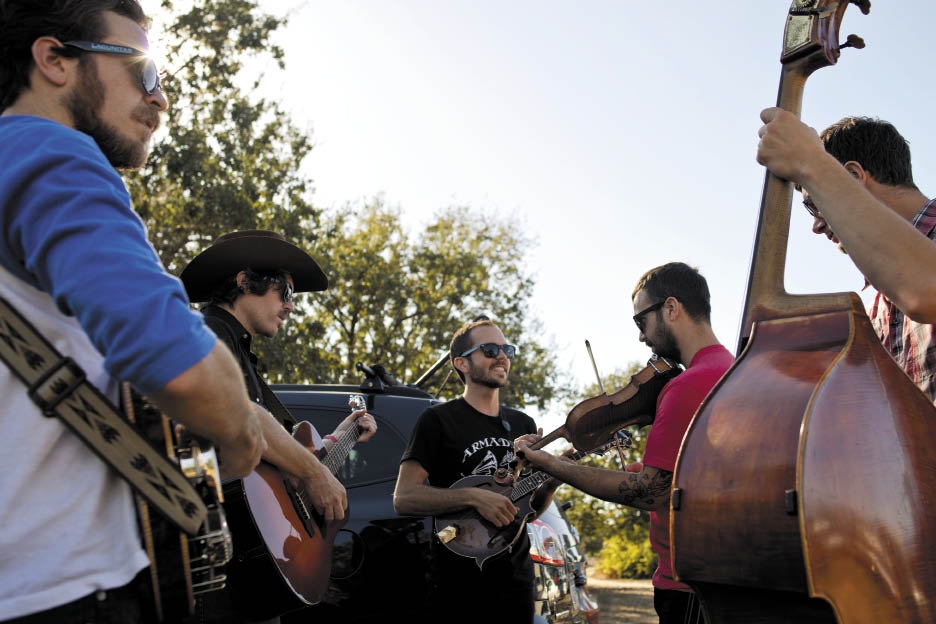
The backstage photograph catches the arrangement in miniature: musicians gathered close, instruments between them, an ordinary vehicle behind them. The Brothers Comatose had roots in Petaluma, where Ben and Alex Morrison grew up around musical gatherings at home. Their presence at EarleFest connected the festival to a local story audiences could recognize. Booking a band can also mean booking a relationship with a place.
The business between the sentence and the stage
The company lists itself on LinkedIn as self-employed, with one employee. Its stated services include collateral, ghostwritten articles, press releases, press kits and web content. This is a professional services practice: clients obtain planning and editorial work. EarleFest is the named example around which that description is organized.
Its market position is best understood through the combination of tasks. An organization arranging a public event can divide the work among an event producer, a writer and its own staff. A practice spanning those functions offers another arrangement. The potential advantage is continuity: the person shaping the invitation understands the event it describes. That is an interpretation of the service mix, rather than a measured claim about better results.
The buyer and the audience also occupy different seats. The organization needs an event that supports its purpose. Attendees need a reason to spend money and an afternoon. Performers need the promised conditions for their set. Good communications make these expectations legible to one another. A beautifully written announcement cannot tell a stagehand where the equipment goes; a precise production schedule cannot, by itself, persuade a family to attend.
A ticket counter in three towns
In 2015, advance admission cost $45, compared with $50 at the door. Children under ten entered free. Tickets were available at the Last Record Store in Santa Rosa, Tall Toad Music in Petaluma and People’s Music in Sebastopol, as well as online through Brown Paper Tickets with an additional service charge. The geography mattered: the festival had purchase points in places where music listeners already went.
There was a smaller invitation, too. A July benefit at HopMonk Tavern in Sebastopol featured local performers and a suggested $10 donation. September EarleFest tickets were available there. That arrangement let one gathering introduce another. For a reader planning a community event, the reusable idea is quite specific: find an existing occasion where likely attendees are already paying attention, and make the next step available on the spot.
Ticket prices describe the visitor’s purchase. They do not describe the organizer’s costs.
By 2017, advertised admission was $55 in advance and $65 on show day. A ticket price is useful evidence about the offer; it should not be mistaken for the economics of the whole operation. Musicians, staging and other production requirements belong on a different side of the ledger. The practical lesson is to keep the audience’s price and the event’s financial result separate when judging a fundraiser.
The venue changed. The cause stayed on the bill.
In 2016, EarleFest moved to SOMO Village in Rohnert Park. Lucinda Williams and the Mavericks were among the advertised performers. Contemporary coverage described more than a thousand people attending in the heat, with a smaller HopMonk stage beneath shade trees. The chairs came along, too: the report noticed concertgoers carrying beach chairs for comfort.
The tenth edition, advertised for September 23, 2017, paired Los Lobos, the California Honeydrops and Tift Merritt with a wider lineup. The Earle Baum Center and SOMO Concerts presented the benefit. Its description included sight-loss education alongside food trucks, artists and local vendors. The cause had a place within the afternoon’s activities, as well as in the explanation of where support would go.
Here is a useful distinction for anyone borrowing the format. National performers can help attract attention; local participants can give the gathering texture and familiarity. Neither automatically produces a viable benefit. The combination needs an audience willing to buy the particular offer, and a production plan the organizers can deliver.
What a 7.4x number can tell you
A July 2017 ToneDen case study described a separate piece of the festival operation: advertising run by SOMO Concerts assistant marketing director Isabelle Garson. The vendor reported a 7.4x return measured in ticket revenue against advertising spend, and reach of 14,311 people. Those are partner campaign figures, not the communications company’s revenue or independently audited festival profit.
Ticket revenue relative to advertising spend
Advertising spend = 1 unit · Reported ticket revenue = 7.4 unitsThe case described testing multiple audiences and shifting budget toward stronger performers. One lookalike audience generated more revenue while spending less than the comparison audience. The copyable step is the test: compare actual purchasing responses before committing the entire budget to an audience assumption.
That requires enough useful purchase data to distinguish a stronger response from noise. A small event with very few sales should be cautious about declaring a winner. And even a strong advertising ratio has to be considered alongside the rest of the production budget. Buying attention is one job; delivering a worthwhile benefit is the larger one.
Someone remembered the water bottles
A 2023 remembrance in the Horse Journal described Lynn Newton’s decade coordinating EarleFest alongside the center’s Allan Brenner and the KRUSH’s Bill Barker. Patricia Jefferson recalled lists covering name badges, water bottles and performers’ needs. The account places a person inside work that concertgoers might otherwise experience simply as an afternoon that runs.
“She worked her heart out for months each year”Patricia Jefferson, remembering EarleFest coordinator Lynn Newton
The festival’s beneficiary has its own continuing story. Earle Baum Center joined the LightHouse community in 2023. Its educational and support services belong to that organization. For the communications practice associated with EarleFest, the instructive story remains the meeting of editorial work and physical arrangements: make the invitation clear, connect it to a real purpose, and attend to what happens after someone accepts it.
The low-backed chair earns its place in that story. It is a tiny operational decision, expressed in ordinary language, that considers the person sitting behind you. A public event is full of such decisions. The audience may remember the encore. The planner has to remember the view.