On his second day at Apple, Evan Cheng says, he took a proposal to a vice president: a system the company had used for years needed replacing. It was an assertive introduction for a new hire. Cheng had found another engineer, and the two believed they could do the job. In his telling, they finished the replacement in nine months. For most employees, a first week is for learning where the coffee is. Cheng was already looking for the load-bearing walls.
That instinct has followed him through a career spent on machinery few people see directly. At Apple he worked on LLVM, the compiler infrastructure that turns a programmer's instructions into code a processor can run. At Facebook he led teams responsible for programming languages and runtimes. At Meta's Novi project he moved into blockchain research. Then, in 2021, he left to co-found Mysten Labs, where he now serves as chief executive. Each stop put him close to the layer beneath the product, the place where a design choice can shape thousands of later choices.
Cheng talks like someone who enjoys opening the hood. In an interview about blockchain games, he called himself “highly opinionated” and described a career of volunteering for hard systems that other teams wanted replaced. The admission is disarmingly practical. The work is difficult, the conversations can be uncomfortable, and the results must be good enough to justify both. His shortest formulation of the product test was this: “The best way to convince people is to show them.”

The boy who preferred the machine room
Cheng grew up in Kaohsiung, in southern Taiwan, and has said he began coding around age ten. He later left Taiwan while still a teenager and made his way to the United States for school. Marietta College in Ohio admitted him without a high school diploma, he later recalled. He graduated in 1992 with studies in computer science and mathematics, then earned a master's degree in computer science at Syracuse University. The route is unusual enough to make a tidy origin story, but the more revealing detail is the kind of work he chose afterward: software infrastructure, where success is often invisible to everyone except the people who depend on it.
Before Apple came startup work, including Equator Technologies and Synfora. Apple hired him in 2005. There he worked with the LLVM project and helped drive the design and implementation of its code generator, the component that translates an intermediate form of software into instructions for particular processors. It sounds remote from daily life until one remembers how many applications must cross that bridge. The Association for Computing Machinery recognized LLVM with its 2012 Software System Award and singled out Cheng's contribution. An award for a compiler is fitting: the tool does its best work when users can forget it exists.
His part in LLVM also complicates the familiar picture of the solitary programmer. In one interview, Cheng described his younger self as a “lone wolf kind of engineer.” The work that brought him public recognition, though, was a large open project built with other engineers and adopted well beyond Apple. Over time he became a manager of teams rather than a person working alone in a room. He could still be blunt about a system, but he now needed other people to join the rewrite.
A bigger company, a smaller box
In 2015 Cheng went to Facebook to lead programming languages and runtime engineering. Three years later he moved to Novi Financial, the research and development arm connected to Facebook's Libra project, later renamed Diem. Blockchain interested him as a way to change how people own and transfer value online. He also thought the available systems were awkward and limited. That combination, attraction to the idea and irritation with the implementation, is a reliable description of his next move.
Inside Meta, Cheng led research on systems, security and programming languages. He has said the Libra effort was constrained by its initial ambition as a payment rail. His team wanted a broader network on which many kinds of digital assets and applications could be built. The distinction matters. A payment system moves balances. A general platform has to accommodate games, media, identity, storage and the rules by which those things change hands. In Cheng's account, the work he wanted to do had outgrown its home.
Starting a company in his fifties was hardly a default career step. In a later interview, he recalled his wife and friends asking why he would do it then. He described coming home frustrated that he could not pursue the work he thought mattered. “I wanted to do it again,” he said of building a foundational layer. The phrasing is modest for an enormous undertaking, and perhaps that is why it feels revealing. This was less a sudden conversion to entrepreneurship than a return to the scale of problem that had held his attention at Apple.
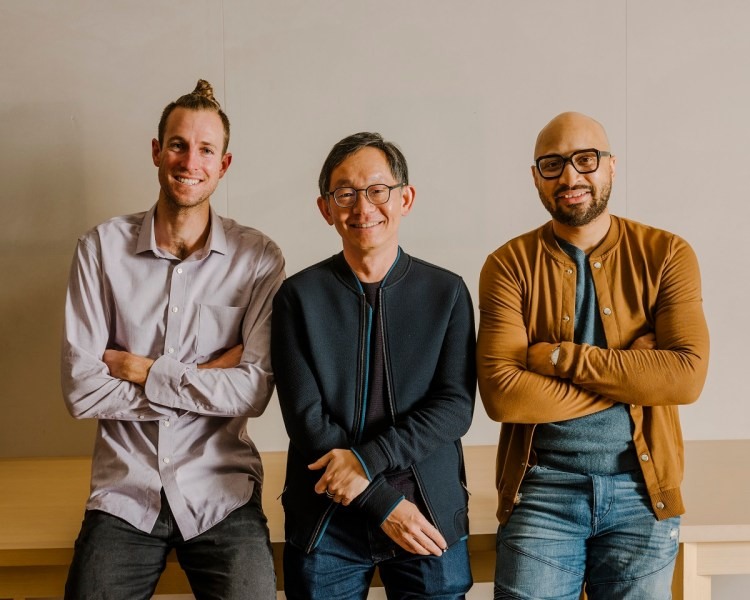
Mysten Labs began in 2021 with Cheng, Sam Blackshear, Adeniyi Abiodun, Kostas Chalkias and George Danezis. Their roles cover engineering, product, cryptography and research. The arrangement matters to the story because a blockchain is a team sport in a particularly unforgiving way. A mistake in the basic rules is carried forward by every builder who trusts them. The founders had worked around Meta's earlier attempt; now they could choose the boundaries themselves.
“The best way to convince people is to show them.”Evan Cheng, on winning over skeptics
Why the baseball needs to change
Sui, the network Mysten Labs helped create, went live in May 2023. Its design treats digital assets as objects that can have an owner and change over time. Cheng once explained the idea with a baseball: when a favorite player signs it, the ball acquires a new quality. He wanted digital goods to be similarly capable of carrying updates, rather than requiring developers to invent awkward workarounds. It is a homespun example for an abstract technical decision, and much more memorable than a throughput chart.
The point is especially clear in games. Players already devote time and money to items, characters and worlds. For Cheng, a useful digital asset should be able to reflect that history and move under rules the player can understand. At a 2022 game developers' conference, he argued that the industry would be won over by working experiences, not speeches about blockchains. There is a wry symmetry in a systems engineer demanding a good demo. Even excellent plumbing is hard to admire until the water comes out.
Three projects from the Mysten Labs orbit, each handling a different part of a digital product.
A network alone, however, is not a complete product toolkit. Mysten later introduced Walrus for decentralized storage and Seal for programmable access to encrypted content. In 2025 the company launched Seal on testnet and announced its mainnet release. The names are playful; the problems are ordinary. Where does information live? Who may see it? How does a rule travel with an asset? Cheng has argued that builders should have coherent answers instead of stitching together unrelated services for every new application.
That broader view is visible in the company's 2025 work on tools for software agents. In a Mysten Labs essay, Sam Blackshear described an internet increasingly asked to serve automated actors while still protecting user control. Cheng made a similar point in a later interview: the web was built for humans to read and act, and automation changes what the underlying network must do. It is a long way from compiler code generation, yet it is recognizably the same sort of question. What should the base layer make possible for everyone above it?
The price of a promise
Cheng is forceful about the future he wants, but he can be skeptical about the industry's habits. He has objected both to sweeping claims that crypto is finished and to cheerful declarations that every downturn is good for builders. In a recent interview he pointed to the people and projects that suffer when markets fall. The remark cuts against the breezy resilience slogans that tend to fill this field. Technical conviction does not erase the cost of getting the timing wrong.
Nor does a token's market value answer whether a useful service exists. Mysten raised a $300 million Series B in 2022, a sign that investors were willing to fund a difficult infrastructure bet. Sui's launch followed the next year. Those are milestones, not a verdict. Cheng himself has said the team has achieved only a small part of what it set out to do. That assessment gives the profile a more honest ending than a victory lap: the builder of foundational systems is still trying to prove that people want to live on the floor he has laid.
His career has an almost comic consistency. The child in Kaohsiung learned to code. The Apple engineer offered to replace an old system before he had settled into his chair. The Meta executive grew frustrated with a project whose walls seemed too close. The founder now asks whether online ownership can be redesigned from the ground up. A person can spend decades changing employers and still keep returning to the same problem. In Cheng's case, it is the machinery beneath everybody else's ambitions.
What comes next will be decided less by another elegant diagram than by the people willing to build on Sui, Walrus and Seal. Cheng's most persuasive line remains the one from the game developers' conference: show people. For an engineer who has spent so much of his life working out of sight, it is a demanding instruction to give himself. The plumbing has to disappear into ordinary use. Only then will anyone notice what has changed.