The first Euronet cash machine went into a McDonald’s in Budapest in 1995. It was an oddly perfect address. Hungary had left communism, bank cards were multiplying, and the familiar infrastructure of consumer capitalism was arriving faster than the banking system could install convenient places to withdraw cash. Michael Brown and Daniel Henry, two American brothers-in-law, saw the gap. Their company, then called Bank Access 24, would put ATMs where bank branches were not.
That first machine did more than dispense forints. It established the method Euronet has repeated for three decades: enter a fragmented market, do the operational work nobody finds glamorous, connect local endpoints to a reliable switch, and then find more transactions to run across the same machinery. The result is now a public company with $4.2537 billion in 2025 revenue, roughly 11,000 employees and operations touching more than 200 countries and territories.
Three businesses wearing one trench coat
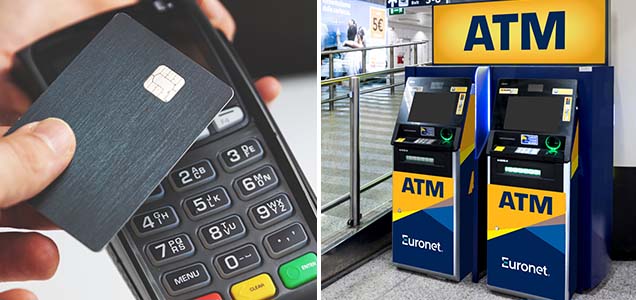
Calling Euronet an ATM operator is like calling Amazon a bookseller: historically correct, strategically misleading. The company has three engines. Payments Infrastructure owns and manages ATMs, processes transactions, handles merchant acquiring and sells issuing and switching technology. epay distributes mobile airtime, gift cards, subscriptions and other branded digital value through stores, apps and websites. Cross-Border Payments includes Ria, Xe and Dandelion, moving consumer and business funds through cash locations, accounts, wallets and cards.
They serve different customers at different moments. A tourist uses an Euronet ATM. A supermarket sells a gaming code supplied by epay. A migrant worker sends money through Ria. A small company hedges or pays an overseas supplier through Xe. A bank embeds payouts through Dandelion. Another bank modernizes card processing with Ren or CoreCard. Consumers see the logo on some of these products, but institutions often see plumbing.
company-reported mix
The useful trick: reuse the rails
Euronet’s advantage is not that any single service is unprecedented. Western Union and MoneyGram send cash. Wise and Remitly sell digital transfers. NCR Atleos works on cash access. Fiserv, FIS and ACI sell bank technology. Blackhawk and InComm distribute stored value. The difference is the amount of infrastructure Euronet can reuse across categories: processing centers, regulatory licenses, settlement accounts, retail relationships, compliance teams, cash points and software built under real transaction load.
Dandelion makes the logic unusually clear. Ria had 42,000 cash points when Euronet bought it in 2007. The broader cross-border network now reports roughly 651,000 locations and connections to approximately 7.7 billion bank deposit and digital-wallet accounts. Euronet built that network to deliver its own Ria and Xe payments. Dandelion turns the same asset into a business-to-business product: one contract and one API for banks, fintechs and software platforms that do not want to negotiate hundreds of payout relationships themselves.
“We built this network for ourselves and now we’re making it available to others.”Euronet’s wonderfully blunt Dandelion pitch
Ren follows the same pattern on the processing side. It is a cloud-native, API-first platform for issuing, switching, ATM management and payment hubs, descended from the technology Euronet uses in its own processing centers. The pitch is deliberately less dramatic than a core-banking replacement: modernize in pieces, keep the legacy system, and add new payment rails around it. CoreCard, acquired in October 2025 for $192.7 million of purchase consideration, added revolving credit, buy-now-pay-later and commercial-card processing - a capability Ren did not fully cover.
The expensive decisions were acquisitions
The Budapest start was scrappy, but the transformation was not cheap. Euronet’s 1997 Nasdaq offering delivered $48 million in net proceeds for expansion and acquisitions. Brown also personally financed early Polish operations: company filings record loans that, with related advances, reached $262,000 outstanding at the end of 1996 before IPO proceeds repaid them.
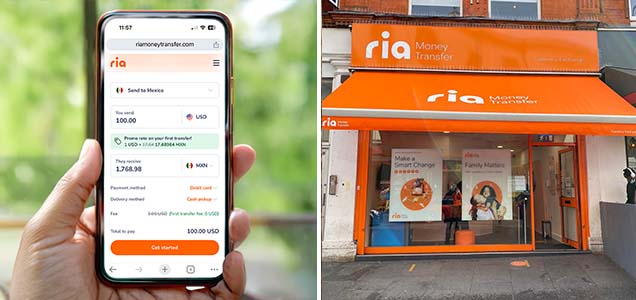
The consequential bill arrived in 2007. Euronet paid $505.5 million for Ria, including $358.3 million in cash, $110 million in stock, contingent instruments and transaction costs. It borrowed $190 million toward the cash portion. That purchase changed the company’s center of gravity. Ria contributed a sending-agent network, owned stores and payout relationships across dozens of countries; Euronet contributed capital, processing experience and an appetite to extend the network. Eight years later it paid roughly $120 million in cash and shares for Xe, gaining a giant digital audience and an international-payments brand.
What failed first was the easy economics
The original ATM story was not a straight climb. In 1999, Euronet still posted quarterly operating losses. Its software division also watched banks delay orders and installations ahead of the Y2K changeover. The useful response was visible in the numbers: by that year, Euronet was managing 705 client-owned ATMs, up from 184, while its own network-services division reached positive quarterly EBITDA for the first time.
In other words, the company did not abandon cash machines. It changed what a machine could earn and who had to own it. Bank outsourcing produced recurring contract revenue without requiring Euronet to fund every terminal. Screens and receipts carried advertising. ATMs sold bill payments and prepaid mobile vouchers. The fixed switch in Budapest handled more activity. What changed management’s mind is not preserved as a cinematic quote; the operating record shows the shift. Asset ownership became one option inside a broader processing business.
The same pragmatism appeared at epay. Scratch-off mobile top-up cards were once the product. As phones and retail changed, the business digitized top-ups and expanded into gift cards, games, subscriptions and loyalty. epay now connects more than 1,000 brand partners across over 60 countries. In 2025 it expanded a Revolut relationship to distribute digital gift and prepaid products in 20 countries.
A moat made of paperwork and patience
Fintech marketing tends to celebrate the interface. Euronet’s defensibility sits lower in the stack. Cross-border money movement requires licenses, sanctions screening, fraud controls, liquidity, foreign-exchange management, reconciliation and a local destination that actually works. An ATM needs cash forecasting and physical service. A gift product needs retailer integration, brand contracts and activation without fraud. None of this photographs especially well. All of it becomes more economical with volume.
Partnerships show where the network fits. Commonwealth Bank of Australia selected Dandelion for international transfers with status tracking and broader payout options. Ria and Xe are collaborating with Google on discovery and access. WorldFirst connected for small-business payments. In the second quarter of 2026, Euronet said Dandelion added six digital partners, including Mastercard Move. On the processing side, DXC is integrating its Hogan core-banking platform with Ren, and Peru’s Unibanca signed a multi-year CoreCard agreement.
The moat is not “one API.” The moat is everything that had to happen before one API could tell the truth.
The copyable lesson - and where it breaks
A founder cannot copy Euronet by buying ATMs. The portable idea is narrower: build a core capability for your own demanding use case, then expose it to adjacent customers only after it survives real load. Favor products that reuse compliance, distribution, data or operations you already funded. Let the next revenue stream increase utilization of the first asset instead of creating a separate company in disguise.
There is a second lesson in the company’s product sequence. Euronet did not leap from cash to a universal API. It accumulated endpoints - ATMs, retailers, agents, bank accounts and wallets - then packaged access. Distribution came before abstraction. A clean developer experience cannot compensate for thin coverage or unreliable settlement.
Conditions that make the playbook wobble
- Transaction volume is too low to pay for fixed infrastructure and compliance.
- Local regulation blocks non-bank operators or changes faster than integrations can adapt.
- Banks and large platforms already control better endpoints and refuse to share economics.
- Tourism, exchange rates, migration policy or recession reduce ATM and remittance traffic.
- One segment’s complexity distracts management instead of creating genuine reuse.
The latest results keep the story honest. In the second quarter of 2026, revenue rose 3 percent to $1.1084 billion and adjusted earnings per share rose 10 percent. Yet reported operating income fell 14 percent and net income declined. Management’s designated “digital accelerators” grew revenue 31 percent and supplied 26 percent of the quarter, but growth investments, mix and softness in parts of money transfer still matter. U.S.-originated transfer volumes had already been pressured in late 2025 by immigration and economic changes affecting senders.
Euronet therefore occupies an unfashionable but useful place in fintech. It is neither a pure software company nor merely a fleet of cash boxes. It is a collector of payment endpoints, a processor of the instructions between them, and a merchant of access to the network it assembled. The first ATM solved a visible problem: people had cards and needed cash. The modern company solves the inverse problem: money exists in too many forms, and somebody has to make them meet.
Keep exploring