The first useful clue about Afriex is that its founders were trying to build something else. Tope Alabi and John Obirije tested ideas including a hip-hop chatbot and a trivia game. Those products failed. Yet each experiment left the same tedious chore on the desk: paying expenses in Nigeria with money sitting in an American bank account. A wire could take days and eat into the amount. The business idea was hiding in the administrative nuisance.
- Founded in 2019, Afriex began as a transfer tool for friends and family.
- Its app now combines international transfers, currency accounts, and virtual cards.
- AFX sells collections, payouts, foreign exchange, and APIs to businesses.
- Afriex reports 600,000+ active users and service across 50+ countries.
Alabi had worked at blockchain company Consensys and returned to Nigeria after two decades in the United States. The founders built a transfer service using stablecoins as part of the route between currencies. For a customer, the point was not the token. It was that money could arrive without making a relative wait for the banking system to finish its paperwork. Afriex launched in 2019 and initially concentrated on Nigeria before adding other African markets.

The errand that became the product
The early app addressed a familiar asymmetry. People could message family abroad in an instant, but money still moved as if the message had to catch a boat. Afriex’s public promise is now pointed: it says 99% of its transfers complete in under 20 seconds, with zero to low fees. Those are company figures, and speed or price depends on the corridor and method. Still, the target is clear. A sender in the US, Canada, the UK, or supported European countries can quote a rate, fund a transfer, and send to a supported destination without arranging a traditional international wire.
The recipient matters as much as the sender. In a place where a bank account, mobile wallet, or local currency is the practical way to use the money, a beautiful sending screen is insufficient. Afriex needs a route to the last mile. That requirement explains its growing network of banking and payment partners. The glamour lies in seconds; the work lies in settlement, identity checks, exchange, and payout access.
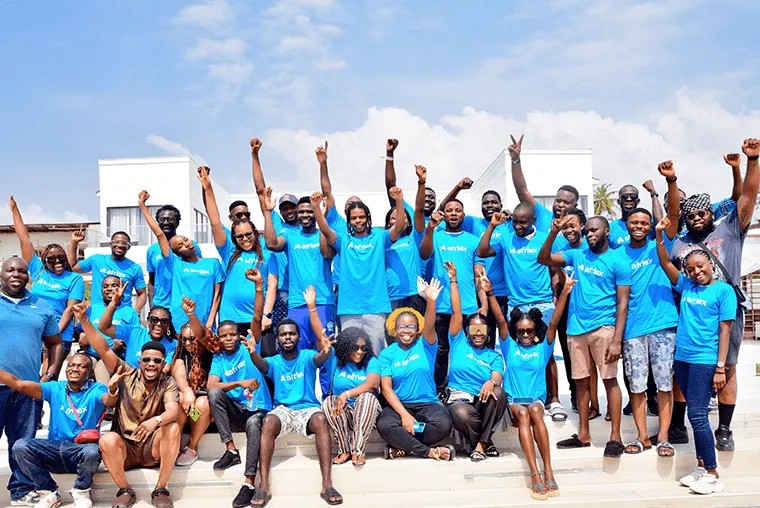
A remittance app grows extra limbs
Afriex’s next products follow the money after it arrives. Global Accounts give eligible customers receiving details in US dollars, pounds, or euros. A Nigerian freelancer paid by an American client can receive into a dollar account in their own name, then convert or withdraw through the app. The product page says account opening and maintenance carry no charge and receiving a payment is free. Eligibility varies by region; it is worth checking the exact currency and withdrawal route before telling a client where to pay.
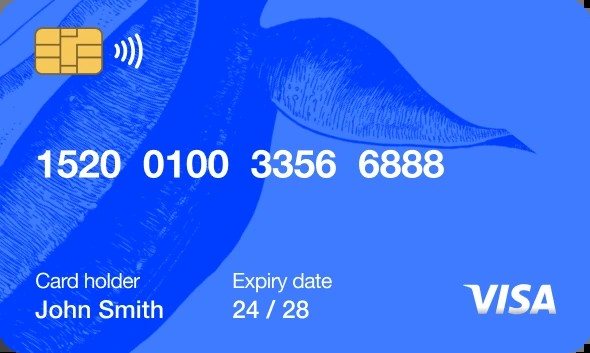
In October 2025, Afriex added a virtual USD card for customers in African countries. The advertised setup price was a one-time $5, with no monthly charge. Its obvious audience is someone whose local card is rejected for an online subscription, exam fee, digital ad, or software purchase. Afriex itself cautions that a virtual card may not work at every local payment gateway. It also advertises a credit-building product for US customers. A family-transfer app is becoming a set of tools for earning, holding, sending, and spending across currencies.
“Sending money overseas should be as easy as sending a text message.”Afriex’s stated belief
Business customers see a different front door. AFX offers collections, payouts, local accounts, currency conversion, treasury tools, a dashboard, and APIs. A payroll company can pay workers in several countries; a marketplace can collect and disburse funds; a fintech can build payments into its own product. Afriex says its consumer app is for personal transfers while AFX handles enterprise operations. The two offerings share a difficult substrate: relationships with local banks, regulated payment partners, and the ability to turn a payment instruction into usable money at the other end.
A simplified payment path. Availability, checks, and timing depend on the route.
Where the money is made
“Free transfer” is a useful claim only when paired with the exchange rate. In a 2022 interview, Alabi said Afriex made money from differences in currency and crypto exchange rates during transactions. The company also sells the $5 card setup and enterprise services, whose public pages do not give a standard price. For a customer comparing Afriex with Wise, Remitly, LemFi, a bank, or a local wallet, the sensible test is the final amount delivered for a particular corridor at a particular time. A zero transfer fee can coexist with a spread. A faster payout may also be worth more than a tiny rate difference when rent is due today.
The old figures tell one part of the story. Afriex was processing more than $5 million in monthly transfers when it announced a $10 million Series A in April 2022. That round, reported at a $60 million valuation, followed a $1.3 million seed round. By August 2026 the company said it was processing more than $600 million in annual payment volume. These are transaction values, not revenue, and they come from different reporting dates. They do, however, fit the shift from a consumer service toward payment infrastructure.
Speed needs boring friends
The most revealing updates are about partnerships. In June 2025, Afriex made UK and EU bank accounts receiving destinations, so supported transfers could move into Europe as well as out of it. In November, it announced an integration with Visa Direct through a financial institution partner, making real-time delivery possible to eligible Visa endpoints in more than 160 markets. “Eligible” is doing important work: a network’s theoretical reach is wider than any one user’s available routes.
Then came a sponsor and settlement banking partnership with Global Innovations Bank, effective in the second quarter of 2026 and announced that August. Afriex said it would support its B2B payment API, USD account access, and business payments across more than 35 countries. It also named Choice Bank in Kenya and United Bank for Africa in Nigeria among its banking partners. A settlement bank is not a decorative logo on a partner slide. It is part of how a transfer becomes a bank balance someone can spend.
Afriex announced ISO/IEC 27001 certification in 2025. Its site says it uses identity verification and is PCI DSS compliant. Those details belong in the story because a transfer company asks customers to trust it with both their money and the documents that prove who they are. The company describes itself as a fintech, not a bank; bank-like features depend on the relevant partners and terms.
The lesson hidden in the failed apps
The founders’ failed products did something useful: they forced the same awkward payment task to recur. The copyable part of Afriex is not “use blockchain.” It is to notice which chore keeps interrupting several different ideas, then test whether other people have the same chore and will return when it is solved. Afriex reported in 2022 that half its active users used the platform more than once a week. Repeated use is more persuasive than a clever launch story.
This approach works only where the company can arrange compliant funding, conversion, settlement, and payout in the relevant corridors. A fast interface cannot repair an unsupported bank route, an unavailable currency, or a rate that leaves the recipient short. Afriex’s expansion is therefore less a tale of one ingenious app than of accumulating unromantic connections. The original nuisance remains the test: can someone move money where it needs to go, in a form the other person can actually use?