The trouble begins after the measurement. An analyzer produces a reading. Someone has to decide whether that reading is valid, which calculation it belongs in, and what happens when the instrument goes out of service. By the time a report reaches an environmental regulator, the number has acquired a considerable biography. The plant needs to know the whole story.
That is the territory occupied by ESC Spectrum. It supplies Continuous Emissions Monitoring Systems, or CEMS, and the Data Acquisition Systems, or DAS, that collect and organize their output. The alphabet soup conceals a practical question: can the people responsible for compliance understand what their equipment is telling them?
- The job: collect, validate, calculate, and report industrial emissions data.
- The kit: StackVision and Prism software, 8864 controllers, integrated monitoring systems, and technical services.
- The buyers: utilities, refineries, manufacturers, and the teams managing their air permits.
- The change: Alliance Technical Group acquired ESC Spectrum in July 2025.
01 / THE BOTTLENECKThe spreadsheet had become a second plant
Consider Pfizer’s research site in Groton, Connecticut. In ESC Spectrum’s published customer account, its former air-compliance manager, Jack Dunne, described a previous DAS implementation marked by poor communication and programming errors. Reporting depended on laborious spreadsheets. Comparing fuel-flow information could take weeks; unresolved discrepancies meant treating valuable data as invalid.
A third-party stack tester recommended StackVision. ESC Spectrum used staged project reviews, and an engineer walked the team through its equations and processes. Dunne reported that automatic comparisons delivered information in minutes. The revealing detail is the implementation: people inspected how the system worked before relying on its results.
At Calumet Montana Refinery, a different inconvenience had grown teeth. Its environmental calculations were difficult to inspect remotely, and modifying the old system required on-site intervention. Environmental manager Joe Dauner considered spreadsheets, a homegrown control-system approach, and an upgrade to the existing DAS before choosing StackVision.
“Automation behind our decision-making is the best element of the system.”
JOE DAUNER · CALUMET MONTANA REFINERY
ESC SPECTRUM’S PUBLISHED CUSTOMER CASE, 2021
Dauner’s account emphasizes the policy behind the automation: the team had to agree how to handle questionable data. A computer can repeat a decision indefinitely. It is therefore useful to settle the decision first. Both customer accounts are vendor-published testimonials, but their descriptions of the original friction are unusually concrete.
02 / THE HANDOFFSFour handoffs, one obligation
ESC Spectrum’s portfolio follows the information through the plant. Monitoring instruments produce measurements. The 8864 Data Controller collects analog and digital signals, performs calculations, and stores and transmits data. DAS software brings those records into dashboards, quality-assurance tools, and reports. Engineering, reporting, IT, and maintenance teams support the machinery and its users.
- MeasureInstruments observe the emissions stream.
- CollectThe controller acquires signals and handles data.
- InterpretThe DAS applies configured calculations and QA rules.
- Review & reportPeople validate the record and prepare submissions.
The distinction matters when something goes wrong. A questionable result may originate in an analyzer, a calculation, a server, or the interpretation of a permit requirement. ESC Spectrum can work across those boundaries. That breadth makes its offering attractive to teams that would otherwise coordinate several specialists to investigate one troublesome number.
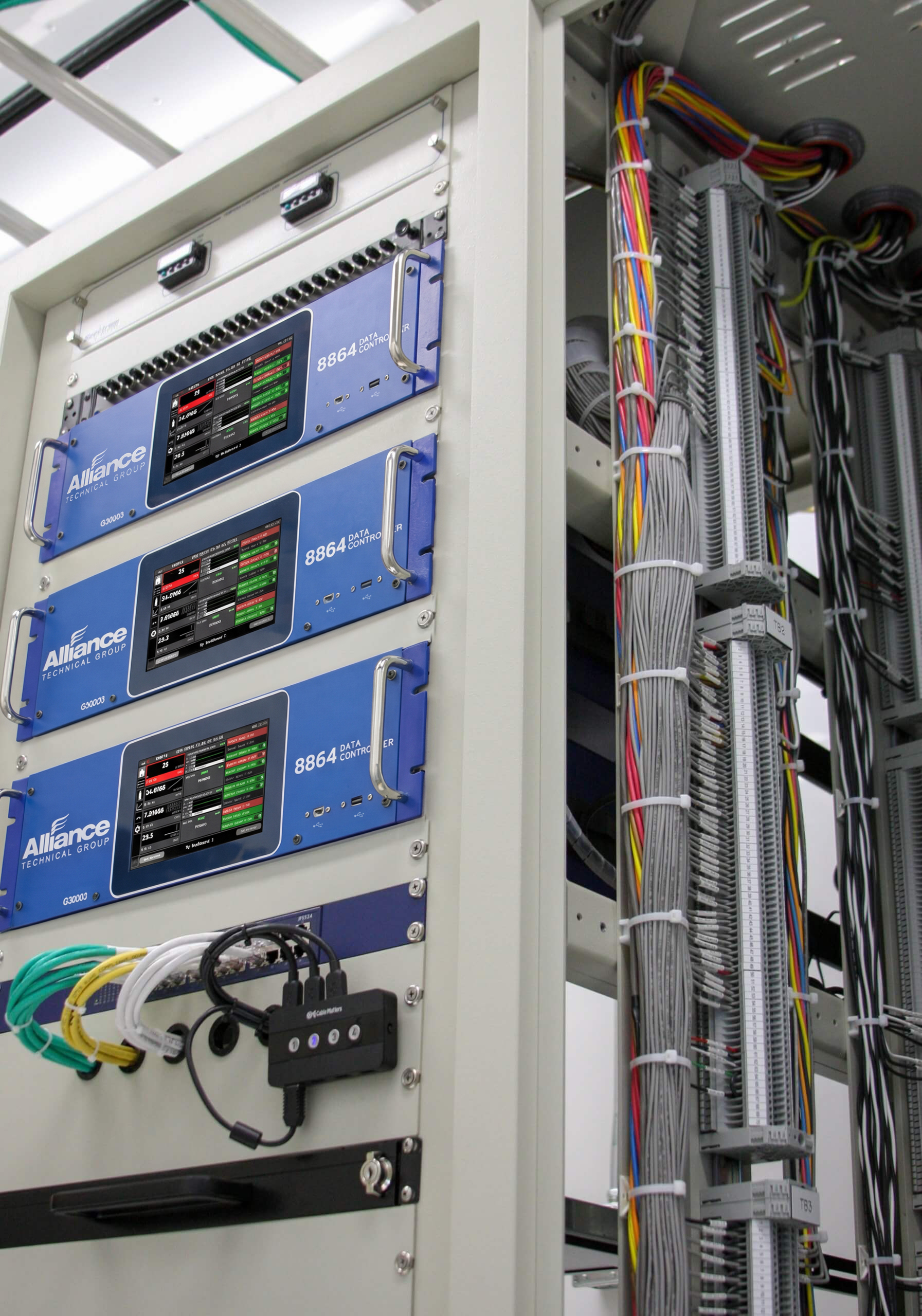
Product photograph: Alliance Technical Group.
Its early work involved a different kind of industrial trace. Environmental Systems Corporation began in 1969 investigating heated water discharged from power plants. Researchers used infrared photographs taken from a small plane; the headquarters was a Knoxville airport hangar. In 1978, ESC built a data acquisition system for TVA demonstration solar homes. Recording what industry does came before the modern software brand.
03 / TOOLS WITH A DAY JOBExcel gets an invitation back
The software is specialized, but the users’ working habits are familiar. Prism runs on Windows and SQL Server and supports stand-alone and enterprise environments. Its panels bring alarms, gas-cylinder information, calibration progress, and trends into view. ESC Spectrum describes it as software created by technicians for technicians. The emphasis is on the person trying to understand an instrument’s condition.
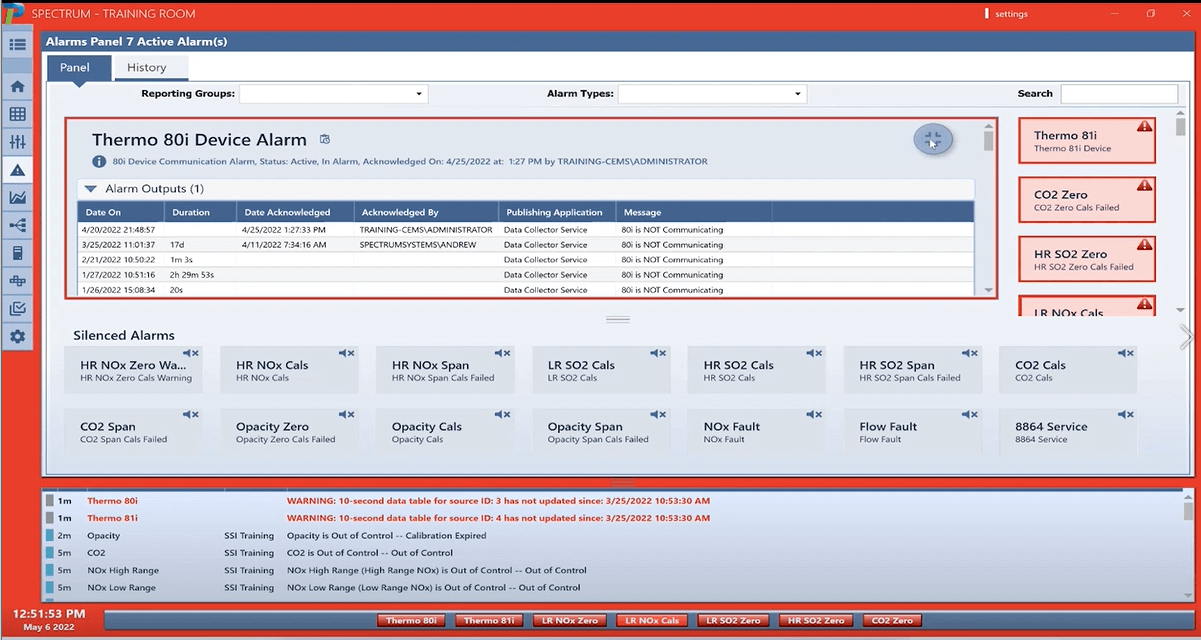
Product screenshot: ESC Spectrum.
QAInsight tackles the calendar: scheduling, planning, and tracking quality-assurance tests, with notices for approaching or overdue tasks. RATAView supports relative accuracy test audits, the testing work used to assess monitoring performance. These products address the obligations surrounding a measurement as well as the measurement itself.
Then there is FleXReports, a subscription product that exports StackVision data into Microsoft Excel, including fleetwide reporting. The spreadsheet survives. It simply receives data from a purpose-built system instead of becoming the place where every upstream problem must be solved. Familiar tools are quite agreeable when assigned a manageable job.
04 / THE ECONOMICSThe bill has more than one line
ESC Spectrum’s business combines software, hardware, custom engineering, and ongoing service. DASProtect makes the continuing relationship explicit. StackVision has Sentry and Fortress support tiers; Prism has Fortress. The program links support and maintenance with resources such as training, software updates, and access to specialist services, depending on coverage.
A Santa Clara public payment record dated August 15, 2025 offers a useful glimpse of the spending. It lists three ESC Spectrum items totaling $71,075: reporting services, DASProtect Fortress, and server management. These are amounts paid for that scope, rather than a universal subscription price or the cost of a complete installation.
The return can also arrive through maintenance. In an unnamed petrochemical case, Alliance reports automated analyzer feeds and immediate notifications replacing manual calibration emails and missed control-room alarms. Its published results include a 50% reduction in gas-chromatograph emergency work orders and savings exceeding $278,000. Those are one customer’s reported outcomes, with no guarantee that another plant would reproduce them.
05 / THE MARKETA rival can draw a dashboard, too
ESC Spectrum competes in an established technical market. CEMTEK KVB-Enertec’s NetDAHS Edge offers emissions reporting and configurable compliance workflows. Nexus Solutions’ CEMView uses a modular architecture with instrument connectivity. Customers can also consider their existing plant control systems and historians, though building a reporting workflow around them brings its own configuration work.
Dashboards and support are therefore insufficient grounds for declaring a category winner. The case for ESC Spectrum rests on how its software, controllers, engineering, and field services fit a customer’s particular monitoring problem. Alliance’s acquisition adds a larger environmental-services network to that proposition. Its stated rationale includes combining monitoring with stack testing, compliance services, and laboratory testing, and simplifying vendor management.
06 / A DIFFERENT MEASUREMENTWhat if the gas stayed in the stack?
In April 2025, ESC Spectrum announced a demonstration developed with EPRI’s Program 233, Unisearch Associates, and utilities. Integrated Path CEMS measures gas concentration along an optical path through the stack or duct. The demonstration concerned gas-turbine combined-cycle units; the company said EPA supported the design as meeting Part 75 requirements.
The engineering appeal is specific. Avoiding sample transport can remove sources of bias and failure associated with moving gas to an analyzer. ESC Spectrum describes potential reductions in calibration-gas consumption, labor, power use, and repairs. Those benefits still need to be assessed against the proposed application. A successful demonstration for one kind of unit does not make every stack a suitable installation.
07 / THE USEFUL LESSONBuy the review process with the software
The customer stories suggest a practice worth copying: make the logic inspectable. Review equations with the people accountable for the results. Agree how the system treats invalid readings. Include acceptance testing and stakeholder approval in implementation. Assign responsibility for routine data review and training. A dashboard becomes useful when someone knows what to do with the next alarm.
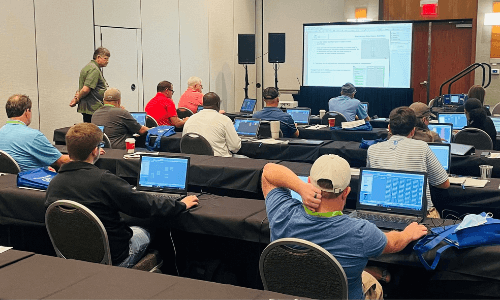
Training photograph: ESC Spectrum.
That approach requires working instruments, a configuration matched to the facility’s obligations, and people prepared to maintain both. Software cannot repair a faulty analyzer by displaying its output more elegantly. ESC Spectrum’s appeal is the ability to sell help at several points along that chain. The smokestack produces the reading. The rest of the business is making it explainable.
EXPLORE / WATCH / FOLLOWGo inside the monitoring room
- CompanyESC Spectrum’s website ↗
- ProductStackVision features and a live-demo request ↗
- VideoESC Spectrum: product explainers and monitoring interviews ↗
- Engineering newsThe Integrated Path CEMS project ↗
- Company newsThe Alliance acquisition announcement ↗
- BlogEmissions data review and reporting ↗
- LinkedIn ↗
- Twitter / X ↗
- Facebook ↗