In February 2018, Erik Kostelnik appeared on a business podcast and gave a bag of coffee to a friend at Cracker Barrel. The episode was about TextRecruit, the recruiting software company he had co-founded, and its recent acquisition by iCIMS. Between the talk of hiring, texting and building a startup alongside a sales job, there was this small, literal delivery. Coffee. A person. Something to take away.
It is a pleasing detail in the career of someone who would next co-found Postal, a business built around making physical gestures manageable through software. The coffee was already there, years before Sendoso announced its acquisition of Postal on May 1, 2025. A sales career can produce elaborate theories about relationships. Sometimes it also produces a bag of beans.
Across recruiting, marketing and his newer work on company names, Kostelnik has returned to a practical question: what gets through? The medium changes. The recipient still has to notice, understand and decide to respond.
From the sales floor to the phone screen
Kostelnik studied finance at Shippensburg University of Pennsylvania and played power forward in college basketball. His later work would put him in another occupation with a scoreboard. Sales measures the result with unusual bluntness. Revenue arrives, or it does not. A promising conversation remains a promising conversation until someone buys.
His career included CareerBuilder and a vice presidency in sales at Identified, which Workday acquired in 2014. He then led sales at Wrike from 2014 to 2016. Those jobs placed him close to the mechanics of growing software businesses: finding customers, organizing sellers and making a useful product pay its way.
The move toward founding a company had a personal edge. In a 2020 sales podcast, he discussed becoming frustrated with creating wealth for other people. The same conversation connected his creativity and competitiveness with his upbringing: an artist mother and a father in business. Ownership offered somewhere to put both impulses.
TextRecruit was operating by 2014. Its proposition was wonderfully ordinary. Candidates used text messages in everyday life. Employers needed to communicate with candidates. The software brought those two facts together, giving recruiters a centralized way to send, manage and track messages. Familiar behavior became a business product.
- 2014TextRecruit
The text conversation - 2018iCIMS acquisition
- 2019Building Postal
The physical delivery - 2025Sendoso acquisition
- 2026BrandScreen
The name before the launch
The reply was the useful part
There was more to this than moving a recruiter’s message onto a smaller screen. Kostelnik argued that candidates wanted speed and convenience. He described helping Gap let people apply by text from inside its stores. A potential applicant could act while the opportunity was in front of them, rather than carry home another intention to fill out another form.
His emphasis was on fitting the recruiter’s existing work. TextRecruit integrated with recruiting and customer systems, avoiding the demand that people rebuild their day just to add messaging. That is a seller’s understanding of software adoption: every extra step gives a busy customer somewhere to abandon the idea.
By March 2017, TextRecruit had raised a $3 million Series A led by SignalFire. It had sent messages to more than five million candidates during the previous year. iCIMS announced its acquisition on January 8, 2018, describing a business with more than 400 customers and products spanning text, live chat and AI.
The results could be strikingly concrete. CDW, a TextRecruit customer, reported an 87% response rate and an average response time of three minutes after introducing the platform. These were one customer’s results, but they explain the attraction. A recruiting team needs an answer. A message that produces one quickly earns its place in the working day.
A package needs a workflow
Kostelnik began building Postal in 2019 with co-founder Jed Danner. By spring 2020, he was laying out the idea publicly: companies had sophisticated systems for sending digital communications, while their physical outreach remained awkward to organize. Gifts, direct mail and branded merchandise had suppliers. The missing piece he wanted to build was a system for putting the activity into an ordinary sales or marketing workflow.
Danner had been his co-founder at TextRecruit too. Mayfield’s Rajeev Batra, who joined Postal’s board, had known the pair from that earlier company. The new venture therefore began with relationships already tested by building and selling a business together. Kostelnik was changing the market he served while keeping a collaborator who had been through the previous undertaking.
He also chose a different place to build. Kostelnik moved to San Luis Obispo to start Postal and said the location helped cut costs by half while attracting talent. In May 2020, he expressed the hope of building a billion-dollar business there. It was an ambition tied to a specific city, rather than an abstract destination on a fundraising slide. Postal emerged from stealth that month with a $9 million Series A led by Mayfield.
This was a different delivery method with a familiar operational problem. The recruiter needed a text conversation inside a business system. The marketer needed a physical delivery connected to the systems already keeping track of customers and campaigns. In each case, the product had to make an existing human behavior easier to use at work.
Postal combined a vendor marketplace with integrations into tools such as Salesforce, HubSpot and Outreach. A company could organize a gift or experience while retaining the budgeting and tracking that a business purchase demands. The recipient encountered the gesture; the sender had to account for it.
The vendors mattered too. A marketplace gave local and specialist businesses access to corporate buyers. That put a second constituency inside the product. Kostelnik had to attract companies that wanted to send things and suppliers with things worth sending. A beautifully wrapped parcel still requires someone willing to pack it.
Connect outreach to sales and marketing activity.
Use the marketplace for gifts, swag and experiences.
Bring spending and campaign activity into business systems.
The gift meets the finance department
In September 2021, Postal announced a $22 million Series B led by OMERS Ventures, with Mayfield participating. The round brought its announced funding total to $31 million. At that point it reported more than 4,000 users, more than 100 vendors and over 250 new customers. The money was intended for hiring, product development and international expansion.
Growth also made the accounting question harder to dodge. In July 2023, Postal joined Planful’s partner network to help customers connect campaign spending with marketing plans, budgets and returns. Sending a present might feel spontaneous. Approving the next quarter’s budget generally does not. Kostelnik’s product had to be legible to both the person choosing the gift and the person checking the expenditure.
Then came a conspicuous number. Postal placed No. 34 in Deloitte’s 2024 Technology Fast 500 for North America. The ranking recorded revenue growth of 5,215%. The result put a measurement beside the proposition Kostelnik had been selling: businesses would pay for software that brought order to physical engagement.
Place in the North American ranking
Revenue growth recorded in the ranking
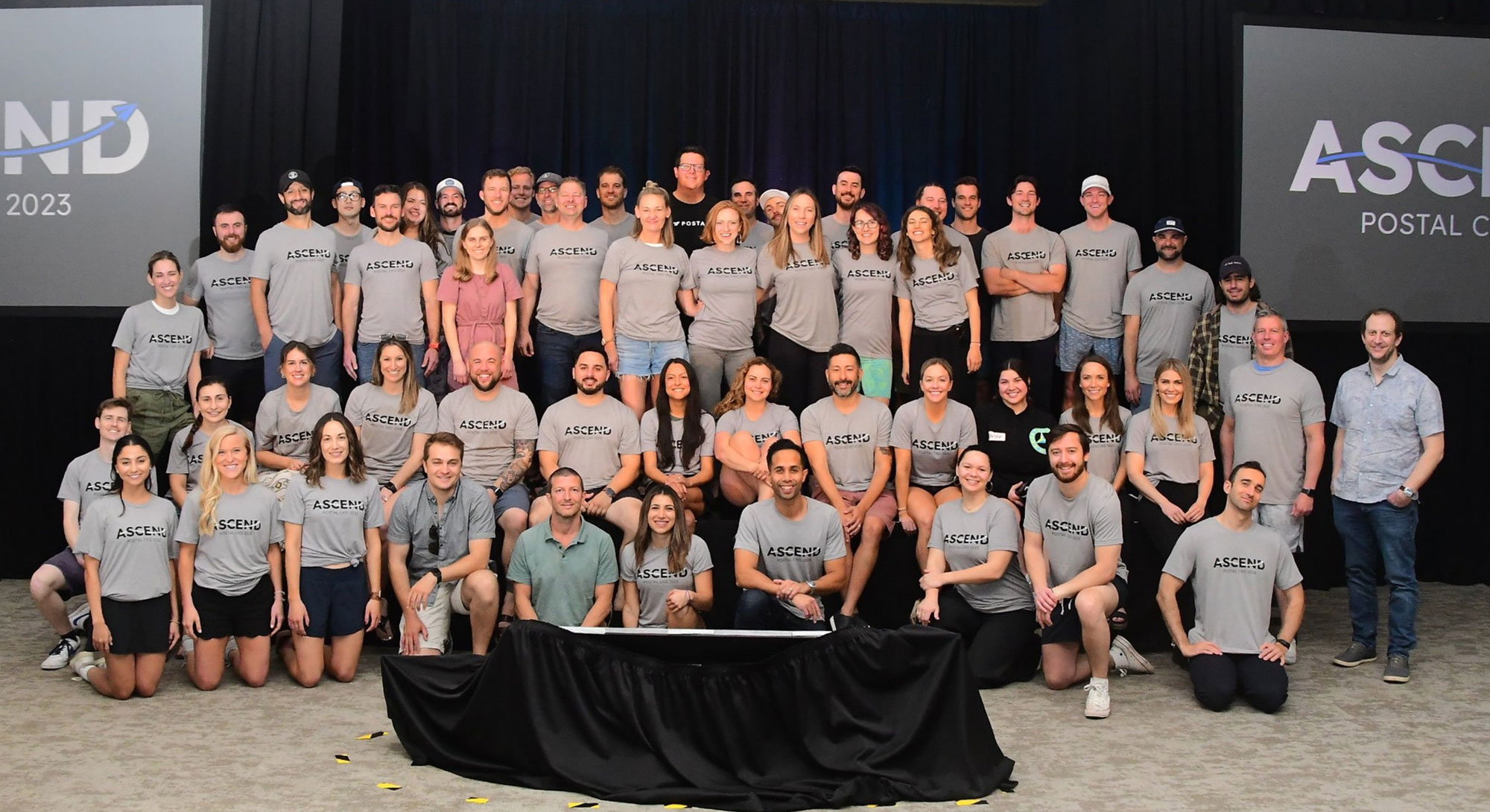
Hot sauce belongs in the interview
For a founder selling ways to make business communication less forgettable, a conventional interview format would have been a small missed opportunity. Taking Flight, the Postal podcast he hosted, paired conversations about business experiments with tasting flights from vendors in the marketplace. The format gave the merchandise something to do besides sit in a catalogue.
Guests included Seth Shaw, whose career encompassed Airtable and Wrike, and Harsh Jawharkar, whose marketing roles included Slack and Atlassian. The conversations explored customer retention, marketing and experiments that had produced useful results. A hot sauce challenge accompanied the Jawharkar episode. There are interview techniques that invite a revealing answer; this one also supplied a condiment.
Kostelnik’s own reading and recommendations offer another glimpse of his interests. In a January 2024 interview, he recommended Walter Isaacson’s biography of Benjamin Franklin and suggested Outreach’s Manny Medina and ZoomInfo’s Henry Schuck as people to hear from. His advice emphasized listening to customers and employing marketers who could tell a good story.
The public work leaves a consistent impression of what interests him: the relationship between an experiment and its result. On Taking Flight, guests explained what they tried. At Postal, a physical experience became something a customer could deploy and evaluate. Even the tasting format put the company’s premise to work in front of an audience.
“You’ve got to hire great marketers.”
Erik Kostelnik / January 2024
The competitor becomes the next chapter
Sendoso’s acquisition brought Postal into a business pursuing the same broad problem. In announcing the deal, Sendoso emphasized Postal’s interface, employee-focused capabilities, company stores and branded merchandise alongside its own global sending infrastructure. The logic was a wider set of tools for business gifting and direct mail.
Kostelnik was Postal’s co-founder and CEO at the time of the transaction. He described the combination as a way to give customers greater scale, new solutions and product innovation. It was the second clearly documented acquisition in his career as a founder, following TextRecruit’s sale to iCIMS seven years earlier.
That pairing gives the story an interesting symmetry. TextRecruit had connected familiar messaging with the machinery of recruiting. Postal connected familiar gifting with the machinery of marketing. Both eventually joined another software business that wanted those capabilities. The exits changed ownership; the underlying work was making everyday interactions fit into larger organizations.
A new name, and another beginning
By October 2026, Kostelnik’s work had moved beyond the Postal title. BrandScreen identifies him as its founder and CEO, and as co-founder and CSO of Navi. He remains based in San Luis Obispo, California. Postal’s biography also describes a family life there with his wife and three children.
BrandScreen addresses an earlier moment in a company’s life: choosing its name. It brings together checks on trademarks, domain names, business entities, social handles and search competition. The aspiration is to help founders spot problems before they spend their time and money building around a name.
There is a modest irony here. After years helping companies attract attention, Kostelnik is building a tool to help them work out whether they can establish a distinct identity in the first place. A name has to survive several encounters before it ever reaches a customer: a domain search, a competing business, someone else’s social account.
His career invites a practical reading of entrepreneurship. Look at a moment people already recognize, then investigate the work surrounding it. A text needs a record. A gift needs a budget. A company name needs checking. Kostelnik keeps finding software to build around these small, consequential acts. The bag of coffee was easy to understand. Organizing everything around the gesture became the business.