Erik Kiser and his riding partner had made it to the bridge when the evening acquired a complication. Will had left his phone behind, back where they had taken a photograph in the Marin Headlands. The ride now included an unwelcome repeat. Kiser’s account, written in March 2017, ended with a modest verdict: “We were zapped getting home.”
There are more glamorous ways to introduce a software founder. There are also less useful ones. A forgotten phone is easy to understand. So is the irritation of discovering that a job you thought you had finished requires another trip. Kiser had been encountering a more expensive version of that problem at work: companies kept needing custom connections to exchange the information that let them do business.
His cycling note appeared in the same month as a much longer explanation of the software he was building. One concerned a trip that needed repeating. The other concerned years of technical work he wanted companies to stop repeating. The coincidence makes a convenient opening. The career that followed gives it substance.
A good business, with a recurring problem
Kiser attended Indiana University Bloomington from 2006 to 2010. His listed activities include the cycling team and service as a class representative for the School of Informatics. He went into consulting, working at Ciber before starting his own firm. This was an education in the practical distance between a business decision and the systems required to carry it out.
The particular territory was electronic data interchange, usually shortened to EDI. Purchase orders, shipment notices and invoices have to travel between companies in forms their systems can understand. A manufacturer and a retailer may agree perfectly well about selling a product while their software remains stubbornly unacquainted. The commercial handshake can be the easy part.
In 2013, Kiser founded Doppio Group, a consulting firm focused on Infor M3. He later described growing it to about 50 people, working with manufacturers including Rip Curl, Jelly Belly and Red Wing Shoe Company. Those were businesses with products people could recognize. Their integration problems were considerably less photogenic.
In his conversation with Sarah Barnes-Humphrey, Kiser described the uneven relationship between a manufacturer and a much larger trading partner. A retailer could set the requirements. A supplier might have only one or two people available to meet them. Being good at making boots did not automatically equip a company to handle another business’s technical demands.
That imbalance mattered to him. He had seen the work from the developer’s seat, then from the owner’s seat. A new customer could bring a new project, but the recurring need for intervention remained. There was plenty to do. There was also a reason to ask why so much of it needed doing again.
By March 2017, Kiser was writing that Doppio had supplied both the understanding and the financial support for developing Orderful. He said he had spent the previous two years building the product. The consulting business had become a way to study a problem closely enough to imagine a different business around it.
What could the next trading partner reuse?
The temptation of the quick fix
Kiser’s explanation of systems thinking begins with a recognizable pleasure: getting something working. Developers solve a problem, complete an integration and move to the next task. Under pressure, a patch is attractive. It produces an answer today. The bill for maintaining a collection of individual answers arrives later.
His systems-thinking essay treated that habit as a strategic problem. A company could keep adding custom work until its available time disappeared. He wanted Orderful to create reusable connections, with requirements and logic that could serve more than the immediate project. That required changing how his own team understood its job.
“We don’t identify as consultants.”
Erik Kiser · Systems Thinking at Orderful
For someone who had founded a consulting firm, that is a consequential sentence. Expertise still mattered. Its destination changed. Instead of ending in another completed assignment, it needed to become something the next company could use. The product would have to remember what the previous project had taught the people building it.
One integration
Reusable requirements
David Ulevitch’s 2019 investment announcement described Kiser putting his own money into Orderful. Andreessen Horowitz led the Series A, and Ulevitch joined the board. His account emphasized a network in which companies could connect once and trade through shared infrastructure. It was the larger version of the question Kiser had brought out of consulting.
The $10 million Series A also arrived in a market being pushed by expectations of faster delivery. Kiser pointed to the pressure flowing from Amazon and Walmart down to suppliers. The consumer saw a delivery promise. Somewhere behind it, another company had to make its data arrive correctly.
A company has to learn, too
While the product was taking shape, Kiser was learning to build an organization around it. In a March 2018 hiring essay, he wrote that the company had grown from three people to 16, with three offices in three countries. Finding and hiring people, he said, had proved harder than closing deals.
His rules were specific. Cultural fit deserved attention throughout the process. A role needed definition before someone was hired into it. He wrote that the team should master the work before recruiting a person to take it on. That put responsibility on the employer to understand the assignment before asking somebody else to succeed at it.
He also wanted an organized process that moved quickly. The combination is revealing: demanding decisions, made without unnecessary delay. Early hiring advice often doubles as a record of what a founder has discovered the hard way. Kiser’s essay shows him trying to make those discoveries useful to the next round of decisions.
There is a quieter continuity here with his product thinking. Poorly understood requirements cause trouble when connecting software. Poorly understood roles cause trouble when hiring people. In both cases, his written response was to do more of the defining work upfront. The parallel belongs to the essays themselves; no grand theory of personality is required.
Counting the handoffs
Kiser’s FreightWaves conversation with Grace Sharkey brought his ambition down to an ordinary working day. Traditional testing could mean documents, emails, calls and waiting for another person to respond. Orderful’s approach let a developer submit a transaction and receive feedback through software, with trading partners able to work on their own schedules.
Waiting is an unusually durable competitor. It does not need a sales team. It simply occupies the space between two people who need something from each other. Kiser’s argument for self-service was that useful feedback could arrive while the developer was still working, rather than after the next exchange of messages.
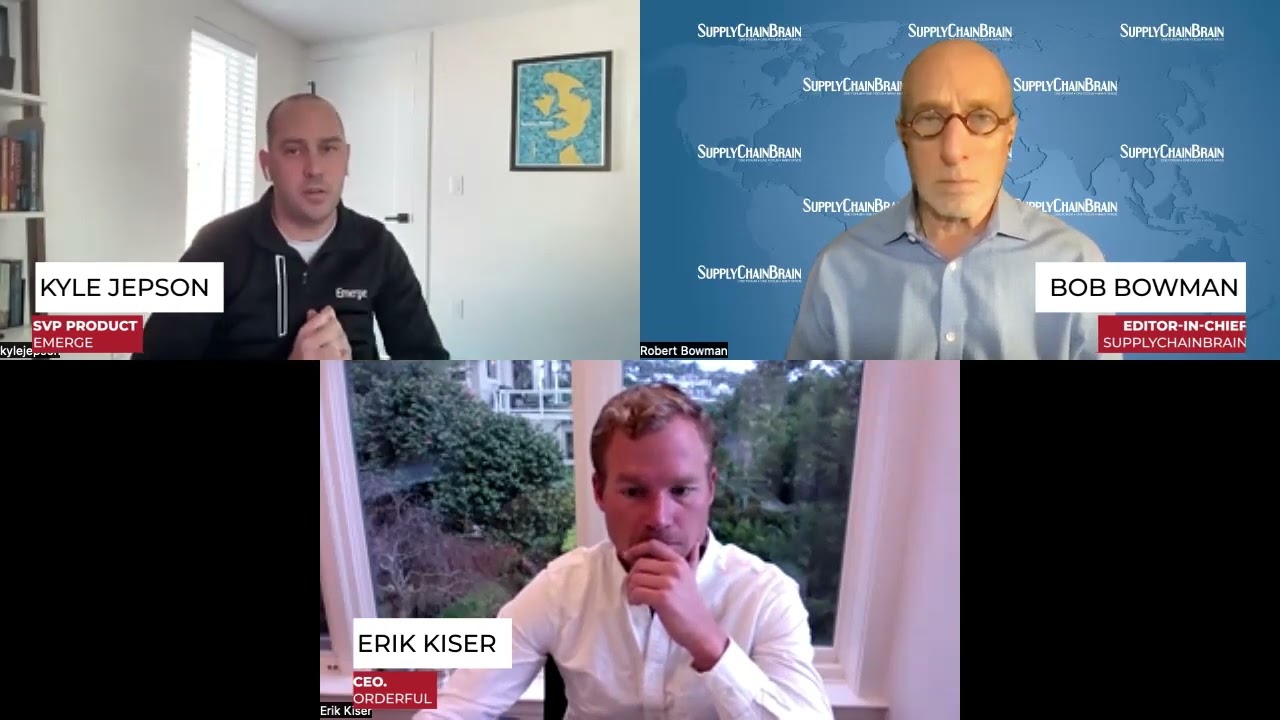
A discussion with Emerge’s Kyle Jepson illustrated the same issue from another angle. Emerge had engineers comfortable with modern web services. Older EDI connections were less familiar territory. Orderful offered an API those engineers could work with while handling the validation, conversion and communication behind it. Kiser was selling the ability to keep working with familiar tools.
Another customer conversation supplied a particularly useful unit of measurement. KBX’s Jim Bruckert described an onboarding process that had involved 95 steps. Asked by Kiser about the revised count, he put it at 32. Bruckert also described cycle time coming down to around four weeks. These were the details of one customer’s process, with its own requirements and history.
The appeal of that count is its plainness. It replaces a broad promise of efficiency with something a team can inspect. Which handoff disappeared? Who can now test without waiting? Kiser’s background made those questions natural. He had spent enough time around the work to know that the awkward parts tend to live between the boxes on a diagram.
The next version of once
Orderful’s financing continued: a $19 million Series B in 2021, then a $15 million growth round in 2024 led by NewRoad Capital Partners. In June 2026, the company announced a $35 million Series C led by Koch Disruptive Technologies, with NewRoad participating. Orderful put its total funding at $85 million.
The 2026 announcement connected that capital to Mosaic and an expanding role for AI. Orderful described systems that read trading-partner specifications, generate guidelines and mappings, and maintain them as requirements change. It also set out ambitions for better visibility into trading data and decisions made in real time. Those are the company’s plans and product claims, with execution still the work of the business.
For Kiser, the subject has remained consistent even as the tools have changed. He began with people building connections by hand. He moved toward a network that could reuse those connections. Now he is pursuing more automation around the documents and rules that make the connections possible. Each stage asks how much knowledge can remain in the system for the next person.
The bicycle has remained in the record, too. The 2018 Whistler GranFondo results list an Orderful team, with Kiser recording 3:57:21. A company name had made its way onto a results sheet, far from a software demonstration or investor announcement. There were colleagues, a course and a finish time.
It is a pleasant place to leave him: a founder with a technical obsession and a documented interest in getting outside. The early ride in the headlands had required a return trip for a phone. At work, he kept looking for ways to spare other people the return journey. Years later, that remains a concrete ambition: finish the connection, preserve what was learned, and let the next business get on with its day.
Follow the connections
Read Kiser’s writing, explore Orderful and watch the longer conversations.