Eric Hochberger’s business education came with celebrity gossip attached. Before Mediavine managed advertising for other publishers, its founders ran websites of their own. They knew how to attract readers. Getting paid for those readers proved to be a separate discipline, with its own rules, middlemen, and unpleasant surprises.
Hochberger had a B.S.E. in Computer Engineering from the University of Michigan. He brought that training to a business in which a perfectly good story could sit beside a perfectly disappointing advertisement. Eventually, he began rebuilding the machinery. An internal fix became the basis of a different business.
It is an origin worth keeping in view. Today, he is Mediavine’s co-founder and CEO, discussing auctions, audience relationships, and compensation for content used by AI. The questions have become larger. The original problem remains recognizable: somebody has made a page worth visiting. How does that person earn enough to make another?
The clients did not always listen
Mediavine began in 2004 with search-engine optimization and publishing. Hochberger attended Michigan from 2000 to 2003, placing the company’s start just after those university years. His work would take him from the mechanics of attracting traffic to the mechanics of monetizing it.
The early SEO consulting business had a familiar irritation. Clients would accept advice, then stop following it. The founders decided to try their methods on their own websites. The Hollywood Gossip was one result. Hochberger has described the incongruity of three men with little celebrity-gossip knowledge building an entertainment publishing business through search.
The subject matter provided a pleasing disguise for the technical work. A gossip website still needs pages that load, content that can be published efficiently, and readers who can find it. Hochberger built a content-management system for Mediavine’s own properties. Underneath the celebrity headlines sat a programmer’s collection of practical decisions.
A better auction, then a shorter trip
When the sites’ advertising income declined, Hochberger investigated doing the work themselves. He has said the changed approach quadrupled their own revenue. That figure belongs to the founders’ experience; it is no promise about what another publisher will earn. For Mediavine, it made the advertising tools worth taking seriously as a business.
The company’s header-bidding system dates to 2014. Its appeal was competition: potential buyers could bid for an impression rather than being approached one after another. In a sequential arrangement, the order of buyers helps determine what happens. A simultaneous auction gives competing demand a chance to meet. The difference sounds procedural until it appears in the publisher’s earnings.
Hochberger later turned his attention to where the auction ran. Mediavine moved from client-side header bidding toward its own server-to-server OpenRTB system, the Mediavine Exchange. The browser could send a request to Mediavine’s infrastructure, which handled the onward work. Less of the machinery had to live on the reader’s device.
In August 2021, he announced the Exchange’s first international data center in Frankfurt. For readers in Europe, the Middle East, and Africa, distance to a server mattered. A request traveling across the Atlantic consumes time even if the person holding the phone scarcely notices. Advertising systems do notice. Putting infrastructure closer to those readers addressed a small delay repeated across many visits.
Bradley Cooper, allegedly
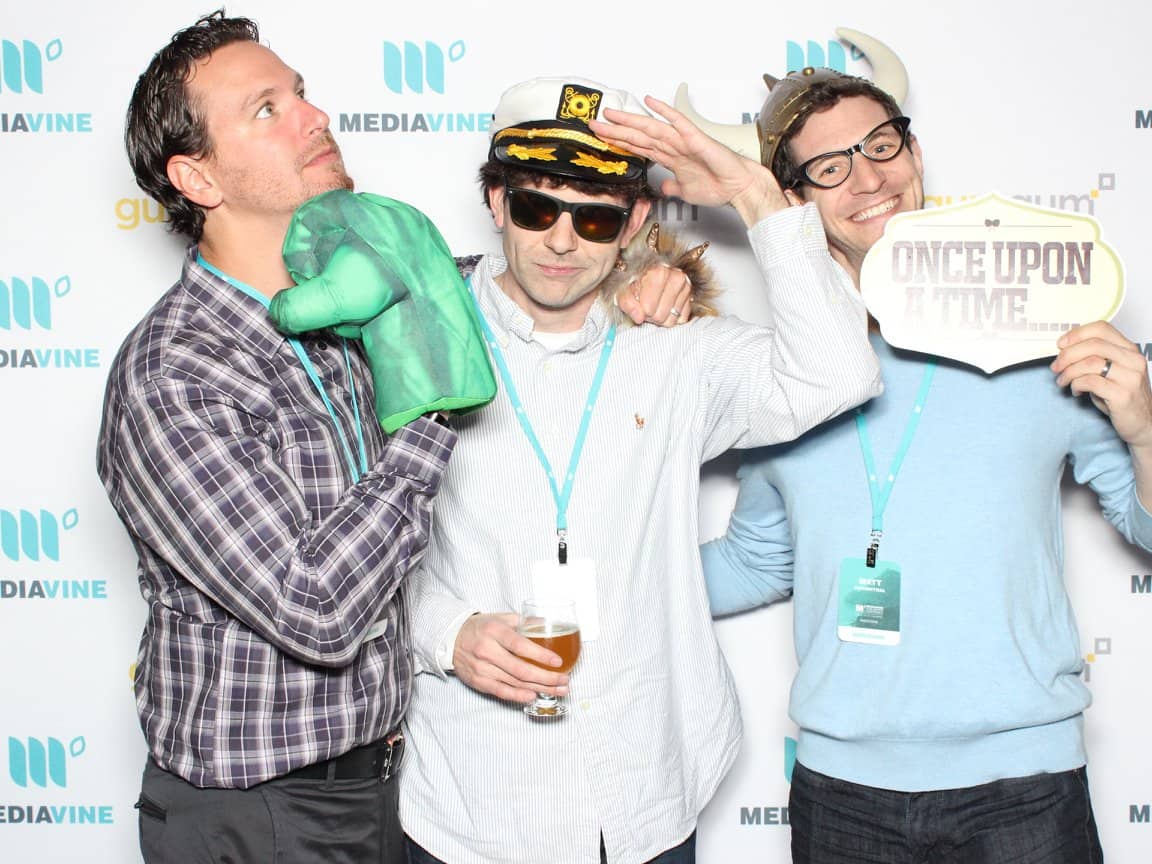
There is a useful counterweight to all this infrastructure in the founders’ public banter. Matt Richenthal once teased Hochberger about claiming to look like Bradley Cooper. Richenthal’s verdict was that Eric really looked like Matt. Corporate biographies rarely arrange for the co-founder to heckle the leading man; this one benefits from the interruption.
The joke appeared alongside a more consequential observation. Richenthal credited Hochberger’s homegrown content-management system with helping Mediavine succeed before it took on outside publishers. The code had a daily audience of its own: the people trying to run the company’s websites. A tool that made their work easier was valuable long before it needed a sales pitch.
His public GitHub account adds a quieter detail. Under the name ehoch, it lists Ruby projects, including an FAQ tool for Spree Commerce and a Rails Admin spam action. These are working-web concerns: forms, administration, images, the ordinary furniture of a site. They suit a career whose big turn began with making existing tools do a better job.
He lives in Lighthouse Point, Florida, with his wife, daughters, and an abundance of dogs. The household description is more relaxed than the job title. Both belong in the picture: a computer engineer responsible for advertising infrastructure, and a family biography whose canine headcount has escaped precision.
The engineer in the CEO’s chair
Video gave Hochberger another set of operational problems. Mediavine initially depended on third-party players, with uploads and individual embeds to manage. Its existing image work with Cloudinary suggested a more workable route. He has described integrating the video service in less than a day of development and using it to regenerate more than 30,000 videos in a day when introducing new codecs.
The gains were measured in saved developer time and reduced bandwidth. A half-size video at the same quality is an improvement the viewer need never think about. Much of this work is successful precisely when it becomes unremarkable. Nobody opens a recipe hoping to admire the delivery infrastructure.
In April 2019, Hochberger announced a unified Mediavine Video Player for mobile and desktop. Combining previously separate offerings made maintenance and improvements easier. It also simplified what publishers had to understand. The recurring preference is visible: fewer separate pieces to manage, with more of the technical coordination handled behind the page.
“We still answer to you, our publishers.”
Eric Hochberger, 2023
Ownership enters his explanation of those choices. In 2023, Hochberger wrote that Mediavine had no outside investment and was not beholden to external shareholders. He connected that independence with the ability to invest for the long term, including in Grow, its audience tool. Independence, in his telling, affects the development calendar.
That calendar has also been shaped by people outside engineering. Food Fanatic launched in 2013, bringing Mediavine into closer contact with food bloggers. Hochberger met Amber Bracegirdle at a food-blogging conference. The connection helped extend the company’s understanding of what those publishers needed.
In October 2024, he announced Bracegirdle’s transition from day-to-day operations to an advisory role. His account credited her with nearly a decade of work shaping Mediavine’s brand, culture, and social impact. The company’s story contains both the engineer’s tools and the relationships that gave those tools a wider purpose.
Four hours with the people who pay the bills
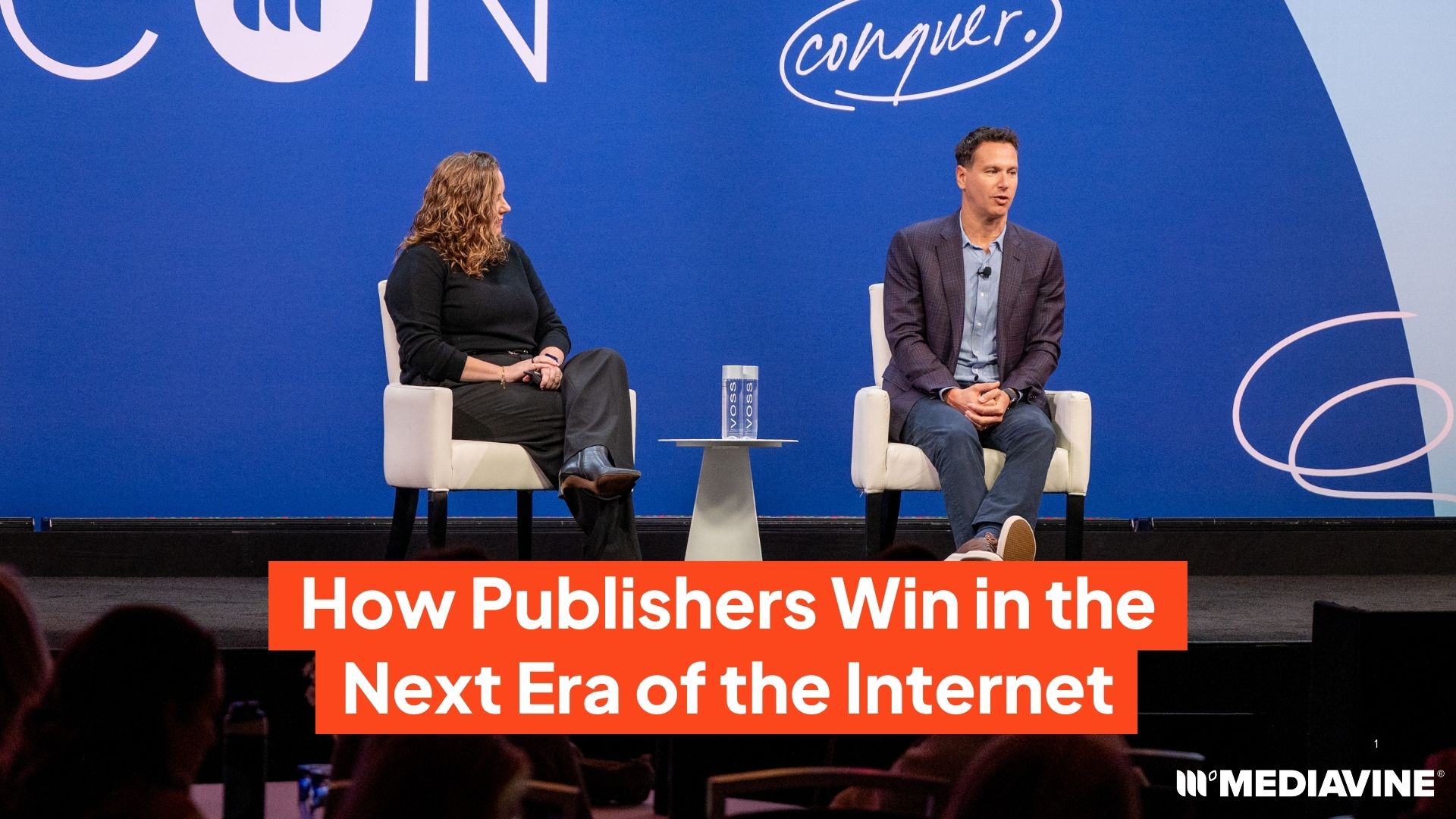
On September 17, 2025, Hochberger put himself in front of bloggers on Reddit for an AMA. The session lasted four hours. It is a revealing format for someone selling infrastructure: the conversation can move immediately from strategy to a rejected application, a technical incompatibility, or a publisher’s lost traffic.
One participant asked whether there was hope after losing 80 percent of Google traffic. Hochberger acknowledged the severity of that loss and encouraged diversification: email audiences, social platforms, and changes to search strategy. For a founder whose own publishing business had relied on SEO, the advice marked a change in the conditions around a familiar craft.
He also addressed a request about reviewing a rejected Journey application. After suggesting a route to seek another look, he joked about the reaction his support colleagues would have to finding the comment. The moment brought the grand topic of the future of publishing back to a very ordinary company problem: somebody still has to answer the ticket.
His advice placed more responsibility on publishers than simply waiting for a search ranking to recover. Build relationships that can bring people back. Keep the website useful to an audience with reasons to return. Advertising depends on visits, but the route to those visits need not always pass through the same platform.
Who pays when the reader never arrives?
AI has made the compensation question harder. A creator’s work can help generate an answer without producing a visit to the creator’s page. In July 2025, Hochberger supported Cloudflare’s Pay Per Crawl initiative, designed to let publishers charge AI crawlers for access to content. He presented it as a step toward paying the people whose work powers the web.
He also welcomed the end of Google’s Recipe Quick View pilot that July. The proposed experience let people view a recipe within search rather than leaving for the publisher’s website. For a food publisher, the missing visit matters: useful content has been delivered, while an opportunity to earn from the page may have disappeared.
These debates extend a concern already present in his advertising work. Attention, access, and payment do not automatically travel together. Someone has to establish the terms of the exchange. Hochberger’s position puts independent creators inside that negotiation, including when the thing arriving at their site is software rather than a reader.
A smaller front door, left open
In August 2026, Hochberger announced changes to Journey by Mediavine, the program for publishers earlier in their growth. The requirement became 1,000 premium sessions a month, meaning traffic from markets such as the United States, United Kingdom, Canada, and Australia. Traffic from other countries was not a penalty; the requirement concerned sufficient monetizable impressions.
Applications were unified across Journey and Mediavine. Google Analytics data could be used for evaluation, removing the need to run Grow for 30 days before applying. Grow became optional, and Journey publishers gained access to the shared dashboard. The changes addressed both entry and what happened after admission.
Hochberger continued to recommend audience retention tools and described Journey as an investment in human publishers early in their development. That is a practical expression of the aspiration running through his public work: help independent publishing remain a business people can enter and sustain.
The celebrity-gossip site and the AI crawler belong to different eras of the internet. They pose a related question for Hochberger. A page takes work. A reader may arrive by search, email, or habit. The machinery between that work and a payment deserves attention, even when the headline above it is much more entertaining.
Keep the conversation going
Explore Mediavine, Hochberger’s writing, his LinkedIn profile, and GitHub.
Watch: the Niche Pursuits interview Watch: ads, experience, and search with TopHatRank Listen: The Business of Content, March 2026 Read: the August 2026 Journey update Read: the September 2025 blogger AMA