Imagine a supermarket that lowers its prices and waits for shoppers to notice. The spreadsheet looks better. The store still feels expensive. Engage3 has built a business around this awkward possibility: a retailer’s price position and its reputation for value can move separately. The basket is arithmetic. The reputation is something people carry home.
- Engage3 combines competitive pricing data with models of shopper price perception.
- Festival Foods and Moët Hennessy are named customers with different pricing problems.
- The practical idea: identify which prices influence perception before spreading discounts everywhere.
The Davis, California company calls its approach Price Image Management. Its software helps retail and brand teams collect competitive intelligence, compare products, and recommend prices. The interesting part is the sequence. Knowing that another store charges less is useful. Knowing whether that difference influences where somebody shops is a different kind of advantage.
The basket and the memory
A shopper does not perform a complete price audit before choosing a supermarket. Engage3’s premise is that particular products have disproportionate influence on the overall impression. It calls these Price Image Drivers. A retailer can therefore spend money reducing prices without spending it on the products that change its reputation. That is the budget problem hiding inside the psychology problem.
Engage3 sells tools for finding and managing that relationship. The intended users are pricing analysts, merchants, and revenue management teams. Their task is to balance traffic, revenue, and margin across products and locations. Grocery is a natural setting, but the company also serves drug, convenience, pet, sporting goods, and e-commerce retailers, alongside consumer brands.
“Pricing remains the most powerful lever on the P&L.”
Edris Bemanian, CEO · December 2023
First, compare the right things
Before the psychology comes the housekeeping. Engage3 combines automated web collection, professional in-store audits, and self-service collection. MissionControl organizes competitive shopping work: planning, scheduling, execution, and analysis. Its Competitive Intelligence Management offering brings that information together. A price becomes more useful when somebody knows where it came from and what it describes.
Then comes product linking. Retailers compare equivalent items across assortments, including products without identical branding. Engage3’s Lighthouse module addresses that matching task. An impressive model cannot repair a comparison built around the wrong product. For a prospective buyer, inspecting the matches is a sensible place to begin.
- 01ObserveOnline prices + store audits
- 02CompareLink comparable products
- 03DecideBalance perception + margin
Consider the buying decision as three separate checks. Does the service see the competitors that matter in your market? Does it compare products on terms your merchants accept? Can your team turn its recommendations into changes customers actually encounter? These are editorial questions for evaluating this kind of software. They keep a demonstration attached to the operating problem: a recommendation has to survive the journey from a dashboard to a real shopping trip.
This is also where a pricing program can stumble first. As an inference, stale observations or poor matches can distort the recommendation before a price reaches a shelf. Engage3’s integration of collection, linking, and optimization addresses that dependency. Buyers still need to check local coverage and data freshness against their own assortment.
A Wisconsin grocer takes the next step
Festival Foods supplies an adoption example. In August 2023, the Wisconsin grocer expanded an existing Engage3 relationship. It already used omnichannel competitive intelligence; the expanded agreement added Price Image Management. At the announcement, Festival operated 40 stores. Its manager of business analytics, Benjamin Plaza, described the appeal in terms of understanding customer psychology while growing revenue and trips.
The sequence is instructive. The grocer built on a data program it already used, then added another decision tool. The announcement documents that expansion, rather than a controlled trial of Festival’s financial results. It also reported that Lighthouse created 50 million unique product links during 2022, with customer acceptance above 99.3%. Acceptance measures customer agreement; it should not be mistaken for an independent accuracy audit.
Engage3 reported serving eight of the world’s ten largest retailers in March 2025, alongside 300+ customers across 100+ countries.
Why buy the data collector?
The founders had encountered retail pricing before. Brothers Ken and Tim Ouimet created KhiMetrics, which SAP acquired in 2006, and founded Engage3 in 2008. That background helps explain the company’s concentration on pricing science. Its leadership draws on retail software and analytics businesses including SAP, Revionics, dunnhumby, Nielsen, and Catalina.
In August 2022, Engage3 acquired Dexi, an enterprise web data collection company. The stated purpose included expanding data volume, reliability, and product linking. Read as a strategic choice, the acquisition brought more of the input machinery into the business. Engage3 later introduced an Omnichannel Intelligence Module to help brands track execution across digital and physical retail.
Moët Hennessy shows why brands belong in this story. Its October 2022 partnership addressed pricing visibility across major chains, independent liquor stores, and other wine and spirits channels. A brand needs to understand how its products appear in a fragmented market. The analytical starting point resembles a grocer’s, even when the bottle on the shelf is rather more celebratory.
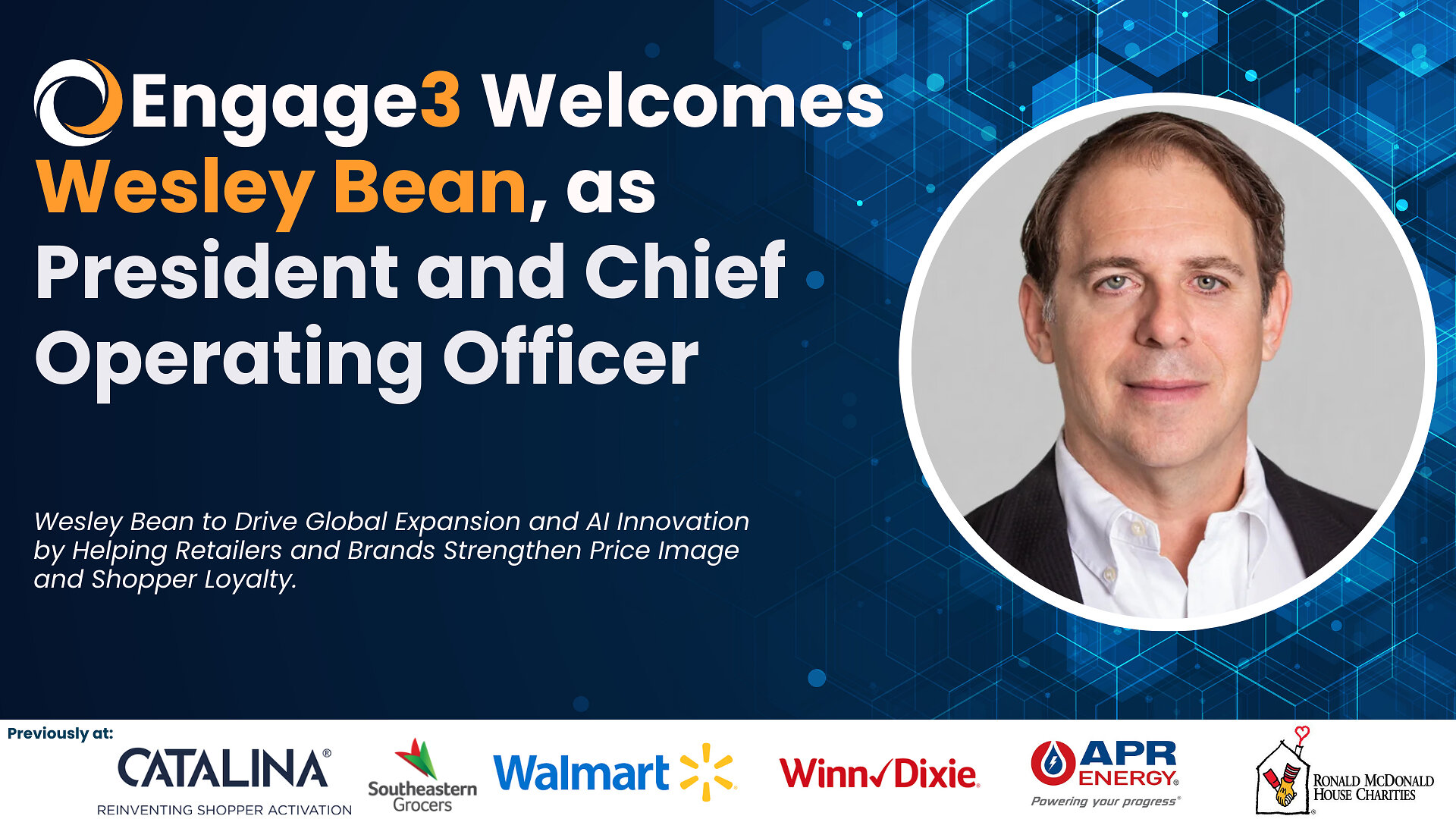
The business earns recurring subscription and data-services revenue. Customers buy through a quote-based sales process. Financing has supported its expansion: Engage3 announced a $35 million Series D in December 2021, led by Arrowroot Capital. Espresso Capital announced a $25 million credit facility in April 2024. The latter is borrowing capacity, distinct from equity investment or cash necessarily drawn.
Spend the discount where it speaks
Engage3 operates in a competitive field. Revionics also offers retail price optimization and discusses price image. Engage3’s particular proposition combines omnichannel collection, product linking, and perception modeling. Its value depends on whether those components improve a customer’s decisions and working process, rather than on the mere presence of AI.
A practical experiment could begin with one category and a defined group of stores. Establish the competitive position, check the product comparisons, and record the outcome you want to change. Then decide what evidence would justify continuing. More units sold may look encouraging while a smaller profit pool tells another story. Keeping both measures in view makes the experiment useful even when the first recommendation disappoints. This is a suggested evaluation method, rather than a claim about Engage3’s implementation process.
Here is the useful idea to copy: identify products that influence your price reputation, test focused changes, and measure shopper response alongside profit. That is an editorial application of the approach, not a guaranteed outcome. It depends on usable data, enough observations, and a team able to execute. A model cannot make unavailable products available or redeem a disappointing shopping experience. But it can give a retailer a sharper question to ask before paying for another discount.