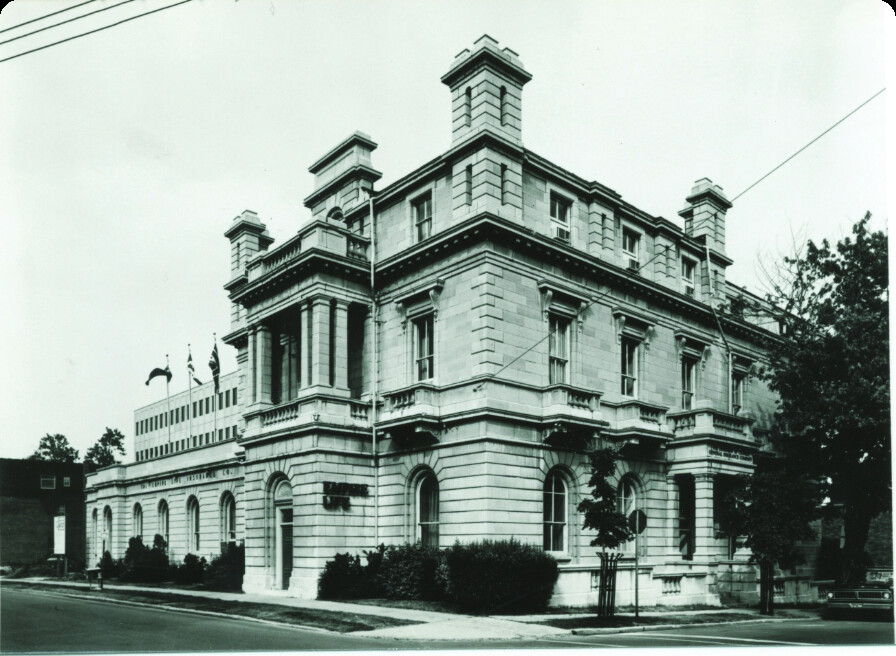
Insurance companies sell a peculiar thing: a promise that may not be tested for thirty years. Empire Life has been making that promise since 1923, first from Toronto and, after a 1936 merger, from Kingston, Ontario. The company now underwrites individual and group life and health coverage, manages retirement money and serves employers with benefits plans. The old product is reassurance. The new contest is how quickly reassurance can move through a browser.
That makes Empire Life an instructive middleweight. It is not a bank with a branch on every corner, and it is not an insurtech hoping a pastel website can substitute for a balance sheet. It sits between those poles: among Canada's ten largest life insurers by assets, controlled by E-L Financial, distributed heavily through independent advisors and focused on Canadian customers. At the end of 2025 it reported C$20.8 billion in assets, C$1.832 billion in total revenue and C$201 million in common-shareholder net income.
Three businesses under one sensible coat
The company works in three broad lanes. Individual Insurance includes term life, permanent coverage and critical-illness policies. Group Solutions sells health, dental, disability, life and wellness benefits, particularly to small and midsize employers. Wealth Management offers segregated funds, guaranteed-interest contracts, annuities and registered accounts. The common customer problem is not a lack of financial products. Canada has plenty. It is turning a mortgage, payroll, retirement date, diagnosis or death into a plan that does not require the buyer to become an amateur actuary.
Empire Life's differentiation is therefore less about inventing insurance than packaging it with human distribution and useful software. Independent financial advisors, managing general agents and benefits producers do much of the explaining. Fast & Full applications move life and investment business online. Group-plan members submit eClaims. Administrators get digital cards and downloadable billing. My Advisor Dashboard is replacing the older Business Centre with search, requirements tracking and service transactions in one place.
“Provide expertise and intelligent solutions to help Canadians navigate life with confidence.”Empire Life's mission, refreshed in 2025
The clever wedge is an underused account
The clearest recent example is the Registered Disability Savings Plan it launched in October 2025 - the first RDSP offered by a Canadian life insurance company. An RDSP is not a shiny invention. It is a federal, tax-sheltered vehicle for Canadians approved for the Disability Tax Credit, with grants and bonds that can reach C$90,000 over a lifetime for eligible beneficiaries. Yet only about one-third of eligible Canadians had one when Empire Life entered the market.
Empire Life's move was to place segregated-fund investments inside the account and let insurance-licensed advisors offer it through a fully online application. That is a distribution innovation disguised as a product launch. Families get government incentives, insurance guarantees and an advisor who can help with an intimidating application. Advisors get a reason to build deeper, multigenerational relationships. Empire Life gets assets it may manage for years.
This is also the part worth copying. Look for a valuable program with low adoption, then ask whether the bottleneck is awareness, paperwork or distribution. Do not build a new benefit when the existing one is stranded behind a bad journey. Build the bridge. The approach is weaker when the incentives are small, the rules change frequently, or the distributor lacks the patience and knowledge to guide a vulnerable customer. In those conditions, digitizing the form simply produces faster confusion.
Insurance revenue kept climbing
What failed first was the assumption
Digital transformation stories are often edited to remove the invoices. Empire Life's numbers put one back in. Fourth-quarter 2025 common-shareholder net income was C$5 million, down from C$16 million a year earlier. Better investment and insurance-finance results and a stronger Individual Insurance service result were offset by higher non-insurance expenses tied to information systems and workforce costs. The company did not disclose a neat price tag for “becoming convenient,” but the direction is plain: software, security, integration and the people to run them cost money before they save it.
A smaller product decision shows what changed Empire Life's mind. At the onset of the pandemic, it embedded telemedicine in extended-health benefits at no extra cost because plan members could not easily see doctors. By September 2023, lockdowns had ended and in-person consultations had returned. Empire Life shifted basic telemedicine to an optional C$2.39 per member per month, while keeping medical-expert and mental-health-navigation services embedded. The emergency assumption failed first; the product followed.
Then demand moved again. In late 2025 Empire Life added myStrength, Teladoc Health Canada's digital mental-wellness platform, for group members with telemedicine coverage. The lesson is not to add and remove benefits on a whim. It is to price according to the job a product is doing now, not the crisis that introduced it. This fails when an employer values predictability above customization, or when an “optional” benefit creates one more decision for an already overloaded HR manager.

Trust is the product; software is the delivery truck
Empire Life says it paid 99.5 percent of individual life claims in 2022 and C$673 million in net benefits and claims that year. Those figures are more important than whether an application has pleasing rounded corners. A policyholder ultimately needs the claim paid. An employer needs coverage that staff can use. An advisor needs accurate status and a person to call when the edge case arrives.
That human-plus-digital model explains where Empire Life fits. Canada Life, Sun Life and Manulife bring enormous scale. Banks can cross-sell to existing deposit customers. Direct insurers can offer a brisk online quote. Empire Life's answer is a narrower operating position: Canadian focus, advisor relationships, small- and midsize group plans, personal service and technology intended to remove administration rather than remove advice.
The portfolio is broad, but each product answers a recognizable moment. Term insurance can cover a mortgage or the expensive years of raising children. Permanent insurance can fund an estate obligation or charitable gift. Critical-illness coverage pays a lump sum after a covered diagnosis, giving a household cash when treatment or time away from work disrupts income. For employers, health and dental coverage help recruit and retain staff; disability insurance protects income when an employee cannot work. None is exotic. The value comes from matching duration, risk and price without turning the conversation into alphabet soup.
On the investment side, segregated funds combine market exposure with insurance-contract guarantees at maturity and death. That can be useful for estate planning, potential creditor protection and investors who want a floor beneath market risk. The trade-off is important: guarantees and advice have costs, fund values can fall, and withdrawals may reduce benefits. Annuities exchange a lump sum for predictable payments. Class Plus 3.0 adds a guaranteed lifetime-income structure to selected funds. These products fit people who value certainty; they fit poorly when low fees, maximum liquidity or self-directed control matter most.
The customer is actually a triangle
Empire Life rarely serves one person at a time. In individual insurance, the policyholder, advisor and beneficiary can all want different things. In group benefits, the employer chooses and pays for much of the plan, an advisor helps design it, and employees discover whether it works at the pharmacy or dentist. A faster claim delights the member, but an easy invoice may matter more to the plan administrator. A polished illustration helps the advisor, but clear exclusions protect the buyer. The product has to survive all three viewpoints.
That triangle is a quiet moat and a permanent source of friction. A direct startup can optimize a single checkout. Empire Life must coordinate underwriting, capital, compliance, investments, advisor compensation, employer administration and claims. The reward is a relationship that can stretch from a first term policy through employee benefits and retirement income. The danger is believing that longevity guarantees loyalty. Customers benchmark every login against their bank, every status update against parcel tracking and every support exchange against the best service they received anywhere.
Serve customers too complex for a checkout page and too small to enjoy enterprise attention.
Applications, claims and status checks are where trust gets lost in transit. Shorten those moments first.
Claims paid, customers served and assets held say more than an innovation slogan ever will.
When the case is emotional, regulated or odd, let a knowledgeable human take the wheel.
The risks are equally ordinary. Large incumbents can outspend a middleweight. Legacy systems make every clean interface dependent on messy plumbing. Advisor distribution adds reach but can slow feedback from the end customer. Regulators rightly treat data, capital and product conduct as serious matters. Empire Life's 2025 report notes that only approved, enterprise-managed AI tools are available to employees, with governance and board reporting. In insurance, “move fast and break things” is less a strategy than an incident report.
Still, the company has room to maneuver. It acquired an 80 percent interest in Specialty Life in December 2025, adding lead generation, sales and marketing capabilities for direct life and health insurance. That sits beside TruStone, its advisor-distribution subsidiary, and Empire Life Investments. The structure suggests a company testing several routes to the customer without abandoning its central advisor channel.
Empire Life's century was built through mergers, acquired policy blocks and patient compounding. The next phase will be judged in smaller increments: an application completed without a courier, a group claim filed from a phone, an RDSP opened before a family misses another year of grants. None makes a dramatic movie scene. Together, they decide whether a 1923 promise can meet a 2026 attention span.