Emily Atkin found journalism by accident. As a freshman at SUNY New Paltz, she signed up for Journalism 101 without quite knowing what the word meant. She thought, by her own delightedly embarrassing account, that it might be a class about writing a journal. The professor was a former reporter for the Staten Island Advance, the old-school sort who spoke about the First Amendment and a free press as working parts of democracy. Atkin heard the job description properly for the first time: find the facts, help people tell truth from fiction, hold power to account. Something snapped into place. She decided there would be no Plan B.
The route from that classroom to HEATED, her independent climate newsletter and podcast, was less a straight career ladder than a series of useful corrections. Atkin wanted to cover politics. Climate reporting looked, at first, like a side door into the crowded Washington press corps. She took the side door and eventually noticed that it opened onto the larger room.
The beat she meant to leave
After graduating in 2011 with a journalism degree, Atkin learned the practical craft in places where romance is scarce and deadlines are abundant. She reported on New York politics and policy for the Legislative Gazette. At Law360, she covered litigation and public policy at a clip of four stories a day. The work trained speed, precision, and the useful professional reflex of calling one more person before filing.
Her early ambition remained campaign reporting. When a climate position opened at ThinkProgress, she reasoned that the applicant pool might be smaller. Get the job, enter a more public newsroom, then switch to politics. The scheme worked almost perfectly. She spent three years on the climate desk, rose to deputy climate editor, then covered the sprawling 2016 presidential field. Afterward came a national politics job at Sinclair Broadcast Group.
The prize was not quite the prize. Campaign reporting moved on a clock that reset daily. The contest had endless motion and, to Atkin, diminishing purpose. Climate had the opposite quality. It connected elections, corporate power, science, public policy, disasters, money, and the lives of people who had not chosen to become case studies. It offered what had attracted her to journalism before she knew the job existed: difficult facts, consequential decisions, and somebody powerful who ought to answer a question.
SUNY New Paltz
Law360
ThinkProgress
The New Republic
HEATED
Garbage collection, as a public service
One figure sits behind Atkin’s idea of the work. Wayne Barrett, the investigative reporter known for decades of muckraking at the Village Voice, hired her as a research assistant and became her mentor. Barrett called journalists “equal-opportunity garbage collectors.” The phrase is comic, democratic, and rather exact: no party or personality earns immunity from inspection. Atkin absorbed his belief that the conduct mattered more than the charisma of the person conducting it.
Her own description of reporting is similarly free of incense. Find experts. Call them. Pester them until they answer. Dig through government websites apparently designed by a committee hostile to navigation. Put the findings into spreadsheets. Ask public officials questions, then ask again. At The New Republic, where she became climate staff writer in 2017, those elementary moves yielded reporting about federal science, environmental policy, extreme weather, and the politics that determined whose losses counted.
“I see journalism as a really aggressive profession.”Emily Atkin, on the accountability tradition behind her work
Aggressive, in Atkin’s usage, does not mean casual with evidence. It means unwilling to make politeness the measure of fairness. A promise to reduce emissions can be tested against policy and physics. An advertisement can be compared with a company’s behavior. A politician’s climate plan can be assessed for whether it could do what the politician says. Her anger is printed in the open, while the reporting underneath it remains available for inspection.
An inbox becomes a newsroom
By 2019, Atkin’s frustration extended beyond one magazine. She had helped push for a presidential debate centered on climate change. A controversy elsewhere in The New Republic helped derail the event, making painfully visible how one institution’s choices could swallow another reporter’s work. Atkin left in July. In September, she launched HEATED.
The name carried the temperature and the temper. The publication offered original climate reporting and analysis with an accountability spine. It also changed who stood between reporter and reader. There would be no advertiser to soothe and no owner to impress. The audience would supply the revenue, which meant Atkin had to become reporter, editor, publisher, marketer, and keeper of the subscription spreadsheet. Independence arrived with invoices.
She approached the paid launch as reporting. First, build a free list. Ask readers what they value. Record every citation, note of praise, and example of impact. Then make a case in public. Five months after HEATED began, Atkin said the free list had passed 20,000 signups and the paid list had topped 2,000, including subscriptions she gave away. The business had reached six-figure revenue. By April 2021, HEATED had more than 40,000 free subscribers, with a reported free-to-paid conversion rate between 8 and 12 percent.
The figures made HEATED a case study in the newsletter economy. The more interesting achievement was editorial. A small publication had found enough readers willing to finance sustained attention to a subject that large newsrooms often treated as worthy but optional. Atkin did not need to pretend every subscriber agreed with every sentence. She needed to make the work worth opening.
Anger with receipts
HEATED’s tone is sometimes summarized as furious climate journalism, which catches the volume but misses the arrangement. Anger is not substituted for evidence; it follows evidence into the room. Atkin argues that climate coverage becomes clearer when reporters identify systemic drivers rather than assigning equal moral weight to a household flight and a corporation that funds delay. Individuals consume energy. Individuals do not set national energy policy.
That distinction lets her treat climate less like a specialty corner and more like a crime beat. Who knew? Who decided? Who made money? Who absorbed the damage? One early HEATED investigation found Twitter blocking advertisements that promoted climate action while allowing fossil-fuel interests to place ads rejecting climate science. The reporting triggered criticism, and the platform changed its policy. For Atkin, it demonstrated the practical force of accountability reporting: name the contradiction plainly enough and an institution may have to move.
There is also humor, because a publication cannot live entirely at the pitch of an alarm. Atkin is capable of calling herself an “overly sentimental weirdo” while thanking her college professors, or confessing that her original independent-media strategy was simply to work until she collapsed under it. The joke makes room for a correction. Independence still needs editing, boundaries, colleagues, and time. A one-person newsroom is a freedom machine with a distressing number of pedals.
“There are way more powerful forces at work driving the climate crisis and people deserve to know about them.”Emily Atkin, introducing the expanded HEATED podcast
The publication learns to speak
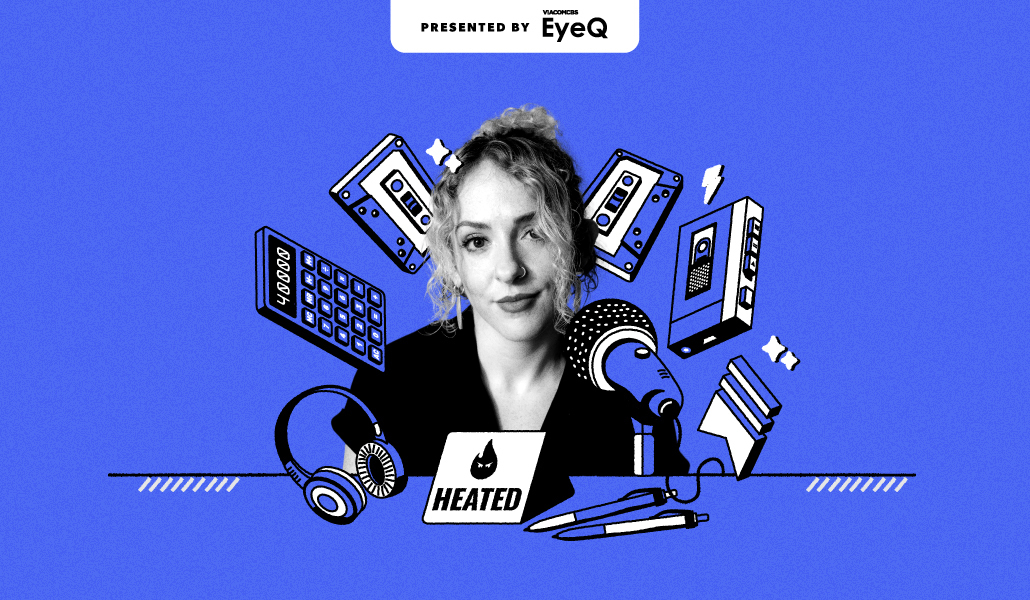
In February 2026, HEATED changed shape again. Atkin teamed with veteran television climate journalist Tracy Wholf to launch a weekly video podcast. The move answered two problems at once. Climate units at major television networks were contracting, even as much of the public encountered news through video and social platforms. HEATED had spent almost seven years primarily in text. A microphone and camera offered access to a different audience without surrendering the publication’s funding model.
The show promised urgent threats, scrutiny of the interests pushing delay, challenges to misinformation, and conversations with scientists, officials, activists, and reporters. Atkin and Wholf described the operation in unusually crisp financial terms: no corporate sponsors, no billionaire owners, no nonprofit funding. Its only revenue came from the audience. That arrangement is not a guarantee of wisdom. It is a clear disclosure of whom the work must persuade.
By the summer recess, the experiment had produced 16 full episodes, four bonuses, 1.42 million post views, nearly 200,000 downloads, and 100,000 video views across platforms. Atkin announced a pause, asked listeners what worked, and planned a streamlined next season. It was a publisher’s response rather than a broadcaster’s ceremony: look at the numbers, ask the audience, adjust the product.
No Plan B, several formats
Atkin has said she hopes to use the latter part of her career to teach and mentor journalists, especially those from underserved backgrounds. She has already taught climate journalism at SUNY New Paltz, returning to the institution where a misunderstood course title rearranged her life. The ambition fits the rest of the story. Her debt to mentors is not ornamental. Professors taught her to interview, search public records, analyze data, shape narrative, and write with urgency. Barrett taught her where to point those tools.
HEATED now makes that inheritance public. It shows that accountability reporting can carry a strong voice without discarding standards, and that an audience relationship can be part of the editorial architecture rather than merely a distribution channel. The model remains vulnerable to churn, attention, and the limits of any small team. Atkin discusses those pressures openly, which is one reason the publication feels less like a distant institution and more like a running correspondence.
The accidental climate reporter did become a political reporter after all. She simply chose a definition of politics wide enough to include the atmosphere, the balance sheet, the government filing, the television rundown, and the reader deciding whether to pay for one more year. The job still begins where it began in that freshman classroom: find out what is true, locate the power, and explain why the public should care. Only now the classroom is an inbox, a podcast feed, and a newsroom whose front door opens directly onto its audience.