The revealing detail about The AI Daily Brief is something its creator stopped doing. In 2023, Nathaniel Whittemore launched an AI podcast with a companion newsletter. Then he let the newsletter go quiet. There were already too many people explaining artificial intelligence in your inbox, and he wanted to concentrate on the show. In a business where every new channel looks like another chance to grow, that is an unusually useful beginning.
- A frequent AI news show built around headlines and one deeper discussion.
- Free audio, video and written editions; an optional $3 monthly ad-free membership.
- A lesson for publishers: give every additional format a specific job.
The newsletter that went quiet
Whittemore later described his return to email with a question: did anyone need another AI newsletter? His answer was an experiment called Night Desk. The show’s planning already happened late in the evening on America’s East Coast. Perhaps that routine could produce something useful before the next morning’s newsletters arrived.
“tomorrow’s news today”
Nathaniel Whittemore, on the Night Desk experiment
Consider the change in the proposition. The first newsletter accompanied a podcast. The new experiment had a reason to arrive at a particular moment. Whittemore proposed trying Monday-through-Thursday editions for a few weeks, then assessing the result. That is a test a small publisher can copy: start with an audience problem, use an existing routine, and set a time to decide whether to continue.
The resource being protected was attention, including the creator’s. Adding email takes work even when distribution is cheap. The early retreat suggests a sensible trade: concentrate effort where the product has a clearer identity. Returning later becomes easier when the new format answers a question the old one did not.
Five minutes to get your bearings
The show began as The AI Breakdown. Its introductory episode appeared on April 4, 2023, and lasted 33 seconds. That tiny opening grew into a continuing analysis business distributed through Apple Podcasts, Spotify and YouTube. The current name tells you the intended habit: come back for the next briefing.
In his Modern CTO interview, Whittemore described the structure with helpful precision. The opening five minutes cover three to five stories. A main topic follows, giving him space to examine a particular development. Interviews are occasional rather than the routine engine of the show. The listener becomes familiar with a recurring sequence even when the subject changes.
For someone trying to keep up while doing another job, that predictability matters. A new model, a workplace debate and a policy argument arrive in the same feed. The product supplies a way to sort them. It serves AI-curious listeners and professionals who want enough context to ask better questions without spending the day collecting tabs.
Its place in the market follows from that choice. Last Week in AI offers a weekly rhythm; broader technology shows compete for the same listening time. The Daily Brief concentrates on frequent interpretation from a recurring host. Choosing it means choosing a cadence and a point of view as much as choosing a subject.
A browser full of judgment
Whittemore’s production method offers another small surprise. In his 2024 conversation with Dan Shipper, he explained that the AI show was unscripted. He collected discussions, grouped themes and arranged browser tabs in roughly the order he wanted to cover them. The sequence of tabs became a working outline. Preparation happened before speaking, even without a finished script.
He described curation using X bookmarks, Google News, Feedly and Perplexity. Those tools helped gather material; deciding what belonged together remained an editorial task. Someone can copy the ordered-tab outline immediately. Speaking coherently through it requires familiarity with the subject and enough practice to notice when an argument needs another step.
The method also explains the show’s character. It examines what people are saying about a development as well as the development itself. That can help a listener understand a disagreement quickly. It also asks the listener to distinguish the host’s interpretation from the underlying announcement. A briefing gives you orientation; an important decision still deserves a closer look.
Three dollars, two kinds of customer
The commercial arrangement is legible. The public show carries named sponsors. October 2026 editions identify businesses including KPMG, Robots & Pencils and Blitzy. The official website advertises ad-free listening on Patreon for $3 a month. Listeners can pay for a different listening experience; advertisers pay to reach people interested in AI.
Optional ad-free Patreon membership.
Public episodes remain free to access.
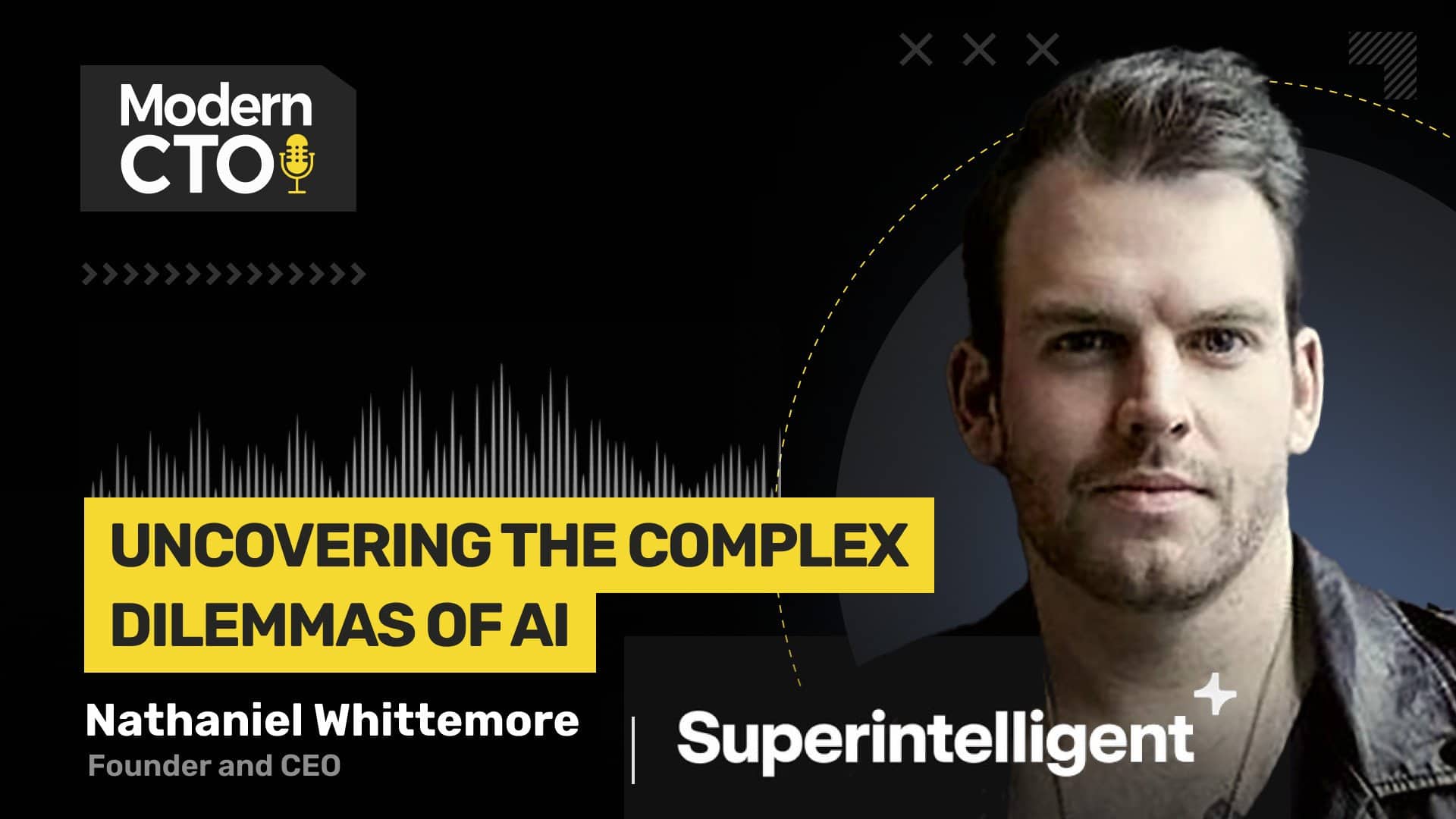
There is a related business worth understanding. Whittemore also leads Superintelligent, an AI training company whose programs are promoted on the briefing’s website. The show discusses developments; training helps people work with tools. Shared leadership gives the host experience with adoption questions, while readers should keep the two businesses distinct when considering their products and claims.
Bring your own test
The October 7, 2026 edition provides a concrete example of usefulness. Whittemore and Nufar Gaspar discuss building a personal AI benchmark. Pick four to six tasks that resemble your work. Compare outputs without the model names visible. Judge the results before deciding whether to switch tools, divide tasks between them, or stay put.
- 01Pick real tasks
- 02Compare blind
- 03Score the results
- 04Switch · split · stay
The discussion includes the parts that promotional demos often skip: scoring too many candidates becomes tedious, visual work needs visual inspection, and cost and speed can alter the decision. Familiar habits also have value. A marginally better result may offer little reason to rebuild an established workflow.
That is a useful way to approach the company’s output. Listen for one question worth investigating, then try it on a small, representative task. Daily commentary will be less useful if you need a detailed technical audit or if listening consumes the time you meant to spend experimenting. The briefing earns its place when the next thing you do becomes a little more considered.