Before the mining farms, before the Nasdaq ticker, Emiliano Grodzki had a supply problem involving rice cakes. His family’s Chocoarroz business was growing, and outside suppliers could no longer be allowed to determine how much it could make. Grodzki opened a factory with his brothers. An enterprise built around his mother’s idea was becoming an exercise in production. There are less delicious introductions to industrial capacity.
Years later, he would help build a business whose output could not be put in a lunchbox. Bitcoin required computers, electricity and places to put both. The product had changed almost beyond recognition; the need to organise its manufacture had survived. Grodzki’s career makes more sense when followed through the things he helped make than through the industries printed beside his name.
A chair, an alfajor, a factory
Construction came early. He started a dry-construction business in 1994, then moved into furniture with Classic & Now in 2002. The furniture venture exported to the United States and Europe. These were businesses with tangible objects, customers and the ordinary complications of getting an order out the door. His later move into digital assets came after years spent in a distinctly physical economy.
Classic & Now brought him into a particular corner of design. Working with architect Gala Elman and Marcelo Siccardi, he participated in a venture making reproductions of modern furniture classics. Its references included Saarinen, Breuer and Eileen Gray. A 2003 account described the project’s beginnings in 2001; the business was already being covered long before cryptocurrency furnished him with a new public identity.
Then there was Chocoarroz. His mother, Mónica Hertz, developed the rice-cake confection, and Grodzki joined its development in 2009. In 2012, the family sold Deli Light, the company behind it, to Molinos Río de la Plata for a reported US$15 million. That was a family business sale, rather than a measure of his personal fortune. Giving the invention its proper parentage matters: his contribution was to help turn demand into a larger business.
The sequel, My Urban Food, offered a less comfortable lesson. Grodzki described buying ingredients for cash while supermarkets paid after 90 days. A popular product still needed working capital. The business was sold, and by 2016 he was working with Aki Slelatt on Global Material Supplier, importing construction materials and equipment. The route back towards building had taken a detour through the supermarket aisle.
The unlikely route to Quebec
Nicolás Bonta entered the story through an everyday connection: the two entrepreneurs had met while taking their daughters to the same kindergarten. Bonta’s hotel business would provide another opening. An unexpectedly large electricity bill led him to discover cryptocurrency-mining equipment at a hotel. What began as a question about consumption became a conversation about a business.
Grodzki and Bonta tested mining in premises previously used by My Urban. They met Canadian operators Pierre-Luc Quimper and Mathieu Vachon, whose existing data centres offered a route to greater scale. Quebec offered hydroelectricity and a cold climate. In 2017, the partners brought their interests together in the venture that became Bitfarms. An old industrial address in Argentina had become a starting point for a Canadian operation.
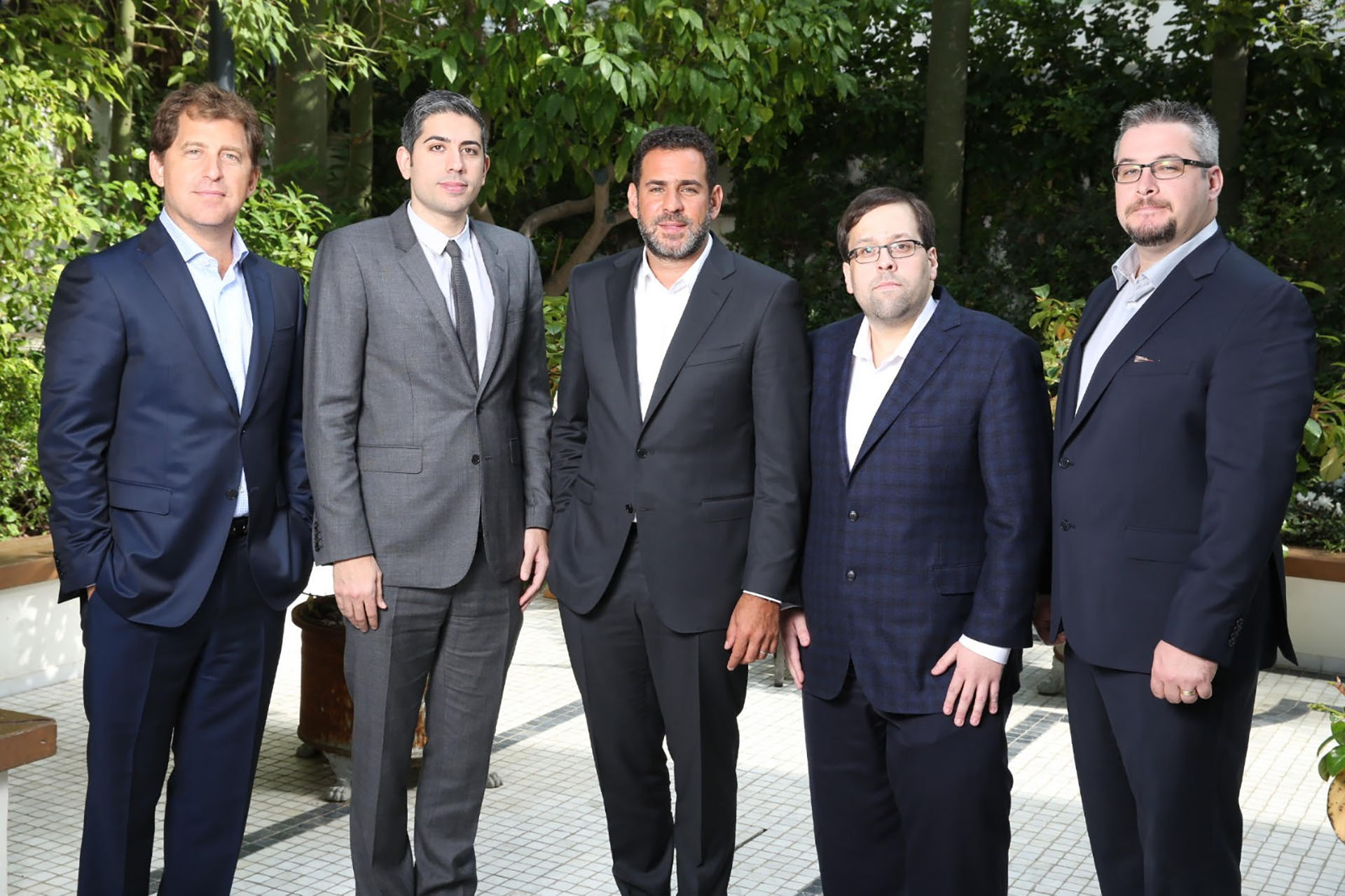
The partnership also helps explain Grodzki’s place in the company. He was one of several founders with different experience, alongside people already operating the technology. A 2018 corporate biography described his background across design, food and construction and dated his discovery of cryptocurrencies to 2016. His route into the industry was entrepreneurial, with a history of building and selling businesses behind it.
A public company needs more than an idea
At Bitfarms, Grodzki served as chief strategy officer before becoming interim chief executive in March 2020. His appointment became permanent that December. The company then operated five industrial facilities in Quebec. Its model included technical repair, data analytics and engineering. For the chief executive, growth meant coordinating an organisation with equipment that had to keep running.
The leadership around him was changing too. Nicolás Bonta became executive chairman, Brian Howlett became lead director and Geoffrey Morphy became president in December 2020. Those appointments distributed responsibility across a growing public company. The founder’s work was becoming part of a management structure with more people, defined roles and investors watching its progress.
Bitfarms began Nasdaq trading on June 21, 2021. By November, it reported production capacity of 106 megawatts in Canada and the United States, with further development underway in Canada, Paraguay and Argentina. Its third-quarter revenue was US$44.8 million. These figures belonged to the company and its team; they also show the scale of the operation Grodzki was leading.
That year, he appeared on a Bitcoin 2021 conference panel with Matt Roszak, Amanda Fabiano and Kevin Zhang. The subject was mining and the next industrial revolution. The setting suited a founder whose experience crossed factory floors and financial markets: cryptocurrency was acquiring an industrial vocabulary, and he already knew something about production.
The neighbours could hear the future
A mining facility has neighbours. In Sherbrooke, residents had concerns about noise from Bitfarms’ Rue de la Pointe operation. In September 2021, the company reached an agreement with the city to develop 96 megawatts of hydropower infrastructure while addressing sound emissions. New facilities would be farther from residential areas, with sound monitoring if required.
“We regret the inconvenience to those citizens of Sherbrooke who have been affected by the noise”
Emiliano Grodzki, September 2021
Grodzki publicly acknowledged the inconvenience and committed the company to engaging with residents. The episode gives the expansion story a useful street address. Whatever the attractions of a distributed digital currency, the equipment making it possible occupied particular buildings. People living nearby were entitled to opinions about the soundtrack.
In March 2022, Bitfarms began production at The Bunker in Sherbrooke. Its first phase added 12 megawatts, bringing company capacity to 118 megawatts across eight operating farms. Grodzki emphasised construction and deployment timing. The name had a certain theatrical confidence; the immediate job was installing delivered machines and getting them working.
Bigger machines, harder arithmetic
Bitfarms mined 3,452 Bitcoin in 2021. It also reported a 228% increase in hashrate during the year, a measure of computational work per second. Greater computing capacity was central to the growth plan, alongside new sites and equipment orders. But the amount of Bitcoin produced depended on competition across the network as well as the machines inside its own buildings.
September 2022 showed both sides of that equation. The company reached 4.2 exahashes per second, up 180% from September 2021. Bitcoin production rose 57% over the same period. Computing capacity and coin production were growing at different rates. The operating update pointed to increased network difficulty among the reasons that September’s output fell from August’s.
The same month brought production at Río Cuarto in Argentina, initially through a 10-megawatt module. By September 30, 1,751 miners had been installed there, with another 3,000 pending at customs. For Grodzki, the company’s expansion had reached his home country. It arrived through modules, machinery and import procedures, the sort of practical details that make a strategy take time.
Cash imposed its own timetable. In June 2022, Bitfarms announced that it had sold 3,000 Bitcoin for about US$62 million over the preceding week. It also closed US$37 million in equipment financing and reduced its Bitcoin-backed borrowing. The company was adjusting its policy of holding mined coins to improve liquidity. Accumulating Bitcoin and funding an expanding business had to share the same balance sheet.
A founder’s seat is still a seat
On December 29, 2022, Grodzki resigned as chief executive. Geoffrey Morphy succeeded him, and Grodzki remained a director. The company credited Grodzki and Bonta with its strategic development and Argentina expansion. Its founders had helped establish a business that now operated across four countries; daily executive responsibility was passing to another member of the team.
The board chapter ended separately. At the May 31, 2024 shareholder meeting, Grodzki received 33,957,229 votes for re-election and 55,524,769 against. He was not elected. Bitfarms thanked him for his contribution and said it would seek a candidate to address independence concerns raised by certain proxy advisory firms. Founding a public company had given him a lasting place in its history, while board membership remained subject to a vote.
His public interests extend beyond mining. On LinkedIn, he lists technology, cryptocurrency, design, music and cars. Design, in particular, reaches back to an earlier business rather than serving as a decorative addition to a biography. The furniture venture, the family factory and the mining farms give his career an unusual continuity: different products, with repeated attention to the means of making them.
The business gets another name
On April 1, 2026, Bitfarms completed its US redomiciliation and rebrand as Keel Infrastructure. Keel became the ultimate parent of Bitfarms, with its principal executive office in New York City. Under chief executive Ben Gagnon, the company described a shift towards infrastructure for high-performance computing and AI. This was a later chapter under subsequent leadership.
Grodzki’s part in that history belongs to the beginning and the mining expansion. Before the new name, there had been a business built around securing power, installing machines and coordinating production across borders. His earlier ventures had dealt in chairs and confectionery. The Bitcoin years enlarged the map and changed the output. Even the intangible, it turned out, needed someone to arrange the factory.