Look at a mixed-breed dog and a small committee immediately forms. Someone sees a Labrador. Someone else is certain about the terrier. The dog, having contributed nothing to this discussion, waits for lunch. Embark Veterinary sells a way out of that guessing game: collect saliva, mail a swab, receive a genetic report. But the interesting part begins after the argument ends. A purchase made to understand one animal can also contribute to understanding thousands of others.
- Breed ancestry gets owners through the door; health screening gives the results practical weight.
- Embark pairs genetic data with volunteered health surveys to investigate canine traits and disease.
- Its Age Test retreat shows why a prediction needs room for uncertainty.
Curiosity pays for the science
Founded in 2015, Embark grew out of the work of brothers Ryan and Adam Boyko. Adam is a canine geneticist at Cornell’s veterinary college; Ryan became the company’s founding CEO. Geneticist Spencer Wells and entrepreneur Matt Salzberg were also co-founders. The brothers’ central idea was wonderfully economical: give dog owners information they want, then invite them to supply information researchers need.
That arrangement solves a tedious scientific problem. DNA alone cannot tell a researcher whether a dog has itchy skin, blue eyes or a particular medical history. Owners can. Embark combines genotyping with volunteered surveys about health and appearance. Participants receive a useful product first. Research participation is optional, and owners can opt out. The resulting exchange makes collecting observations part of an existing relationship.
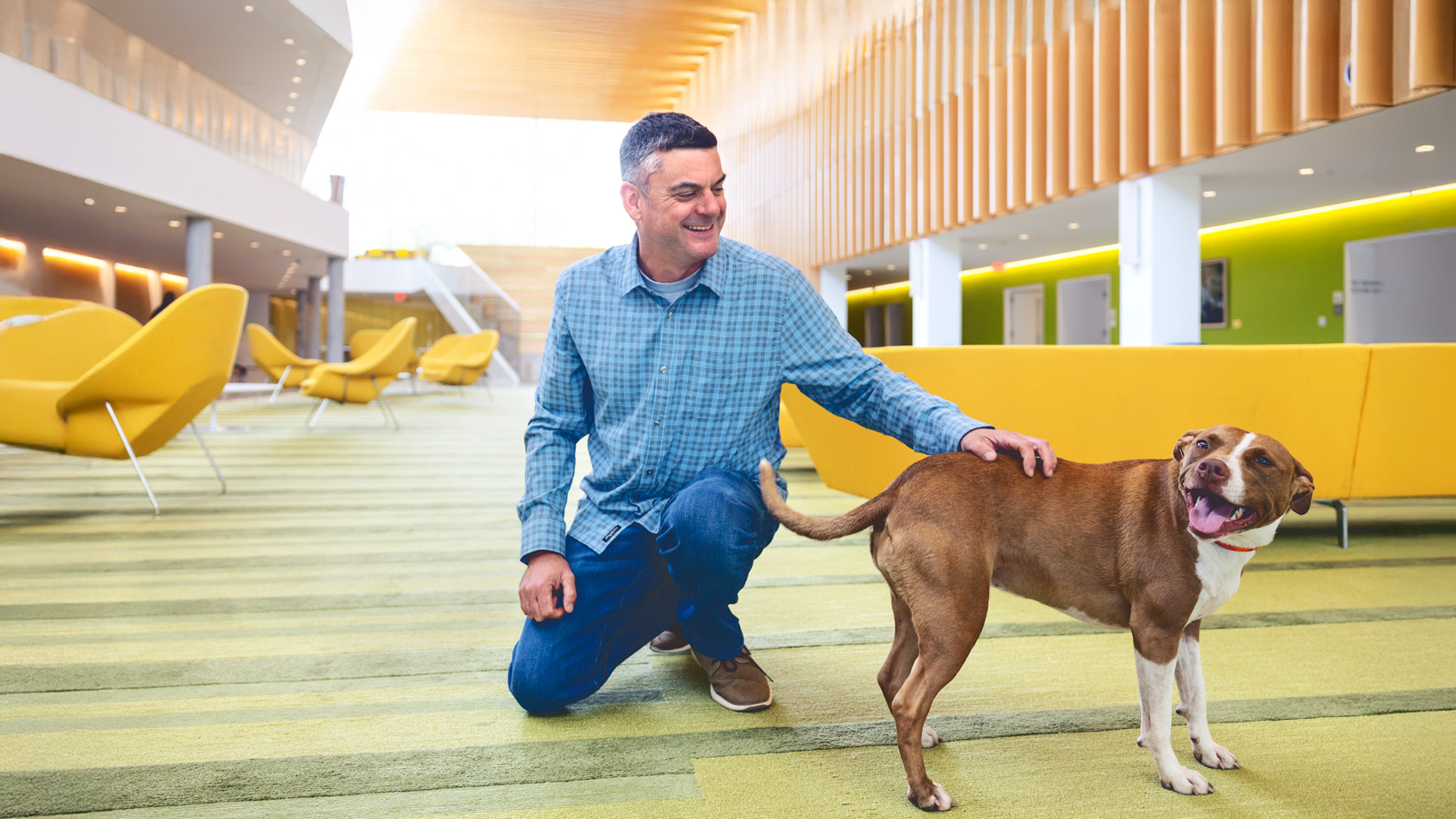
Consider blue eyes. A 2018 paper in PLOS Genetics used data from 6,000 dogs to identify a DNA duplication near a gene called ALX4 associated with blue eyes, especially in Siberian Huskies. Customers’ observations helped connect what scientists could measure with what owners could see. A charming feature of a dog’s face became evidence that the consumer research model could produce a published finding.
“This is a way of getting to know your dog better.”Adam Boyko, speaking to Cornellians in 2025
The report has to earn its keep
Embark sits between pet retail and veterinary genetics. Its customers include owners of rescue dogs, people with purebred pets, breeders and veterinary professionals. Breed ID answers ancestry questions and searches for relatives. Breed + Health adds inherited-condition screening and other health information. The current science page lists more than 400 breeds, 55 traits and 270 genetic health conditions. Those are separate categories, not 270 promises of illness prevented.
The useful moment is often a conversation with a veterinarian. A medication-sensitivity result, for example, can flag a genetic issue worth considering when drugs are chosen. An inherited-risk report can help frame monitoring and further investigation. It does not establish that a dog is sick. For breeders, carrier screening and genetic diversity information can inform mating decisions. A family tree records ancestry; a genetic report measures information inside the animal.
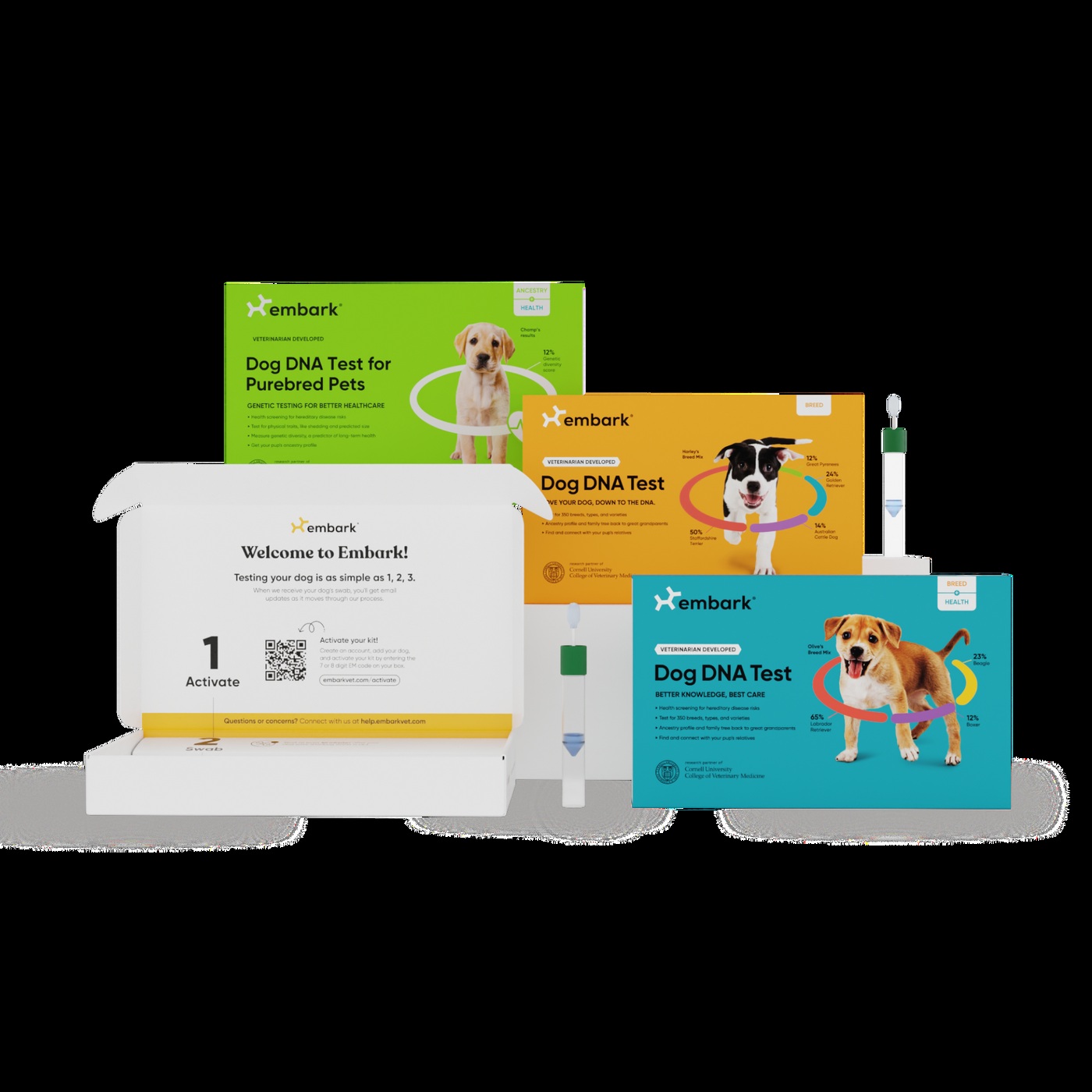
The business is straightforward at checkout: pay for a kit, laboratory analysis and a digital report. On October 5, 2026, the website displayed Breed ID at $109 and Breed + Health at $139, with Age testing starting at $109 and Gut Health at $129. Promotions move those numbers around. Bundles, supplements and additional insights extend the shopping basket beyond the first swab.
Wisdom Panel is a direct alternative, offering ancestry, relatives and health screening too. Relative matching is therefore no longer a feature Embark can claim alone. Its distinctive case rests on its research program, genetic diversity tools and specific health insights. Counting listed breeds or conditions is an incomplete comparison: buyers should ask which question the report answers, how clearly it explains uncertainty and whether the result changes a decision.
Three million dogs change the questions
Embark now reports three million dogs tested. It also says one in three tested dogs has found a parent, sibling or child in the database. Scale has an immediate consumer benefit: a family match becomes possible when the relative has been tested. For researchers, more genetic records paired with health histories can support investigations of traits and disease. The database is both a product feature and a research resource.
Dogs tested, as reported by Embark. Samples are not a count of unique paying customers.
In July 2021, a $75 million Series B led by SoftBank Vision Fund 2 financed hiring and development of Embark’s discovery engine. The accompanying ambition was to increase dog lifespans by three years within a decade. That was a goal, not an observed benefit of taking a test. Venture capital can buy laboratory work and more researchers. It cannot purchase a favorable result.
The product range shows where that investment thesis leads. AnimalBiome supplies the science behind Embark’s gut health testing partnership, announced in 2023. Allergy risk scores arrived in 2025; the mast cell tumor risk score expanded to all breeds in March 2026. These products ask different questions. A microbiome test examines gut bacteria. Genetic risk scores estimate susceptibility. An allergy probability cannot name the substance making a particular dog scratch.
A large database still requires careful interpretation. Dogs whose owners buy tests need not represent every dog population, and owner surveys depend on what people notice and report. Those are reasons to examine how a finding was validated before applying it broadly. For a customer, the same habit pays off: distinguish a measured genetic variant from an estimated probability, ask what comparison group was used, and keep the dog’s actual symptoms in the conversation alongside the numbers on the screen.
The birthday that needed a second opinion
The clearest corrective came with age. Embark launched an Age Test in 2022 using DNA methylation, chemical patterns correlated with aging. Then results in customers’ dogs failed to match the accuracy seen when the model was built. Embark withdrew the product, refunded customers and rebuilt it. Its account identifies the mismatch as the reason for changing course. An attractive estimated birthday had met an uncooperative reality.
of dogs have a true birthday within 12 months of the estimate, according to Embark. The remaining 23% fall outside that window.
The revised model used more than 2,000 dogs with known birthdays across breeds, sizes and ages. Embark now publishes a range rather than offering certainty about a calendar date. The lesson worth copying is practical: build a product people want, make participation easy, and check predictions against real outcomes. This approach needs reliable observations, permission to use them and customers who understand the limits. For the owner, the sensible next step is equally modest: choose a question, read the report, and bring consequential findings to the vet.