Michael Severino had a perfectly respectable reason to stay where he was. By 2022, he was vice chairman and president of AbbVie. Research and development, corporate strategy, years of accumulated authority: the job offered plenty to occupy a working day. He had spent eight years there, following a decade at Amgen and an earlier stretch at Merck. Then he became chief executive of Tessera Therapeutics, a startup. After all that time learning how large companies worked, he chose a different kind of assignment.
There is something pleasingly awkward about this turn in his career. Promotion usually comes with an expectation of more: more people, more territory, a longer title on the conference badge. Severino’s move asks a more interesting question. What does an experienced executive carry into a company whose future is still being assembled?
In July 2026, he started another chapter, becoming CEO and a director of Sarepta Therapeutics in Cambridge, Massachusetts. The appointment brings together two strands of his working life: the organizational experience acquired at large companies and the willingness to join a business at a new stage. To understand that combination, it helps to look beyond the latest title.
The library needed reinforcements
Severino grew up in Colesville, Maryland, reading science books with an appetite the public library eventually struggled to satisfy. His two older sisters attended the University of Maryland. One took him to its library to find more reading. An older sibling with access to a university collection is a useful ally for a child with this particular problem.
He entered Maryland in 1984 and graduated in 1987 with a biochemistry degree. His undergraduate research mentor was John Kozarich. Later came an M.D. at Johns Hopkins and further training at Massachusetts General Hospital and Harvard Medical School. The academic honors included summa cum laude and Phi Beta Kappa at Maryland, and Alpha Omega Alpha at Hopkins.
His own description of the effort is admirably economical: “I never wanted to do anything halfway.” That is a demanding standard to set for yourself. It also makes the later job changes easier to read: each involved learning how to work at a different level of responsibility.
“I never wanted to do anything halfway.”
Michael Severino, reflecting on his training
When the team reaches 35 countries
Severino entered industry at Merck in 1998. By 2004, he had moved to Amgen as a senior director. His responsibilities grew through a series of appointments, including a vice presidency in global development in 2007. In February 2012, Amgen named him senior vice president of global development and corporate chief medical officer, succeeding Sean Harper in that position.
The sequence matters because it shows how much experience sat beneath the eventual CEO title. This was a progression through operating roles inside an organization, with years between the first appointment and the most senior one. A biography can reduce that progression to a comma. Working through it takes rather longer.
At Amgen, he eventually led an organization of more than 2,000 people across 35 countries. Those figures describe a particular kind of responsibility. A team spread across that many countries cannot depend on everyone being in the same room, hearing the same conversation, or knowing what the boss meant by a hurried remark.
Scale changes the work. Decisions must travel. Responsibilities need names attached to them. An executive’s understanding has to become something colleagues can use without summoning the executive each time. Read this way, Severino’s Amgen years were an extended education in making specialized work function across an international organization.
A snapshot of his Amgen responsibilities, described at his 2022 Tessera appointment.
Four years to a wider brief
In May 2014, AbbVie appointed him executive vice president of research and development and chief scientific officer. The company had become independent the previous year. He was joining a young corporate identity backed by an established operation, an unusual combination of room to shape a business and the resources to put decisions into practice.
The collective scientific organization numbered more than 7,000 people when his appointment was announced. That number belongs to the organization described at the time; it should not be mistaken for a count of his personal direct reports. Even so, it gives a sense of the setting in which he was expected to lead.
Four years later, AbbVie widened the brief. In December 2018, he became vice chairman and president as part of a restructuring of the executive leadership team. His responsibilities included research and development, human resources, operations, and the corporate strategy office. He reported to chairman and CEO Richard Gonzalez.
That collection of functions is revealing. Scientific judgment now sat alongside questions about staffing, execution, and the company’s direction. A research plan needs people who can carry it out. Those people need an organization that can support them. The promotion formally placed several pieces of that problem within his remit.
It also puts his subsequent move in perspective. When he left in 2022, Severino was leaving a role with influence across several parts of a large company. Tessera would give him the chief executive’s job, with the broader accountability that title brings, in a very different business setting.
A startup gets an experienced newcomer
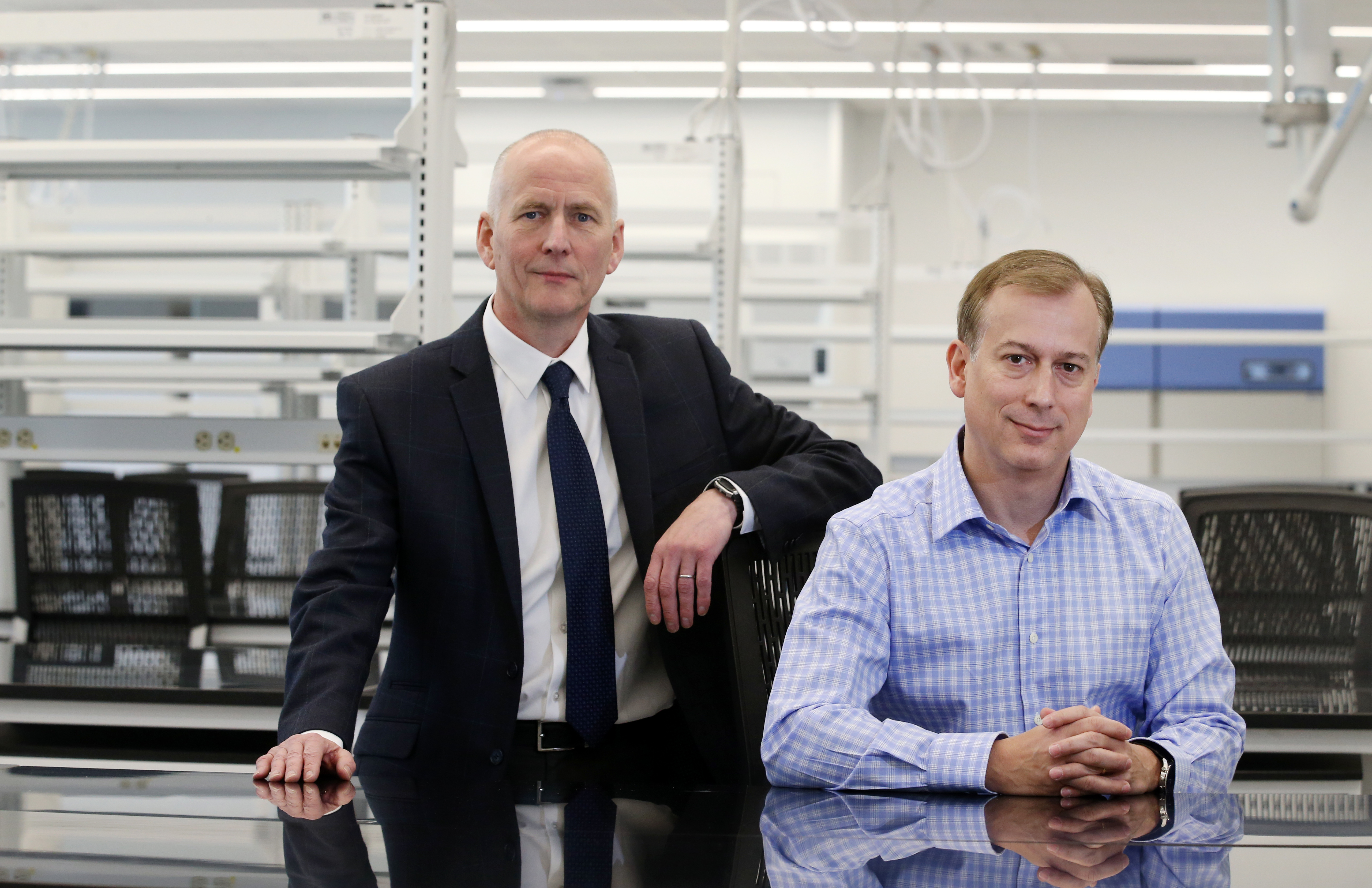
Tessera announced Severino’s appointment on June 2, 2022. He also became a CEO-Partner at Flagship Pioneering, the company’s backer. Tessera co-founder Geoffrey von Maltzahn moved to the board chair role. The transition joined an incoming executive’s operating experience with the continuing involvement of a founder.
Severino described the opportunity as “too good to pass up.” It is an ordinary phrase for an uncommon career decision. He had spent years accumulating knowledge of established businesses. The appeal of Tessera was sufficient to make him take that knowledge into a startup, where the organization and its ambitions were still developing together.
His comments at the time included praise for the leadership team already built at AbbVie and the importance of maintaining its momentum. There is a practical point inside that acknowledgement. A departure tests the organization left behind as well as the executive making the move. Capable colleagues are part of what allows an established business to continue.
At Tessera, the central leadership question changed. How much of a large company’s discipline can a younger enterprise use? Which habits help people make decisions, and which simply require another meeting? Severino’s résumé made those questions particularly relevant. Experience is valuable, but deciding where it applies is itself a piece of work.
His public language also included a clear requirement for evidence. In a LinkedIn post during his Tessera tenure, he wrote: “It’s our job to generate the data to prove that we can do that.” The sentence places an obligation beside an ambition. For someone making the case for a young company, that is a useful pairing.
Ambition comes with an obligation to produce evidence.
An editorial reading of his Tessera remarksThe responsibilities beyond the CEO’s desk
Alongside his executive roles, Severino has taken on board work. He joined Avantor’s board in April 2020 and chairs its compensation and human resources committee. In May 2025, he joined Viatris’s board. His committee assignments there include audit and science and technology.
These are different vantage points on a business. Compensation and human resources concern the people who do the work and the incentives around them. Audit requires attention to financial oversight. Science and technology bring another set of questions. Together, the appointments show the range of responsibilities attached to his career beyond running one company.
His board connections also include Montai and Quotient Therapeutics. Earlier, he served on the Field Museum’s board from 2015 through 2022. That museum appointment adds an institutional setting outside the companies that dominate his professional biography. The dates also place it alongside much of his AbbVie tenure.
A list of boards can look like a collection of names. The committee assignments make it more concrete. They show where an executive is being asked to apply judgment, and where that judgment must work through oversight rather than the authority of a chief executive. The distinction is useful when reading a career spent in both seats.
- 1998MerckMove into industry
- 2004AmgenA decade of expanding roles
- 2014AbbVieResearch leadership, then president
- 2022TesseraStartup chief executive
- 2026SareptaCEO and board member
The next appointment has a date
Sarepta announced Severino as its next CEO on July 27, 2026, with the appointment effective the following day. He succeeded Doug Ingram and joined the board. Ingram agreed to remain in an advisory capacity through the end of the year, providing a defined period for the handover.
The distinction between announcement and start date is small but useful. So is the distinction between a record of experience and the results of a new appointment. Severino arrived with more than 25 years in the industry. His work at Sarepta belongs to a chapter that began in July, with its own decisions still to be made.
There is a personal counterweight to all these professional responsibilities. Away from work, he has described himself as a keen cyclist and skier, and credited time with his family with keeping him grounded. It is a welcome change of scale after the international teams and board committees: a bicycle, a pair of skis, a conversation at home.
The child who needed access to a larger library eventually accumulated a substantial professional education of his own. Merck, Amgen, AbbVie, Tessera, and now Sarepta each gave him a different place to use it. His career invites a straightforward reading: knowing a great deal can be preparation for starting again.
Follow the appointments
Profiles, announcements, and a conversation about the 2022 move.