Profile · Biotech Leadership
Andy Kidd
A doctor who learned to price an IPO, now running a company whose drugs only switch on where they are supposed to.
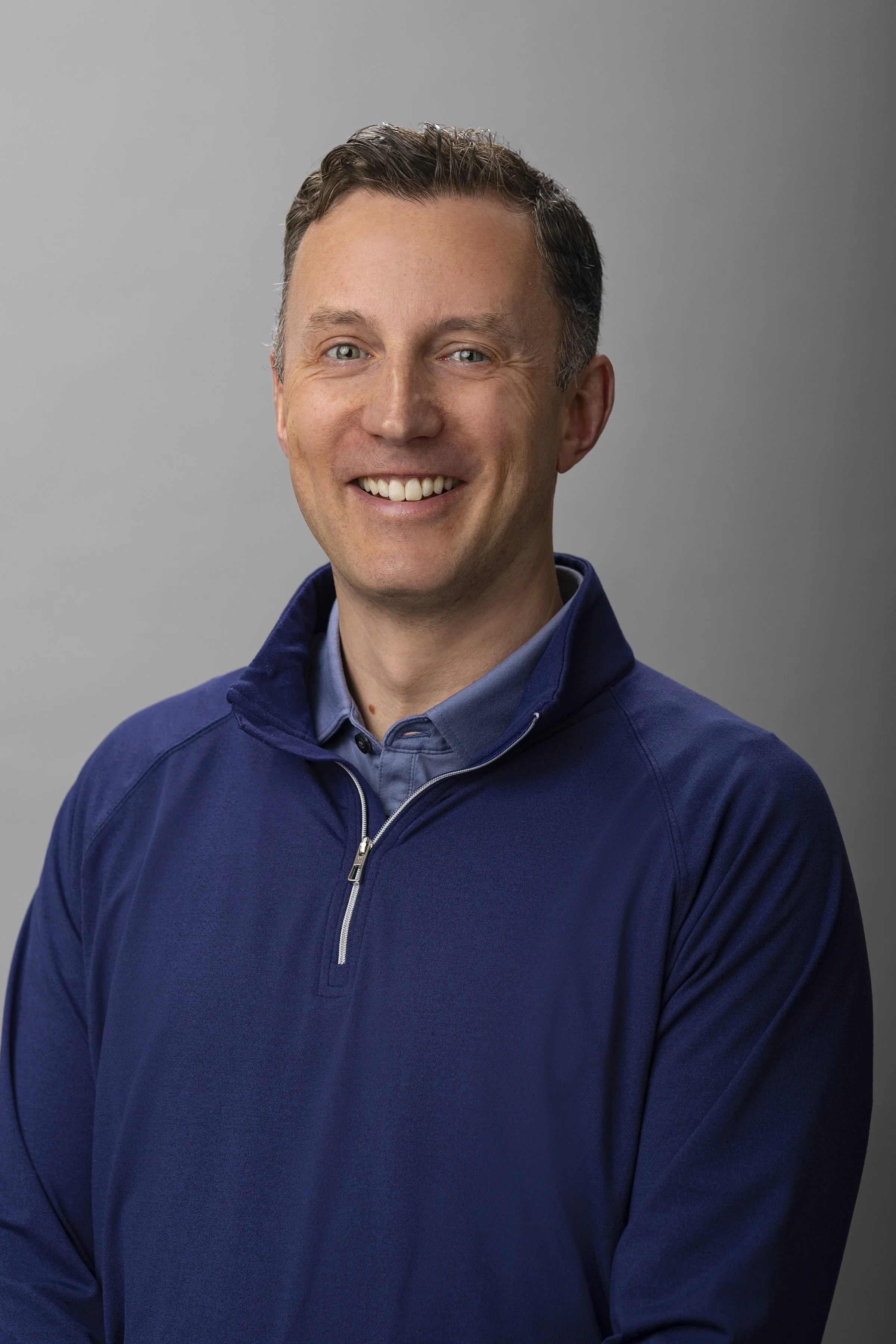
Andy Kidd — the physician-financier at the helm of Tentarix.
A doctor who learned to price an IPO, now running a company whose drugs only switch on where they are supposed to.
In April 2024, Tentarix Biotherapeutics handed the keys to Andrew D. Kidd, a man whose business card needs two sets of letters after his name. M.D. from Oxford. CFA from the finance world's three-exam gauntlet. The first says he can sit at a patient's bedside. The second says he can sit across the table from a venture investor and not blink. The combination is the whole point.
Tentarix is a San Diego company chasing a deceptively simple idea: build biologic drugs that stay quiet until they reach the exact cell that needs them, then activate. The platform is called Tentacles. The promise is a higher therapeutic index, which is industry shorthand for hitting the tumor and sparing the patient. It is the kind of science that sounds inevitable on a slide and is brutally hard at the bench. Kidd's job is to move it from the first to the second.
He arrived at what chairman Donald Santel called "a critical inflection point." Translation: there were already grown-up partners in the building. Gilead and AbbVie, two of the larger names in the industry, had signed on to programs. A startup with that kind of company on its dance card needs a CEO who can speak fluently to scientists, to pharma business-development teams, and to the people who write the checks. Kidd has spent twenty-five years collecting exactly those three vocabularies.
"I firmly believe in the company's mission to revolutionize patient care through multi-specific biologic treatments."— Andy Kidd, on joining Tentarix
What makes the appointment interesting is not the resume's length but its shape. Kidd did not climb a single ladder. He kept switching buildings. From the consulting room to the consulting firm, from the corporate ranks of a NYSE company to the corner office of a Nasdaq one, and now to a venture-backed startup where the science is still being invented. Each move traded comfort for a steeper learning curve. That is either restlessness or a strategy. With Kidd, it reads like a strategy.
Consider the unusual order of operations. The conventional biotech CEO starts as a scientist and later picks up the business vocabulary, or starts as a banker and learns to nod along in lab meetings. Kidd built both foundations early and on purpose. The medical training at Cambridge and Oxford came first, then the analytical rigor of the CFA, then the strategic muscle of consulting. By the time he ran a company, he was not learning any single discipline on the job. He was assembling them.
That assembly matters more in this corner of biotech than in most. Conditionally active multispecific biologics are not a tweak on an existing pill. They are a bet that you can engineer a molecule sophisticated enough to make decisions about where and when it works. Selling that bet requires someone who can explain the molecular logic to a skeptical scientist in the morning and the capital logic to a skeptical investor in the afternoon, without contradicting himself. That is the job description hiding inside the title.
Tentarix builds conditionally active, multispecific biologics. The aim is precision: therapies that engage their target only under the right local conditions, so the immune punch lands on disease and not on healthy tissue. It is a direct attack on the oldest tradeoff in medicine, the one between potency and side effects.
"The compelling science behind the Tentacles platform presents an unparalleled opportunity to impact the lives of patients globally."— Andy Kidd
When chairman Donald Santel welcomed Kidd, he framed the moment as "a critical inflection point for the company." In biotech, that phrase tends to arrive at the exact spot where the science has proven interesting enough to attract partners but not yet proven enough to be safe. Tentarix had already drawn Gilead and AbbVie into partnered programs. The next stretch is where promising platforms either become medicines or become cautionary tales. Kidd was hired for that stretch.
His track record is built for it. At Aptinyx, a clinical-stage company focused on disorders of the central nervous system, he did not just hold the CEO title; he led the company public and moved multiple programs into clinical trials. Taking a biotech public is one of the more revealing tests of leadership, because it forces a single person to hold the scientific narrative, the financial model, and the regulatory reality in the same sentence and keep all three honest. He has done it once already. Tentarix is betting he can do the harder, earlier version again.
Before any of that, there was Baxter International, where his senior roles spanned both general management and corporate development. Corporate development is the unglamorous engine room of a large medical company, the place where deals get evaluated, partnerships get structured, and the math behind a strategy gets pressure-tested. It is, in retrospect, the perfect apprenticeship for a CEO who would later need to manage relationships with two pharmaceutical giants while keeping a startup's pipeline on track.
The throughline across all of it is translation. Kidd's career is a series of moves between communities that do not naturally speak to each other: clinicians and consultants, operators and investors, scientists and dealmakers. The companies he has worked for were not paying for any one of those fluencies. They were paying for the ability to stand in the gaps between them. At Tentarix, that gap is the whole frontier - turning an elegant idea about conditional activation into something a patient will one day actually receive.
Trained as a physician at Cambridge and Oxford, he understands what a drug has to do for a real patient, not just on a Phase II readout.
The CFA is not decoration. He led Aptinyx through its IPO, which means he knows how the market prices a story before it has earnings.
At Aptinyx and Baxter he moved real assets forward. For a startup juggling Gilead and AbbVie, execution is the entire job.
Strip away the platform names and the credentials, and the assignment is clear. Tentarix wants to prove that a biologic can be smart about geography, switching on inside disease and staying dark everywhere else. If that works, the prize is enormous: treatments for oncology and autoimmune disease that hit harder without hurting more. The catch is that "if it works" hides years of laboratory grind, regulatory patience, and capital discipline. Someone has to keep the company funded, focused, and honest through all of it.
That is the role Kidd stepped into in April 2024. He is not the scientist who invented the chemistry, and he is not pretending to be. He is the person responsible for making sure the chemistry gets a fair shot at becoming medicine - that the partnerships with Gilead and AbbVie are executed well, that the pipeline advances, and that the story stays credible to everyone who has to believe in it. It is a job that rewards exactly the kind of cross-disciplinary career he spent two decades building, almost as if on purpose.
There is a quiet logic to handing this particular company to this particular leader. A startup whose entire thesis is precision - drugs that act only in the right context - was always going to need a CEO with range, someone who could operate in more than one context himself. Kidd reads the science and reads the spreadsheet. For Tentarix, that is not a nice-to-have. It is the whole reason he is in the chair.
Two of the world's most storied universities trained him: Cambridge for undergraduate medical sciences, Oxford for his M.D.
On top of a medical degree, he passed the CFA program, a punishing trio of exams that most people attempt without ever touching a scalpel.
His first job out of the gate was at BCG, run from London and Chicago, so his career started on two continents at once.
Tentarix names its tools like a spy novel: Tentacles, CellSurf, HuTARG, FunctionSeq. He has to make the marketing match the molecules.