Mark Bertolini gave thousands of people a raise, then discovered that generosity had a complicated seating plan. Some employees welcomed Aetna’s new $16 hourly minimum. Others had spent years working their way to that figure. They wanted to know what the announcement meant for them. A change could be welcome, overdue and awkward at the same time. The chief executive had to live with all three.
That episode makes a useful introduction to Bertolini, now CEO of Oscar Health and independent chair of Verizon. He has spent much of his career talking about the distance between the people who run a company and the people who experience its decisions. Closing that distance sounds agreeable in a speech. It becomes considerably more interesting when someone has to alter a budget.
He grew up in Detroit and completed his undergraduate studies at Wayne State University before earning an MBA at Cornell in 1984. His route gave him a hometown education as well as a business-school one. Detroit was a place where the abstract vocabulary of labor and capital had addresses, shifts and people waiting for the next paycheck.
The book he would publish decades later, Mission-Driven Leadership, describes an early executive who was competitive, forceful and capable of running roughshod over colleagues. It is a less flattering starting point than the polished origin story usually supplied with a leadership manual. It also makes the later argument more credible: a person advocating a different style of management had needed to change his own.
His résumé eventually accumulated the familiar markers of corporate ascent. Executive jobs at SelectCare, NYLCare and Cigna. A move to Aetna in 2003. The presidency, followed by the chief executive’s job in 2010 and the chairmanship in 2011. Yet the episode that still explains his approach involves the people at the other end of that hierarchy.
Sixteen dollars, paid in real money
In January 2015, Aetna announced that its lowest hourly wage would rise to $16. About 5,700 employees were affected, with an average increase of 11 percent and increases reaching 33 percent for some. The policy took effect that April. Those numbers give the decision a scale that a statement about valuing people cannot supply.
For an employee, an hourly rate is a very intimate piece of arithmetic. It sets limits on the month before the month has begun. For a company, the same rate appears among expenses. Bertolini’s decision put those two views of the number into the same conversation, where they belonged and where they could argue.
In his public explanation, he connected the raise to how work actually felt. Visits to offices had exposed the strain on employees’ household budgets. He wanted to understand what people had left to spend, rather than assuming that a wage table told the whole story. Listening involved following an answer far enough to discover an inconvenient question.
A report from Aetna’s Fresno call center captured the other side of the announcement: workers receiving the increase. Bertolini argued that better pay could improve productivity. The proposition had an ordinary business logic. A company spends money recruiting and training people; keeping capable colleagues has value. The person answering a difficult call is also part of the product a customer receives.
There was still no universal round of applause. People compare their wages with the person beside them, with what they earned last year and with what it took to get there. A new floor changes those comparisons. The friction is instructive. A company can make a defensible decision and still owe its employees a patient explanation. Even a larger paycheck does not spare management the trouble of managing.
The corner office has a door
Bertolini’s taste for accessibility extends to his public voice. His personal X account is @mtbert, and he has said that he writes his own posts. The detail matters because corporate communication so often arrives as if it has passed through a committee devoted to removing fingerprints. An executive who speaks in his own voice also has to answer for it.
His advisers received a compact instruction: “You cannot protect me; you must prepare me.” It is a revealing distinction. Preparation accepts that a leader will meet a world he cannot entirely control. Protection can become an elaborate system for ensuring that he never meets it at all. Plenty of organizations are very good at the second task.
In a 2016 conversation about leadership, Bertolini described how difficult a large organization could make dramatic change. Analysis and internal work on the employee initiative had taken nearly two years. Authority had not made the institution move at the speed of its chief executive’s impatience. The corner office could authorize a direction; people throughout the business still had to make it happen.
His answer to that problem emphasizes followership, selflessness and the courage to decide. That is a demanding combination. It asks a leader to listen without treating every disagreement as a veto, and to act without assuming that the title proves the argument. A person can be accountable for a decision while remaining curious about what it will do to someone else.
The same outlook appears in his writing. Published in March 2019, Mission-Driven Leadership: My Journey as a Radical Capitalist makes the relationship between personal conduct and corporate purpose its subject. The subtitle supplies a small provocation. Capitalism has room for an argument about the people doing the work, and Bertolini plainly intends to have it inside the boardroom.
“You cannot protect me; you must prepare me.”
Mark Bertolini, on his instruction to the PR team
A director should ask another question
After Aetna, the job titles continued to change. He served as co-CEO of Bridgewater Associates from 2022 to 2023. In June 2022, he sat down with Justin G. Nelson of the National LGBT Chamber of Commerce for Bridgewater’s speaker series. Their conversation covered business opportunity and succession planning. It offers a glimpse of an executive interested in who gets to build a business, as well as who gets to run an established one.
His boardroom philosophy is particularly plain. In a 2020 interview, he organized the director’s responsibilities around strategy, succession and performance. A board should examine whether the operating model and the allocation of people and money actually support the strategy. A presentation can state an intention beautifully. Daily operations have to bear some resemblance to it.
He also put customers at the center of the discussion. When executives say a market has moved against their product, he argues that directors should question the leadership’s response. Customers changing their minds are part of the assignment. A board cannot do much with the discovery that the outside world has neglected to stand still.
That outlook has a fresh institutional setting. A Verizon director since 2015, Bertolini became independent chair in October 2025 as Dan Schulman became CEO. The arrangement separates running the business from leading the board that oversees it. His own test now applies to him from another seat: ask useful questions, examine the answers and hold management to the work it has promised.
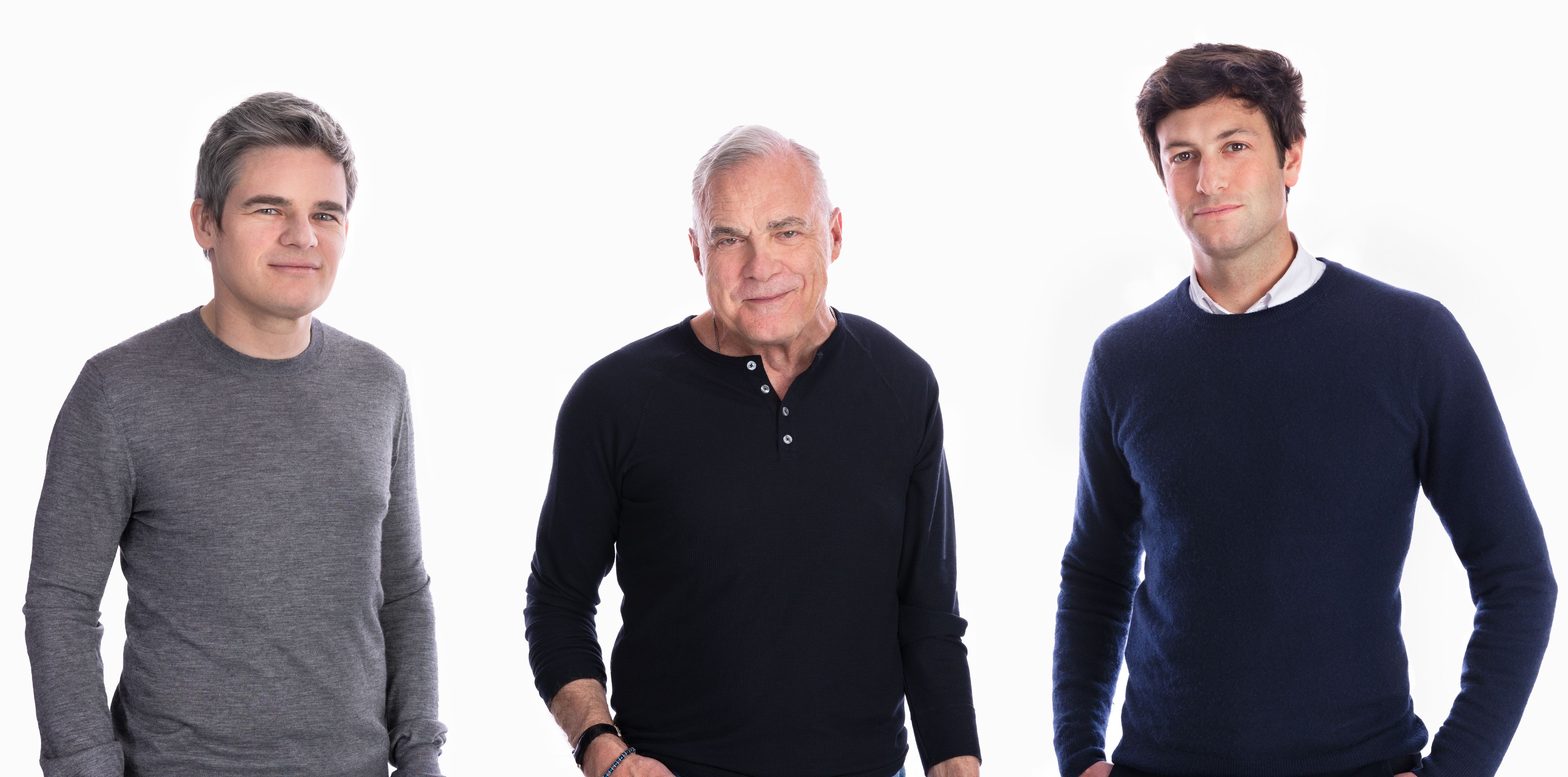
Another desk, another set of numbers
Oscar brought him back to the chief executive’s desk in April 2023. He had already spent 18 months advising the company. Co-founders Mario Schlosser and Joshua Kushner knew him through that work before asking for the full-time commitment. It was a recruitment conducted at close quarters, with rather more evidence than a succession committee usually gets from a handful of interviews.
Schlosser moved into the president of technology role. Bertolini took responsibility as CEO and joined the board. The allocation of jobs is more revealing than the usual language about a new chapter. A founder stayed to lead technology; an experienced operator arrived to lead the company. Expertise was being assigned a place in the structure.
The invitation came with an unfinished financial story. Oscar reached net income and adjusted EBITDA profitability for 2024. Its shareholder letter described that year as a financial milestone. For Bertolini, it supplied an early result against which the decision to hire him could be assessed. A leadership philosophy acquires a different weight when shareholders can place it beside an income statement.
The following year complicated the picture. Oscar’s second quarter of 2025 produced a net loss attributable to the company of $228.4 million. In August, Bertolini said the business expected to return to profitability in 2026. The sequence is worth preserving. A corporate turnaround rarely has the courtesy to draw a neat, steadily ascending line for the person writing its history.
By the second quarter of 2026, the company reported attributable net income of $361.8 million. For the first half, that figure was approximately $1.04 billion. Oscar raised its full-year operating earnings outlook. Those are company results, produced by an organization, and they are period-specific. They give this stage of his tenure substance without pretending to issue a verdict on every year still to come.
Two quarters, a different picture
Who gets the next word?
Bertolini’s career now stretches across executive work, board leadership and authorship. There is an obvious temptation to tidy those roles into a doctrine with a memorable name. His record is more useful when left a little untidy: a hard-driving early manager arguing for empathy, a chief executive increasing wages, a director insisting that the board look past the slides.
The recurring concern is whether an organization can hear what its own arrangements encourage it to miss. An employee sees a household budget. A customer sees a product that must earn another purchase. A director sees a strategy that should survive questions. Each has information the corner office needs. None is obliged to deliver it in the language of an earnings call.
That gives the $16 decision its lasting interest. The number was specific, the people affected were identifiable and the objections were real. Someone had to decide that what employees were saying deserved a change in company policy. Someone then had to handle the response. For all the titles Bertolini has collected since, that remains a useful description of the job.