Elizabeth Stephenson’s career makes more sense as a map than as a ladder. One line begins in elementary-school classrooms in Kuwait and Oman. Another passes through contributed writing, nonprofit communications and in-house marketing. A third leads to a consultancy, two founder titles and board seats in British Columbia. Look at any one stop and the route can seem indirect. Step back, and the same job keeps appearing: understand an audience, find the useful idea and make the next move easier to see.
That job now has an explicit label. Stephenson describes herself as a fractional CMO and communications specialist, and her firm, Two Four Seven PR, sells senior marketing leadership alongside the practical work required to carry it out. Brand strategy sits next to campaign planning. Public relations sits next to copy, social media and web work. The organizing idea is less glamorous than a grand reinvention, and more useful: strategy should remain attached to the sentences, pages and decisions through which people encounter it.
Her public résumé spans organizations with very different vocabularies. She has worked with a construction software company, a resources company, a nonprofit ministry, allied-care companies and a counselling network. Each one asks outsiders to absorb specialized language before deciding whether to trust it. Stephenson’s work has lived at that border, where internal complexity has to become a clear external promise without losing what makes the organization credible.
The classroom was part of the training
Stephenson studied at the University of Alberta from 2009 to 2014. Her early professional record then places her in elementary education, first at Al-Bayan Bilingual School in Kuwait and later at Ellesmere Muscat in Oman. Teaching can look like a prelude to a communications career, but it contains the central problem in miniature. A room does not owe the speaker its attention. An explanation has to be paced, translated and adjusted until the idea lands.
While she was teaching, Stephenson also built a public writing and marketing track. She contributed to HuffPost from 2016 to 2018 and held a marketing director role with Lux Social Media Marketing. The overlap matters. It suggests the shift was not a cinematic career break. It was closer to a gradual accumulation of proof: classroom communication, published writing and commercial messaging running at the same time until the newer lane could carry more weight.
By late 2018, she had created Two Four Seven PR. Over the next few years she moved through marketing and communications positions at Intersect Creative Solutions, CreoLogic Design, The Mustard Seed and SiteMax Systems. These were not identical briefs. The Mustard Seed works in the nonprofit sector. SiteMax builds software for construction teams. CreoLogic is a digital design business. The change of setting forced the underlying skill to travel.
A career that compounds sideways
Constraint became a subject, not an excuse
A small artifact from 2020 captures Stephenson’s way of approaching difficult terrain. In a LinkedIn article titled “Navigating Cannabis Compliance on Social Media,” she examined the practical tension between a powerful marketing channel and Canada’s rules for promoting cannabis. The subject is technical, but the communication problem is common: how does a company remain visible when the obvious playbook does not fit?
The article sits early in her public body of work, before the senior healthcare titles and board appointments. It is useful because it shows an instinct that later roles would reward. Regulation, stakeholder caution and specialized language are not side notes for a communicator to tidy up after a strategy meeting. They shape the strategy. The person responsible for the story needs to understand the fence line as well as the open field.
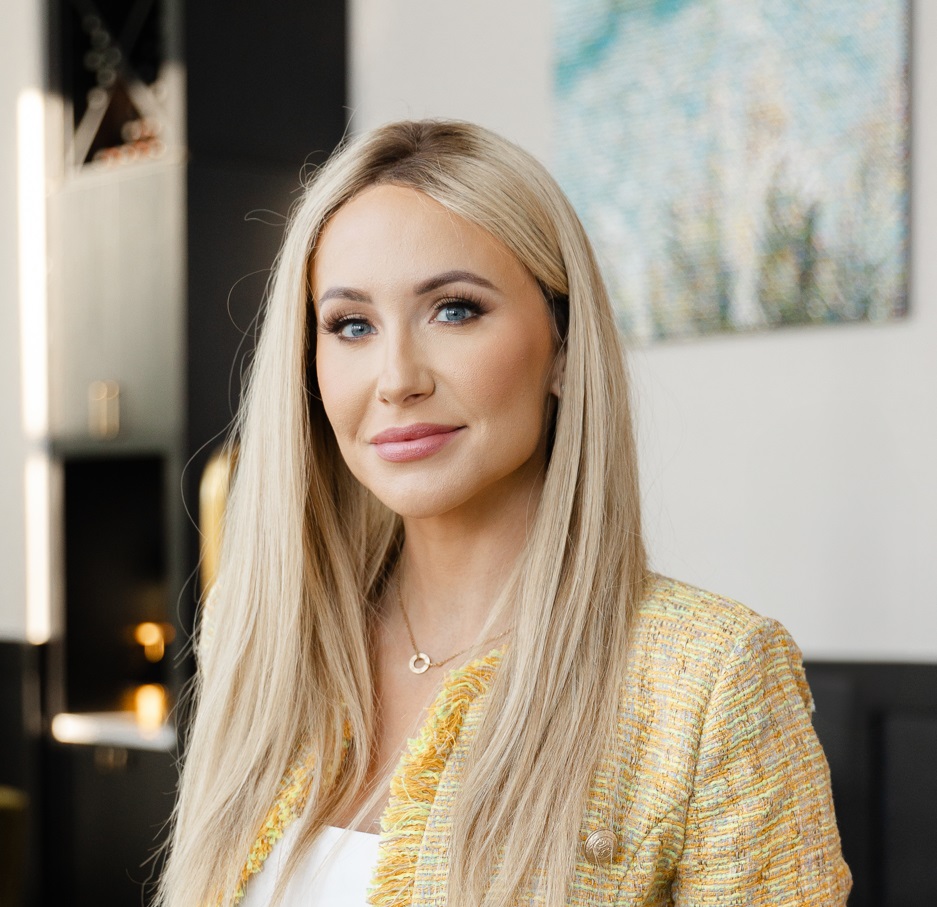
In 2021, Stephenson joined No Fear Counselling as Director of Marketing Communications. The organization’s current team page lists her as Marketing Director, while her work history records a move into the chief communications officer role in January 2024. The titles vary by page, but the arc is plain: her responsibility expanded as the organization grew its footprint and partnerships.
Her portfolio widened at the same time. Stephenson worked as a content specialist at Teck Resources from 2022 to 2023. In 2023 she founded Dear Eliza. In 2024 she took a marketing communications position with Lyte Medical and joined the boards of Move Health Holdings and Potluck Café Society. She also served as a media contact when Move Health and No Fear announced their proposed strategic combination that June.
“We’re nimble. Strategic. And we care about doing work that matters.”Two Four Seven PR
A consultancy designed around the missing middle
Two Four Seven PR now presents itself as a fractional CMO and creative communications studio. That phrasing identifies a specific gap. A growing organization may need experienced judgment before it needs, or can support, a full executive department. It may also need more than advice. The positioning has to become a campaign. The campaign needs words and visuals. The launch needs coordination. Someone has to keep the pieces loyal to the same decision.
Stephenson’s answer is a two-tier model. The leadership side covers brand and marketing strategy, campaign architecture, internal and external communications, message direction and stakeholder alignment. The studio side covers the things audiences actually see: media relations, photography and video, copy, social channels, websites, search and brand identity. A trusted collective supplies specialized execution.
The signal
Identify the idea that can survive plain language and repeated use.
The room
Give stakeholders a shared account of the goal, audience and tradeoffs.
The decision
Keep strategy connected to the campaign, page, release and follow-through.
The firm’s public process is similarly compact: discovery call, tailored proposal, kickoff. Its website reports more than 50 clients and lists work for No Fear Counselling, Lyte Medical, Move Health, Potluck Society, Teck Resources and several smaller brands. The case for the model is not scale for its own sake. It is proximity. The strategist who helps frame the problem remains near the people making the assets and near the client who owns the consequences.
That arrangement also explains why Stephenson’s portfolio does not divide neatly into “consulting” and “operating.” Long-running relationships can blur the border. A consultant becomes a communications director, a media contact or a board member. The work gets closer to the decision because the organization is buying judgment, not merely deliverables.
Board service makes the story accountable
Stephenson’s two publicly listed board roles add another dimension. Move Health describes her as a director and a marketing executive with 15 years of experience. Potluck Café Society identifies her as a board director and emphasizes her record in brand development and her interest in community resilience. Potluck is a Vancouver social enterprise whose catering operation supports food and employment programs in the Downtown Eastside.
In May 2025, Stephenson appeared as the media contact on Potluck’s announcement that Vancouver restaurant Anh and Chi had raised more than $7,200 for the organization through a reservation-by-donation campaign. The mechanics are revealing. A restaurant turned reservations into contributions. A nonprofit turned a local gesture into a public invitation. Communications connected the gift to a larger case for community participation.
Board work changes the stakes of language. A message is no longer only a way to win attention. It has to reflect priorities, hold up across stakeholder groups and help an institution act consistently. For a career built around translation, governance is a logical extension. The story becomes a promise the organization has to keep.
Potluck’s biography offers two small personal details: Stephenson finds inspiration in art and travel. They fit the professional record without needing to carry too much symbolic weight. Both reward attention to context. Both train the eye to notice framing, contrast and the assumptions a familiar audience stops seeing.
The useful idea hiding in a portfolio career
Stephenson’s path offers a practical lesson for people whose work resists a clean title. A portfolio becomes coherent when the same problem keeps finding you. For her, the sectors changed and the seats multiplied, but organizations continued to need someone who could locate the signal inside crowded language and carry it into public view.
There is also a lesson for founders deciding when to hire senior marketing help. Communications is often treated as the last mile, something applied after the strategy has hardened. Stephenson’s current model puts it closer to the beginning. A clear narrative tests the decision itself. If customers, employees and partners cannot tell what is changing or why it matters, the problem may be upstream of the copy.
The phrase on the Two Four Seven site is “you are in charge of your story.” It works as a client promise, but it also describes Stephenson’s own career. Teaching did not disappear when she became a writer. Writing did not disappear when she became an operator. Operating did not disappear when she became a founder or director. Each chapter gave the next one a larger room and a more complicated audience.
Her career is still being written across several organizations, which is the nature of portfolio work. The durable part is already visible. Clarity is not the polish placed on meaningful work. In Stephenson’s practice, it is how meaningful work recruits attention, aligns people and becomes possible to act on.