The cleverest thing about Element Eight is not that it sells oxygen. The atmosphere has been doing that for free. The clever thing is where the company went looking for its skincare story: not a flower in Provence or a fermented bean in Seoul, but the much less romantic world of spine surgery.
Element Eight grew from oxygen-carrier work associated with bone-graft materials. In spine procedures, oxygen and blood-vessel growth matter to healing. The team behind the technology spent more than a decade developing ways to hold dissolved oxygen near tissue rather than letting the gas wander off. The consumer translation is OATH - Oxygen Amplified Therapy - a proprietary complex that the company describes as a topical analogue to hemoglobin.
That is a terrific sentence for a pitch deck. It is also a demanding promise for a jar of moisturizer. Element Eight says its carriers hold 20 times more oxygen than water and deliver it as deep as 700 microns. Those figures come from the brand and its studies; the finished products still live in cosmetics, not medicine. The distinction matters. A surgical origin gives the brand a sharp beginning, but it does not give every consumer claim a free pass.
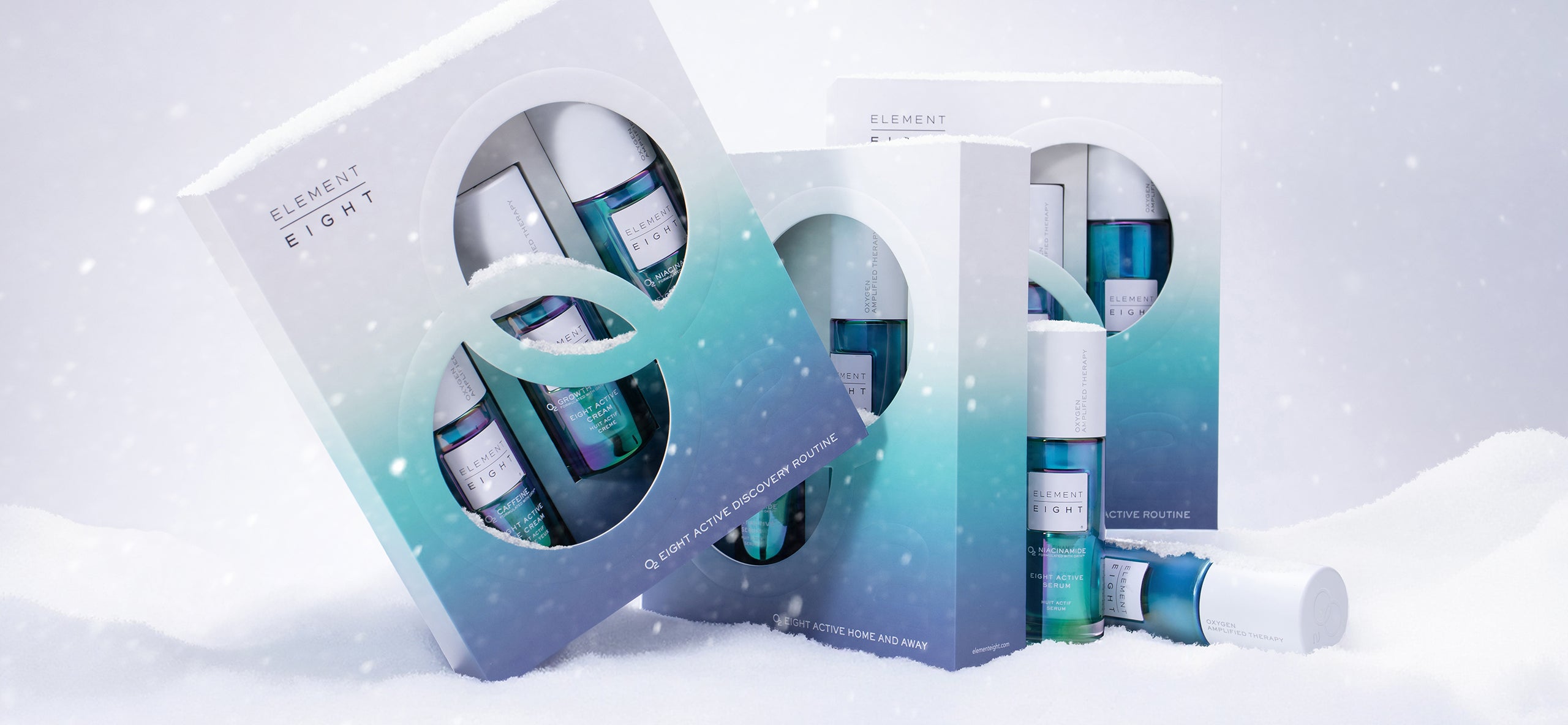
The conversion happened in Gerard Camme's head
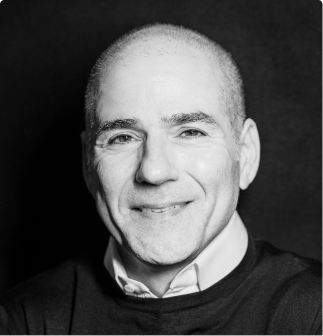
Camme, a Queens-born beauty executive with experience at Armani, Fresh and L'Oréal, was not the obvious person to fall for biomaterials. He told Beautytap that when he met co-founder Bradley Patt and heard the concept, his first reaction was that it was “extremely scientific.” Then the mechanism clicked. Oxygen products already existed, but a carrier adapted from another technical field could give the brand an ownable explanation. He saw whitespace where other people saw a lecture.
“When I understood what they were doing for spine surgery, I thought if we can apply this to skin, we would corner that whitespace in the market.”Gerard Camme, founder
That change of mind is the founding lesson. Camme did not simplify the science by removing it. He simplified the buying decision around it. Element Eight launched in November 2022 with three face creams: O2 Peptide for firmness and wrinkles, O2 Hyaluronic Acid for hydration, and O2 Squalane for repair and soothing. Each cost $250. Different concerns, same technological chassis.
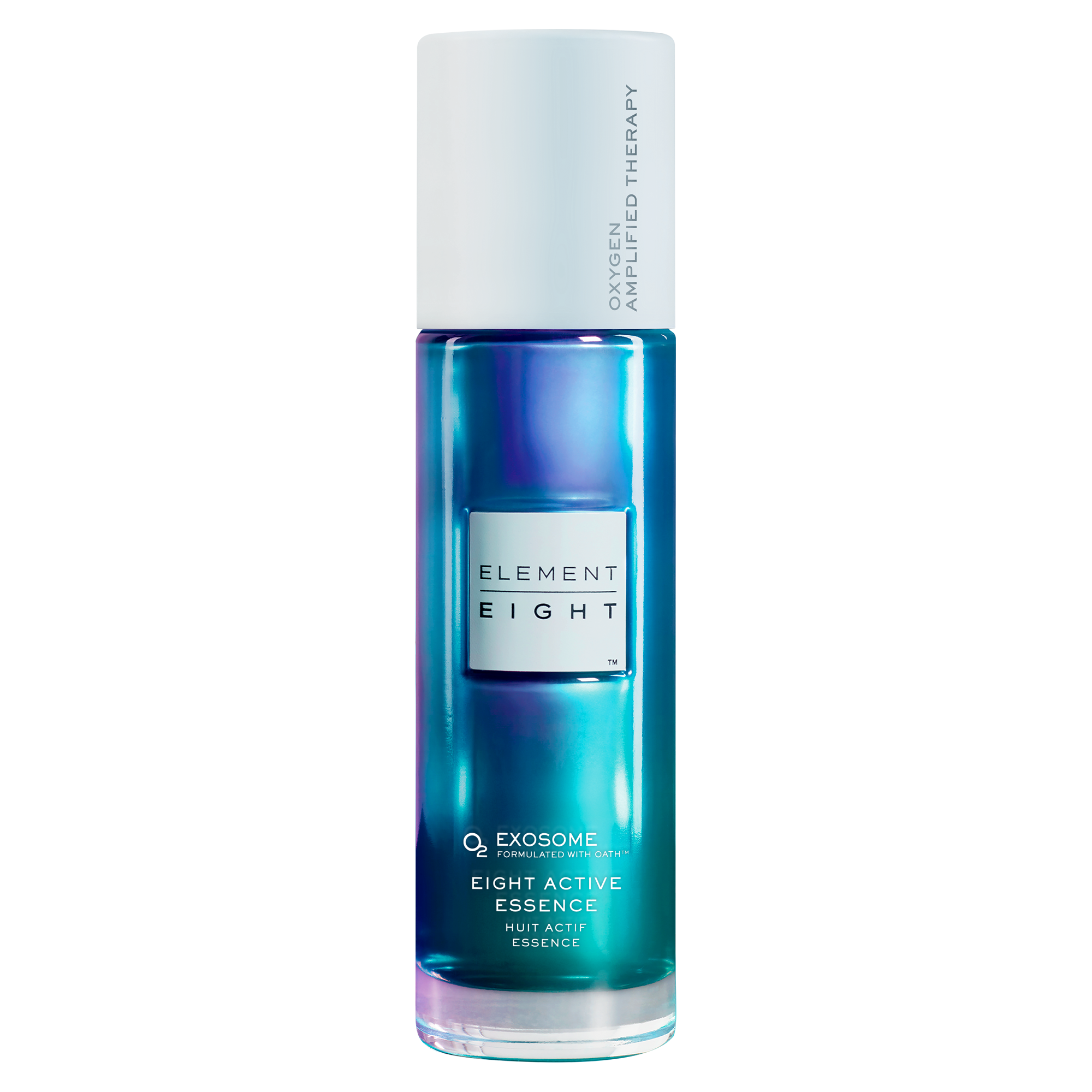
The platform logic is stronger than a one-ingredient fad. Once customers accept the oxygen premise, the company can place OATH beneath nearly any familiar active. The range now includes niacinamide, growth factors, retinol, vitamin C, caffeine eye cream and an exosome essence. A shopper does not have to learn a new brand story every time. The bottle changes; the reason for believing stays put.
What did it cost? Start with the cream
Element Eight is not coy about being luxury. Current US prices begin at $30 for a gua sha, while smaller cream formats start around $95 or $100. Full-size moisturizers reach $250 to $275. Selected sizes of the O2 Niacinamide serum reach $395. The newest O2 Exosome essence lists at $150. A complete routine can therefore turn into a four-figure bathroom experiment before the customer reaches the second shelf.
The corporate cost is bigger. In November 2023, Element Eight announced a $6 million SAFE financing - $2.5 million from existing backers and $3.5 million from new ones - bringing its reported total raised to $7.9 million. The company said 45 percent of the round came from surgeons, dermatologists and PhD scientists, 34 percent from beauty-experienced family offices and 14 percent from insiders. It simultaneously announced plans for a $6.25 million Series A, though a later close has not been publicly detailed.
The first failure was physics
There is no public founder postmortem naming a disastrous prototype or a flaming first batch. The more honest answer is that the original enemy was physical: oxygen is a gas, and gas escapes. Oxygen-branded cosmetics are not new. Keeping a useful concentration in a formula and moving it toward skin is the problem Element Eight says its carriers solve. The company built its distinction around the failure of ordinary topical oxygen to stay where marketers say it goes.
The second likely failure mode is comprehension. Customers cannot see oxygen entering a cell. They can see smoother skin, but that outcome may also come from peptides, squalane, hyaluronic acid, retinol or the simple habit of moisturizing consistently. Element Eight has to explain why its carrier deserves credit without turning a beauty counter into a graduate seminar.
Luxury retail does half the explaining
Distribution is part of the argument. Element Eight moved from its Shopify store into Bergdorf Goodman and Neiman Marcus, then select Nordstrom doors. It is now listed online by Sephora, sold through MECCA in Australia and New Zealand, and offers a one-hour Oxygen Amplified Therapy facial at Harrods in London. Put a $275 cream beside other $275 creams and the price stops looking like a typo.
Those partners also solve the tactile problem of direct-to-consumer skincare. A customer can test texture, ask an associate a skeptical question and receive a sample. That matters for a brand whose pitch is both expensive and invisible. The company adds a 20-percent auto-replenishment subscription online, bundles products into systems and uses mini sizes to lower the first-payment sting.
Its core customers are affluent skincare enthusiasts concerned with dryness, uneven tone, fine lines, barrier damage or recovery after aggressive treatments. They already know ingredients such as niacinamide and retinol. Element Eight is not asking them to discard that vocabulary; it is asking them to believe those ingredients perform better in an oxygen-rich cellular environment.
What founders can steal
Search sideways
The best consumer wedge may already work in a less glamorous industry. Borrow the mechanism only when the translation is real and protectable.
Launch the platform
Three familiar jobs made one unfamiliar technology easier to understand. Every product taught the same central idea.
Make price feel native
Luxury retailers do more than distribute. Their shelves create a comparison set in which a three-digit moisturizer looks normal.
Keep the tension
“Spine surgery in a face cream” is specific enough to repeat. The contrast carries more memory than a list of benefits.
What cannot be copied cheaply is the underlying work. Element Eight says the development team includes surgeons, dermatologists, engineers and clinical researchers whose collective history covers 120 medical patents and more than 100,000 uses of technologies they developed. Those are company-reported team credentials, not a shortcut available to a founder with a contract manufacturer and a clever landing page.
When the playbook stops working
This strategy fails when technical provenance becomes a costume. If the finished formulation lacks persuasive testing, the medical origin can make scrutiny harsher, not softer. It fails when customers cannot distinguish the proprietary system from the familiar actives doing much of the visible work. It fails when irritation, incompatibility or skin sensitivity makes a high-performance routine unpleasant. Even the company's exosome essence advises adjusting frequency to tolerance.
It also fails outside the luxury context. A mass shopper comparing a $250 moisturizer with a $25 hyaluronic-acid cream may not value the delivery mechanism enough to bridge the gap. And for people seeking treatment for a medical skin condition, cosmetic claims are not a substitute for dermatological care. Element Eight's own terms make clear that its products are not intended to diagnose, treat, cure or prevent disease.
The company sits in an interesting strip of the market between prestige skincare and beauty biotech. Its alternatives are not just other oxygen products. They include clinical names such as SkinCeuticals and SkinMedica, platform-led luxury brands such as Augustinus Bader and Eighth Day, growth-factor specialists such as Plated, and every less expensive serum built around the same recognizable actives.
Element Eight's achievement is not settling the argument over topical oxygen. It is turning that argument into a coherent company: one mechanism, a growing product family, credible technical contributors and distribution that matches the price. The next stage is less cinematic than the trip from operating room to beauty counter. It is the slow work of producing evidence, earning repeat purchases and making an invisible gas feel worth paying for.
For customers, the practical move is pleasingly unscientific: test one product, not the mythology. Choose the formula whose familiar active matches a real concern, introduce it slowly, photograph the same skin in the same light and judge the result over a sensible period. A mini cream or single essence is a cleaner experiment than buying the entire “oxygen ritual.” If the texture, tolerance or outcome does not justify the premium, the platform story is not a consolation prize. If it does, Element Eight has made its hardest conversion - not oxygen into a liquid, but curiosity into a repeat order.