Ejnar Knudsen introduced himself to a Federal Reserve agriculture symposium in 2011 with a small geographical provocation. “I am from the Republic of California,” he said. The joke came with a qualification: his California was the Central Valley, where he still resided at the feed mill. The audience laughed. Before discussing portfolios, he had established which side of the agricultural conversation he knew firsthand.
That opening offers a useful way into his career. Knudsen has worked in banking, investment management and an operating business. Each puts a different question to the same enterprise. Can it repay a loan? Is its equity worth buying? Can it actually produce and deliver what it promises? His working life has required him to consider all three, sometimes from a rather less glamorous address than the financial district.
Today he is the founder and chief executive of AGR Partners, overseeing its investment strategy. Based in Reno, he works in a sector whose businesses include feed mills, ingredient processors, equipment manufacturers and produce marketers. The distance between a financial decision and a physical result can be short. Somewhere beyond the spreadsheet, a plant has to run and a customer has to receive an order.
His earlier life began on a family dairy farm. He earned a bachelor of science at Cornell and became a CFA charterholder. Those credentials sit alongside an agricultural upbringing rather than replacing it. The resulting résumé has an unusual rhythm: farm, finance, operations, investing. It is a career assembled through different kinds of responsibility for businesses that make, move or supply food.
An hour of electricity, an hour of economics
Knudsen spent ten years in Rabobank’s New York office. His work encompassed a loan portfolio, venture capital investments and corporate advisory services. Banking gave him a view across agricultural companies and their financing needs. It also placed him in the business of evaluating obligations: what an enterprise could afford, what it needed next and how its plans would meet the demands of capital.
At Western Milling, he served as executive vice president. The California grain and feed company grew from a single location in Goshen to more than $1 billion in sales. Knudsen’s place inside the business matters because it gave his subsequent investment career an operating reference point. Feed could be bought, processed and sold. The costs did not stay politely inside their forecast cells.
A small engineering detail makes this period particularly revealing. Western Milling installed a combined heat and power system that generated electricity while recovering useful heat. The equipment produced 1,250 kilowatts of electricity and supplied steam and hot water to the processing facility. The plant operated around the clock. “Every hour the CHP system runs, we save money,” Knudsen explained.
It is a wonderfully unornamental sentence. No grand theory of disruption was needed to explain the attraction. A piece of equipment did several useful jobs, and each hour of operation improved the economics. The example shows the sort of business question an operating executive encounters: how to make a necessary process work more efficiently. An investment presentation can describe productivity. A processing plant has to achieve it.
From the loan book to the ownership question
From 2009 to 2012, Knudsen was a portfolio manager of Passport Capital’s Agriculture Fund. The assignment gave him another perspective on the sector, this time through investment selection. In a 2011 interview, he described looking for opportunities outside the mainstream. Agriculture, in that account, offered more than the familiar names that attracted the most attention whenever commodity prices made headlines.
The appeal was breadth. A food economy contains many businesses with different exposures, customers and competitive positions. A feed supplier and an equipment manufacturer can both belong to agriculture without responding identically to a change in grain prices. Treating the sector as a single bet risks missing the particular economics of the company in front of you. Knudsen’s move into investing made those distinctions part of his daily work.
His public discussion of risk also asked listeners to examine what happened beyond the average case. He recommended considering extremes when planning. That is a practical concern for companies with physical assets and continuing obligations. A forecast can be reasonable and still leave a business poorly prepared for a very different outcome. The question is how much room its financing and operations leave for events to depart from expectations.
AGR Partners followed in 2012. The firm’s present portfolio page reports more than $800 million invested since its founding. Its scale also makes the early career sequence consequential: the dairy farm, bank and mill preceded a business responsible for financing other businesses.
- EARLY LIFEFamily dairy farm
- TEN YEARSRabobank, New York
- OPERATIONSWestern Milling
- 2009–2012 → 2012Passport → AGR
A sequence of roles, rather than a timeline drawn to scale. Some responsibilities overlapped.
Ownership has more than one shape
AGR’s current approach permits majority investments, minority investments and junior capital. That range deserves attention because ownership is often discussed as though every company faces the same decision. A founder seeking money for expansion may have different needs from shareholders seeking liquidity. A management team arranging a buyout faces another set of choices. Capital comes with a structure as well as an amount.
The firm organizes its offering around growth, ownership transitions and special situations. Acquisitions and investment in facilities sit within the growth work. Shareholder liquidity and management buyouts belong to ownership transitions. Debt reduction and corporate carve-outs appear among special situations. These are concrete business events. They are also moments when the people already responsible for an enterprise must decide how its next chapter will be financed.
The investment list makes the agricultural focus tangible. SEMO Milling produces corn milling products for food and beverage companies. Tru-Test supplied dairy and livestock equipment. Prime Time Produce manages a chain that includes growing, packing, shipping and marketing. Treehouse makes almond ingredients. These businesses operate at different points between production and consumption. Their variety helps explain why sector knowledge has to extend beyond a view on the price of crops.
Patient capital, in this setting, is a question of fit. AGR says it seeks to match its partners’ time horizons. That intention still has to coexist with transactions and changes of ownership. A long relationship can have a next owner. The practical test is whether the financing supports what the business needs to do, while allowing the people involved to reach an agreement they can work with.
Acquisitions
New facilities
Shareholder liquidity
Management buyouts
Debt reduction
Corporate carve-outs
AGR’s three stated uses of capital. Illustrative categories, not a forecast of returns.
A university next door, and a call twenty years later
In 2016, AGR moved its headquarters from Visalia to Davis. Knudsen described wanting proximity to UC Davis and access to several major airports. He was explicit about the firm’s investment stage: its focus was later-stage businesses, rather than directly funding the earliest ventures. Still, new technology and business models could matter to the mature food and agricultural companies it worked with.
The move put an investment firm near a university where agricultural research and entrepreneurship meet. It also offered the possibility of internships and contact between students and industry. The distinction between those worlds is useful. A young company may be developing an idea. An established processor may have the facilities, customers and operational problem that make the idea valuable. Someone has to make the introduction.
Knudsen’s interest in entrepreneurship education has a personal memory behind it. He recalled that a former student from Cornell contacted him twenty years after he had encouraged the student to pursue a business. The student told him that the encouragement had changed his life, leading to further opportunities and a successful career. It is a modest episode with a long interval between action and reply.
At UC Davis, Knudsen and AGR have supported the Big Bang! Food + Agriculture Sector Award alongside Gowan. The university described a $10,000 prize for food and agriculture innovation. He spoke warmly about the finalist presentations and the changing mix of people and ideas. Encouraging someone takes little space in a calendar. Its consequences may take considerably longer to become visible.
A former student called twenty years later. The encouragement had stayed with him.Knudsen’s recollection of his Cornell entrepreneurship work
A partnership reaches its next owner
Devil Mountain Wholesale Nursery supplies a useful example of a business reaching another ownership stage. AGR lists its investment in 2021. In April 2024, SiteOne Landscape Supply announced that it had bought a majority stake, with Drew McMillan remaining as president. At the time, Devil Mountain had eight wholesale nursery distribution branches and six growing facilities across California.
The transaction connected an existing nursery operation with a larger distribution business. Its importance to this profile is the shape of the transition: a company with facilities, customers and leadership continued into a different ownership arrangement. Knudsen later discussed AGR’s exit as part of recent divestment activity. Long-term investing still includes decisions about when another partner can carry a business forward.
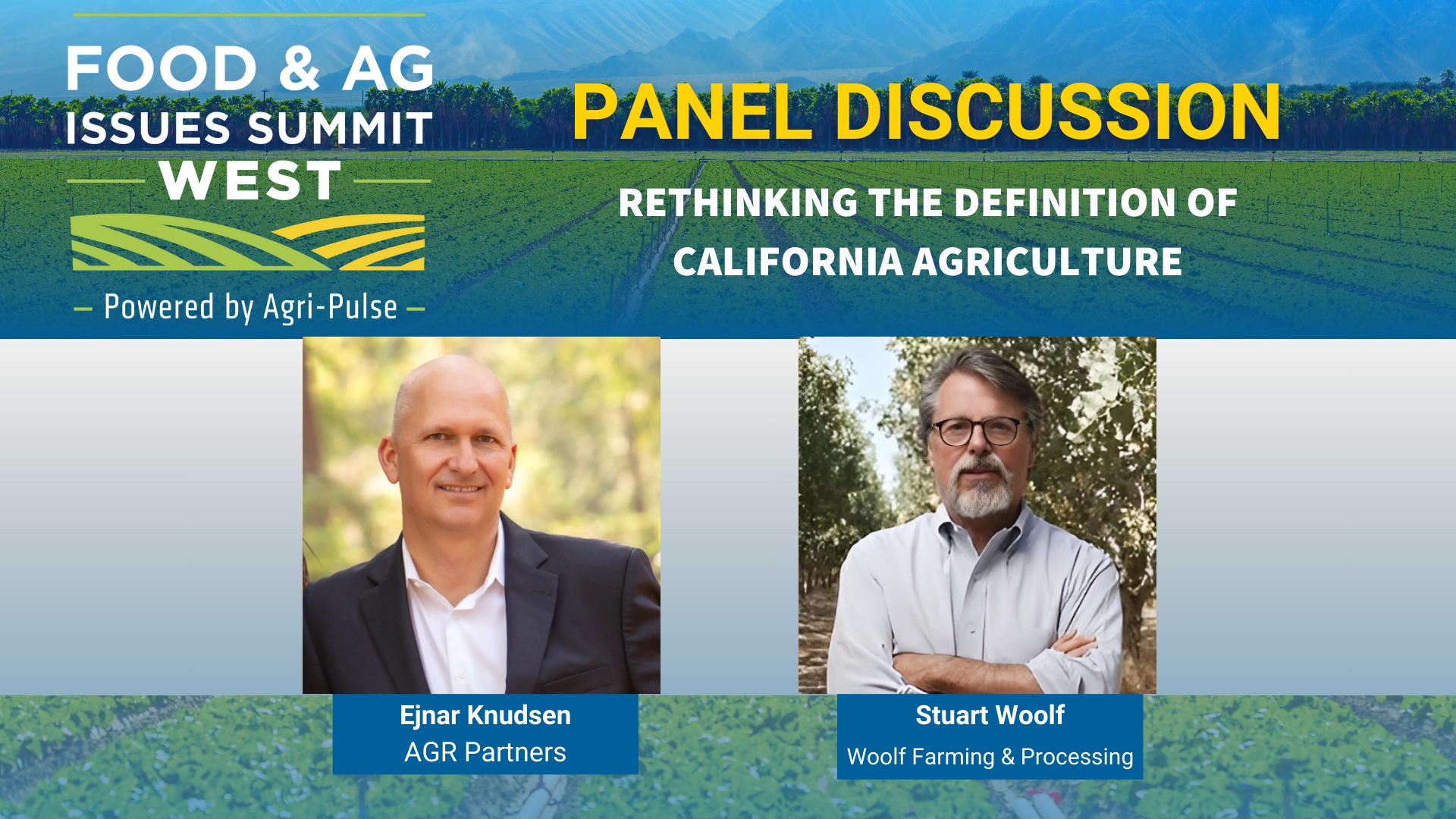
He also remained part of the public conversation about agriculture. In June 2024, he joined Stuart Woolf of Woolf Farming & Processing for an Agri-Pulse discussion in Sacramento about rethinking the definition of California agriculture. The pairing put an investor beside an operating executive. It was a fitting combination for someone whose own career had repeatedly crossed that boundary.
The next chapter belongs to people, too
In January 2026, the Giumarra Companies announced a minority equity investment from AGR alongside Don Corsaro’s retirement. The fresh produce business dated to 1922; Corsaro’s career there had lasted 65 years. Its president, Tim Riley, described a workforce that included many employees with decades at the company. A financing announcement carried a considerable amount of human history.
Knudsen’s comment emphasized Giumarra’s relationships across its supply chain and the foundation already in place. “AGR’s purpose is to grow leaders and leading companies,” he said. The stated ambition joins company development to the people responsible for it. In a produce business, growers, employees and customers already depend on a working network. An investor enters that network with both resources and expectations.
A March 2026 private equity education agenda listed him for a fireside chat with CalPERS investment professional Miguel Silva. The setting reflected another part of his role: explaining the work to institutional investment audiences. Between that room and the produce supply chain sits the central challenge of his career, translating the needs of operating companies into terms that capital providers can understand.
Asked for career advice, he has emphasized patience, persistence, hard work and pursuing an interest that matters to you. His own path gives those familiar words some texture. There was a farm before the financial qualifications, a bank before the mill, and an operating business before AGR. The most telling unit in the story may still be the hour: enough time for a machine to earn its keep, and one small part of a relationship that can last for years.