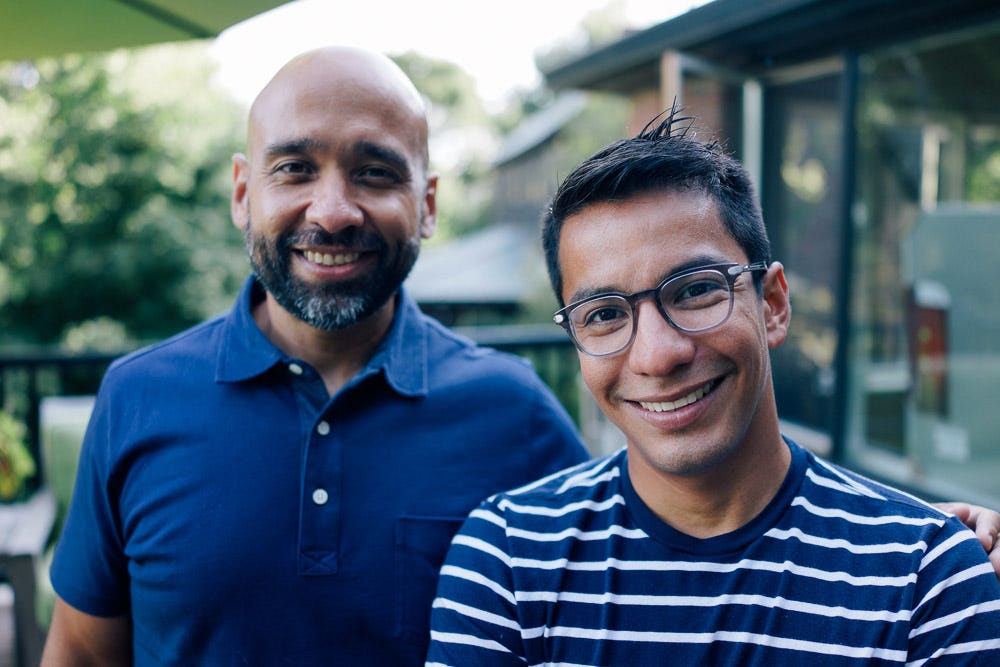
At nine in the evening, a prospect opens a pricing page. She has a question, perhaps two, and the familiar rectangle marked “Contact sales” offers an exchange: her email address now for somebody else’s attention tomorrow. In 2015, David Cancel and Elias Torres saw a business in that little delay. Drift put a conversation where the form had been. Its bot could answer, ask, qualify, and, if the visitor looked promising, produce a human or a calendar slot before she closed the tab.
- Drift sold B2B website chat that turned visitor questions into sales conversations and meetings.
- Its founders built a conversational marketing category and reached a valuation above $1 billion in 2021.
- Salesloft bought Drift in 2024; in March 2026, it announced a gradual sunset and named 1mind the successor.
The idea sounded almost impolite to the old marketing stack. That stack counted page views, collected forms and passed names to sales. Drift treated the visit itself as the lead. The buyer could ask in her own words. The seller could arrive with some idea of what she wanted. A chatbot was the visible part, but the proposition was a shorter distance between curiosity and a useful reply.
The first thing that broke was the wait
Cancel and Torres were hardly new to software. They had worked together at Performable, which HubSpot acquired, and later left to build Drift. Their first attempt to find a market was painful: Cancel told Forbes that early product fit was so elusive he never wanted to repeat the experience. The initial chat product finally gave the company a particular problem to solve. It could serve a buyer when a representative was unavailable, gather context, and bring the right person into the conversation.
That distinction mattered. A generic support messenger waits for someone to ask for help. Drift’s sales playbooks could appear on a high-intent page, recognize an account, ask a qualifying question, then route the visitor to an available seller or offer a meeting. Email, video and service tools later joined the chat product in a broader Conversation Cloud. The buyer saw a greeting; the company saw a small chain of decisions.
This was software for marketing and sales teams with enough inbound interest to miss some of it. A startup could use a simple chat widget. A larger buyer could use account targeting, CRM data, routing rules and reports. Drift sold through a freemium and paid SaaS model; enterprise customers paid for a more elaborate system. A G2 pricing listing last updated in 2024 put Premium at $2,500 a month, while larger plans required a quote. It was a sales tool attached to the buyer’s first visit, an unusual vantage point in a market crowded with tools for managing buyers after they became records.
A chat bubble with a balance sheet
The money followed the story. In April 2018, Drift announced a $60 million Series C led by Sequoia Capital, with CRV and General Catalyst participating. TechCrunch reported that the company had raised $47 million before that round. Three years later, Vista Equity Partners made a strategic growth investment that put Drift’s valuation above $1 billion. Vista said 50,000 customers used it at the time. That is a historical company claim, not a count of paying customers today.
A customer example shows the attraction more clearly than a market slogan. State Street Global Advisors tested Drift first on its UK SPDRs site. The team set a six-month goal of $15 million in trades originating from chat and said it exceeded that target in half the time. After 18 months, it reported more than $65 million in allocations from Drift leads. Those are customer-reported results, tied to one firm’s audience and sales process. The useful lesson is the experiment: one site, a stated commercial target, bots that screened out irrelevant traffic, and a human team ready for the qualified conversations.
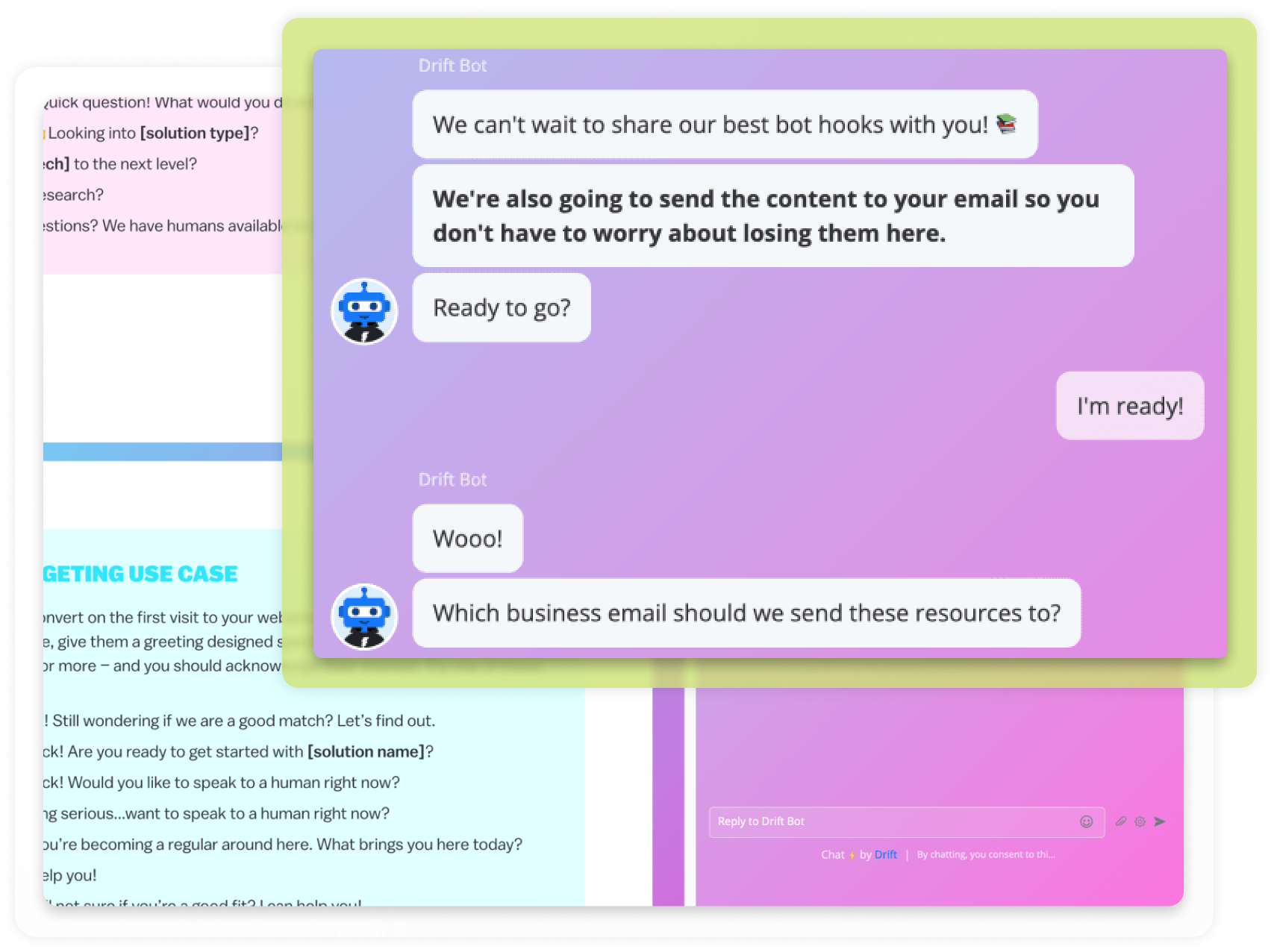
Drift’s difference from an ordinary chat widget was the purpose of the exchange. It was built to find buyer intent, move it into a seller’s day and measure the resulting pipeline. It did not need every visitor to become a lead. Indeed, the State Street team used bots to spare its salespeople the irrelevant questions. That is a quieter ambition than “automate sales,” and a more practical one.
When the conversation joined the CRM
Salesloft acquired Drift in February 2024 for an undisclosed price. The logic was direct. Drift knew what buyers did on a website; Salesloft organized what sellers did next. By June, Salesloft described new workflows that used Drift page views, video views and chatbot conversations as buyer signals, then prioritized follow-up in its Rhythm system. A web visit could become a seller task with context rather than a lonely event in an analytics dashboard.
“Drift’s AI helps you understand who’s on your website, who’s more likely to buy, and engage them for you, at scale.”ELIAS TORRES, IN A 2020 FORBES INTERVIEW
The integration carried a less charming truth. In August 2025, an attacker used credentials from Drift integrations to access data in some customers’ Salesforce instances. Salesloft’s trust updates say it revoked affected tokens, investigated with Mandiant and temporarily took Drift offline in September while it fortified the application. A connected sales tool can be valuable because it sees buyer history and CRM context. Those same connections make its security everyone’s business.
It would be too tidy to claim the incident alone ended Drift. Salesloft gave a different reason for the next turn. In March 2026, it announced an exclusive partnership with 1mind and a gradual sunset of Drift, referring existing clients to 1mind as the successor. Salesloft said it wanted AI buyer interactions that would feed its predictive revenue system. The announcement did not give a universal shutdown date. Drift had won the first conversation; its owner now wanted the conversation, follow-up and forecast to live in one wider loop.
What remains after the chat window closes
Drift’s legacy is an operating habit as much as a product. Put an answer close to the moment a buyer asks. Let a bot handle the repeatable questions. Make the handoff to a person explicit. Count booked meetings and real commercial outcomes, not merely opened chat windows. Start with a small, busy corner of the site and learn what people actually ask before writing fifty cheerful scripts.
The method has limits. It needs visitors with questions, a team able to follow up, a routing scheme that does not send good prospects into a void, and careful control of the data shared with connected systems. If the website has little qualified traffic, or if nobody owns the conversations, a chat box only makes the silence more animated. Drift’s own history supplies both sides of the lesson: speed can create a new market, but an enterprise promise must survive the software behind the greeting.
The blank form is still with us. It remains wonderfully cheap and stubbornly quiet. Drift’s achievement was to make the wait it imposed seem optional. For a decade, that was enough to build a company. The microphone has moved, but the buyer at nine in the evening is still there, waiting for someone to answer.