Salesloft Wants To Tell Sellers Exactly What To Do Next
The Atlanta company retired the old sales cadence and replaced it with Conductor AI, an engine that ranks every rep's next move in real time. It is the clearest bet yet that revenue work becomes a prioritized list, not a guessing game.
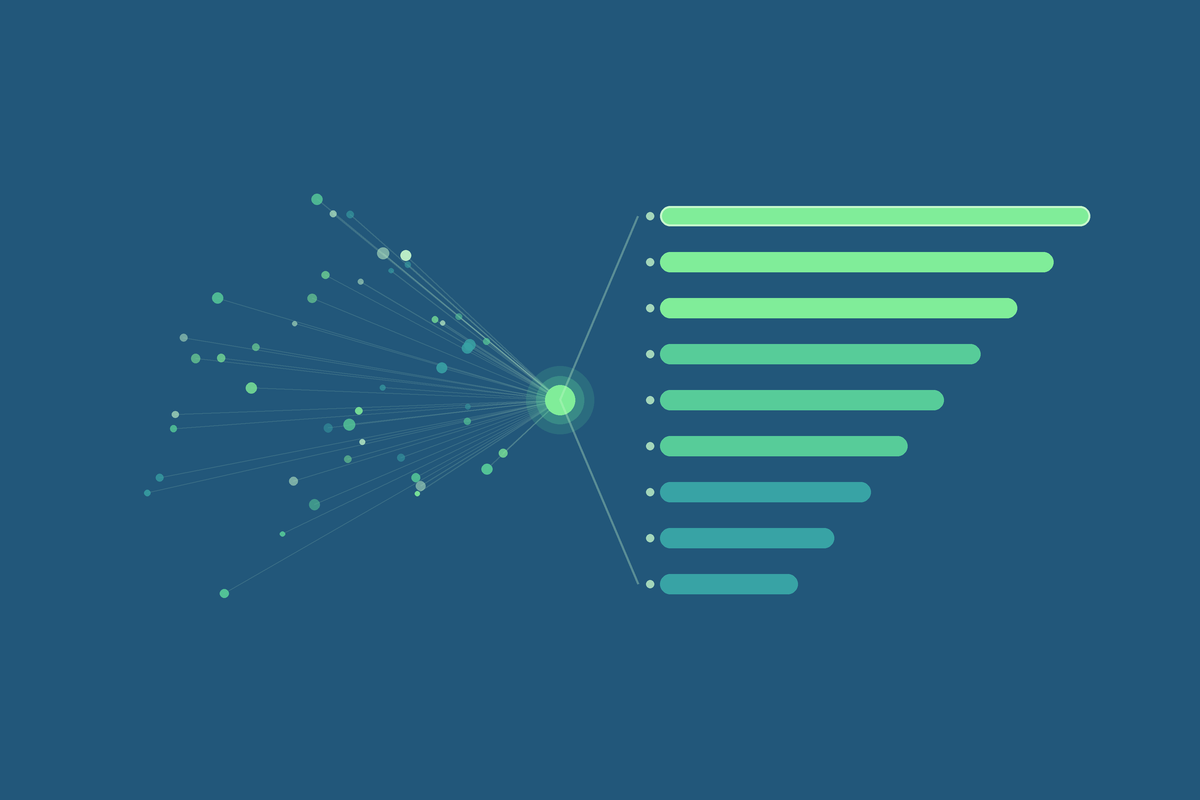
Open a sales tool from ten years ago and it asks you a question: what do you want to send, and to whom? Open Salesloft's Rhythm today and it does something closer to answering. It reads what your buyers have been doing overnight, ranks the moves that matter, and hands you a list. Do this first. Then this. The blank morning is gone.
That shift is small on screen and large in strategy. For most of the last decade, Salesloft and its rival Outreach sold roughly the same thing: a way to run outbound at scale. You built a cadence - a sequence of emails, calls, and social touches - and the software made sure nobody fell through the cracks. Consistency was the product. Whoever had the deeper sequence editor won the bake-off.
Salesloft has spent the past three years arguing that consistency was never the hard part. The hard part is deciding what to do next, out of the hundred things you could do, before lunch. Its answer is Conductor AI, a patent-pending engine that sits underneath the Rhythm workflow and turns a stream of buyer signals into a single prioritized to-do list for each seller.
A cadence is a plan you made yesterday. A signal is what changed this morning.
From sequences to a signal-to-action system
Conductor AI ingests engagement signals from across a company's sales stack - email opens, website visits, deal activity, conversation intelligence, calendar, and rep-defined tasks - and ranks the most impactful actions in real time. It explains why it made each recommendation, and it learns from what closes to re-order the list. Salesloft's Chief Product Officer, Ellie Fields, describes Rhythm as a "signal-to-action system that consolidates actions in one prioritized location."
The phrase to notice there is "one prioritized location." The old sales interface was a place to do work - draft the email, log the call. The new one is a place to be told the work. That is a different relationship between the rep and the software, and it is the wedge Salesloft is pressing in 2026.
Why does this matter beyond a demo? Because the best reps already do this ranking in their heads. They know the account that just visited the pricing page is worth more of the next hour than the cold prospect on step four of a sequence. Salesloft's bet is that the ranking - not the sending - is the scarce skill, and that software can hand it to everyone else on the team.
The Outreach question
Any honest look at Salesloft has to deal with Outreach, because for years the two were near-mirror images. Both are the category-defining sales engagement platforms. Both do sequencing, dialing, and analytics. If you put their feature lists side by side, the overlap is uncomfortable.
The interesting move in 2026 is not a new feature. It is that Salesloft reframed what the product is for. Outreach leans on the depth of its sequence tooling - sophisticated exit criteria, dynamic variables, its native Kaia conversation intelligence - and pitches control at scale. Salesloft leans on Conductor AI and pitches decisions. The difference is narrow in a spec sheet and wide in a sales meeting.
| Salesloft | Outreach | |
|---|---|---|
| Core wedge | Conductor AI ranks the next action | Deep sequence tooling at scale |
| Signature layer | Rhythm workflow | Kaia conversation intelligence |
| Framing | Signal to action | Control and forecasting |
| Buyer side | Drift (acquired 2024) | Smart Account Plans |
When a company simplifies its story that aggressively, watch what it drops. Salesloft dropped "cadence tool."
What a rep can actually do with it
Strip out the category language and here is the day-to-day. A seller logs in and Rhythm has already sorted the queue: the account that reopened a proposal, the champion who went quiet, the renewal with a slipping close date, the sequence step that is merely due. Each item carries a short reason - why now, what changed - so the rep is not taking orders on faith. Calls, emails, and LinkedIn touches run from inside the same window, and the outcomes feed back into the ranking.
The research agents do the pre-work. Instead of opening five tabs before a call, a rep can have the Account and Person Research agents assemble a briefing - recent news, org structure, prior touches - and the methodology agent can pull qualification fields out of a recorded call and drop them into the deal record. For a manager, the payoff is coverage: the whole team works a prioritized list, not just the reps with good instincts, and the new AI-adoption metrics show who is leaning on the tools and who is ignoring them.
That last point is where a lot of sales software quietly dies. A recommendation engine only helps if reps believe it. Salesloft's answer - show the reason for every ranked item, and let managers watch adoption - is an admission that trust, not accuracy alone, is the product's real constraint.
The moves behind the pitch
Repositioning is cheap in a press release and expensive in practice. Salesloft made the expensive kind. In February 2023 it brought in David Obrand, a Vista Equity Partners operator, as CEO. Vista had taken a majority stake in 2021, in a deal that valued the company near $2.3 billion. Obrand's framing has been consistent since: "Rhythm will transform how every seller in the world works by taking the complexity out of the revenue workflow."
In February 2024 the company acquired Drift, the conversational marketing platform, and folded its buyer-side chat and intent into the orchestration story. That gave Salesloft a claim on the whole arc - first touch to renewal - rather than only the seller's outbound motion. The combined company reported nearly 6,000 customers.
Then, in 2025 and 2026, the AI layer thickened. Salesloft shipped research agents in a "Closing Power" suite - an Account Research Agent and a Person Research Agent that assemble context a rep would otherwise dig for. A methodology-extraction agent listens to recorded calls and pulls qualification fields into deal records on its own.
Each of those pieces is defensible on its own. Stacked together, they add up to an argument: the seller's job is shifting from doing the busywork to approving the machine's output. The research is drafted, the call is summarized, the next action is ranked. What is left for the rep is judgment and the conversation itself - which is, not coincidentally, the part that is hard to automate and the part buyers actually pay for.
Opening the box
The most telling 2026 move is the quietest. In its June release, Salesloft added native access to Claude through an MCP Connectors Directory, and shipped a Salesloft MCP Server that opens live pipeline data, deal activity, engagement signals, and call data to any MCP-compatible AI tool - Claude, ChatGPT, Microsoft Copilot, Gemini. It also added AI-adoption metrics so managers can see who is actually using the assistants.
Read that closely. A company that believed its interface was the product would keep the data inside the app. Salesloft did the opposite. It is betting that the value was never the screen - it was the ranked decision, and the signals underneath it. If sellers want to reach those signals through Claude or Copilot, fine. The orchestration layer still owns the priority order.
The tell: Salesloft no longer thinks the interface is the product. The ranked decision is.
What you can take from it
There is a portable lesson here for anyone building software, not just for sales teams. When you cannot out-feature a rival, you can redefine what winning the day means. Salesloft could not win a sequence-editor arms race outright, so it moved the argument to a question its rival was not centering: what should the rep do in the next ten minutes?
The second lesson is about removal. Most software competes by adding options. Salesloft's most valuable move was subtracting a decision - the blank-page feeling of a rep's morning. Users rarely want more choices. They want to know what is next, and to trust the thing that told them.
None of this guarantees the bet pays off. Ranking is only as good as the signals feeding it, and a to-do list a rep does not trust is worse than no list at all. Salesloft also sells into a market that has heard "AI will fix your pipeline" enough times to be skeptical, and a majority-owned company under Vista carries pressure to show that the repositioning turns into retention and expansion, not just a cleaner keynote.
Outreach, for its part, is not standing still, and the two platforms remain closer than either would admit in a demo. A buyer choosing between them in 2026 is really choosing a philosophy: control the sending machine, or trust the ranking one. But the shape of the fight has changed. It used to be about who could automate the most outreach. Now it is about who gets to decide the seller's attention - and Salesloft has planted its flag on that ground.
Explore & connect
Frequently asked
What does Salesloft actually do?
It is a sales engagement and revenue orchestration platform. Reps use it to run outreach across email, calls, and social, and its Rhythm workflow hands each seller a ranked, AI-prioritized list of what to do next based on live buyer signals.
What is Conductor AI?
Conductor AI is Salesloft's patent-pending engine. It ingests engagement signals, ranks the most impactful actions in real time, explains why it recommends them, and learns from outcomes to re-prioritize each seller's workflow.
How is Salesloft different from Outreach?
Both are the leading sales engagement platforms and overlap heavily. In 2026 the wedge is AI orchestration: Salesloft leans on Conductor AI and Rhythm to decide a rep's next move, while Outreach emphasizes deep sequence tooling and its Kaia conversation intelligence.
Who owns Salesloft?
Vista Equity Partners took a majority stake in 2021, valuing the company around $2.3 billion. It was founded in 2011 by Kyle Porter and David Cummings and is led by CEO David Obrand.
Why did Salesloft acquire Drift?
The 2024 Drift acquisition added conversational AI and buyer-side engagement, letting Salesloft orchestrate a personalized, omnichannel buyer journey from first touch through renewal rather than only the seller's outbound motion.