Drew Baird made more cables than he needed. This is an unglamorous way to begin a business story, which is part of its appeal. He wanted to connect his own audio equipment, found the cables he liked too expensive, and built some himself. The extras went online. Buyers appeared. A domestic problem had acquired a customer list.
There were other possible beginnings. A New York dance floor. An engineering classroom at Penn State. A pair of homemade speakers assembled because buying the desired models was out of reach. Baird’s route to Moon Audio passed through all of them. The cable was simply the part of the story that somebody else wanted to order.
Today he is the founder and CEO of Moon Audio in Cary, North Carolina, and the host of The Fidelity Exchange. He sells equipment, develops cables, and asks other audio people how they came to make the things listeners love. His own answer involves a long apprenticeship in wanting something, taking it apart, and wondering whether he could make it work differently.
The spare parts found customers
The first project was personal. Baird was putting together a home theater and already owned much of the equipment. Cabling became the sticking point. He began with interconnects, the cables that link components, using Cardas connectors and DH Labs wire. Selling the leftovers on eBay turned a solution for one system into a small experiment in demand.
The experiment moved quickly enough to encourage him. Recalling the early sales in 2003, he said the cables he listed on eBay and Audiogon had gone within the first week. Yet the ambition he described was quite practical: make cables he thought sounded good, keep overhead low, and sell directly to customers. A retail chain was absent from the plan.
“It shouldn’t cost a fortune to acquire good sound.”
Drew Baird, 2003
He was already thinking beyond one product. His early work included custom terminations and reterminations, adapting the ends of cables to particular equipment. He was exploring speaker and power cables, too. These are the details that make the origin useful. Baird had found a repeatable kind of request: a listener with a system, a desired connection, and a reason the standard option did not quite suit.
A DJ takes the engineering exit
Baird grew up in Manhattan and became a DJ in high school, playing school dances and parties and working in clubs. His interest in sound developed in places where music had a job to do. People were there to hear it together. Equipment was part of delivering that experience, and his curiosity about modifying it followed him into college.
At Penn State he initially pursued electrical engineering because he wanted to design audio equipment. He switched to structural engineering and later worked as a civil engineer. The professional route changed; the audio projects continued. After college, he built his own speakers because the expensive ones he wanted were beyond his budget. He considered a speaker line, then recognized how many variables speaker design would require him to master.
That decision has a certain modesty. Plenty of business biographies treat every abandoned idea as a prophecy. Here was a builder deciding that a subject was complicated enough to remain a hobby. He kept making speakers for himself and moved into modifying other equipment, trying different components and materials. He also read, spent time on audio forums, and asked questions.
His early cable discussion was personal rather than absolute. He liked silver conductors, while acknowledging that another listener might prefer something else. He encouraged people to try alternatives. That distinction matters in a field where a preference can arrive dressed as a law of nature. Baird was describing what he heard and liked, and making products around that judgment.
“Moon” was chosen to be easy to say and remember. “Dragon Cables” came from Baird’s Dungeons & Dragons hobby. Even an audio business is allowed a little fantasy at the naming stage.
Nine years before the leap
Moon Audio began as a garage project in 2001 and incorporated in 2003. Baird continued his engineering job, filling cable orders at night and on weekends. He and his wife, Nichole, committed to the business full-time in 2010. The dates resist a tidy overnight-success anecdote. There was a substantial stretch when the next order had to fit around another working day.
Nichole belongs near the center of this story. They married in 1999. As the cable work developed, her advertising and marketing background helped turn technical ideas into explanations customers could use. She handled questions, relationships, branding and sales work. A product designed at a workbench still needed someone to explain which version belonged in somebody else’s listening room.
That partnership also helps explain the shape of the company now. Moon Audio combines its own made-to-order cables with other manufacturers’ audio equipment and a substantial body of educational material. Drew’s product knowledge and Nichole’s communication work meet in the same practical question: how does a person choose something that fits the system they already own and the music they want to hear?
The garage has given way to an 8,000-square-foot Cary workplace. The business serves customers internationally. Its team includes cable technicians, engineering, logistics, customer support and video production. What once occupied one engineer’s evenings now involves people making, packing, explaining and demonstrating products. Growth, in this version, comes with a shipping department.
Bring the gear. Stay for the people.
Baird’s account of an early headphone gathering supplies a less comfortable measure of progress. He drove equipment from North Carolina to Queens in a Pacifica. After the event, with the gear back in the vehicle, he watched it from a window through the night. He was afraid someone would steal it. A parking lot had become the place where the business felt most exposed.
He retold the episode in a conversation with longtime friend Mike Dias, whose career includes Ultimate Ears. Their recollections also concerned the manufacturers and enthusiasts meeting at those early events. Baird remembered competitors becoming friends, then finding each other again at subsequent gatherings. For him, the community was made through repeated encounters, with equipment providing the reason to arrive.
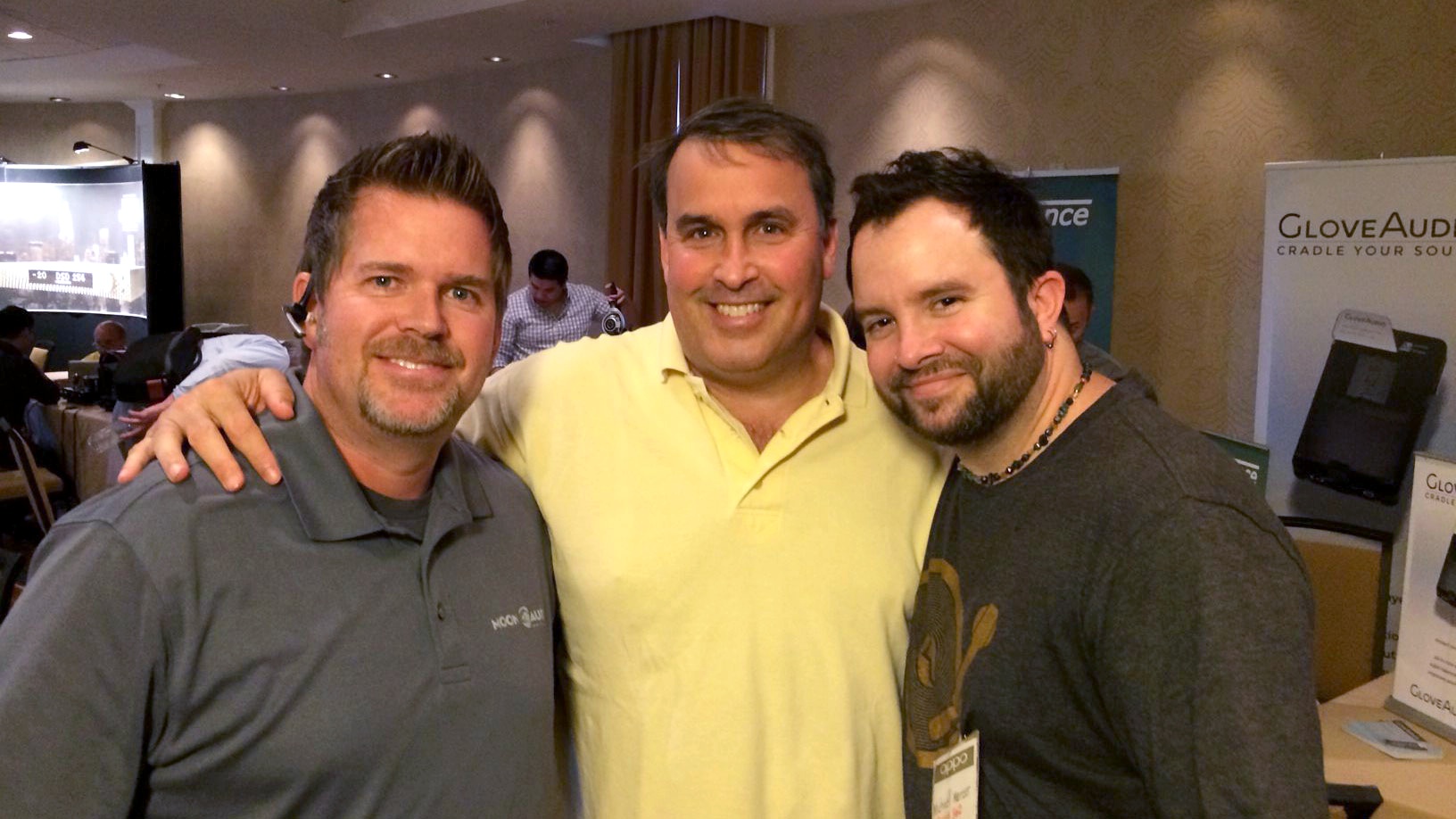
Those relationships extended into professional audio. Moon Audio’s work with JH Audio includes manufacturing stock cables for its in-ear monitors as well as offering Dragon Cable upgrades. The connection places Baird’s cable business alongside equipment used by working musicians. It also gives the word “custom” a concrete purpose: different users and devices need different connections.
Recognition arrived in the specialist press. Moon Audio’s Silver Dragon V3 Audeze headphone cables received a 2013 Positive Feedback Writers’ Choice Award. The award concerned a particular product, including its interchangeable connections. That is a useful detail in Baird’s career: the ability to move between pieces of equipment can matter as much to a customer as the object itself.
His demonstrations could also lead somewhere beyond cables. At CanJam London in 2016, he invited reviewers to hear the Dragon Inspire IHA-1 headphone amplifier with Focal Utopia headphones. The amplifier was designed by Dennis Had, the founder of Cary Audio. Baird’s part in this scene was recognizably that of the enthusiast with something he wanted another listener to hear.
The microphone changes sides
On The Fidelity Exchange, Baird now gives other makers room to tell their stories. The program ranges across audio design, recording, playback and the people behind those activities. The format suits a career built partly through questions and longstanding relationships. A conversation can uncover the decision behind a specification, or the earlier job that explains a designer’s habits.
The January 2026 conversation with Dias includes in-ear monitors, early community gatherings and the pleasures of collecting equipment. Baird is candid about the machinery’s appeal. He compares the attraction of audio gear with other collecting hobbies and allows that the objects themselves account for a considerable share of the fun. A good listening room can also be a very elaborate toy cupboard.
“At the end of the day, we’re all geeks, right?”
Drew Baird, The Fidelity Exchange
His interests reach beyond the latest purchase. In March 2025, he joined The Occasional Podcast to discuss CDs, physical media and system matching. A September 2026 Fidelity Exchange conversation with Wattson Audio founder Alexandre Lavanchy explored a phono preamp and Lavanchy’s engineering background. The subjects span old formats and new designs, with the decisions of the people making them providing the through line.
A garage project with room to keep going
Outside work, Baird’s interests remain pleasantly physical. He fishes, hikes, attends concerts and works on an International Scout. He follows Penn State football. His working day includes connectors and audio components; his choice of vehicle offers further opportunities to tinker. Some people unwind by putting the tools away. His list of hobbies suggests other arrangements.
The stated ambition behind Moon Audio remains helping people reconnect with their music. It has room for both the listener who wants advice and the enthusiast who enjoys comparing equipment. Baird has occupied both positions himself: the buyer with a budget, the builder with spare parts, the dealer carrying demonstration gear, and the interviewer asking a friend how it all began.
The appealing thing about his beginning is its scale. He was trying to finish a system in his own home. He made something, offered the extras, and discovered that other people had a use for them. Years of work followed that first response. The music supplied the reason to start; the next person asking for a cable supplied a reason to return to the bench.
Keep listening
Explore Moon Audio and its expert advice journal. Follow Drew on LinkedIn.
Watch Drew’s conversation with Mike Dias, browse Moon Audio on YouTube, or listen to The Fidelity Exchange and his Occasional Podcast appearance.