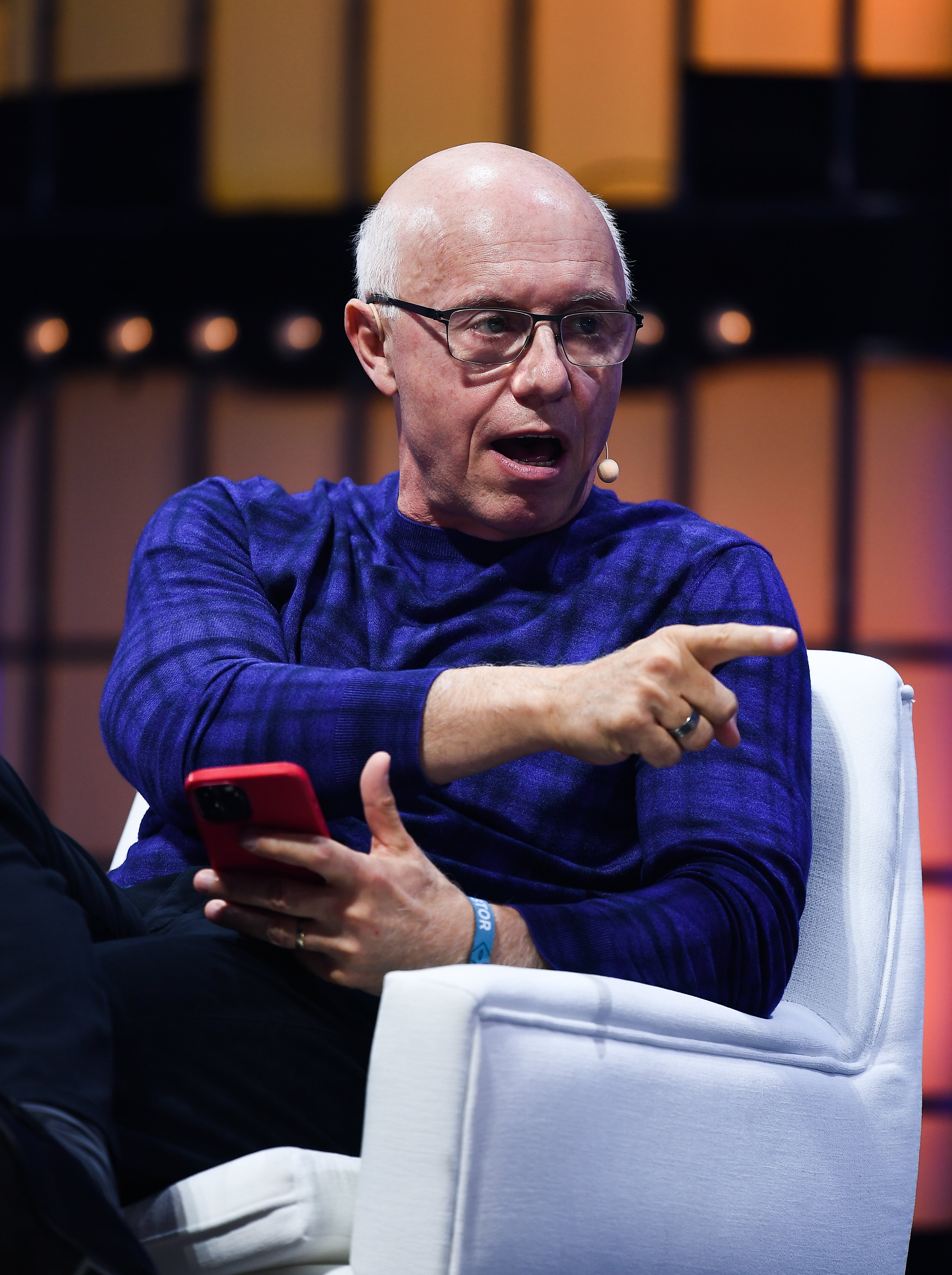
The year was 1968. An 11-year-old boy from Genoa, Italy stepped off a plane into Mount Vernon, New York - not speaking a word of English, not knowing a soul, carrying a name that would shift in translation. In Italy he was Mauro. In America, he flipped the names and became Douglas. Small choice. Big statement about what was coming next.
Douglas M. Leone didn't glide into Silicon Valley on family connections or prep school polish. He clawed into it through three graduate programs - Cornell, Columbia, MIT Sloan - and a string of grueling sales roles at Prime Computer, Hewlett-Packard, and Sun Microsystems. By the time Sequoia Capital founder Don Valentine gave him a shot in 1988, Leone had earned the reputation as the guy who could sell anything to anyone. He proved it.
Give me an entrepreneur with a lot of courage, gusto and who iterates rapidly, and I will back that person day in and day out.
- Douglas LeoneSequoia in 1988 was already legendary, but Leone found ways to make it more so. He became Partner in 1993, Managing Partner in 1996, and Global Managing Partner in 2012. Along the way, he pushed the firm into China and India when most American VCs were still figuring out how to spell "globalization." Those bets aged extremely well.
The roster of companies he touched reads like a history of the modern internet: Google before most people cared about search. ServiceNow when enterprise software was still boring. RingCentral when unified communications meant juggling a dozen phone systems. WhatsApp before messaging apps were a category. Nubank when Latin American banking was untouchable by outside capital. Wiz when cloud security was still figuring itself out.
I'll always change my mind based on new data. Never emotions, just data.
- Douglas LeoneWhat makes Leone interesting to study isn't the returns - it's the philosophy behind them. He has said openly that he prefers founders who are "spiky": someone who scores A, F, F, A is more interesting to him than a reliable B+ student. He wants the outlier. He wants the obsession. That preference tracks. The companies he backed weren't safe bets - they were concentrated, weird, contrarian.
Leone stepped back from the Global Managing Partner role in July 2022, handing the operational reins to Roelof Botha and others. But "stepped back" is doing a lot of work in that sentence. He remained a general partner and still sits on the boards of Wiz, Nubank, Trade Republic, Island, Cyera, Cresta, ActionIQ, and strongDM. That's not retirement. That's a different schedule.
At home in Atherton, California, with his wife Patricia Perkins-Leone and four children, Leone describes his priorities with unusual simplicity: family, Sequoia, fitness, relationships, and appreciating the small moments. He wakes at 4:30am - not because he has to, but because mental discipline is as much a practice as a habit. He calls himself a "terrible listener" - a self-assessment he's actively trying to correct. He wants his epitaph to say "he died a young man" because, as he puts it, he's still a kid at heart.
The Carnegie Corporation named him a Great Immigrant in 2017. Italy gave him the Order of the Star in 2021. Forbes put him in the top 10 U.S. tech investors. By December 2025, his net worth sits at $10.8 billion. None of those numbers would exist if that 11-year-old from Genoa had decided America was too hard.
He didn't. That's the whole story, really.