On September 2, 2005, Roelof Botha sat down at his desk at Sequoia Capital and typed a memo. The company he was writing about had three employees. Their office was in a garage in San Mateo, California. Their product was a website where people uploaded home videos - pets, weddings, skateboard tricks. He wrote six pages. He wired $5 million.
Google bought the company fourteen months later for $1.65 billion. Sequoia's take: approximately $500 million. The return: 57 times the investment. The timeline: 427 days.
"YouTube has an opportunity to be the primary outlet for user-generated video content on the internet. It has achieved viral growth without any marketing spend. The content quality, while rough, is improving. The barriers to competitive entry are significant."
That memo - which became public evidence in the Viacom vs. YouTube copyright lawsuit years later - is now studied in business schools around the world. Botha didn't write it as a case study. He wrote it as a bet. That's the thing about Roelof Botha. He thinks in bets. And he doesn't stop betting until the math is unambiguous.
The Actuarial Mind
Before he was a venture capitalist, Botha was an actuary-in-training in Cape Town. His undergraduate degree from the University of Cape Town covered actuarial science, economics, and statistics - a combination that produces people who are comfortable with probability distributions in the way that other people are comfortable with spreadsheets. He graduated with the highest GPA in UCT's history. Not of his year. Of the university's entire recorded history.
Actuaries build careers out of modeling futures other people find too uncertain to quantify. That training follows Botha everywhere. When he evaluates founders, he's running a mental model about trajectory, not present state. He calls it "favoring slope over intercept" - back someone's growth rate, not their current position on the curve. A founder who hasn't accomplished much but is moving fast beats the decorated veteran who has peaked.
Favor slope over intercept. Back trajectory, not credentials.
Roelof Botha - Sequoia CapitalThis is not a conventional VC framework. Most investors use pattern recognition - founders who look like prior winners. Botha trusts the derivative. It's a subtle but enormous distinction that explains many of his most surprising bets.
The South African in the Room
PayPal, in its 2001-2002 heyday, was run by South Africans.
Elon Musk was from Pretoria. David Sacks was from Cape Town. And Roelof Botha - also Pretoria - was CFO at 28 years old. Three South Africans running a company that was reinventing money. The arrangement was almost comically improbable. It was also extraordinarily effective.
Botha had arrived in the United States on a student visa and a scholarship to Stanford's Graduate School of Business - where, incidentally, he graduated as valedictorian. He also met his wife, Huifen Chan, in their first year. They later funded the Botha Chan Innovation Program at Stanford to give students money to test entrepreneurial ideas over the summer. That's how you say thank you to an institution that worked out.
His path to PayPal started with a currency crisis. South Africa's rand collapsed in 1998, and exchange controls prevented Botha from accessing his own savings. He borrowed from friends and family to pay rent in Palo Alto. A mutual friend eventually introduced him to Elon Musk. Musk offered him a job before he'd finished his MBA - as Director of Corporate Development at X.com, the payments company that would soon become PayPal. Musk sat him at the desk adjacent to his own. The mentorship was immediate and consequential.
By September 2001, Botha was CFO. Five months later, he led PayPal's IPO - the first technology IPO after the dot-com bust. It raised $61 million in conditions that made most bankers nervous. Eight months after that, he negotiated PayPal's acquisition by eBay for $1.5 billion. He was 28 years old.
The Marshmallow Test
When the eBay deal closed, Meg Whitman - eBay's legendary CEO - offered Botha the CFO role for the combined company. Prestigious, lucrative, and safe. Exactly the kind of role that looks like the highest expected value option.
He turned it down.
Michael Moritz, who had been a PayPal board member and recognized something in Botha from close range, invited him to join Sequoia Capital. The salary was lower. The work was harder to define. The upside was entirely uncapped.
Botha has since called this his "marshmallow test" - the classic delayed-gratification experiment where children choose between one marshmallow now and two marshmallows later. Every serious VC career starts with a version of this choice. Most people take the marshmallow. Botha waited. He's been collecting them ever since.
The Portfolio, Twenty Years On
YouTube was the breakout moment, but it wasn't an anomaly. Over the next two decades at Sequoia, Botha built a portfolio that reads like a syllabus for how technology reshaped the world.
He backed Instagram before Facebook could see it coming. He led the Series B for Block - then called Square - the Jack Dorsey payments company that would eventually expand into Bitcoin, music streaming, and commerce infrastructure for small businesses. Dorsey later wrote about Botha on X: "roelof is one of the greatest of all time. both as a VC lead, and as a friend."
He sat on the MongoDB board as the database company grew from startup to publicly-traded enterprise stalwart. He backed Tumblr before Yahoo! got interested. He was on the Eventbrite board through its IPO. He invested in 23andMe when consumer genomics seemed almost theoretical. He led Sequoia's involvement in Natera - where his publicly reported stake is now valued at roughly $231 million - and in Ethos Technologies, the life insurance startup worth another $169 million in reported holdings.
In October 2023, he became Chairman of Unity Technologies' board, taking control at one of the most turbulent moments in the gaming industry's recent history. The following year, Sequoia participated in Elon Musk's xAI funding round at a $6 billion valuation.
The through-line across all of these bets is harder to identify than it looks. Payments. Databases. Video. Social. Genetics. Gaming. AI. These are not a cohesive thesis. They are, instead, the result of a methodology: build a "prepared mind" in each domain, arrive before the consensus does, and then back the founders whose trajectories are moving fastest.
The Steward Years
In July 2022, Botha became Sequoia's Managing Partner - its Senior Steward, in the firm's unusual vocabulary. He inherited one of the most consequential portfolios in venture history at a moment when the industry was questioning everything: valuations, timelines, the nature of exits, and whether the AI moment would reward incumbents or upend them.
The FTX implosion came almost immediately. Sequoia had invested $214 million in Sam Bankman-Fried's exchange. When it collapsed in spectacular, fraudulent fashion, Botha did something unusual in a world of institutional hedging: he apologized directly to Sequoia's limited partners. Not a press release. A genuine acknowledgment.
"We were fooled," he told them. "We take full responsibility."
During his stewardship, he distributed more than $50 billion in profits to LPs - a number that would be the headline achievement of most firms' entire existence. He oversaw the global restructuring that separated China operations into HongShan and India and Southeast Asia into Peak XV Partners. He navigated the arrival of AI into the venture landscape with evangelical urgency, ensuring Sequoia was positioned in xAI and maintaining the firm's relationship with OpenAI's broader ecosystem.
He also made enemies. The Wall Street Journal reported that some partners found his management style "brusque." An internal dispute over a partner's political posts on X led to Sequoia's COO resigning in August 2025. The firm's culture, under pressure from rapid growth and a polarizing external environment, showed its cracks.
On November 4, 2025, Botha stepped down as Senior Steward. Alfred Lin and Pat Grady took his place as co-stewards. He remains an advisor, retaining board seats across the portfolio. He is, by any measure, neither finished nor coasting.
The Philosophy Behind the Portfolio
Botha's investment framework has been refined over two decades. It started with a simple idea from actuarial training: think in probabilities, not certainties.
"Only 30 to 40 percent of early-stage bets succeed," he has said. "Another 30 to 40 percent are total write-offs. You have to make peace with that distribution before you can be effective at this job."
He is Socratic by design. In partner meetings, he deliberately monitors his own "share of voice" to avoid dominating conversations. He prefers questions to assertions. He poses a single question to every founder to test their prioritization discipline: "What would you do with only 12 months of runway?" The quality of the answer reveals everything about how the founder thinks.
He runs team "check-ins" where members share personal challenges - a practice unusual enough in venture capital circles that former colleagues consistently cite it as memorable. He has spoken openly about experiencing imposter syndrome throughout his career. "We're only as good as our next investment," he's said - and meant it as a source of anxiety as much as motivation. The anxiety keeps him sharp.
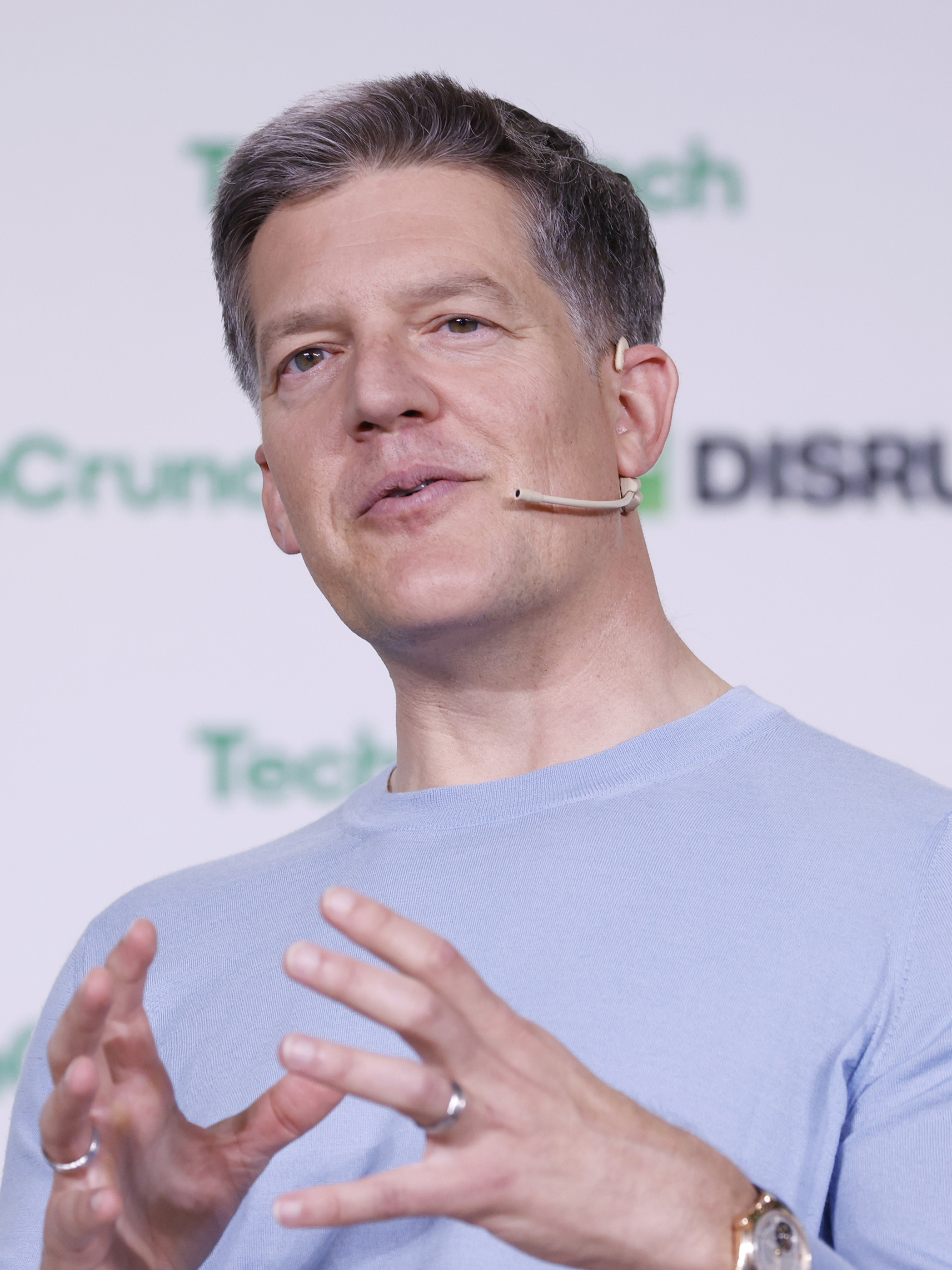
At TechCrunch Disrupt 2025, Botha made a statement that quietly rattled an entire industry: "Venture capital is not an asset class." He meant it technically and precisely. The average VC fund, he argued, offers "return-free risk" - the kind of investment where you'd be better off buying treasuries than writing checks to a mediocre general partner. The business of venture capital is not inherently value-creating. Excellence is the only thing that matters. The distinction is enormous and most of the industry refuses to acknowledge it.
The Man in the Room
Roelof Frederik Botha was born on September 19, 1973, in Pretoria, South Africa. He grew up in Hout Bay, outside Cape Town, the son of an economist and the grandson of Pik Botha - the man who was South Africa's last apartheid-era foreign minister and, later, Nelson Mandela's first Minister of Mineral and Energy Affairs. Few families carry more layered history.
He snowboards at 60 miles per hour. He listens to Tom Waits. He plays table tennis. He cried in a Sequoia partner meeting when he lost $10 million on his first investment - an act of emotional honesty that partners have described as unexpected and humanizing in equal measure.
The man who wrote the YouTube memo is the same man who monitors his share of voice in meetings. The same man who ran out of money in graduate school and borrowed from friends to pay rent. The same man who turned down a safe, prestigious, lucrative job to take a pay cut and try something harder.
In November 2025, in a post-departure interview with Axios, he said he thought SpaceX could be worth more than OpenAI. He hasn't stopped betting. He's just doing it without the title now.