BREAKING
Don Valentine founded Sequoia Capital in 1972 with $3 million First investor in Atari, Apple, Oracle, Cisco, Google, and YouTube Grew up in the Bronx; paid Fordham tuition in cash each quarter "Great markets make great companies." - Don Valentine Named "Grandfather of Silicon Valley Venture Capital" by industry peers Sequoia Capital backed companies worth trillions in cumulative market value Described Steve Jobs as "like Ho Chi Minh" - then wrote the check anyway Asked founders to condense business plans to the back of a business card Featured in Emmy-winning documentary "Something Ventured" (2011) 1932-2019 - Born in the Bronx. Died in Woodside. Changed everything in between. Don Valentine founded Sequoia Capital in 1972 with $3 million First investor in Atari, Apple, Oracle, Cisco, Google, and YouTube Grew up in the Bronx; paid Fordham tuition in cash each quarter "Great markets make great companies." - Don Valentine Named "Grandfather of Silicon Valley Venture Capital" by industry peers Sequoia Capital backed companies worth trillions in cumulative market value Described Steve Jobs as "like Ho Chi Minh" - then wrote the check anyway Asked founders to condense business plans to the back of a business card Featured in Emmy-winning documentary "Something Ventured" (2011) 1932-2019 - Born in the Bronx. Died in Woodside. Changed everything in between.
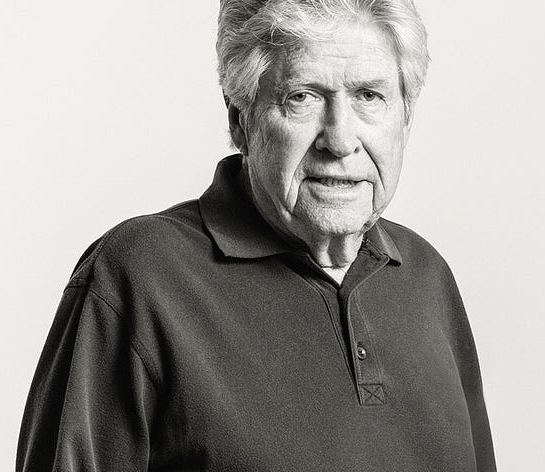
Don Valentine, founder of Sequoia Capital, 2009
Venture Capital Legend  /  Sequoia Capital Founder

Don
Valentine

The Milk Route Kid Who Funded the Digital Age
"Great markets make great companies."
Grandfather of VC Sequoia Capital Apple Cisco Google
June 26, 1932 - October 25, 2019  |  New York City → Woodside, CA
1972
Sequoia Founded
$3M
First Fund Size
50+
Landmark Investments
$1.5B+
Est. Net Worth at Death

The Ho Chi Minh Call

When Steve Jobs needed money for Apple in 1977, his former Atari boss Nolan Bushnell gave him one piece of advice: "Don't ask me - call Don." Valentine showed up at Jobs' house, took one look at the young founder - barefoot, vegetarian, radiating a kind of deliberate strangeness - and reportedly described his first impression privately as looking "like Ho Chi Minh." He backed Apple anyway, because the market was real. Consumer computing. Sub-$1,000 price points. A product that solved a problem millions of people had without knowing it. Valentine invested $150,000. The market he identified eventually exceeded $3 trillion. That was the Valentine method in its purest form: the founder was bizarre; the market was undeniable; the check was written.

Three Laws Valentine Never Broke

1
📈
Markets First, Founders Second

Valentine bet on large, fast-growing markets before he evaluated founding teams. He believed a mediocre team in a massive market would outperform a brilliant team in a small one every time. "Great markets make great companies" was not a slogan. It was a hypothesis he tested across 50+ investments.

2
Find the Confusion Phase

Valentine looked for moments when a new technology had disrupted an industry but incumbents hadn't adapted yet. He called these "inflection points." He sought companies positioned to exploit the gap before established players understood the threat. Cisco and Oracle both fit this pattern precisely.

3
💰
Cash Flow Is the Only Scoreboard

Valentine was famously blunt about financial discipline. "All companies that go out of business do so for the same reason - they run out of money." He required gross margin clarity and cash flow rigor from every portfolio company. This was not optional. This was table stakes.

Landmark Investments

Valentine backed companies across four decades, spanning semiconductors, personal computing, enterprise software, networking, and consumer internet. The through-line in every investment was the same: a massive addressable market at an early inflection point.

The list of companies he backed reads like a syllabus for the history of Silicon Valley. Not all were winners on entry - Atari was a gamble, Apple was unconventional, Cisco was a niche router company. But the markets were all undeniably enormous.

1970s
Atari, Apple
1980s
Oracle, Cisco, EA
1990s
Networking
2000s
Google, YouTube
Atari
1975
Apple
1978
Oracle
1980s
Cisco
1980s
Electronic Arts
1982
LSI Logic
1980s
Linear Tech
1980s
Google
1999
YouTube
2005
NetApp
1990s
PayPal
~1999
NVIDIA
1990s

The Valentine Doctrine

"Great markets make great companies."
Core Investment Philosophy
"There are two things in business that matter: high gross margins and cash flow."
On Financial Discipline
"The trouble with the first-time entrepreneur is that he doesn't know what he doesn't know."
On Founder Experience
"The key to making great investments is to assume that the past is wrong."
On Contrarian Thinking
"All companies that go out of business do so for the same reason - they run out of money."
On Survival
"I just follow Moore's Law and make a few guesses about its consequences."
On Technology Strategy

A Life in Markets

Valentine's career arc ran from selling transistors in the 1950s to backing the companies that defined the internet era. He was at Fairchild during the silicon revolution, at National Semiconductor when Moore's Law became gospel, and at Sequoia when personal computing became inevitable. He was never in the wrong room at the wrong time.

He stepped back from Sequoia's day-to-day operations in the mid-1990s, handing the reins to Doug Leone and Michael Moritz - partners who extended his market-first philosophy across geographies and decades. The firm he built continued investing in Google, WhatsApp, Airbnb, Stripe, and ByteDance long after his active tenure ended.

1932
Born in the Bronx, New York City, to a working-class family
~1954
Military service deposits him in California - he stays permanently
1960s
Manages worldwide sales at Fairchild Semiconductor; joins National Semiconductor as a senior exec
1972
Founds Sequoia Capital in Menlo Park with a $3 million fund
1975
First major bet: Atari. The video game industry is born.
1978
Invests $150,000 in Apple Computer after meeting Steve Jobs through Nolan Bushnell
1980s
Backs Oracle, Cisco, Electronic Arts, LSI Logic - building the enterprise tech stack
1990s
Serves as Cisco board chairman; transitions Sequoia leadership to Leone and Moritz
1999
Sequoia backs Google in its earliest institutional round
2011
Featured in Emmy Award-winning documentary "Something Ventured"
2019
Dies October 25 in Woodside, California, age 87

What He Left Behind

The Sequoia Standard

Valentine built Sequoia Capital into the most consequential venture firm in Silicon Valley history. The firm he started with $3 million in 1972 has backed companies representing trillions in combined market value - Apple, Cisco, Oracle, Google, YouTube, WhatsApp, Airbnb, Stripe, NVIDIA. The institutional DNA he established - market-first thinking, financial discipline, Socratic board governance - persists across generations of partners.

A Framework That Runs Silicon Valley

Valentine's market-first investment philosophy became the dominant framework for early-stage technology investing. Nearly every major VC firm today uses some version of his approach: identify large, rapidly growing markets; find companies positioned to dominate them; apply relentless pressure on gross margins and cash burn. It was not invented by an MBA. It was built by a salesman who had actually lived inside the semiconductor wave.

The Computer History Museum Recognition

The Computer History Museum credited Valentine with playing "a key role in the formation of a number of industries such as semiconductors, personal computers, personal computer software, digital entertainment and networking." The list covers essentially the entire modern tech economy. He was not a passive observer of these industries. He bankrolled them.

One of my jobs as a board member has been to counsel management to avoid distraction and to execute with constructive paranoia.

- Don Valentine, on board governance

The Details That Stick

He wrote all his notes in green ink his entire career. His colleagues found it memorable. He found it practical. The reason, if there was one, he never shared.

He once said: "Flying east, I'm leaving behind more opportunities in Mountain View than in any city in the East." He never moved back to New York. He never had to.

He never drank coffee. In a valley that runs on caffeine and pitch decks, he got his energy somewhere else. Probably from the compounding returns on Apple stock.

His father drove a milk route in the Bronx. Valentine paid Fordham tuition quarterly, in cash. He never forgot where money actually came from - which is why he was so precise about where it went.

He lost money on Pizza Time Theatre. The failure reinforced his most important rule: stick to technology markets, where growth curves are steep and incumbents are blind. Consumer retail is not a market - it's a slow war.

He named his firm after a tree, not himself. In a valley where partners name funds after themselves routinely, that was an act of institutional philosophy disguised as a branding decision.

Go Deeper

Share This Profile