A salon suite is a modest unit of ambition. Inside it, an independent professional can put a name on a business, welcome a client and get to work. The room is small. The decisions belong to the person renting it. For Douglas Cox, that arrangement offered a way into a new business: provide the setting in which somebody else could build their own.
In November 2020, Cox signed a 15-unit development agreement with Phenix Salon Suites through Providence Salon Group. The territory covered Tennessee and Kentucky. Nashville, Knoxville and Lexington were named in the expansion plans, with Hendersonville identified for an anticipated first opening. Here was a business owner looking at a collection of rooms and seeing an opportunity to work with other business owners.
The appealing detail is the tenant. Cox spoke about building relationships with the people who would use the suites. A landlord might describe a floor plan in terms of occupancy. Cox’s public explanation also concerned the professionals on the other side of each door. That emphasis makes the agreement a useful starting point for understanding the founder of The Providence Groups.
Territory: Tennessee + Kentucky. An agreement, rather than a count of completed openings.
A room inside another person’s business
Phenix’s model gives independent salon professionals individual spaces in which to work. It occupies an interesting place between property and entrepreneurship. The operator supplies a physical arrangement; the tenant supplies the craft, the clients and the character of the business conducted there. Two enterprises share an address without becoming the same enterprise.
Cox entered the venture alongside Spencer Harp, identified at the time as Providence Salon Group’s president and chief operating officer. That division of roles matters. Development agreements describe a geography and an ambition. Operating a business requires people responsible for the details. Even a compact suite sits within a larger organization, with decisions to make about the building and the businesses using it.
“Having grown many businesses over the years,” Cox said when the agreement was announced. His interest in the concept came with an expressed desire to create opportunities for aspiring entrepreneurs and a real estate legacy for his family and employees. Those ambitions connect a near-term transaction to a much longer horizon. A tenant needs a place to work now. A legacy concerns who will still be working later.
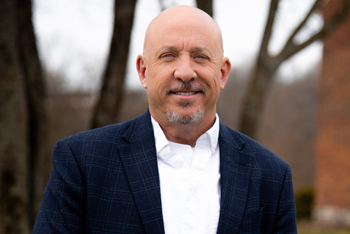
The suite offers a concrete way to hold both ideas at once. Its usefulness can be judged by the professional who works there. Its place in a property business can be considered over years. For a founder talking about family and employees, that combination is more tangible than the usual language of ambition. There is a room to inspect and a person whose work depends on it.
White House, Tennessee, is the point of departure
Cox’s professional base is White House, Tennessee. The Providence Groups dates its founding to January 2015. Its stated purpose includes a varied portfolio and a legacy for future generations. The company’s public vocabulary repeatedly returns to family. The shorthand is F.I.T.: Family, Integrity and Teamwork.
Those three words are easily printed. Giving them a place in an operating company is the more interesting task. A founder who wants an organization to outlast him needs other people to carry responsibility. The current leadership roster places Cox beside finance, operations, marketing, strategy and administrative leaders. A portfolio may appear under one name, but the work has several desks.
Greg Mitchell is listed as chief financial officer; Chris Cox as chief operating officer. Charnele Williams leads marketing, Jeff McKay strategy, and Megan Harp serves as chief of staff. Amanda Wienholz is director of treasury and finance. These named roles put a practical shape around the founder’s position. Money, decisions and communication all need owners of their own.
A portfolio may appear under one name, but the work has several desks.
From this profile
The salon agreement gives that larger organization an accessible human scale. Think of it from the tenant’s side: the business behind the building becomes relevant when the space needs to function. The founder’s ambition matters through its consequences for somebody else’s working day. That is a demanding way to measure a property venture, because a floor plan cannot answer every question a tenant brings.
The portfolio gets its boots muddy
Construction and septic services are also part of the group’s published portfolio. They put Cox’s ownership interests close to the practical demands of homes and workplaces. A salon suite creates a setting for work; a builder creates the building; a service company deals with systems that need attention. Each has customers with a specific job in mind.
Providence Building Group describes itself as family owned and veteran operated, based in White House, north of Nashville. It offers residential and commercial construction. Its customer-facing commitments include clear communication, transparency and accountability. The emphasis is on the experience of commissioning a building as well as the finished result.
There is an instructive connection to the salon venture. Someone investing in a workplace must make choices before that place can be useful. A builder’s promises concern how those choices are explained and carried out. The connection is an editorial reading of the businesses, rather than a claim that every company follows an identical process. Construction and salon real estate bring very different work to the same portfolio.
PWM Environmental serves Middle Tennessee with septic pumping, repair and installation. Its offerings also include camera inspections, tank locating, hydro jetting and grease-related services. These are appointments with a tangible purpose. The customer wants a system inspected, a problem located or a job completed. The business has to bring people and equipment to the place where the work is needed.
There is little room for abstraction in that exchange. A company name on an ownership chart cannot perform an installation. Diversification brings different kinds of responsibility under a shared business umbrella, while the individual trades keep their particular demands. The variety in Cox’s portfolio is visible in those demands: buildings, rented workplaces, service vehicles and people making decisions about all of them.
What goes around a new founder
The Providence Groups also has an incubator. Its published offering covers mentorship, resources, networking and financial support. Guidance includes strategy, operations, marketing and finance. The resources named extend to workspace, technology and legal support. Introductions and funding sit beside those more ordinary ingredients of getting a business into motion.
Read beside the salon arrangement, the incubator suggests another setting for someone else’s enterprise. An independent professional may need a suitable room. A new founder may need a person to consult or access to a resource that would be difficult to arrange alone. The needs are different, but both models pay attention to what surrounds the person doing the work.
That distinction is useful because entrepreneurship is often described through the moment of deciding to begin. The working business arrives through further decisions: whom to ask, where to operate, what to pay for and how to reach customers. An organization offering support has to engage with those questions individually. A founder’s confidence cannot serve as the office, the introduction and the answer to every operational problem.
Cox’s portfolio includes international hiring businesses as well. Oppvia describes an end-to-end direct-hire service covering sourcing, screening and legal and immigration requirements. Here, the setting for work extends across borders. The administrative steps become part of the service. It is another example of an associated business handling the arrangements around a professional’s ability to get started.
A legacy with tenants and teammates
Cox’s public ambitions make room for family, employees and aspiring entrepreneurs. The company portfolio also lists The Manna Foundation, whose stated mission centers on education, practical resources and community engagement. Its published goals include serving Greater Nashville and White House. The connection places community work alongside the group’s commercial interests without making every activity the founder’s personal accomplishment.
That is the right scale at which to finish this story. Douglas Cox founded the organization; other people operate within it and use the businesses associated with it. His salon agreement offered a particularly clear expression of that relationship. A landlord supplies a setting. An independent professional brings the work. Employees help keep the arrangement functioning.
A legacy is a large word, apt to wander into speeches wearing an unnecessarily expensive suit. Cox’s stated ambition becomes easier to consider through a smaller object: a door to a workplace. Someone opens it, turns on the lights and begins the day. For the business owner behind that space, the enduring question is whether the organization he builds will remain useful to the people who come through it.