Doug Scott had three possible futures on a piece of paper. He could stay in banking and follow the familiar route toward private equity. He could go to business school. Or he could start a company. It was around 2014, he had been working late, and the question he put to himself was disarmingly ordinary: what did he want to do with the next ten years?
That is an awkward question to ask a career that is proceeding according to plan. The salary arrives. The work is demanding. The people are talented. Leaving requires an explanation; staying requires only turning up. Scott chose the option with the least elaborate instructions. Within weeks, he had sold his belongings and moved from Australia to the Bay Area.
Ethic, the investment business he would co-found with Jay Lipman and Johny Mair in 2015, now reports more than $10 billion under management. But the interesting part of Scott’s decision comes before the reassuring number. He left before he had settled on the business he was going to build. The spreadsheet, for once, would have to catch up.
The family values, and the day job
Scott grew up in Melbourne with parents who encouraged social and environmental commitments. His subsequent work in mergers and acquisitions at Deutsche Bank brought him into Australia’s energy, metals and mining industries. He enjoyed the intellectual demands and the people around him. The direction of the work troubled him.
“It just didn’t sit well with my value set,” he said of that period. There is something refreshingly untheatrical about the admission. He could appreciate his colleagues without wanting their shared occupation to become his life. A job can be good at providing everything except a reason to keep doing it.
His education combined engineering and finance. That combination helps explain the company he eventually built: a financial proposition that depends on making complicated systems work. His ambition was to put the skills accumulated in institutional finance toward the concerns he had grown up with. Quitting banking did not require abandoning everything he had learned there.
Lipman and Mair brought their own experience and convictions to the venture. The three founders began with their own money, then endured repeated refusals before securing external backing. Scott has described that period as formative: operating with little room to spare forced them to sharpen what they were trying to accomplish. A mission still had to survive the decidedly unromantic business of paying for its construction.
“I recognized that I had strayed from my true north.”
Doug Scott, on leaving investment banking
A portfolio with room for a person
Ethic’s proposition starts with a reasonable complaint about investment products: people have individual preferences, while a fund packages many holdings into one ready-made decision. Scott and his colleagues wanted investors to have more say over the companies inside their portfolios, while retaining a disciplined approach to the financial exposure they wanted.
In 2019, Scott was already talking about taking apart exchange-traded funds and rebuilding the exposure around an individual client. Values were one way to personalize that portfolio. The implication was broader. An investor’s convictions could become an input into portfolio design, alongside the financial questions an advisor would ordinarily ask.
Consider the difference between choosing a general label and explaining a particular concern. One client might care about climate. Another might prioritize women’s rights or racial justice. Those preferences need translation into company-level decisions, then into a portfolio that still makes sense as an investment. An attractive statement of principles does little of that work on its own.
A simplified view of the process, rather than a model portfolio.
Ethic works through advisors and institutions. Its job includes the experience around the holdings: proposals, transitions, reporting and ongoing management. Tax considerations sit beside values and financial objectives. The personalization has to make its way through the whole relationship, including the parts of investing that rarely appear in a founder’s origin story.
This is why the engineering matters. Building a portfolio around someone’s preferences involves constraints, data and trade-offs. Ethic seeks to manage how far the resulting portfolio moves from its benchmark. The appeal rests on making those choices usable for financial professionals and understandable for the people whose money is involved. Scott’s ambitions have always required a considerable amount of plumbing.
Trust takes longer than a demo
Choosing advisors as customers placed Ethic in a demanding position. Financial professionals already had relationships, routines and obligations to clients. A new business had to earn a place inside that arrangement. In Scott’s account of the company’s growth, getting the first assets was difficult precisely because the market depended so heavily on trust.
He has described $100 million as an early psychological threshold. The number mattered partly because it gave people a way to judge an unfamiliar firm. Before that came years of technology development and the challenge of persuading someone to be early. Every established investment manager was once new, a fact that offers limited comfort to the person considering being its first customer.
Scott also learned that a distribution agreement and actual distribution are different achievements. Senior executives could approve a partnership while the people expected to use or explain it remained unconvinced. Education, incentives and practical understanding had to reach the people doing the work. A signature could open a door; it could not conduct every conversation beyond it.
That lesson gives his career a useful continuity. The founder who wanted to bring his work closer to his own values also needed to bring his company closer to its customers’ working lives. The relevant unit was often a conversation between an advisor and a client. Ethic had to be useful there, where enthusiasm meets a question that needs answering.
The number gets bigger. The job changes.
Recognition arrived along the way. Scott and Lipman appeared on Forbes’ 2018 social entrepreneurs list, when the company had raised more than $3 million. Scott was later named among WealthManagement.com’s people to watch for 2020. Those notices captured a business still being built, years before the current asset total made the founding wager look comfortable.
By the end of the first quarter of 2024, Ethic had passed $5 billion in assets. It had more than doubled its assets since the beginning of the previous year, with roughly 80 percent of that growth coming from family offices and institutions. The customer base was helping shape the company: larger, more particular mandates create their own reasons to build for customization.
In April 2025, State Street Global Advisors led a $64 million funding round and announced a strategic partnership with Ethic. The arrangement covered customized accounts, model portfolios and unified managed accounts, as well as the technology surrounding them. For Scott, institutional finance had become a route for delivering the product he had left banking to pursue.
“We see our role as empowering intermediaries to help their clients invest in the future that they want to see,” he said when the partnership was announced. The choice of intermediaries is revealing. His company’s reach depends on helping other professionals do their jobs. That requires patience with an industry whose caution was part of the difficulty from the beginning.
Assets under management across 350+ partner firms.
Company-reported figures as of July 27, 2026. Client assets are distinct from company revenue or a founder’s personal wealth.
Put the product people on the call
Some of Scott’s more useful observations concern the distance between people who build products and people who use them. In 2021, he described Ethic’s product team regularly joining client calls. He had seen the separation inside larger financial institutions. At his own company, customer relationships and product development were supposed to inform each other directly.
There is a modest test of leadership in that practice. It asks whether the person designing a tool has heard someone explain a problem in their own words. The answer may be less tidy than a specification. It may also save everyone from shipping a polished solution to a problem the customer does not have.
Scott returned to that concern in an August 2026 essay about management. Early in his career, he recalled, people who remained above operational detail were called “747s”: they flew over the work. His preferred approach begins with understanding how a system functions, breaking it into smaller jobs and checking the model against what the team encounters.
He describes balancing time spent working in the business with time spent working on it. Both are necessary as an organization grows. The danger is allowing seniority to make proximity optional. There is a dry joke lurking in his aircraft metaphor: promotion can give someone a better view while making it harder to see what anyone is actually doing.
A founder takes the other chair
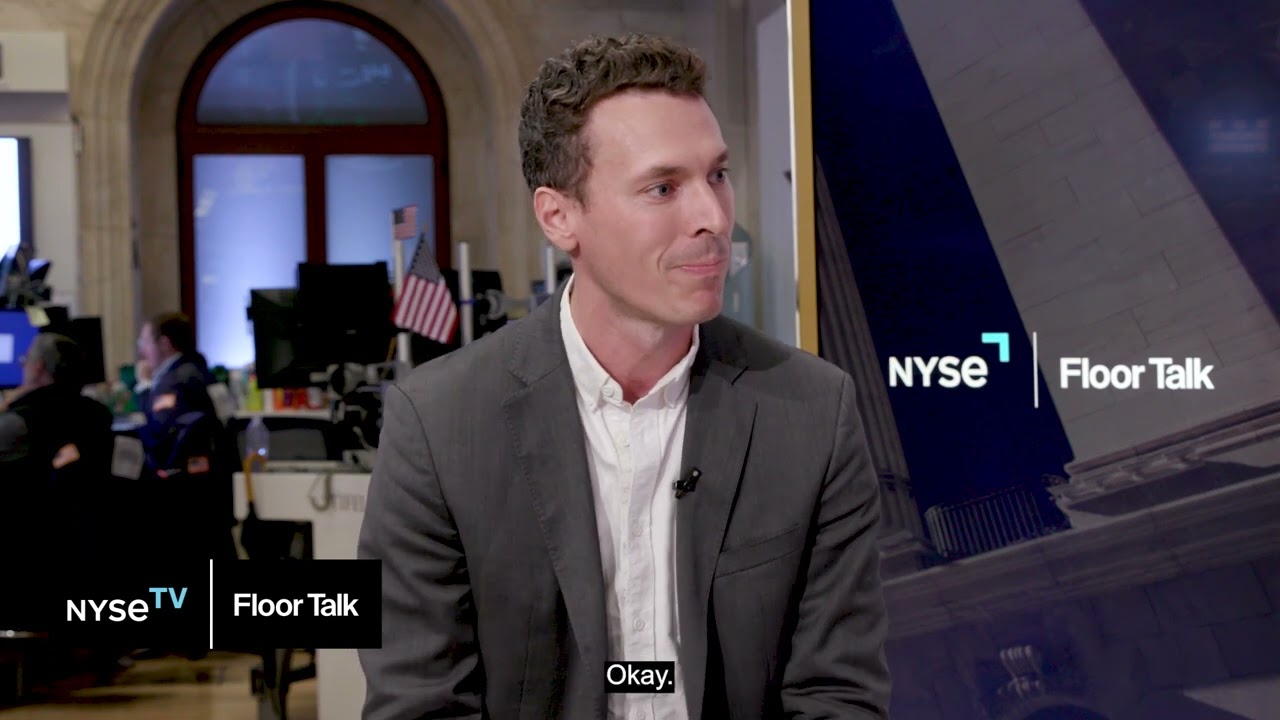
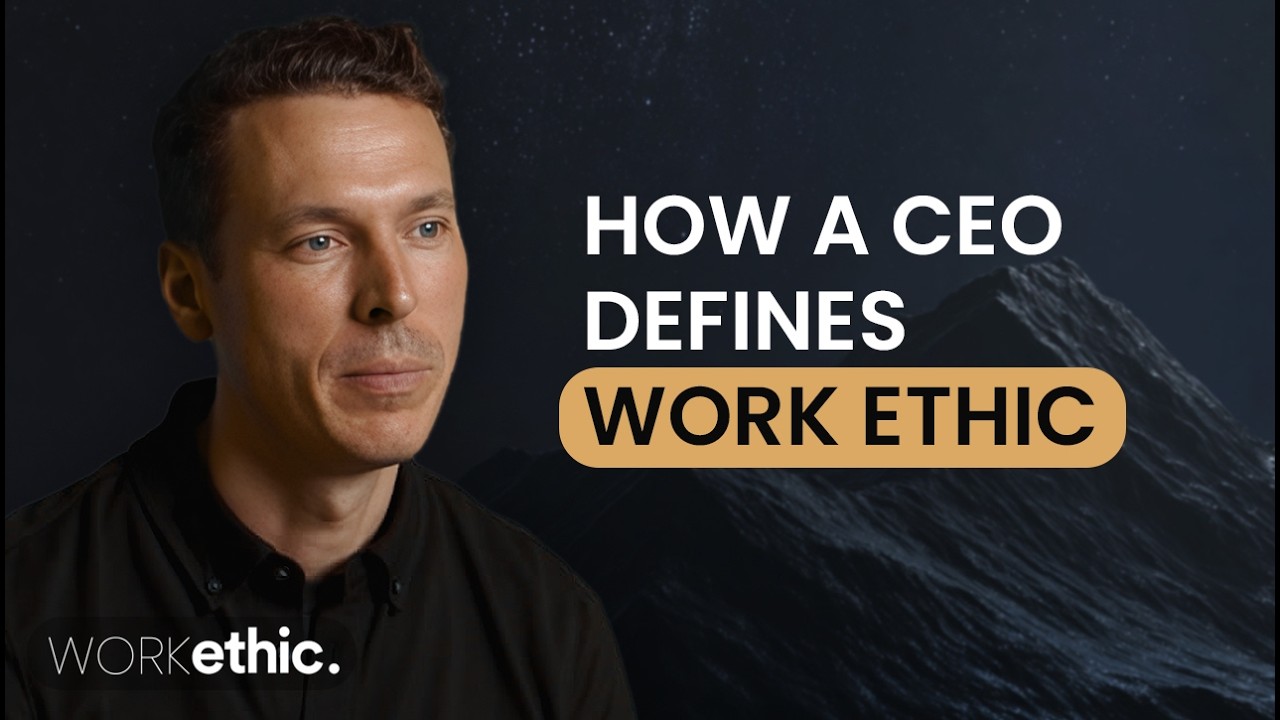
In February 2026, Scott added a new role: host of Work Ethic, a video interview series about the people building wealth management businesses. Guests discuss careers, leadership decisions and the practical work of running firms. It places a founder accustomed to explaining his own company in the position of asking how someone else built theirs.
His guests have included State Street Investment Management’s Yie-Hsin Hung, Corient’s Adam Katz and Aaron Wealth Advisors founder Gary Hirschberg. By September, he was also talking with John M. Dowd, chairman and former chief executive of Fiduciary Trust International. The series gives his interest in the industry’s working details a recurring appointment.
There is a smaller detail that brings him back down to street level. Asked in 2021 about a favorite outdoor dining spot in New York, he chose Two Hands in Tribeca and mentioned his regular flat white. After all the discussion of institutional capital, an Australian ordering coffee offers a welcome reduction in scale.
The ten-year question on that piece of paper now has an answer. Scott built an investment company around a problem he had first encountered in his own working life: the gap between what matters to someone and what their daily decisions support. The next set of decisions involves more clients, more colleagues and more money. His recent writing suggests he still intends to examine them from close enough to notice the details.
Keep the conversation going
Interviews, public writing and places to follow Doug’s work.