Doug Keller preferred closing. At Tufts University, the pitcher who had started games in high school moved into the closer’s role, arriving when other players had already done much of the work. He liked it better. There is a particular kind of satisfaction in that assignment: your contribution is visible, but the score you inherit belongs to everybody. A save requires a game worth saving.
Years later, Keller would describe leadership in terms that make his baseball preference seem less like a college footnote. Sometimes, he said, a team needs an individual to step forward. Sometimes it needs that individual to support somebody else. The useful question is what helps the group. For a pitcher, that question can be settled on a mound. For an executive, it tends to follow you into every meeting.
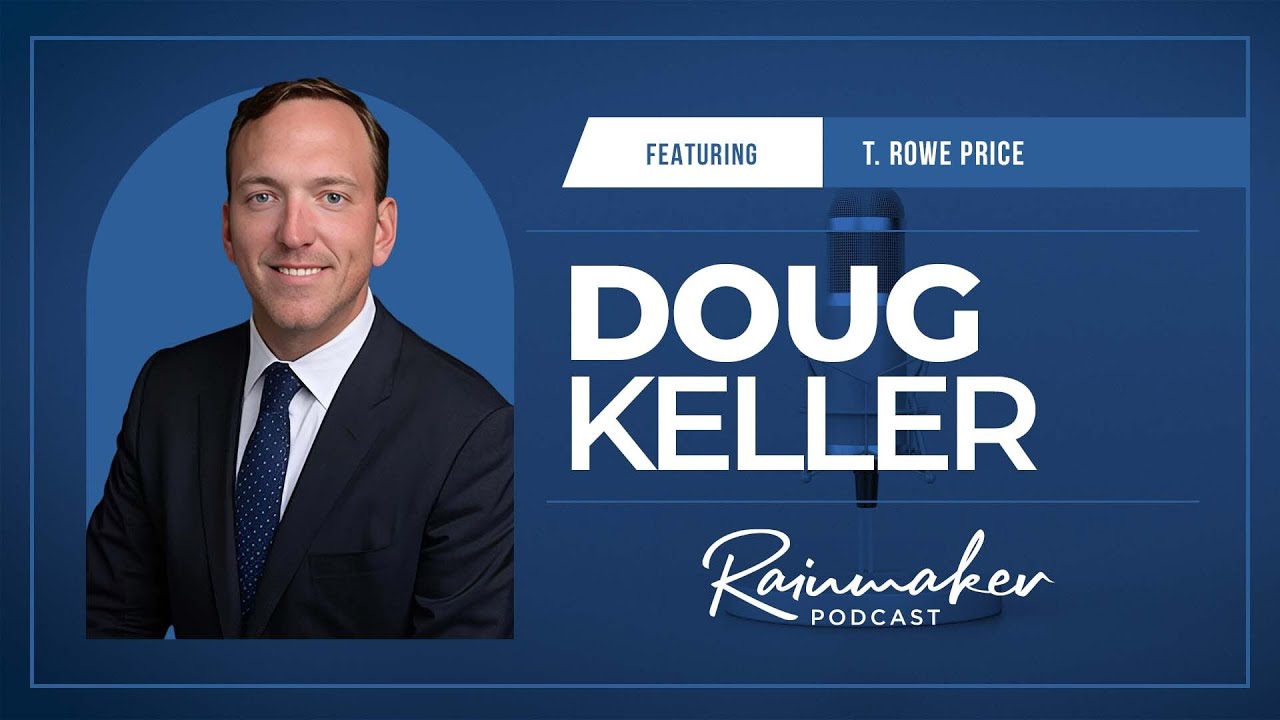
Keller now serves as CEO of Permanent Capital & Wealth at RedBird Capital Partners. His remit includes long-term capital strategies for institutional and private wealth investors, permanent capital vehicles and the firm’s expansion across the global wealth management market. He also sits on RedBird’s Investment and Operating Committees. The title contains an ampersand and several financial nouns. The human problem beneath it is easier to recognize: how do you organize people and money for work that takes time?
His career provides an answer assembled through different jobs rather than a single dramatic conversion. Merrill Lynch, Pantheon Ventures, Blue Owl Capital and T. Rowe Price each put him at a different point between an investment and the people considering it. He has worked on products, operations, distribution and leadership. A financial strategy may have an elegant presentation. Somebody still has to make it work on an ordinary Tuesday.
Before the title, a first-night introduction
Tufts supplied more than an economics degree and a bullpen. Keller met his future wife on the first night of freshman year. In April 2024, he described being married since college and having two young daughters. The chronology is pleasantly unbusinesslike: one consequential introduction happened before there could have been much of a plan. Even an economics student cannot model every useful encounter.
Financial advice was already familiar territory. Both his parents worked as financial advisors at Merrill Lynch. In that same 2024 conversation, he said they had each been in the advisory world for 45 years and had recently combined their books of business. He gave his mother, Patricia Bell, a cheerful shout-out. The family connection helps explain why advisors appear in his account as people with working lives, rather than merely as a distribution channel.
He began his own career at Merrill Lynch, where he worked on private equity and real asset products for the wealth management business. His subsequent move to Pantheon placed him inside a private markets firm, building its private wealth and defined contribution businesses. Later came Blue Owl, with a focus on private capital for the global wealth channel. The employers changed; the meeting point between investment managers and individual investors remained.
That is a less cinematic career than buying a famous company or unveiling a consumer product. Its importance lies in the translation. An advisor must understand what an investment does before explaining it to a client. Product design, distribution and operational arrangements all affect that conversation. Keller’s progression put those tasks within the same professional field of view.
The expert does not need to do everything
T. Rowe Price announced Keller’s arrival on June 6, 2023, as head of alternatives sales in its U.S. Intermediaries division. He reported to Dee Sawyer. The job combined advisor relationships, distribution strategy and representing client needs in product management. He would work across T. Rowe Price and Oak Hill Advisors, the alternative credit specialist acquired by the firm in 2021. Selling and listening were both written into the assignment.
The pairing matters. If the product team only hears what it wants to hear, distribution becomes an elaborate exercise in carrying messages downhill. Putting client needs into the product process creates a route back up. It asks whether the thing being offered fits the people expected to use it. A successful introduction needs something worth introducing.
By the time he left T. Rowe Price, Keller had served as head of global alternatives, leading private markets strategy, new investment products and distribution across institutional and wealth clients. His move to RedBird carried that combination into a role with an explicit emphasis on long-duration investor partnerships. There is continuity here without pretending that every employer, strategy or investor is interchangeable.
The distinction between a generalist and a specialist offers a useful way to understand such work. A generalist can maintain a broad relationship and recognize a question that needs attention. A specialist can pursue the technical detail. A handoff is successful when the client receives the expertise the problem requires. Requiring one person to know everything sounds efficient until the first difficult question arrives.
- Merrill LynchPrivate equity & real asset products
- Pantheon VenturesPrivate wealth & defined contribution
- Blue Owl CapitalPrivate capital for wealth clients
- T. Rowe PriceAlternatives sales, then global alternatives
- RedBird Capital PartnersPermanent capital & wealth
Credit has more than one recipient
Keller’s stated preference for team success is also a position about credit. In a business involving product designers, investment professionals, operations staff and relationship managers, the last conversation cannot reasonably contain the entire achievement. A visible finish is still a finish built on earlier work. Baseball offers a tidy illustration; an organization supplies rather more paperwork.
The management question is whether the people doing that earlier work can see their contribution recognized. Credit affects whose judgment gets heard next time, who receives a more demanding assignment and who feels able to bring a colleague into a conversation. A leader can make cooperation sound admirable while arranging everyday rewards so that everybody guards their own patch. The arrangement tends to win.
Keller’s own account emphasizes giving people visibility and building a team capable of functioning with less dependence on its leader. His aspiration to manage himself out of a job is a provocative way to express it. Taken seriously, that ambition changes the meaning of being indispensable. An executive whose colleagues can make good decisions without waiting for him has accomplished something that a crowded calendar cannot measure.
There is a useful restraint in that idea. A leader cannot claim every success as evidence of personal brilliance and then ask everybody else to act like a team. Sharing authority means accepting that other people may become the recognizable experts. For an organization, that is a practical gain. For an ego, it may require a little housekeeping.
“Learn everything. Don’t be afraid of having conversations with anybody.”Doug Keller · April 2024
The less glamorous side of capital
On July 1, 2025, Dakota named Keller to its newly formed advisory board. The company’s announcement identified him in his RedBird role alongside distribution executives from HarbourVest, Fortress, Partners Group and Axonic Capital. The board’s priorities included product strategy, data expansion, API integrations and applications of artificial intelligence to investment sales. It also offered guidance on market strategy and new channels.
The appointment is a revealing companion to his main job. A capital executive can work on the relationship with investors and also advise a company on the machinery supporting those relationships. Data fields and software integrations rarely make a stirring portrait caption. They do influence whether a team can find the right information, use it and act on it without spending the morning searching.
An advisory board brings practitioners into the design process. In this case, the stated agenda connects people who work in distribution with a company building tools for it. The value of that connection depends on specificity: which information is useful, where a process breaks down, what a user actually needs to do next. A fashionable technology label cannot answer those questions by itself.
Keller’s place in that group extends the pattern visible across his career. His work concerns the passage from an investment platform to an investor, and the organizations that make that passage possible. That requires attention to the product, the relationship and the process between them. None of the three becomes optional because the other two look impressive.
A longer clock at RedBird
At RedBird, permanent capital and wealth are joined in Keller’s title. His responsibilities include developing vehicles intended to support long-duration partnerships with investors. The mandate asks him to think about the form capital takes, the people providing it and the time over which the relationship is meant to operate. Those are connected decisions, even when they sit in separate boxes on an organization chart.
Time is the distinctive word here. A partnership intended to last needs expectations that can survive more than the excitement of an initial introduction. The investor and the investment manager must understand the arrangement they are entering. A long horizon makes the quality of that understanding more consequential; it does not make the practical details disappear.
The official remit also places Keller across institutional and private wealth channels. Those are different settings, with different decision makers and processes. Building across both requires a platform to communicate consistently while taking each audience seriously. His years in private wealth, product work and alternatives distribution give that assignment a recognizable professional history.
The college closer returns as a useful image, provided it is allowed to remain an image rather than a prophecy. Keller did not need to know his future title at Tufts for the experience to matter. He remembers a role he preferred and a team lesson he carried forward. Today, the measure is larger and the clock is longer. The satisfaction he describes still depends on helping other people succeed before taking a share of the credit.