Doug Biehn likes the part after the eureka moment. The lab result exists. The device works. The paper has been published. Now comes the rude question that every promising healthcare invention must answer: will anyone make room for it on an ordinary Tuesday? That is the terrain Biehn has crossed for more than two decades, from a large health plan to connected cardiac devices to a laboratory in Menlo Park. His subject has changed. His job has not. He translates.
At Octave Bioscience, where he became president and CEO in December 2023, the translation is unusually literal. The company measures a panel of proteins from a blood sample and produces a score designed to help clinicians interpret disease activity. The science is dense. The output is deliberately spare. Between those two facts sits a business made of laboratory operations, evidence, physician education, payer relationships, logistics, and trust.
Biehn did not found Octave. William Hagstrom did, in 2014, then moved to the chairman's seat when the company decided it needed a different set of muscles for commercial growth. The succession announcement gave Biehn a neat assignment: build on the science, widen access, and turn a clinically validated product into a repeated behavior. It is less romantic than invention and, in healthcare, often more difficult.
“I love designing, creating, building world class commercial organizations.”Doug Biehn, speaking in 2022
The career is the curriculum
Look at Biehn's résumé as a sequence of companies and it appears restless: Blue Shield of California, McKesson, AliveCor, iRhythm Technologies, Cala Health, then Octave. Look at it as a course in adoption and it becomes coherent. Each stop gave him a different view of the same jammed doorway.
At Blue Shield, where he served as chief marketing officer, he saw the system from the payer's chair. At AliveCor, as chief operating officer, he worked on connected electrocardiogram technology that asked people to turn a phone and a small device into a monitoring routine. At iRhythm, he led marketing for a company built around wearable cardiac monitoring. At Cala Health, where he became chief commercial officer in 2022, the product was a wearable therapy and the commercial puzzle included clinicians, reimbursement, training, and patients living with technology at home.
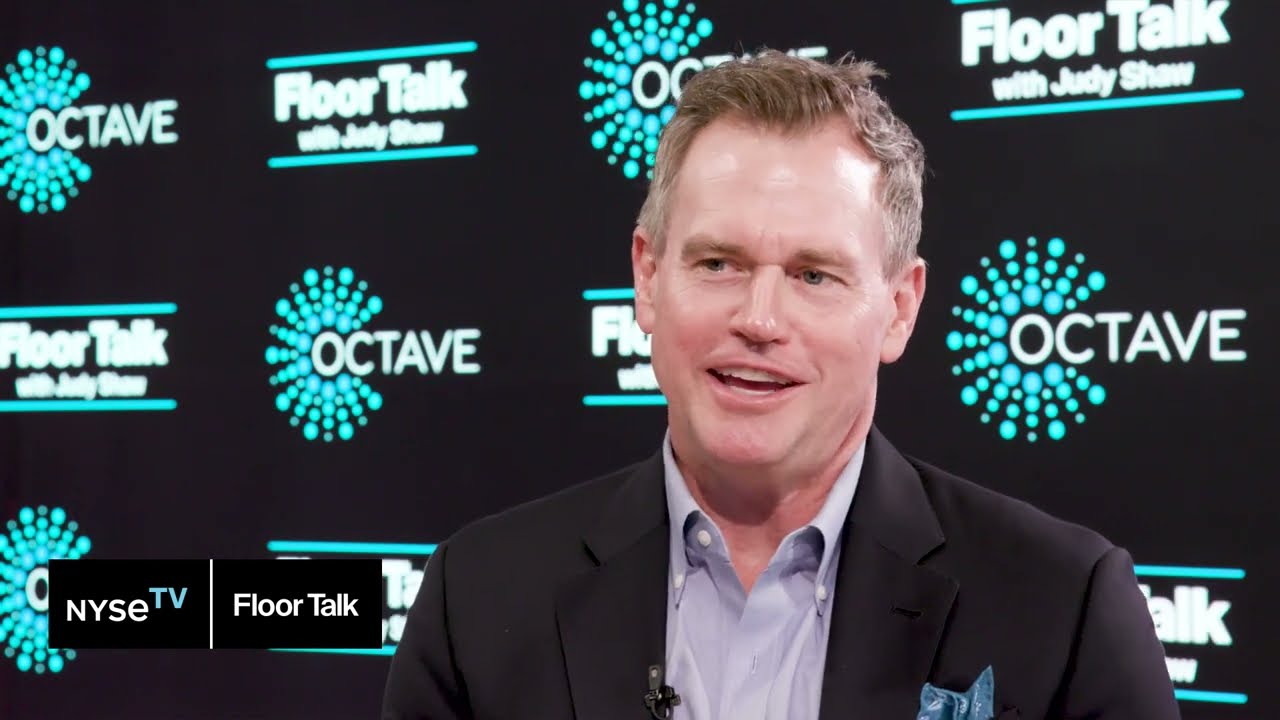
In a 2022 podcast, Biehn reduced what he had learned from older technology users to two linked requirements: ease and value. A product that is hard to understand feels less valuable. A product that is financially out of reach does not feel easy. The pair is almost childishly obvious, which is probably why sophisticated companies regularly neglect it.
He also offered a small observation that cuts through the cliché about older customers and technology. A meaningful portion of Cala's customers used YouTube videos to onboard and troubleshoot without calling the support center. People were not allergic to technology. They were allergic to needless friction. Give them a clear route and they often take it themselves.
The vital few
Biehn's first year at Octave was not narrated as a grand reinvention. In a Nasdaq interview, he described the team as concentrating on the “vital few” things that could make a difference. It is a phrase with the tidy severity of an operator's desk: choose the constraints, make priorities visible, and decline the ornamental work that growth companies find so seductive.
The public scorecard grew. In September 2025, Octave announced $35.6 million in Series C equity financing plus a $15.5 million term loan agreement. At that point the company reported more than 19,000 patient tests delivered, more than 325 prescribers, and in-network reimbursement covering more than 75 million contracted lives. By April 2026, its careers page put the figures at more than 29,000 reports, more than 500 prescribers, 84 million covered lives, and availability in all 50 states.
Those numbers do not prove that the commercial problem is solved. They show what Biehn chooses to count: delivery, repeatable professional adoption, coverage, and reach. In healthcare, growth is never a single graph leaning north-east. It is several systems agreeing to move at once.
That is why the September financing mattered beyond its headline number. Capital lets a laboratory hire, validate, educate, negotiate, and distribute. It also buys time, the most perishable asset in a company attempting to alter a standard workflow. Biehn's language around the round stayed close to the operating plan: accelerate commercial momentum for the existing test and advance the broader platform.
A number with a social life
A diagnostic score does not live alone. It enters a conversation between clinician and patient. It meets previous test results, imaging, symptoms, judgment, and the awkward weight of uncertainty. The practical ambition is not to replace that conversation but to give it another objective point of reference.
This is where Biehn's old marketing instincts become useful in their least glossy form. A new clinical tool asks each participant to learn something. Physicians must know when to order it and how to interpret it. Patients must understand what will happen and why. Payers need evidence of value. Laboratory and distribution partners need a reliable process. Pharmaceutical partners need data that can serve research and development. Commercialization is the choreography of those separate permissions.
“Our focus is on expanding the use and adoption.”Doug Biehn on Octave's commercialization strategy
His professional personality is clearest in this choreography. Public recommendations from former colleagues describe a leader who gathers customer insight, uses data to shape strategy, builds teams, and gives feedback. His own interviews return to education, focus, affordability, and ease. There is ambition, certainly, but it wears sensible shoes.
Biehn carries that thinking to Stanford Graduate School of Business, where he mentors students in the Lean Launchpad program. The work asks teams to turn a technology idea into a venture-scale opportunity. His career supplies a useful warning for the room: an invention is not yet a company, and a company is not yet a habit. Somewhere between the prototype and the purchase order, the founder must learn to love translation.
The unglamorous middle
Healthcare companies sometimes speak as if commercialization were a final department added after the important work is complete. Biehn describes something more structural. In a 2024 interview, he called Octave's task the building of a “commercial engine,” then named its parts: sales and marketing, clinical evidence generation, and market access. An engine is a useful metaphor because no single component can claim the motion. Evidence without access sits still. Access without physician confidence produces a brief trial. Awareness without a dependable laboratory process is merely expensive noise.
The distinction also explains why his appointment made sense at that particular moment. Octave had already moved from beta use in 2021 to an expanded commercial launch in 2022. Analytical and clinical validation followed in 2023. Hagstrom, the founder, described the business as a true commercial company that now required new strategies and skills. Biehn inherited neither a blank page nor a finished book. He inherited the troublesome middle chapters, where a company must preserve the discipline that made its science credible while installing the systems that make its product available.
Partnerships are one answer. Octave's collaboration with Quest Diagnostics extended access through a national laboratory network. The agreement is easily summarized as reach, but its deeper value is familiarity. A new test asks for less behavioral change when the blood draw can happen through an established channel. This is Biehn's ease-and-value principle expressed as infrastructure: innovation travels farther when it can borrow a road people already know.
Education is another answer, and Biehn treats it as part of the product rather than decoration around it. At Cala he argued that novel healthcare companies must teach physicians, users, and payers why a technology belongs in care. The same logic follows him to Octave. A report can be accurate and still fail if its reader does not know what to do next. The commercial operator's craft is to make the next action plain without pretending the underlying medicine is simple.
This is a form of restraint. The score must not carry more certainty than the science supports. The sales story must not outrun the evidence. Growth must not outrun service. Biehn's long tour across the healthcare system has put him close to every place where those promises can separate. His advantage is not that he has eliminated the tension. It is that he seems to recognize it as the job.
The next translation
Octave's stated ambitions extend beyond its first commercial test. The company is developing additional biomarker programs, and Biehn has discussed applying its platform more broadly across neurodegenerative disease. Expansion presents the classic temptation to confuse a larger map with a better journey. His “vital few” discipline will be tested by every new indication, partner, and market.
For now, his most transferable idea is smaller. He sees value and ease as inseparable. That applies to a wearable, a blood draw, a reimbursement form, a report, or a pitch. The user judges the whole system through the next required action. If that action is obscure, expensive, or annoying, innovation becomes a museum piece: impressive, inert, and visited mainly by people who already care.
Biehn has chosen instead to work on motion. Not the cinematic sprint of startup folklore, but the coordinated movement of a laboratory result into a clinic, a clinical insight into a decision, and a good decision into a repeatable standard. The blood sample may fit in a vial. Making it useful takes an organization.