The future of healthcare is often introduced with the manners of a stage magician. A curtain lifts. An app appears. A troublesome old world is invited to vanish. Gil Kochman built his career somewhere less theatrical: in the ledger, the billing queue and the operating meeting, where nothing disappears merely because a presentation says it should.
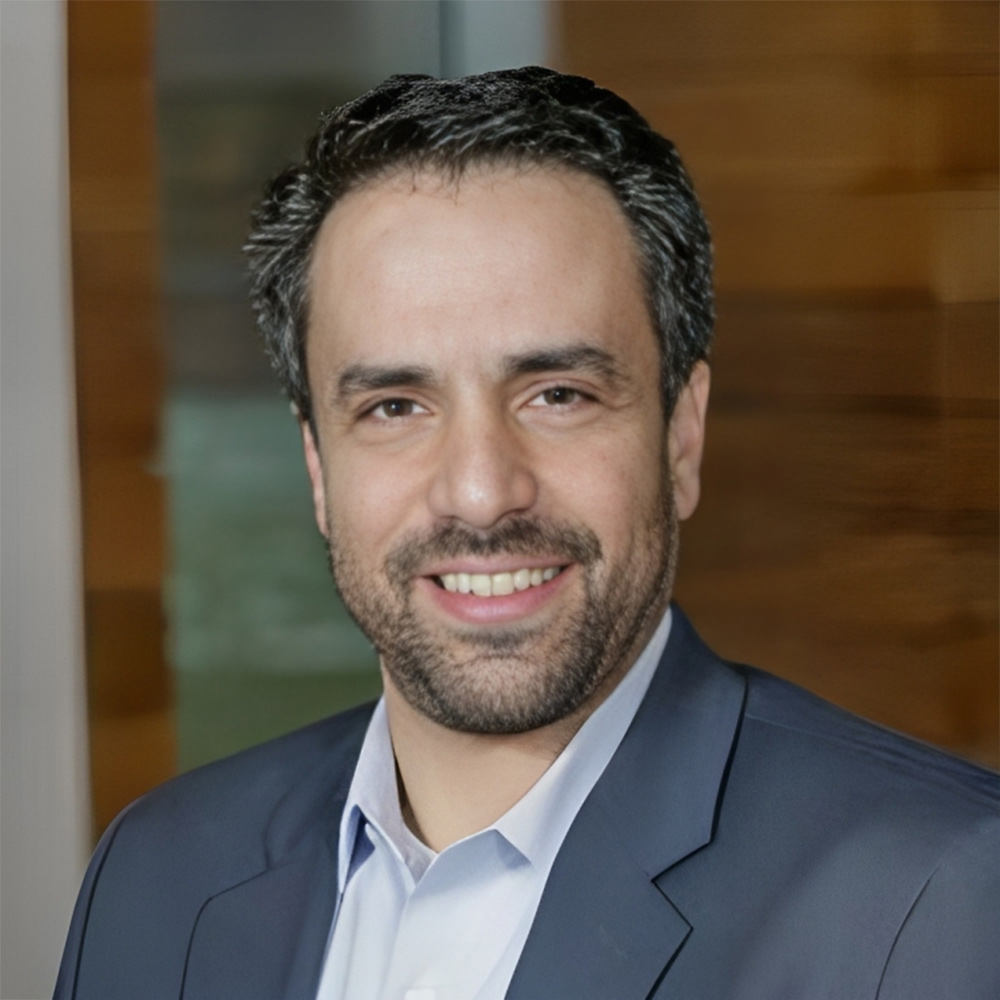
Kochman is the chief executive officer of Workit Health, a virtual-care company headquartered in Ann Arbor, Michigan. He works from Roswell, Georgia. The geography is apt. His career has always connected places that businesses prefer to describe separately: finance and service, software and people, purpose and payroll. He did not found Workit, and he does not borrow the founders’ origin story. His contribution is a different craft. He is the operator asked to make an ambitious model durable.
That task sounds dry only until one remembers what dryness can do. Good operations are like good plumbing. Nobody writes a sonnet when they work, but everyone notices the moment they do not. In a complicated, regulated industry, the unglamorous systems are not backstage furniture. They determine whether the curtain rises at all.
A liberal art meets the ledger
Kochman studied political science at the University of Connecticut, then earned an MBA in finance from Georgia State University’s J. Mack Robinson College of Business. It is an unexpectedly neat pairing. Political science concerns institutions, power and the rules by which groups organize themselves. Finance concerns resources, risk and the consequences of pretending constraints do not exist. Healthcare technology supplies all of the above in industrial quantities.
His early visible work put him close to revenue-cycle management, the broad machinery by which care becomes a claim, a payment and, one hopes, a solvent organization. At Anodyne Health Partners, Kochman served in senior finance roles, including chief financial officer and acting CFO. The company combined business-intelligence software with outsourced billing services. Its promise was practical: help provider groups understand their own financial machinery and run it better.
In 2009, Anodyne was sold to athenahealth. A public report from the Small Enterprise Growth Fund put the transaction at $30 million and described a roughly 25 percent return for the fund. Kochman moved into the athenahealth chapter that followed. The experience placed him inside both sides of a growth-company transaction: the scrappy specialist before the sale and the larger software organization after it.
The recurring subject of Kochman’s career is not money by itself. It is what money reveals about whether a system actually works.YesPress profile
The back office is a biography
Kochman later became vice president and general manager of Revenue Cycle Management Services at Office Practicum, whose software serves pediatric practices. In a company article, he laid out the case for outsourced billing in plain business terms: specialist teams can reduce errors, improve collection work and give a practice a clearer view of what is affecting revenue. There was no manifesto. There was a process, a bottleneck and an argument about who could remove it.
That pattern matters. Executive careers are often edited into a parade of titles, each one shinier than the last. Kochman’s makes more sense as a sequence of operating problems. At Anodyne, the problem was intelligence and execution around revenue. At athenahealth, it sat within a larger technology platform. At Office Practicum, it became a specialized service line. Each stop offered another view of the same awkward truth: a clever product is only as useful as the organization capable of delivering, billing and supporting it.
By 2020, Kochman was chief financial officer at Forefront TeleCare, a virtual-care business backed by private capital. He remained until 2023. The role extended the apprenticeship from revenue operations into the full financial life of a technology-enabled service company. Capital had to be allocated. Teams had to be supported. Growth had to graduate from a graph in a board deck to a routine the organization could repeat.
Finance leadership through the company’s sale to athenahealth.
The acquired specialist enters a larger healthcare technology system.
VP and GM of Revenue Cycle Management Services.
Chief financial officer in a virtual-care business.
CFO first, then chief executive officer from October 2023.
The shortest line on the résumé
The pivotal year is 2023. Kochman joined Workit Health as chief financial officer. By October, he was chief executive officer. On paper, CFO became CEO by dropping one letter. In practice, the weather changed. The finance chief can define the constraint; the chief executive owns what the whole organization does about it.
Workit Health had been founded in 2015 by Robin McIntosh and Lisa McLaughlin. It had moved from an early app to a national virtual model, built insurer relationships and raised a $90 million Series C in 2021. Kochman arrived after the exuberant digital-health funding era had begun to sober up. Capital was no longer impressed merely because software and care appeared in the same sentence. Companies had to demonstrate that their model could operate reliably and last.
Mission × repeatable systems × financial endurance = an organization that can keep its promises.
Workit’s own biography of Kochman chooses two revealing nouns for his assignment: “sustainability and growth.” The order is important. Growth attracts attention because it is visible. Sustainability is the less photogenic discipline that gives growth somewhere to live. One without the other is either a firework or a museum exhibit.
This is where Kochman’s background becomes more than biography. A founder often asks what should exist. An operator asks what must happen every Tuesday for it to continue existing. How quickly can a new employee become effective? Which metric warns of trouble before the quarter ends? Where does a customer encounter friction? Which process depends on one heroic person who is eventually going on holiday? Strategy likes the horizon. Operations keeps an eye on the loose floorboard.
Leading without the mythology
Kochman maintains a restrained public profile. His LinkedIn page describes an experienced finance and healthcare executive. Workit’s leadership page is similarly economical. There are no public keynote declarations to embroider into a grand philosophy, and it would be dishonest to manufacture one. The available record speaks through choices: repeated roles in venture-backed and private-equity-backed businesses, repeated responsibility for financial and operating systems, repeated proximity to the difficult middle where a promising company must learn to behave like an enduring one.
Even his professional geography resists the standard corner-office picture. Kochman is based in Roswell while Workit is headquartered hundreds of miles away in Ann Arbor. That arrangement fits a virtual-first organization. Authority cannot depend on walking past the same reception desk. It has to travel through clear decisions, working systems and a leadership team distributed across functions and places.
The team he leads includes medical, operations, growth, product, finance, design, engineering and people executives. The list is a reminder that the CEO’s real medium is not a spreadsheet, despite Kochman’s finance roots. It is coordination. The figures matter because people make commitments against them. The processes matter because people must use them. A company is not a model with employees attached. It is a set of human promises that the model must make possible.
Workit Health appeared on the Inc. 5000 in 2024, 2025 and 2026. Rankings are snapshots, useful but incomplete. A more telling measure of Kochman’s tenure will take longer to observe: whether the company can turn its model into a durable institution. That is the sort of ambition his career has prepared him to pursue. It is also the sort that rarely fits neatly into a celebratory post.
The best machinery does not demand to be admired. It gives everyone else room to do the work.The operator’s advantage
Making complexity behave
There is a temptation to call Kochman’s path unconventional because political science led to finance, finance led to billing, and billing eventually led to the CEO chair. Yet nothing about it is random. Institutions and incentives were there at the beginning. Systems and consequences came next. Healthcare technology merely supplied a demanding arena in which all four could be tested at once.
His career also offers a corrective to the cult of visible innovation. New interfaces are easy to photograph. Better operating cadence is not. A product launch gets a date; a competent month-end close gets another month-end close. Yet companies are usually saved or lost in the accumulation of such ordinary acts. Kochman has spent years in those acts, close enough to understand that the back office is not the opposite of the mission. It is one of the places the mission proves whether it is serious.
The quiet arithmetic, then, is not a reduction of care to numbers. It is an insistence that numbers have consequences. A missed process becomes someone’s delay. A vague ownership line becomes duplicated labor. A growth promise without operating capacity becomes disappointment wearing a press release. The finance-trained operator notices the gap and, ideally, closes it before anyone has to write a dramatic story about the failure.
Kochman’s public story is still being written, and he has not decorated it with aphorisms. That may be fitting. His résumé suggests faith in a more practical form of expression: the company that works tomorrow because someone understood what it needed today. No magician’s curtain is required. Just the patient business of making complexity behave.