Andrew Flanagan’s first close look at the machinery of American healthcare came with a Xerox badge and a trip downstairs. He was calling on hospital materials-management departments, often buried in a basement corner and crowded with so much paper that the person behind the desk could barely reach it. The scene is funny until you notice what it taught him: care may happen upstairs, but its possibilities are negotiated in rooms full of workflow, purchasing, staffing, and friction.
Flanagan has spent the decades since moving along that border. He founded software for cooperative hospital purchasing, held healthcare leadership roles at SAP and Siemens, ran connected-care and medical-imaging businesses, and in October 2020 became chief executive of Iris Telehealth. His résumé has the gloss of enterprise software and medical technology. His language does not. He talks about seams, toolkits, precious resources, work that needs doing, and the freedom to say a decision was wrong.
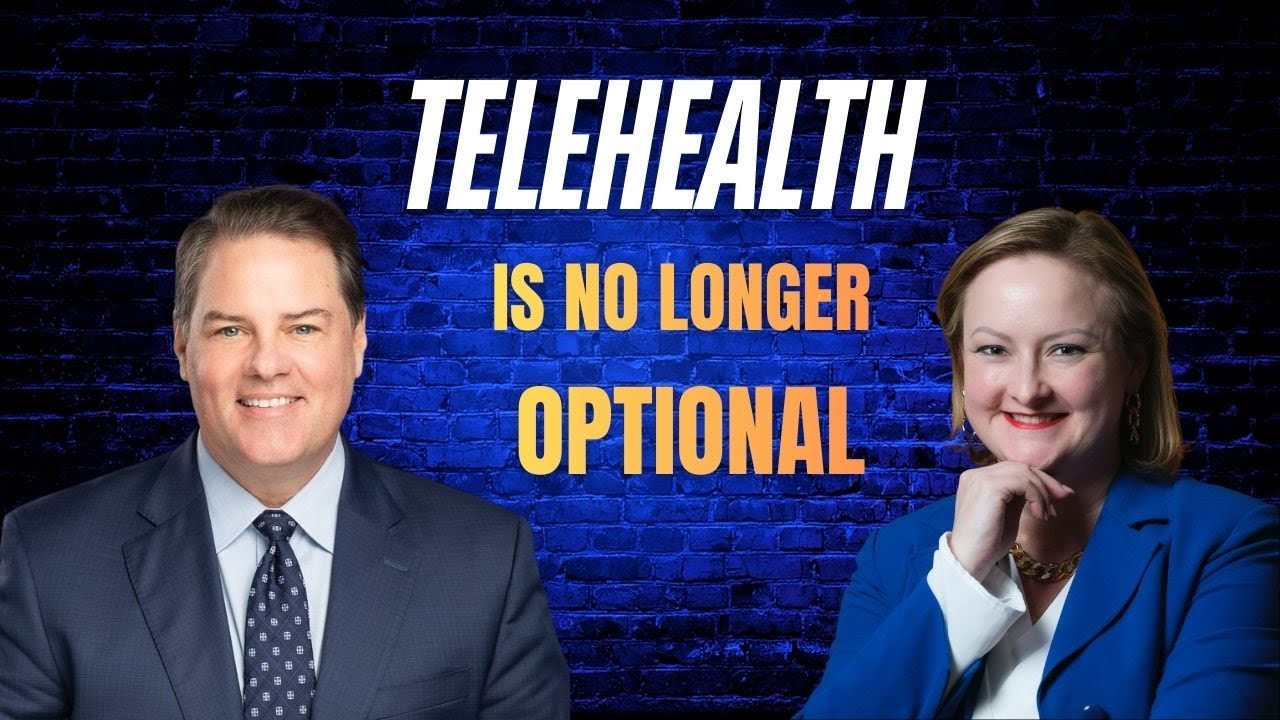
A central claim in his repertoire is delivered almost as a shrug: the word telehealth is going away. Online banking once sounded like a special activity. Now it is banking. Virtual care, in his view, follows the same route, shedding its glowing category beside healthcare until distance becomes an implementation detail.
“It’s just care.”Andrew Flanagan on the destination for telehealth
A career spent near the seam
Flanagan is the youngest of five siblings and one of 26 grandchildren in a close-knit Irish Catholic family. He has said healthcare was always present in family life, wanted or otherwise. He was drawn to the field professionally without pretending to be a clinician. His lane became the often awkward intersection between running a hospital and delivering care.
After Xerox, he built ESM Solutions, a software company that helped organizations, including major hospital purchasing groups, manage cooperative procurement. He served on the Software & Information Industry Association board from 2004 to 2008, then moved through senior roles at SAP and Siemens Healthcare. He later led Telcare and became president and CEO of IMRIS / Deerfield Imaging in 2016. By the time Iris recruited him, the company said he had doubled IMRIS’s global footprint.
Xerox sales work brings him into hospital materials departments.
Founds and leads ESM Solutions, a purchasing-software business.
Healthcare leadership at SAP and Siemens, followed by Telcare.
President and CEO of IMRIS / Deerfield Imaging.
CEO of Iris Telehealth, beginning October 7, 2020.
There is a coherent education underneath the job changes. Flanagan earned a bachelor’s degree in management from the University of Nevada, Reno, and a master’s in health informatics from Northwestern University’s Feinberg School of Medicine. Management explains organizations; informatics explains what happens when information moves, or fails to. Iris sits squarely in the overlap.
The range matters because each company gave him a different view of the same apparatus. Enterprise software taught scale. Purchasing software exposed the negotiations behind hospital operations. Connected devices and intraoperative imaging brought technology closer to clinicians and procedure rooms. None offered a magic balcony above the system. They offered another doorway into it. Flanagan’s advantage is cumulative: he has watched an ambitious tool become useful only after procurement, training, workflow, trust, and support agree to let it in.
Make the technology ordinary
Iris began with psychiatrist Tarik Shaheen delivering consultations virtually. The company name borrows from Greek mythology: Iris was a messenger, an apt figure for a business that sees itself as a conduit. By the time Flanagan arrived, the messenger needed to become infrastructure.
His prescription is less cinematic than “disruption.” Integrate virtual clinicians with local teams. Work inside the systems people already use. Match patients with the proper provider and licensure. Make scheduling legible. Give operators useful data. Preserve continuity. The word virtual matters less with every seam removed.
That philosophy acquired financial weight in April 2022, when Iris raised a $40 million Series B led by Concord Health Partners and Columbia Pacific Advisors. The company said the money would expand clinical operations, commercial reach, product capabilities, and staffing. At the time it worked with nearly 200 hospitals and community health centers. The round was not framed as a trophy. It was a commitment to make the machine carry more load.
In 2024, Iris launched Virtual Clinic and Iris Insights. The names separate service and software; the point is to reunite them. Virtual Clinic packages the operational components of a behavioral-health program. Iris Insights supplies analytics for scheduling, finance, program performance, and risk. Flanagan described the goal with characteristic plainness: make a difficult business easier to run, then help every partner operate like a well-run group.
Innovation must earn its chair
Flanagan’s useful management principle is a rebuke to idea theater. “You earn the right to innovate,” he has said. “They’re twins, innovation and execution.” In his formulation, imagination is a precious gift entrusted to teams that can deliver, far removed from a decorative corporate virtue.
He follows the thought with an operator’s cross-examination. If a product cost nothing to build and nothing to deploy, and it were running today, so what? What value changed? The question drains novelty of its perfume. An idea must survive contact with outcomes.
Growth receives the same unsentimental treatment. Flanagan compares scaling to a ride in which the driver keeps one foot near the brake and the other near the gas. The company accelerates, measures, slows when it must, and admits when the pace was wrong. This is irritating, tiring, and normal. A plan provides direction, not immunity from correction.
“You earn the right to innovate. They’re twins, innovation and execution.”Andrew Flanagan
The January 2025 acquisition of innovaTel showed both feet at work. Iris added more than 165 clinicians and expanded a network that already operated across dozens of states. Flanagan had known innovaTel’s leaders since his early Iris days and said he had long wanted to bring the organizations together. He also described Iris as growing organically and profitably while remaining open to deals that deepen its reach into a diagnosis or demographic.
The permission to be imperfect
For all the talk of systems, Flanagan’s memorable contribution to Iris culture may be three impolite words: “Suck less every day.” The internal shorthand is SLED. It is cheeky enough to survive the corporate-values graveyard, but the joke carries a serious permission.
People can acknowledge a poor decision, a bad day, or a moment when they failed to show enough empathy. Flanagan’s standard is not perfection. “No matter where the bar is, it can be better,” he has said. Improvement rests on forgiveness and ownership together. If a CEO can say, “I don’t think I did that very well,” the hierarchy briefly becomes useful: everybody else has cover to be equally honest.
The idea fits the rest of his playbook. Invisible technology requires teams to care about handoffs more than applause. Earned innovation requires confidence without vanity. A company toggling between accelerator and brake needs leaders who can revise a judgment in public. SLED, far from a side joke, is the cultural operating system for all three.
The next ordinary thing
Recognition has followed. Flanagan was named an EY Entrepreneur Of The Year Gulf South finalist in both 2024 and 2025. Iris appeared at No. 1,939 on the 2025 Inc. 5000, with Inc. reporting 225 percent three-year growth. By February 2026, he was still making the case for the unglamorous foundation: in a Scottsdale Institute discussion, he emphasized data as a prerequisite for measuring and improving integrated programs.
His aspiration remains more human than technical. He has talked about building a next-generation medical group where clinicians can maintain autonomy and a workable life. He calls the clinician “the first precious resource.” Software should optimize schedules and match the work to licensure and expertise. The machine is there to preserve human attention, not to make human beings behave like machines.
The lesson from the basement has endured. Healthcare is built from moments of care, but it is constrained or enabled by everything around them. Flanagan’s career is an argument for treating those surrounding systems as worthy work: the workflow, the data, the schedule, the team, the financing, the honest postmortem after a mistake.
One day, if his prediction holds, nobody will be impressed by telehealth. They will expect a clinician to appear where needed, connected to the local team and equipped with the relevant information. The technology will be everywhere and the adjective will be gone. It will feel ordinary. For an operator, that quiet disappearance is the point.