Donnie King spent decades learning what happens inside a chicken plant. One of the lessons he carried longest arrived on a Friday night in 1984, when Don Tyson walked onto the factory floor. King was 22. Tyson had just bought the operation. He stopped to speak with the people working there, including a young employee who had no particular reason to expect his attention.
More than forty years later, King still remembered how that encounter felt. The visit had made an ordinary employee feel consequential. Coming from someone who would eventually run the company, it is a revealing choice of memory: a brief conversation, kept longer than many promotions.
King's own time as Tyson Foods' president and chief executive ended on October 4, 2026. Jeff Schomburger succeeded him; King stayed on the board. His route to that handover began with an hourly job in Pine Bluff, Arkansas, and passed through plant management, logistics, international expansion and a spell away from the company. It also passed through some uncomfortable arithmetic. A business can feed millions of people and still struggle to make money doing it.
A career that came with the plant
The familiar account starts in 1982: King joins the poultry business and begins climbing. The corporate paperwork adds a useful wrinkle. His original employer was Valmac Industries, which Tyson acquired in 1984. In other words, he did not simply choose a company and remain in place while the years accumulated. The company changed around him, and he learned to move within it.
His early responsibilities included managing poultry plants and complexes, followed by logistics. Later came foodservice operations, consumer products and broader poultry and prepared foods leadership. These are different ways of discovering that a product's journey is considerably longer than its journey across a dinner plate. Production, transport and the customer order must agree with one another. They are not always naturally sociable.
King holds a bachelor's degree in business management from the University of Arkansas at Monticello. His subsequent responsibilities stretched well beyond one product. As president of North American operations, he oversaw poultry, beef, pork and prepared foods. He had to understand businesses that shared a company name while answering to different costs, markets and production rhythms.
That breadth matters to his story. A chicken plant is a specific place with specific problems. An enterprise containing several kinds of meat, consumer brands and overseas operations demands the ability to translate between them. King's advancement gave him repeated practice at that translation, before the chief executive title made it the central requirement of his working day.
The return ticket
Long service can make a biography look like an uninterrupted escalator. King's included an exit. He left Tyson in 2017 and returned in January 2019 to lead its international business. The return placed him alongside CEO Noel White as Tyson integrated Keystone Foods and pursued growth beyond the United States.
The assignment had geographical substance. Keystone brought plants and innovation centers in China, South Korea, Malaysia, Thailand and Australia. King was responsible for international strategy, business models and overseas operations. The task was to make a growing collection of operations work as a business, rather than merely look impressive on a map.
Later in 2019, Tyson announced an agreement to buy a 40 percent stake in the foods division of Brazil's Grupo Vibra. King described the logic in practical terms: access to Brazilian poultry supplies, customers across several regions and a supply chain less dependent on exports from the United States. The attraction was flexibility. Geography could provide another way to manage volatility.
There is a consistent thread here. His language about expansion returned to supply and customers. The foreign address mattered because of what it allowed the business to do. For an executive trained in operations, an international strategy still had to answer the old questions: where does the product come from, where is it going, and how reliably can it get there?
Four months between two promotions
In September 2020, Tyson put King back in charge of poultry. In February 2021, he became chief operating officer while retaining the poultry responsibility. The reorganization brought the leaders of fresh meats, prepared foods and international, along with the chief customer officer, into his reporting structure. Its stated purpose was quicker operational decisions.
On June 2, 2021, he became president and CEO, succeeding Dean Banks. Chairman John H. Tyson emphasized King's understanding of the business, its values and its culture. King, for his part, spoke about execution, innovation and the experience of employees. His appointment made extensive familiarity with the company a central qualification for leading it.
In February 2022, he joined the board. Two months later, he appeared before the House Agriculture Committee to explain the economics of Tyson's business. The former hourly worker was now describing the company to lawmakers: its producers, its plants, its employees and the pressures behind the price of beef.
His testimony connected his own start to the opportunities available inside a large employer. It also defended Tyson's position that supply, demand and rising input costs explained price movements. The setting exposed another part of the CEO's job. Understanding operations was necessary; explaining their consequences to people outside the company was necessary, too.
“I'm encouraged, I'd stop short of saying satisfied.”
Donnie King, May 2024 earnings call
The price of getting better
Familiarity did not protect King from a difficult cycle. In August 2023, Tyson reported a quarterly operating loss of $350 million under generally accepted accounting principles. At the same time, it announced plans to close four additional chicken facilities: North Little Rock, Arkansas; Corydon, Indiana; and Dexter and Noel, Missouri.
King presented the closures as a way to lower costs and improve the use of capacity. Those words describe a financial objective. The place names describe where its consequences landed. A serious account of his tenure needs both. Running a company whose origins he knew so well also meant approving decisions that ended work at particular plants.
He was simultaneously investing in a different production network. Tyson opened its $300 million fully cooked chicken facility in Danville, Virginia, in November 2023. The 325,000-square-foot operation was designed to produce approximately four million pounds a week and brought nearly 400 jobs. Its equipment included automated case packing and robotic palletizing.
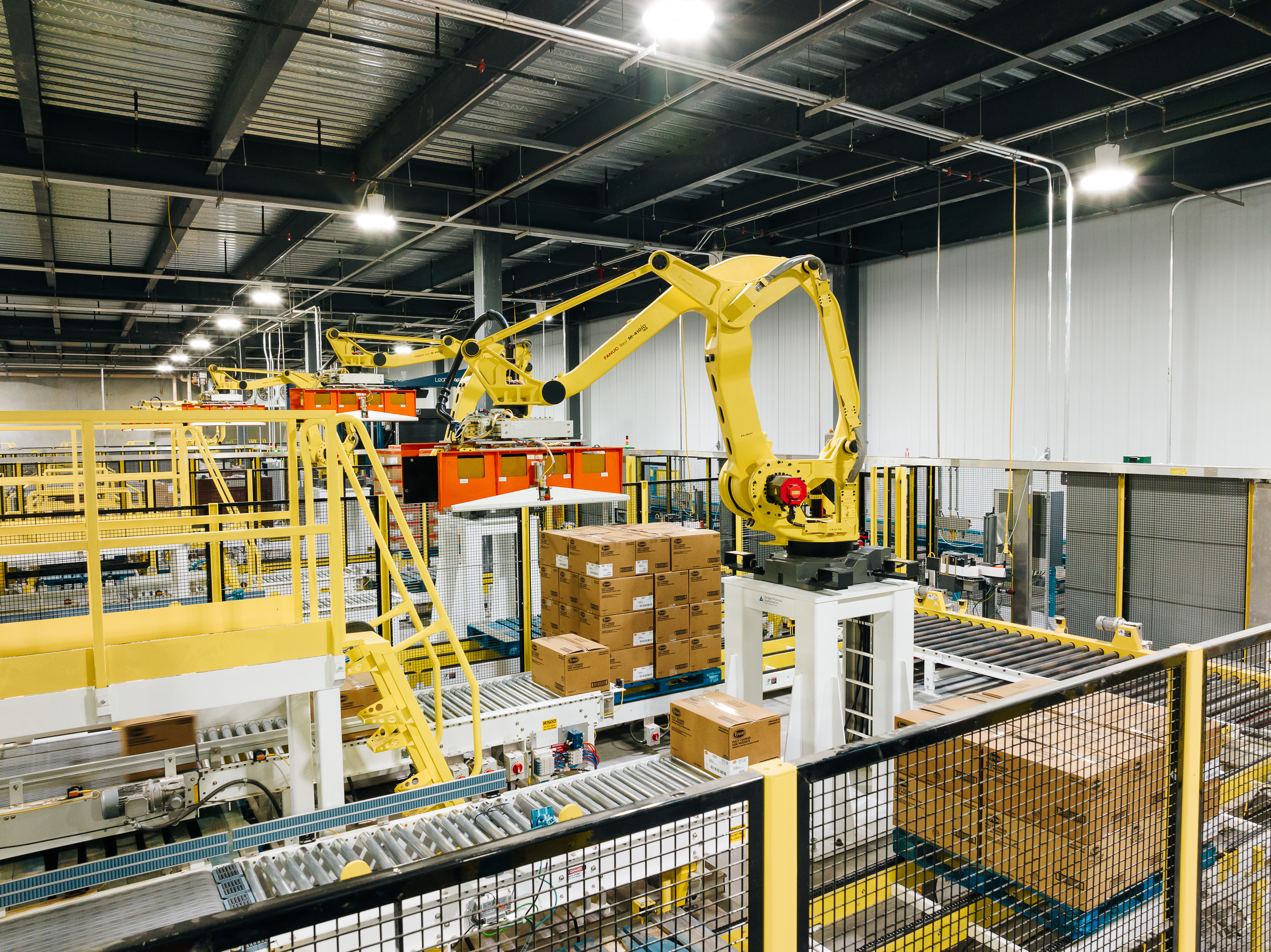
Danville makes the investment easier to picture. A box still needs packing and a pallet still needs stacking, however expansive a company's ambitions become. Tyson also partnered with Danville Community College on maintenance technology training. New equipment creates its own requirements for people who can keep it running.
The financial improvement became clearer in fiscal 2024. Tyson recorded $1.409 billion in operating income, compared with an operating loss of $395 million the previous year. Sales rose just 0.8 percent to $53.309 billion. Much more profit emerged from only modest revenue growth: a useful distinction in a story dominated by the work of making existing operations perform better.
By May 2024, King was telling analysts he was encouraged while withholding satisfaction. It was an appropriately qualified response. Several proteins can give a company different sources of earnings, but they also give it several sets of problems. Improvement in one business does not grant the others a holiday.
Bringing the offices closer
King's interest in proximity also appeared in the organization of the company. In October 2022, Tyson announced plans to bring corporate employees from the Chicago, Downers Grove and Dakota Dunes area offices to its Springdale headquarters. Phased relocation was to begin in early 2023.
He argued that putting colleagues together would help them exchange ideas, solve problems and act faster. It was a substantial bet on the value of sharing a location. Corporate collaboration sounds pleasantly abstract until it involves moving a household. Here, again, an operational decision had an address attached.
The move offers a concrete example of how he tried to manage a business assembled across products and acquisitions. Shared ownership does not automatically produce shared habits. Concentrating offices was a way to seek closer working relationships among people whose jobs depended on one another, even when their desks had been far apart.
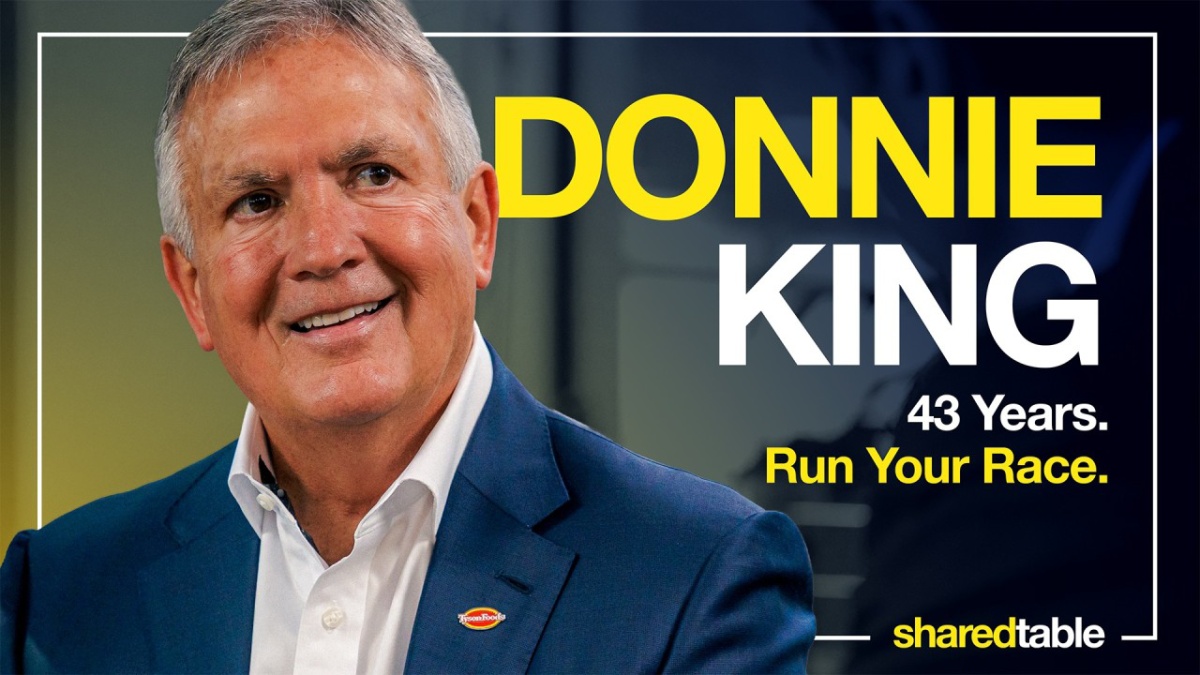
His network extended outside Tyson as well. King served on the boards of the National Chicken Council and the U.S. Poultry & Egg Association. Those roles situated him within the wider industry of producers and processors, alongside the responsibilities he held inside one company. His career's reach became global, while its vocabulary remained rooted in production.
The handover, with a seat retained
Tyson announced King's succession in May 2026. Schomburger, a director since 2016 and a former Procter & Gamble global sales officer, would take over in October after a transition beginning in July. The appointment brought a different professional background to the role: consumer brands and customer relationships alongside the operating experience King had supplied.
King's continued board membership preserves a connection to the business he once entered through an hourly job. The arrangement also gives the succession a clear shape. The executive responsibility passes to Schomburger, while King's knowledge remains available in the boardroom.
In a conversation with Elanco CEO Jeff Simmons near the end of his tenure, King returned to consumers with characteristic directness: “If it doesn't taste good, you can't sell it.” Years of strategy, investment and management still had to survive that small domestic test. Someone has to want another bite.
His career leaves plenty to examine: the widening responsibilities, the departure and return, the closures, the investment and the recovery in earnings. Yet the Friday-night visit belongs in that record, too. Before King held authority across a company, he had experienced what it meant when someone with authority took the trouble to stop.